Tornyol Systems Unveils Autonomous Micro-Drone Achieving First Air-to-Air Kill, Heralding New Era in Mosquito Eradication Efforts

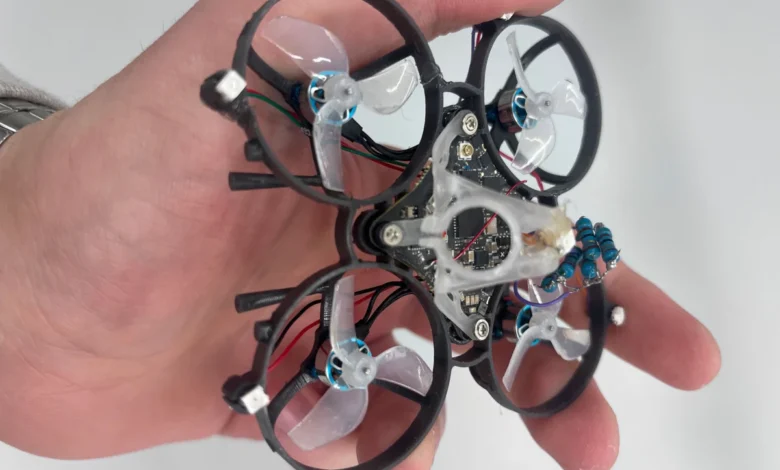
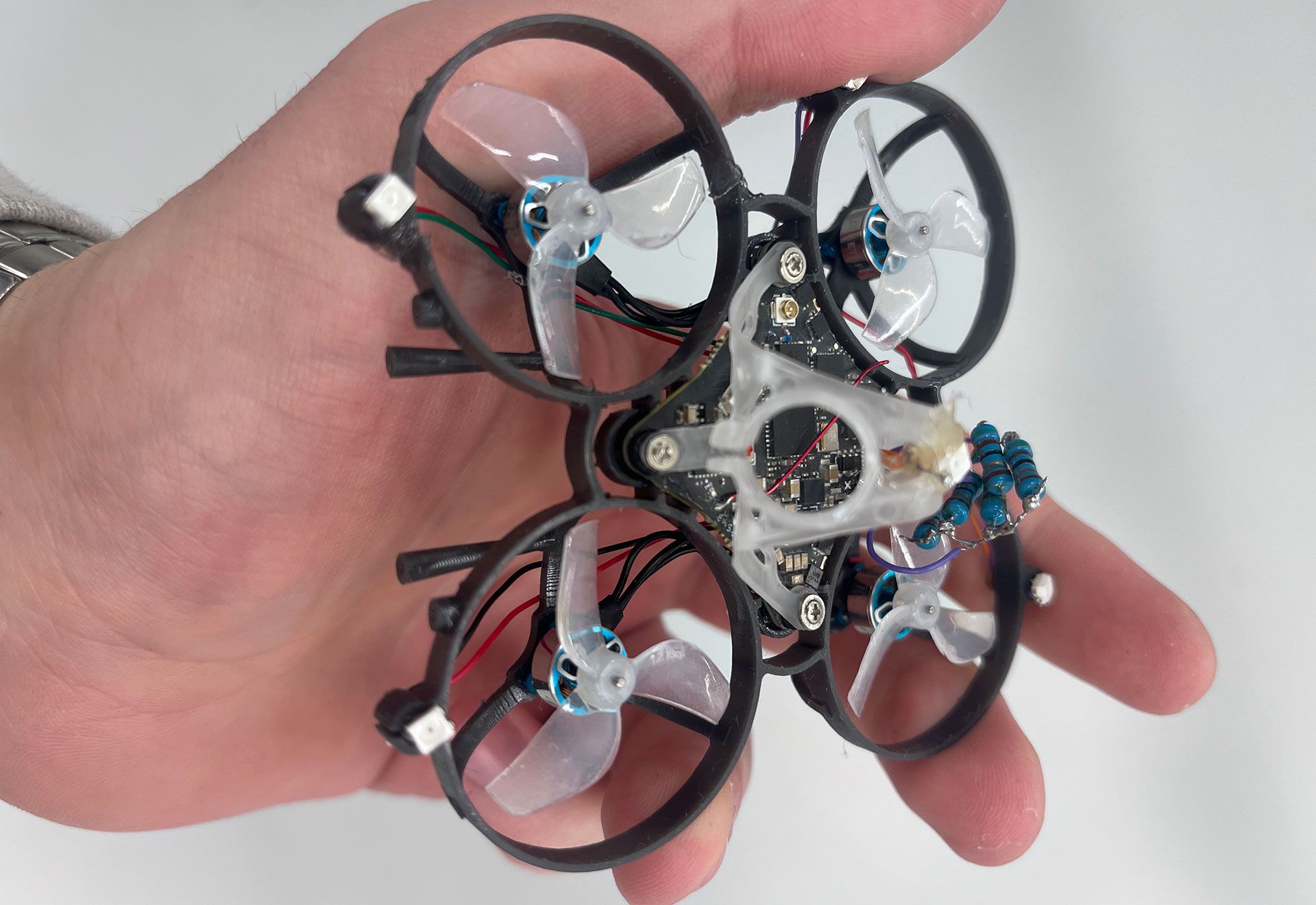
In a significant advancement for autonomous technology and public health, Tornyol Systems, a pioneering tech firm, has announced a crucial milestone in the development of its micro-drone designed for mosquito eradication. The company recently shared video evidence of its eponymous autonomous drone successfully executing its first live air-to-air kill. While the initial demonstration featured a common moth – a choice perhaps made for enhanced visibility during the recording – Tornyol Systems is assertively positioning this achievement as a "significant stride towards completely eradicating mosquitoes" from human-inhabited areas. The 40-gram (1.4-ounce) drone represents a novel approach to combating one of humanity’s most persistent and deadly adversaries.
A Mission to Combat a Global Scourge
The driving force behind Tornyol Systems’ ambitious project is rooted in a profound recognition of the devastating impact mosquitoes have on global health. The company’s mission statement, prominently displayed on its website, articulates a "mosquito-hostile manifesto" that underscores the urgency and scale of the problem. According to Tornyol Systems, mosquitoes are responsible for over 700,000 human deaths annually, a staggering figure that surpasses fatalities from all contemporary conflicts combined. Beyond mortality, more than 700 million people worldwide contract mosquito-borne diseases each year, leading to widespread suffering, economic burden, and strained healthcare systems.
These diseases are not confined to tropical regions; they affect numerous countries, including Western nations. The United States, for instance, records thousands of cases of West Nile Virus annually, highlighting the pervasive nature of the threat. Historically, diseases like malaria, dengue fever, Zika virus, yellow fever, and chikungunya have ravaged populations, hindering economic development and quality of life. Malaria alone, predominantly transmitted by Anopheles mosquitoes, caused an estimated 619,000 deaths globally in 2021, according to the World Health Organization (WHO), with the vast majority occurring in sub-Saharan Africa. Dengue fever, transmitted by Aedes aegypti mosquitoes, has seen a 30-fold increase in global incidence over the last 50 years, with an estimated 100-400 million infections occurring annually. The economic cost associated with these diseases, including healthcare expenses, lost productivity, and tourism impacts, runs into billions of dollars each year.
Tornyol Systems’ stated objective is to leverage cutting-edge technology, including its "small, inexpensive, and yet very fast" micro-drone, to "completely eradicate mosquitoes from areas where humans live." This vision aims to create protected zones, offering respite from the constant threat of disease transmission and nuisance bites.
Chronology of Innovation: From Concept to Combat
The origins of Tornyol Systems’ innovative approach can be traced back to Hackaday Supercon 2024. During this prominent gathering of hardware hackers and innovators, Alex Toussaint, co-founder of Tornyol Systems, delivered a compelling presentation titled "How to Detect (and Kill) Mosquitoes With Off-the-Shelf Electronics." This initial presentation laid the conceptual groundwork for using readily available components to tackle the complex challenge of mosquito detection and elimination. It showcased Toussaint’s early research into acoustic detection and rudimentary targeting systems, sparking interest among the engineering community.
Following the Supercon presentation, the technology underwent significant refinement and miniaturization. The transition from proof-of-concept using off-the-shelf components to a compact, autonomous micro-drone required substantial engineering effort in sensor integration, processing power, and flight control. The recent demonstration, highlighted by Toussaint’s congratulatory tweet to his engineering team on July 14, 2026, marks the culmination of this intensive development period. The video showing the successful air-to-air kill of a moth serves as a powerful validation of the drone’s targeting and interception capabilities, signaling its readiness for deployment against its intended targets. The company has also indicated that the system will transition to embedded hardware deployment "in the next few weeks," signifying a move away from the current PC-dependent control system towards a more self-contained and scalable solution.
Tornyol’s Sophisticated Technology: Pinpoint Precision
At the heart of Tornyol’s system lies a sophisticated suite of technologies designed for unparalleled precision in detecting and neutralizing tiny, fast-moving insect targets. The platform relies on a central base station known as LeSonar2, which integrates a phased array sonar system. This innovative system boasts 380 smartphone microphones, working in concert to create a highly detailed 3D map of the surrounding environment. The sheer number of microphones enables precise acoustic triangulation, allowing the system to pinpoint the location and movement of even the smallest airborne objects with extraordinary accuracy.
The data gathered by the LeSonar2 base station is processed by an Artix-7 Field-Programmable Gate Array (FPGA). FPGAs are reconfigurable integrated circuits that can be programmed to perform specific tasks with high speed and efficiency, making them ideal for real-time signal processing applications. In this context, the Artix-7 FPGA is crucial for interpreting the complex acoustic data, enabling the system to measure movements as minute as 0.1 millimeters. This level of granular detail is essential for tracking insects that are often less than a centimeter in size.
Crucially, the system is designed to identify mosquitoes through their unique wingbeat signature. Each insect species, including various types of mosquitoes, possesses a distinct frequency and pattern in its wing movements. By analyzing these acoustic signatures, the Tornyol system can differentiate between a mosquito and other flying insects, minimizing the risk of targeting non-pest species. This selective targeting mechanism is a significant advantage over broader pest control methods that might harm beneficial insects.
Once a mosquito is identified, the micro-drone receives commands from a control unit, which, in its current demonstration phase, is linked to a PC. This control unit leverages advanced digital signal processing (DSP) algorithms and incorporates components akin to "car park assist sensors" to guide the drone. These sensors, typically used in automotive applications for obstacle detection and ranging, are repurposed here to provide the drone with localized spatial awareness and assist in closing in on the target. The combined technological prowess allows the drone to seek and eliminate mosquitoes up to 8 meters (approximately 26 feet) away. The forthcoming transition to embedded hardware will streamline this control mechanism, allowing the base station and drones to operate more autonomously without the need for an external PC, thus enhancing portability and ease of deployment.
Beyond Traditional Pest Control: A New Paradigm
The introduction of Tornyol Systems’ air-to-air micro-drone marks a distinct departure from conventional mosquito control strategies. Existing methods typically fall into several categories:
- Chemical Pesticides: Widespread spraying of insecticides (e.g., pyrethroids, organophosphates) is common, but concerns exist regarding environmental impact, resistance development in mosquitoes, and potential health effects on humans and non-target species.
- Larvicides: Applied to standing water where mosquitoes breed, these agents target larvae before they mature. While effective, they require identifying and treating all breeding sites, which can be challenging in large or inaccessible areas.
- Biological Control: Introducing natural predators (e.g., certain fish species that eat mosquito larvae) or pathogens (e.g., Bacillus thuringiensis israelensis (Bti) bacteria) into mosquito habitats.
- Sterile Insect Technique (SIT): Male mosquitoes are sterilized using radiation and released into the wild to mate with wild females, resulting in no offspring. This requires mass rearing and repeated releases.
- Genetic Modification: Emerging technologies involve genetically altering mosquitoes to be infertile, less capable of transmitting disease, or to die off before reaching maturity. While promising, ethical and ecological considerations are still being debated.
- Ground-Based AI-Enhanced Zappers: As previously reported, some systems use AI and lasers to detect and eliminate mosquitoes, but these are typically stationary and have a limited range, offering localized protection.
Tornyol’s micro-drone introduces an entirely new dimension: mobile, autonomous, precision air-to-air interception. Unlike stationary zappers, these drones can actively patrol and clear designated areas. Unlike widespread chemical spraying, they offer highly targeted elimination, theoretically reducing collateral damage to beneficial insects and the environment. This represents a significant leap in pest control technology, moving towards a more surgical and potentially sustainable solution.
Broader Implications and Potential Impact
The successful development and impending deployment of Tornyol Systems’ micro-drone hold profound implications across several sectors:
- Public Health Revolution: The most immediate and impactful implication is the potential for a drastic reduction in mosquito-borne diseases. By creating "mosquito-free zones" around homes, communities, and even larger agricultural or recreational areas, the technology could significantly lower infection rates for diseases like malaria, dengue, and Zika. This could save hundreds of thousands of lives annually and prevent millions of debilitating illnesses, particularly in vulnerable populations in developing countries. It could also reduce the burden on healthcare systems and free up resources for other public health initiatives.
- Environmental Benefits: Compared to broad-spectrum pesticide application, the drone’s highly targeted approach could lead to a substantial decrease in chemical pollution. This would benefit non-target insect populations, local ecosystems, and potentially human health by reducing exposure to harmful chemicals. However, careful studies would be needed to ensure the drones themselves do not pose unforeseen environmental risks or cause unintended disruption.
- Technological Advancement: The project pushes the boundaries of autonomous micro-robotics, sensor fusion, and real-time artificial intelligence. The ability to detect, track, and intercept objects as small and fast as mosquitoes in a dynamic 3D environment is a testament to sophisticated engineering. This innovation could have spillover effects into other fields requiring precision drone operations, such as agriculture (e.g., targeted pest control for crops), surveillance, or even search and rescue.
- Economic Impact: The economic burden of mosquito-borne diseases is immense. A successful eradication or significant reduction could unlock substantial economic benefits, improving productivity, boosting tourism, and reducing healthcare expenditures. The market for such a device could be global, spanning residential, commercial, agricultural, and public health sectors.
- Ethical and Safety Considerations: While the benefits are clear, the deployment of autonomous "killer" drones, even for pest control, raises some ethical and safety questions. Concerns might include the potential for misidentification of targets (though the wingbeat signature aims to mitigate this), the possibility of drones falling or malfunctioning, and the privacy implications of systems mapping environments in 3D. Tornyol Systems would need to ensure robust safety protocols, fail-safes, and transparent operational guidelines. Public acceptance will also be a key factor in widespread adoption.
- Scalability and Accessibility: The announced pricing model – a $100 refundable deposit, followed by either a $50-a-month subscription or a $1,100 one-time "own it forever" fee for U.S. residents – suggests a consumer-oriented approach. This indicates a strategy to make the technology accessible to individual households or small communities. The success of this model will depend on the drone’s reliability, effectiveness in real-world conditions, and the cost-benefit analysis for consumers compared to existing pest control solutions. Scaling this technology to cover vast areas or entire cities would present significant logistical and infrastructural challenges.
Looking Ahead: The Future of Pest Control
Tornyol Systems’ micro-drone represents a bold step into the future of pest control, merging advanced robotics with a critical public health mission. While the "kill" of a moth serves as a powerful demonstration, the true test will be its sustained effectiveness against mosquito populations in diverse real-world environments. The company’s imminent rollout on embedded hardware signifies a move towards commercial viability and broader deployment. As the world continues to grapple with the persistent threat of mosquito-borne diseases, innovations like Tornyol’s autonomous micro-drone offer a beacon of hope for a future with fewer bites and, potentially, fewer deaths. The coming months will be crucial in observing how this cutting-edge technology performs and reshapes the landscape of pest management.