The Age of User-Led Innovation: How AI Is Resurrecting Legacy Camera Hardware Through Firmware Modification

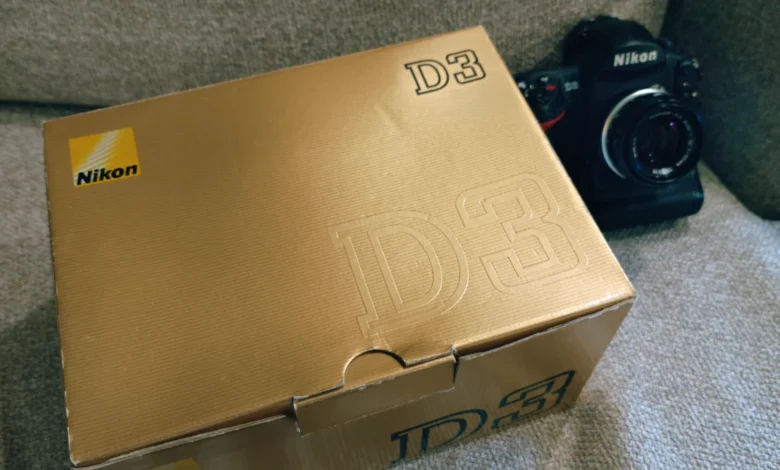
Every dedicated camera owner possesses a mental inventory of desired features—software-based adjustments that seem trivial to implement but remain forever out of reach once a manufacturer ceases support. For years, the end of a product’s lifecycle marked the definitive expiration date for its potential, as companies shifted resources toward newer, more profitable models. The Nikon D3, a legendary full-frame flagship released in 2007, serves as the quintessential example of this phenomenon. However, a new frontier in digital preservation has emerged, driven by advancements in artificial intelligence and the ingenuity of independent developers like Marcus Low. By utilizing modern AI coding agents to reverse-engineer proprietary firmware, enthusiasts are now unlocking capabilities that manufacturers once deemed unnecessary or secondary.
The Methodology of Modern Firmware Hacking
The traditional barriers to firmware modification were formidable, requiring deep expertise in assembly language and reverse engineering. Marcus Low’s approach shifts this paradigm by utilizing AI coding agents, specifically Claude Code, to automate the heavy lifting of disassembly and analysis. Rather than manually writing patches line-by-line, Low functioned as a systems architect, guiding the AI through the complex logic of the Nikon D3’s shutter release and focus mechanisms.
The process is far from a one-click solution. It involves a rigorous cycle of hypothesis, coding, and, most importantly, physical testing. Early iterations of these patches often failed due to incorrect assumptions about the camera’s internal state machines. Only by flashing these test builds onto a physical D3 could Low identify bugs and refine the code. This iterative development process successfully resulted in a patched sub-CPU firmware that introduced "Trap Focus" functionality—a feature the D3 lacked natively.
Chronology: From Sigma Longevity to Nikon Innovation
The roots of this project trace back to the Sigma DP2x, a compact camera renowned for its high-quality sensor but plagued by mechanical vulnerabilities. The DP2x utilizes an extending lens barrel that retracts every time the camera powers down. Low identified this mechanical sequence as a primary point of failure; repetitive extension and retraction cycles inevitably lead to the "lens error" that frequently renders such devices unusable.
In his first major AI-assisted project, Low modified the DP2x firmware to keep the lens in the extended position upon power-off. By eliminating unnecessary mechanical movement, the modification aims to extend the lifespan of the lens motor and gear train. This project also introduced a shot counter and other modernizing tweaks, culminating in the release of the "DP2X Longevity Firmware Update." The success of this experiment demonstrated that the architecture of the camera—specifically the Fujitsu FR-family processor—was susceptible to intelligent reverse engineering. This discovery provided the technical foundation for his subsequent work on the Nikon D3.
Technical Deep Dive: The Mechanics of Trap Focus
Project "Trap Focus" addresses the inherent friction of using manual-focus optics on a digital SLR body. In standard operation, a photographer must visually confirm focus, mentally process the information, and manually trigger the shutter. This human-in-the-loop delay often exceeds 200 milliseconds, which can be the difference between a sharp image and a miss when working with shallow depth of field.
With the patched firmware, the process is streamlined: the user fully depresses the shutter button and then manipulates the focus ring. The camera, constantly polling its own focus-confirmation sensor, automatically fires the shutter the moment the "in-focus" indicator illuminates in the viewfinder. This effectively removes the human reaction time from the capture sequence. Furthermore, the removal of the final physical trigger press reduces the potential for camera shake—an essential improvement for handheld shooting with high-resolution sensors and long-focal-length lenses.
The technical justification for this modification is supported by the hardware’s existing capabilities. The D3 possesses a robust phase-detection autofocus module that already communicates with the camera’s internal logic. The patch simply bridges this signal to the shutter release, a capability that was logically present but programmatically dormant.
Industry Context and the Question of Omission
The absence of trap focus in flagship DSLRs from major manufacturers like Nikon and Canon has long been a source of frustration for manual-lens enthusiasts. While Pentax has historically included "Catch-in Focus" as a standard menu option on its K-mount DSLRs, other manufacturers have not followed suit.
While Nikon has not provided an official comment on these third-party modifications, industry analysts suggest that such omissions were likely driven by strategic product positioning rather than technical limitations. For a manufacturer, a feature that makes a ten-year-old camera more useful might cannibalize the market for newer, more expensive mirrorless bodies. Furthermore, from a liability standpoint, manufacturers are understandably hesitant to release code that could inadvertently damage hardware or cause system instability, even if the underlying capability exists.
Broader Implications for Digital Preservation
The movement to modify legacy firmware represents a significant shift in the "right to repair" conversation. It posits that hardware owners, having purchased the device, should have the agency to determine its functional limits, provided they accept the inherent risks.
The implications for the photography industry are twofold:
- Hardware Longevity: By enabling maintenance-oriented tweaks (like the DP2x lens extension fix) and functional upgrades, firmware modification can keep legacy equipment in active use for years beyond its intended lifecycle. This reduces electronic waste and supports a vibrant secondary market for high-quality vintage glass.
- Community-Driven R&D: The use of AI to bridge the skill gap in firmware development means that sophisticated modifications are no longer the sole purview of corporate engineering teams. As these tools become more accessible, we can expect to see an increase in community-developed features, from custom picture profiles to improved user interfaces for legacy systems.
Risks and Ethical Considerations
It is critical to emphasize that flashing unofficial firmware carries the risk of "bricking" the device. The D3 modification, while innovative, is not an official product and lacks the extensive validation testing required for enterprise-grade firmware. Although Low has included a software kill switch and provides stock firmware for recovery, the process remains inherently dangerous. Reverting to factory settings is only possible if the camera remains functional enough to accept a new flash; a catastrophic error could lead to a total hardware failure.
Furthermore, the legal and ethical landscape of firmware modification remains complex. While the DMCA and similar international laws often provide exceptions for interoperability and repair, modifying proprietary software code occupies a gray area. Enthusiasts must balance the desire for improved functionality against the potential for infringing on intellectual property or violating user agreements.
Future Trajectories
Looking ahead, Low’s roadmap includes porting these modifications to the Nikon D3X and the D700, both of which share the D3’s processor architecture. He is also developing experimental patches for the D3’s main CPU, including advanced picture controls modeled after the D2X. These efforts suggest that we are only at the beginning of a broader movement to reclaim the "lost potential" of our digital devices.
Ultimately, the rise of AI-assisted firmware modding signifies a fundamental change in the relationship between the photographer and their gear. The "I wish my camera could do this" sentiment is shifting from a passive complaint into an actionable project. As these tools become more refined, the divide between consumer and developer will continue to blur, ushering in an era where the hardware we buy is merely the starting point for what our equipment can achieve. Whether this trend will lead to a new ecosystem of open-source camera firmware or remain a niche pursuit for the technically inclined remains to be seen, but the precedent has been set: the manufacturer’s support cycle no longer dictates the end of a product’s utility.