Drakong Challenger Review: High Performance Meets Extreme Budget Value in the Xbox and PC Peripheral Market

The modern gaming accessory market is an arena of stark contrasts, where premium controllers routinely command upwards of $180, packed with modular components, complex companion software, and custom mechanical switches. Yet, a counter-movement has steadily gained traction among budget-conscious consumers and competitive enthusiasts alike: the quest for uncompromising performance at a fraction of the cost. Entering this fiercely competitive landscape is the Drakong Challenger, a wired gamepad engineered specifically for Xbox Series X/S, Xbox One, and PC platforms. Priced at an aggressive $34.99 (approximately £25 / AU$50), the Challenger strips away superficial embellishments—such as wireless connectivity and extensive software suites—to focus entirely on core tactile responsiveness, durability, and advanced sensor technology.
Manufactured by hardware developer Drakong, the Challenger arrives as the industry witnesses a massive shift toward Hall Effect magnetic sensors in budget and mid-tier controllers. For years, traditional potentiometer-based thumbsticks have been plagued by stick drift—a hardware degradation issue caused by physical friction that wears out internal carbon tracks over time. By incorporating Hall Effect technology into both its thumbsticks and analog triggers, the Drakong Challenger bypasses this vulnerability entirely. Magnetic sensors measure the position of the stick without physical contact, promising extended longevity and a level of precision rarely found in sub-$40 gaming pads.
Design and Ergonomics: Function Over Form
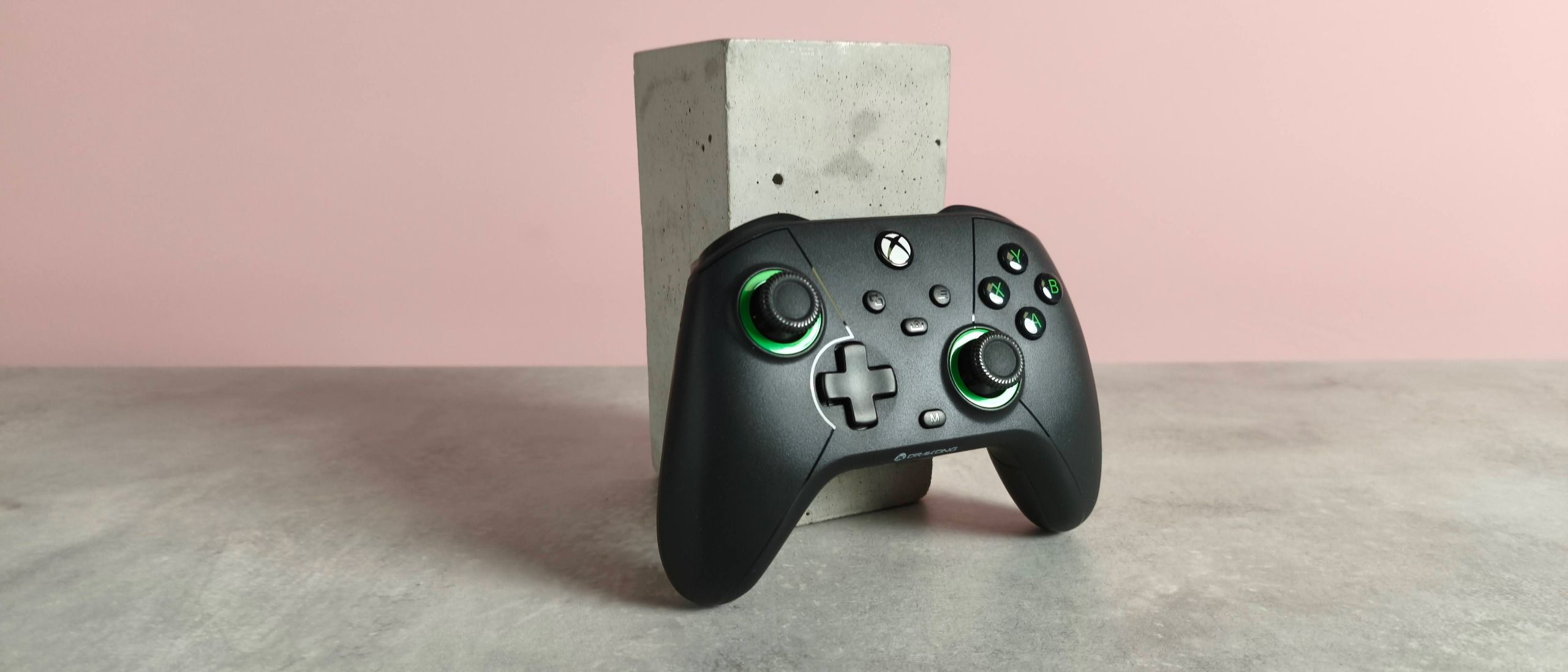
At first glance, the Drakong Challenger looks remarkably familiar. It adopts the classic asymmetric thumbstick layout, overall shape, and general dimensions of the official Microsoft Xbox Wireless Controller, measuring 6.3 x 2.5 x 4.4 inches (160 x 63.5 x 111.8 mm) and tipping the scales at a remarkably light 7.23 ounces (205 grams). Despite utilizing plastics that lack the premium, soft-touch finish of high-end elite controllers, the construction feels surprisingly solid. There is virtually no unwanted flex in the chassis, and the internal components are tightly fitted, preventing the loose, rattling button syndrome that frequently plagues inexpensive third-party alternatives.
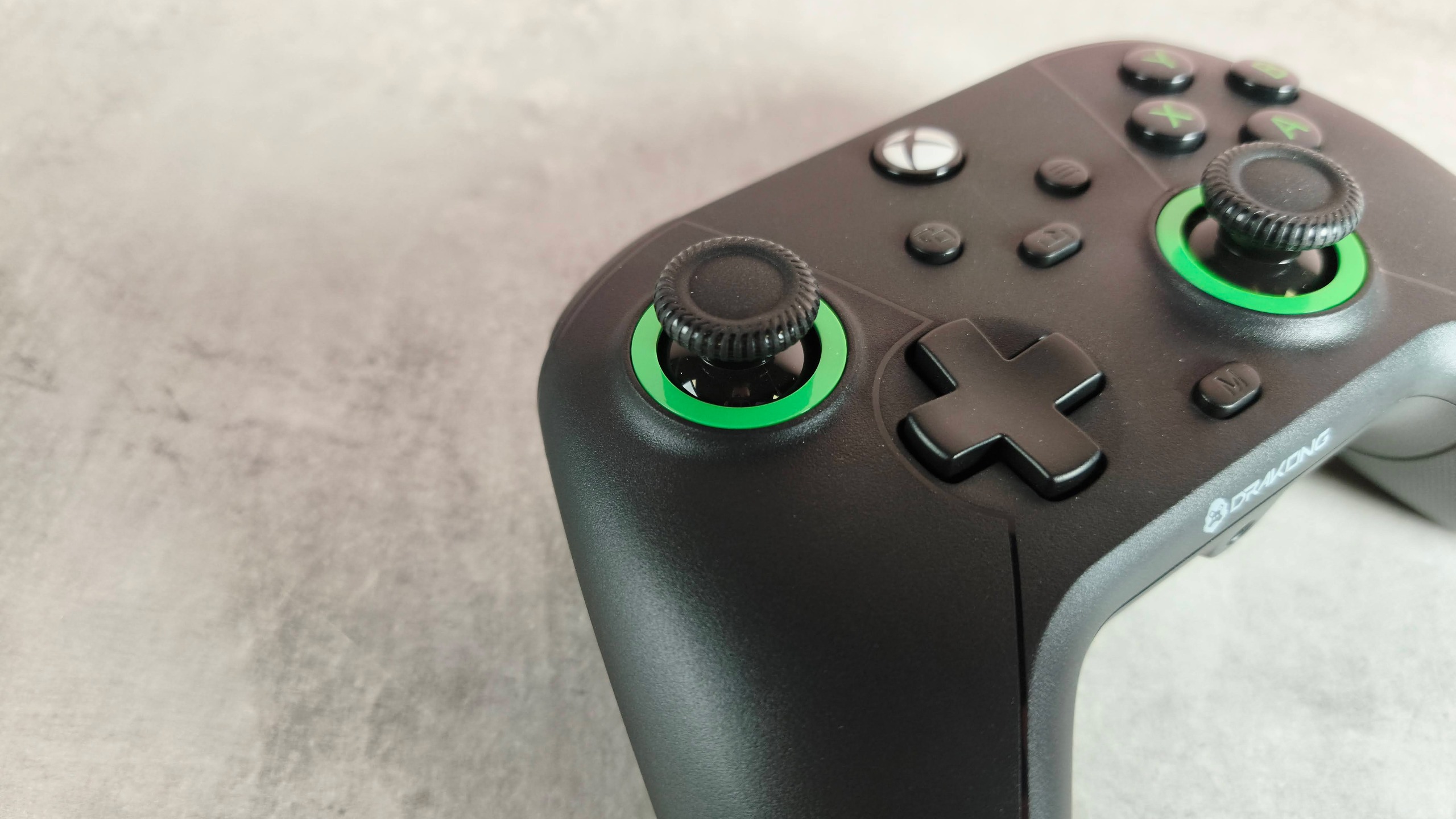
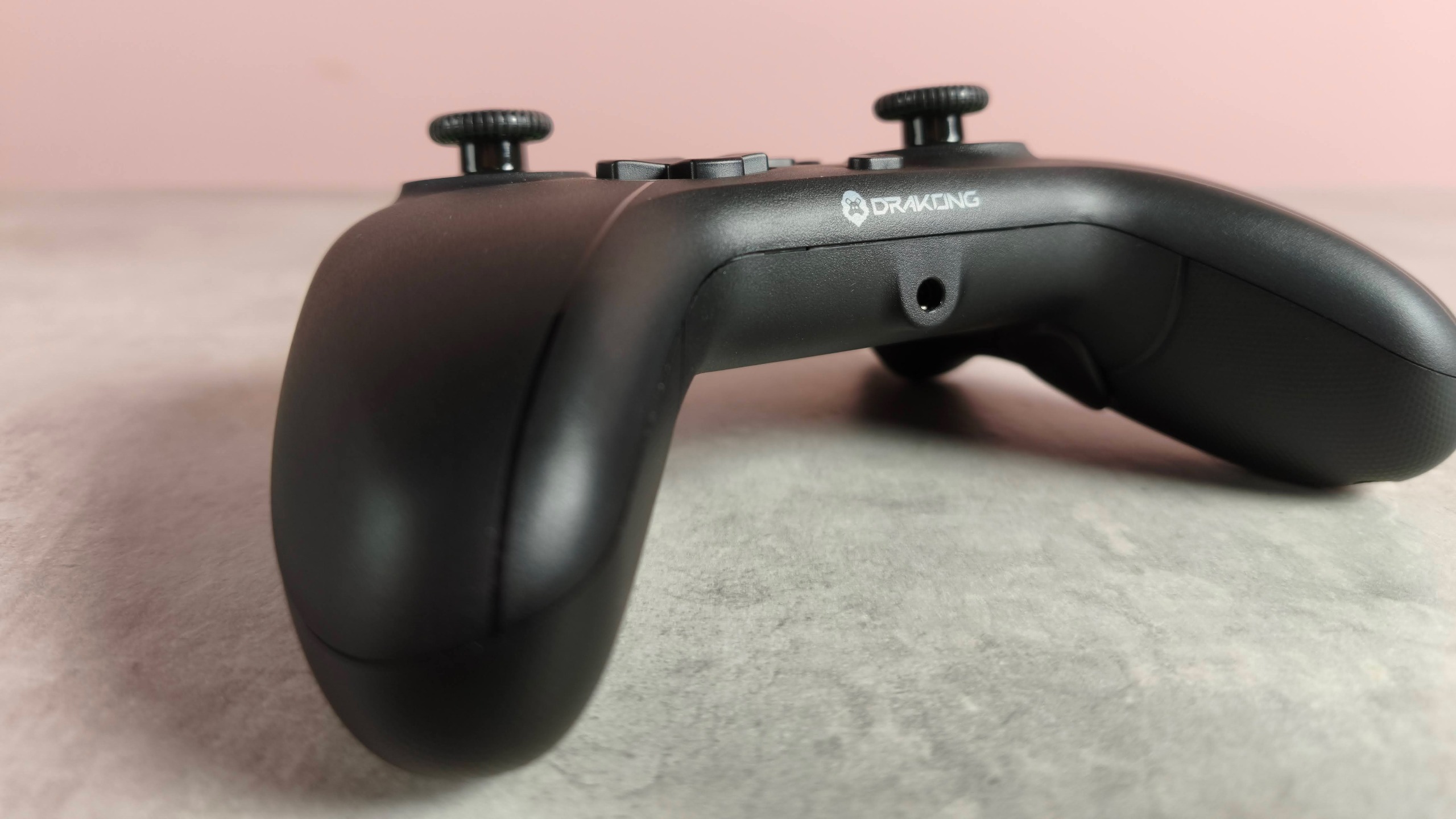
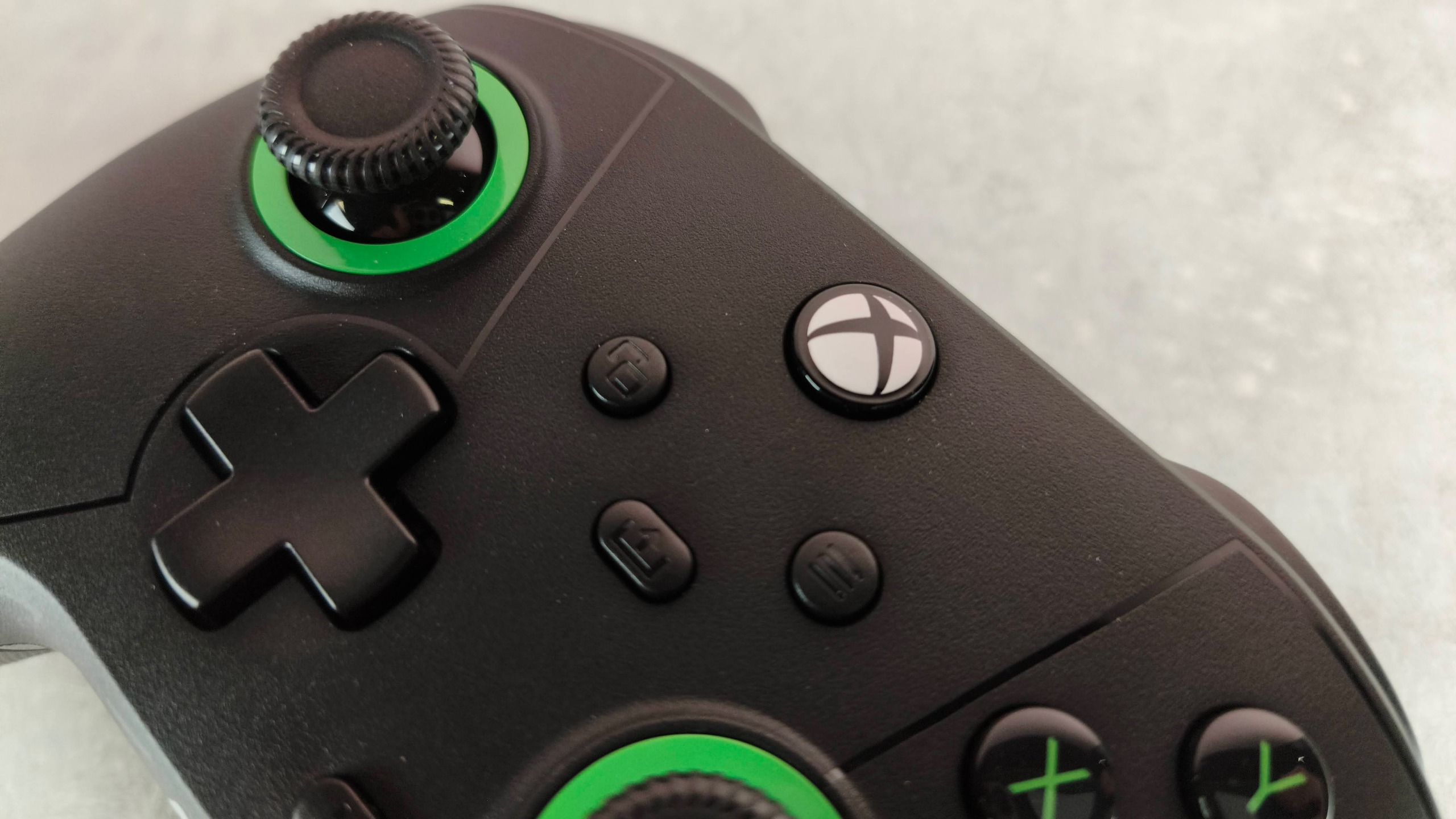
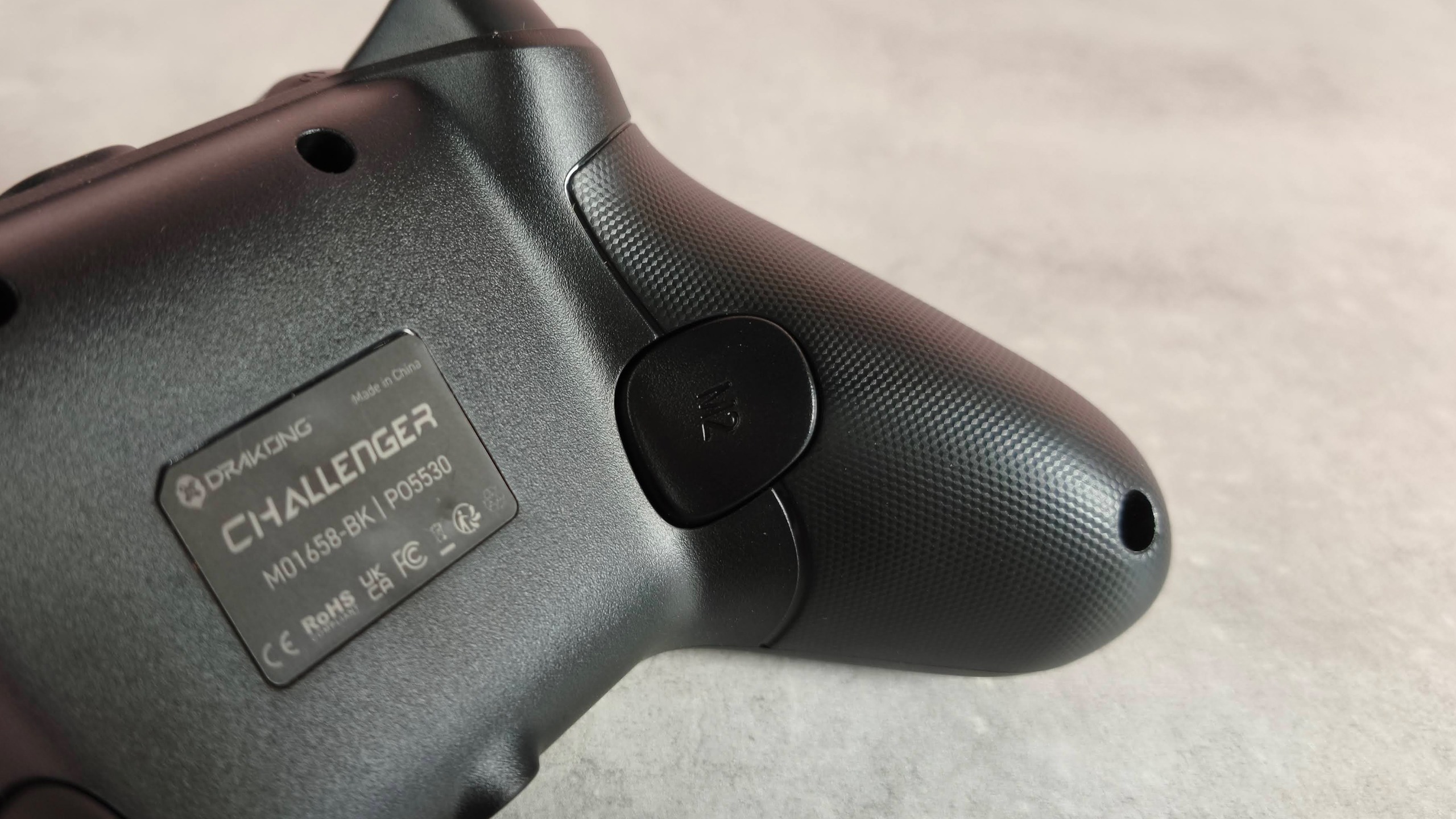
Aesthetic deviations from the standard Xbox blueprint are minimal. Subtle green rings encircle the base of each thumbstick, accompanied by a modest color split along the peripheral’s seam. Despite the visual implication of the green accents, the controller does not feature customizable RGB lighting—a deliberate omission that keeps manufacturing costs low. The handles feature faintly textured grips on their undersides, though the tactile feedback provided by this texture is marginal and offers only a slight improvement in traction during extended gaming sessions.
Connectivity on the Challenger is strictly wired, utilizing an included USB-C cable. While the absence of wireless functionality may deter gamers accustomed to cable-free living rooms, the wired approach yields distinct advantages: zero input latency and an absence of battery degradation worries. The included cable is generous in length and features a durable rubberized finish, though it lacks the flexible braided fabric common among premium PC gaming mice. Additionally, the controller retains a standard 3.5mm auxiliary audio jack, allowing players to plug in headsets directly without experiencing any perceptible drop in audio fidelity compared to direct console or PC outputs.
Performance and In-Game Testing
Evaluating the Drakong Challenger across a variety of genres reveals where the device truly shines. In high-speed racing simulations such as Assetto Corsa, the Hall Effect triggers prove exceptional. They offer a light initial pull accompanied by a smooth, progressive resistance curve that translates into granular control over acceleration and braking thresholds. Similarly, in tactical first-person shooters like S.T.A.L.K.E.R. 2: Heart of Chornobyl, the Hall Effect thumbsticks deliver smooth, accurate rotational tracking and micro-adjustments during high-stakes aiming sequences.
Fighting games present another rigorous test for gamepad hardware, particularly concerning the D-pad and face buttons. Tested in Tekken 8, the Challenger’s traditional four-pronged directional pad provides a comfortable surface for thumb articulation, executing complex directional rolls and rapid inputs cleanly without registering unintended diagonal errors. The face buttons are properly damped, offering a crisp tactile bump and rapid rebound speeds that facilitate button-mashing mechanics when the situation demands it.
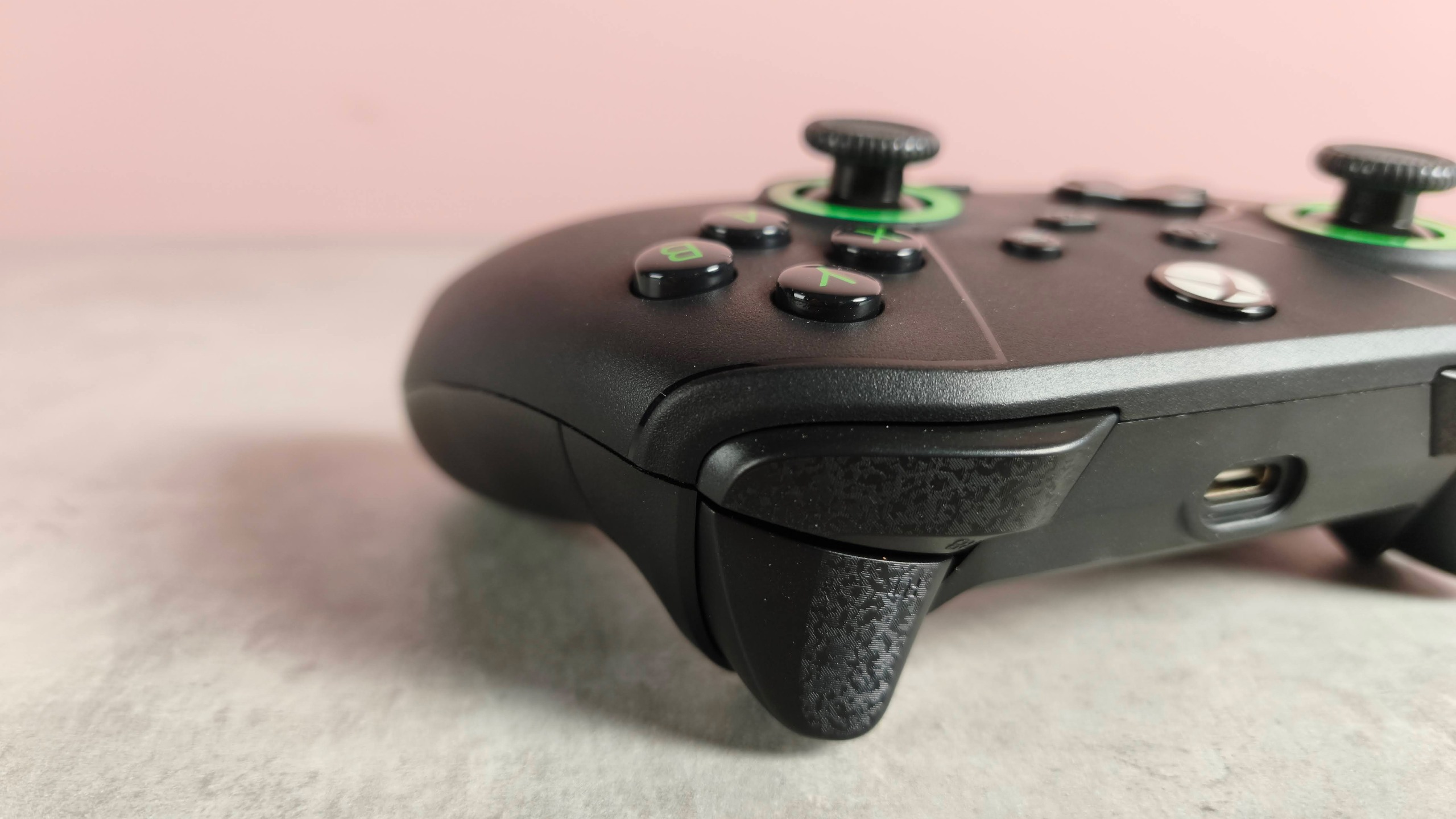
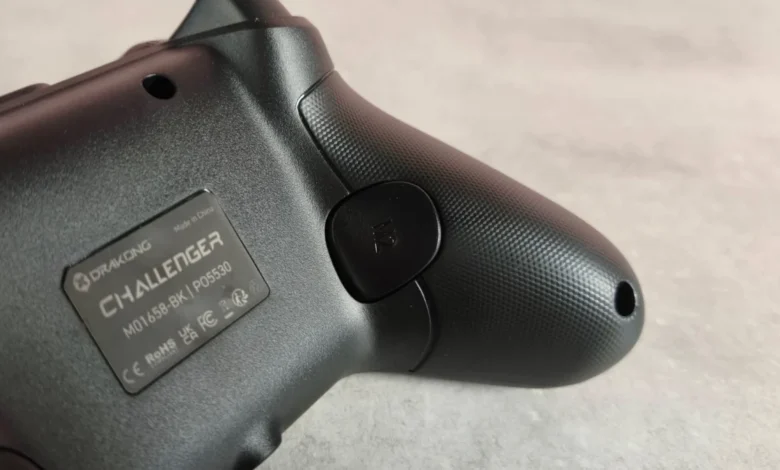
The peripheral also includes two programmable back buttons, adding a layer of competitive utility usually reserved for more expensive hardware. Remapping these buttons requires no companion software; users simply hold the dedicated ‘M’ button alongside a rear paddle until the chassis yields a confirming haptic rumble, press the input they wish to assign, and await a second vibration confirmation. However, the rear buttons present minor ergonomic challenges. They lack the deep travel and distinct tactile click of the face buttons, and their placement can occasionally result in accidental actuation for players with tighter grip styles.
Market Positioning and Competitive Landscape
When stacked against its primary competitors, the Drakong Challenger occupies a unique market niche. The official Microsoft Xbox Wireless Controller retails for $59.99 (£54.99 / AU$74.99) and offers the vital convenience of wireless connectivity, but it ships without a rechargeable battery pack by default and lacks remappable back buttons. Meanwhile, feature-rich alternatives like the Turtle Beach Pacific Skyline push past the $80 mark, offering comprehensive companion apps for dead-zone calibration and vibration tuning, alongside vibrant aesthetic variations.
For consumers unwilling to break the bank, the value proposition of the Drakong Challenger is difficult to dispute. It bridges the gap between disposable low-end peripherals and professional-grade tournament hardware by democratizing Hall Effect technology at an entry-level price point. Buyers receive not only the hardware and a USB-C cable but also a promotional code for a one-month trial of Xbox Game Pass Ultimate, further sweetening the initial investment.
Implications for the Budget Gaming Sector
The introduction of the Drakong Challenger reflects a broader industry trend toward hardware democratization. As consumers grow increasingly weary of controller failure caused by stick drift, manufacturers face mounting pressure to incorporate magnetic sensor technology across all price tiers. By successfully deploying Hall Effect sticks and triggers in a $35 controller, Drakong has set a new benchmark for what budget-conscious gamers should expect from third-party hardware manufacturers.
Ultimately, the Drakong Challenger is defined as much by what it omits as what it includes. It is not designed for gamers seeking wireless freedom, extensive macro customization, or software-driven profiles. Instead, it targets players who prioritize raw mechanical performance, structural durability, and pinpoint input accuracy without incurring high retail costs. For PC and Xbox gamers willing to embrace a wired tether, the Challenger stands as an exemplary model of pragmatic engineering and exceptional cost-to-performance value.