Genesis GV90 Redefines Automotive Luxury with a Pop-Up Cinematic OLED Display and Flagship Electric Architecture

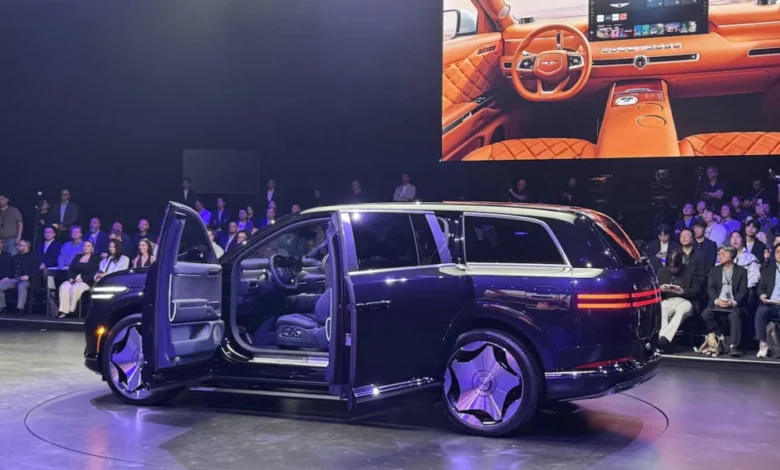
The automotive landscape has long witnessed a steady convergence of high-end consumer electronics and premium interior craftsmanship, yet few recent offerings bridge this gap as ambitiously as the newly unveiled Genesis GV90. Officially making its world debut at the historic Palace of Fine Arts in San Francisco on August 19, the GV90 represents more than just a flagship addition to the Hyundai Motor Group’s luxury stable; it marks a paradigm shift in how electric vehicles utilize their interior space. Beyond its striking exterior presence, highlighted by B-pillarless Neolun Arch Gate coach doors and swiveling executive seating, the GV90’s defining technological crown jewel is its extendable, pop-up OLED cinematic display—a feature designed to turn the cabin of a moving vehicle into a personal, high-fidelity screening room.
A Grand Unveiling in San Francisco
The global reveal of the Genesis GV90 in late August served as a definitive statement of intent for the South Korean luxury marque. Having spent years steadily chipping away at the traditional dominance of legacy European luxury brands, Genesis positioned the GV90 not as a speculative concept, but as a production-ready behemoth designed to redefine top-tier motoring. Held against the dramatic backdrop of the Palace of Fine Arts, the event drew automotive journalists, industry analysts, and EV enthusiasts alike, all eager to witness the culmination of years of design evolution.
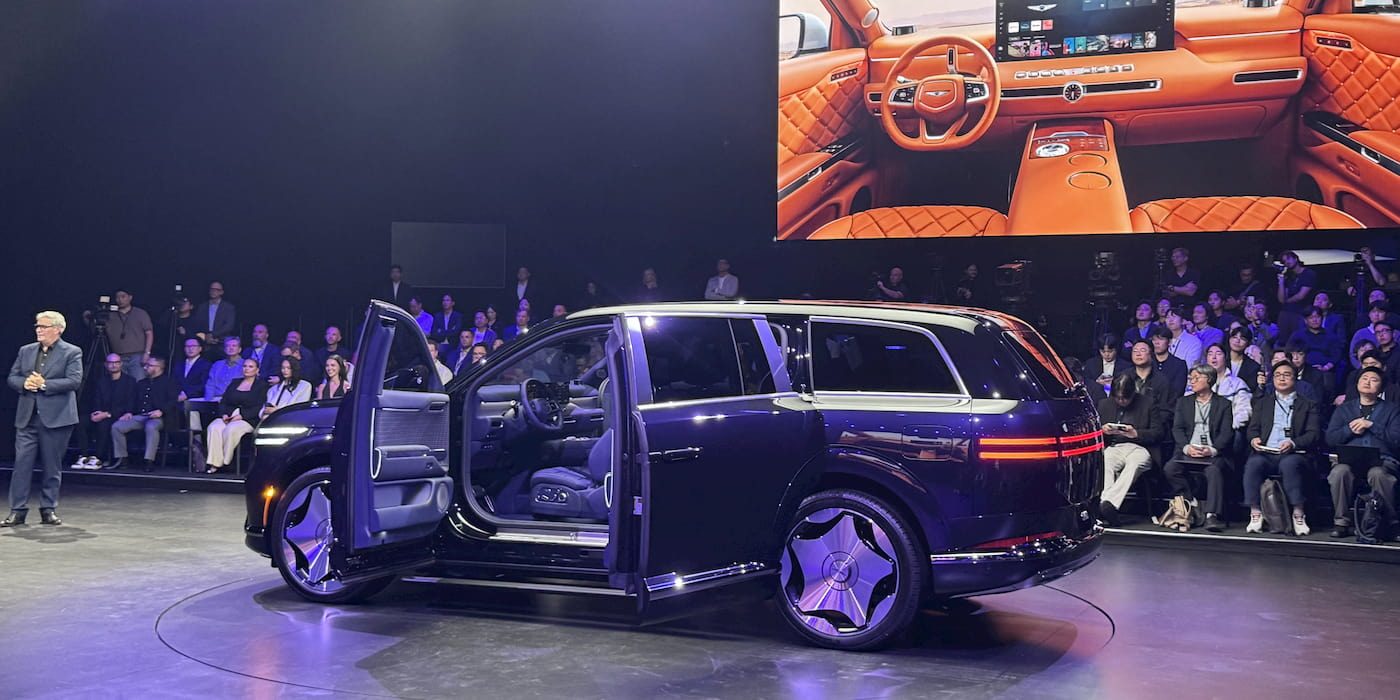
When the covers finally came off, attendees were met with an imposing silhouette that far surpasses its stablemates in the Hyundai-Kia corporate ecosystem. Measuring 208.1 inches long, 79.9 inches wide, and 71.5 inches tall with a generous 127.8-inch wheelbase, the GV90 commands a physical footprint larger than both the Hyundai IONIQ 9 and the Kia EV9. Available in two distinct architectural configurations—the ultra-exclusive GV90 Neolun featuring coach doors, and standard variants utilizing traditional swing doors—the vehicle caters to ultra-luxury buyers seeking bespoke personalization alongside bleeding-edge zero-emission performance.
Transforming the Cabin: The Pleos Connect Infotainment Ecosystem
At the heart of the GV90’s interior transformation is Pleos Connect, a proprietary infotainment architecture developed by Hyundai Motor Group. While variants of Pleos Connect are slated to roll out across other upcoming models such as the IONIQ 3, the GV90 benefits from a deeply customized, model-exclusive implementation tailored specifically to its flagship status.
Inho Yoon, the lead designer and developer behind the GV90’s Pleos Connect system, noted that the vehicle’s conception was driven by an evolving consumer reality: modern automobiles are increasingly utilized as multi-functional living spaces rather than mere transportation vessels. Given that battery-electric vehicles inherently double as mobile power banks capable of running heavy-load household electronics, Genesis engineers sought to capitalize on this capability by building an uncompromising in-cabin entertainment hub.
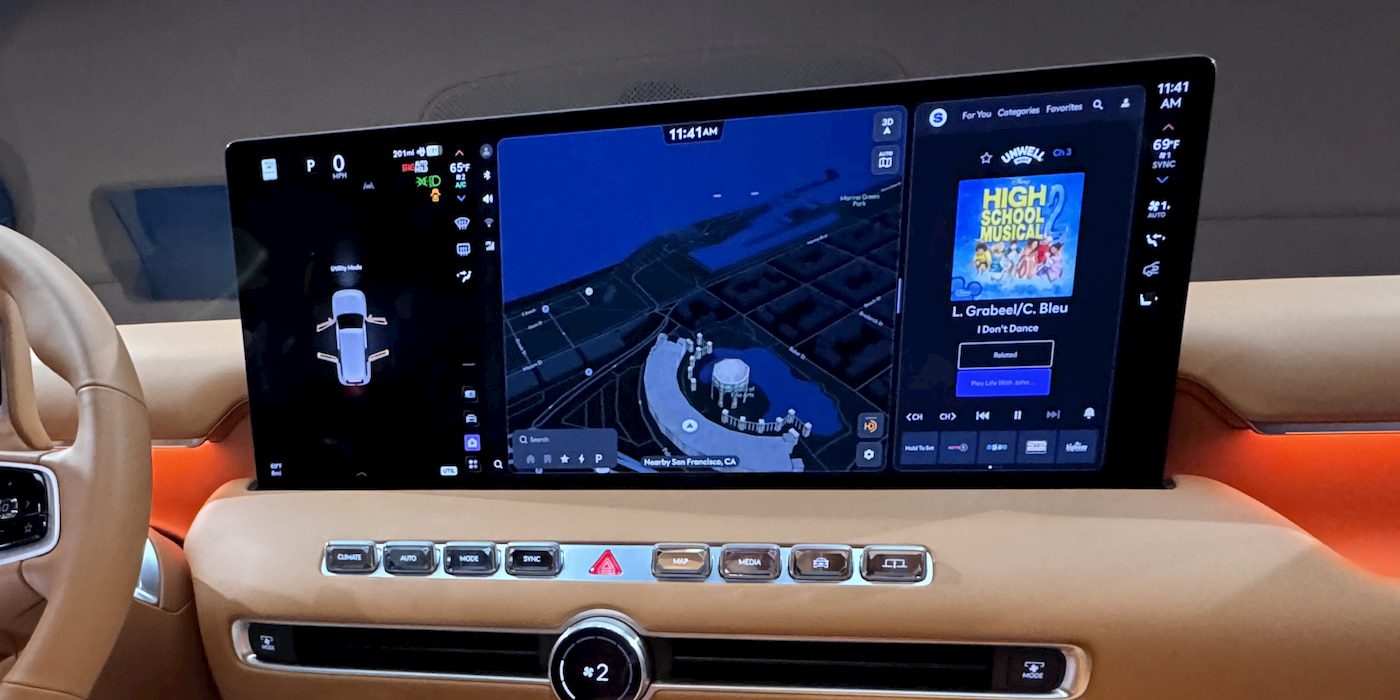
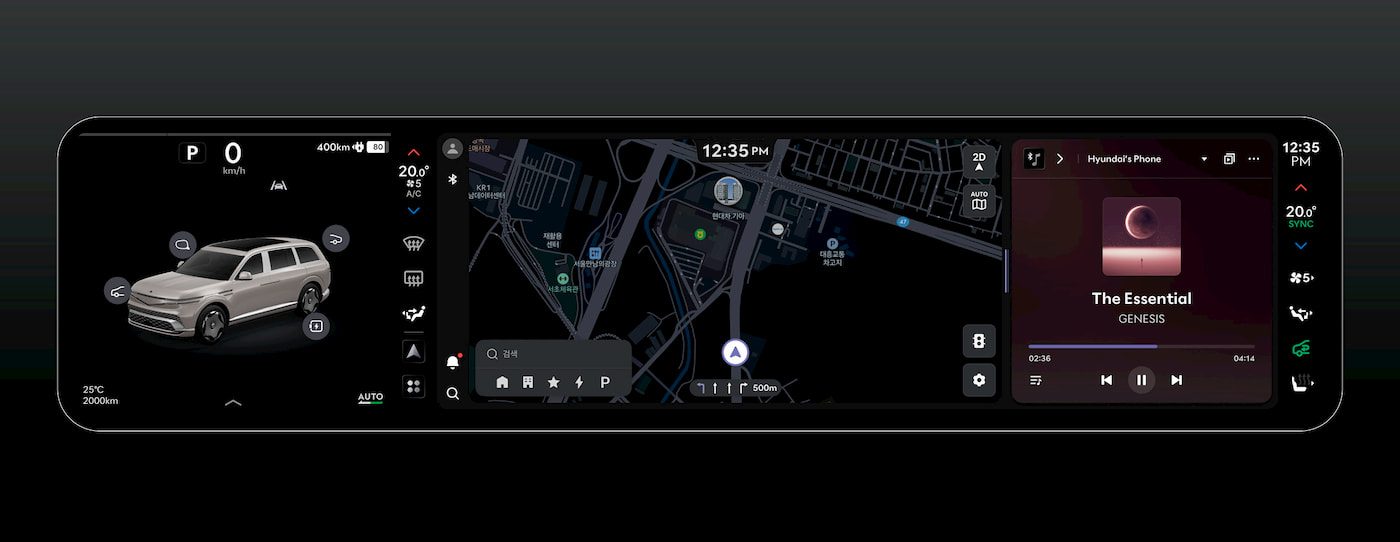
The centerpiece of this ecosystem is an OLED display that dynamically alters its physical dimensions depending on the vehicle’s operational state. When the GV90 is in motion, the driver-facing and central interface measures 23.6 inches, prioritizing uncompromised ergonomic access and critical driving telemetry. However, once the vehicle is safely parked, the driver or passengers can engage a dedicated button that physically extends the screen to an expansive 24.6 inches. This shifts the cabin into "Media Home" mode, granting occupants full access to streaming powerhouses like Netflix, live television feeds, and third-party media applications.
Acoustic Engineering and User Experience Design
A cinematic display requires an equally impressive acoustic counterpart to justify its theater-like aspirations. To achieve this, Genesis partnered with Bang & Olufsen to integrate a bespoke 25-speaker Premier 3D Sound System equipped with Dolby Atmos processing. The resulting soundscape aims to replicate the spatial dynamics of a commercial movie theater, ensuring that dialogue, sweeping musical scores, and ambient environmental effects are reproduced with pinpoint accuracy across every seating position.
Simultaneously, the user experience (UX) team placed heavy emphasis on maintaining a smartphone-like fluidity during active driving scenarios. Lee Min-ah, a Senior Researcher on the Infotainment UX Development Team, emphasized the rigorous engineering required to balance multitasking capabilities.
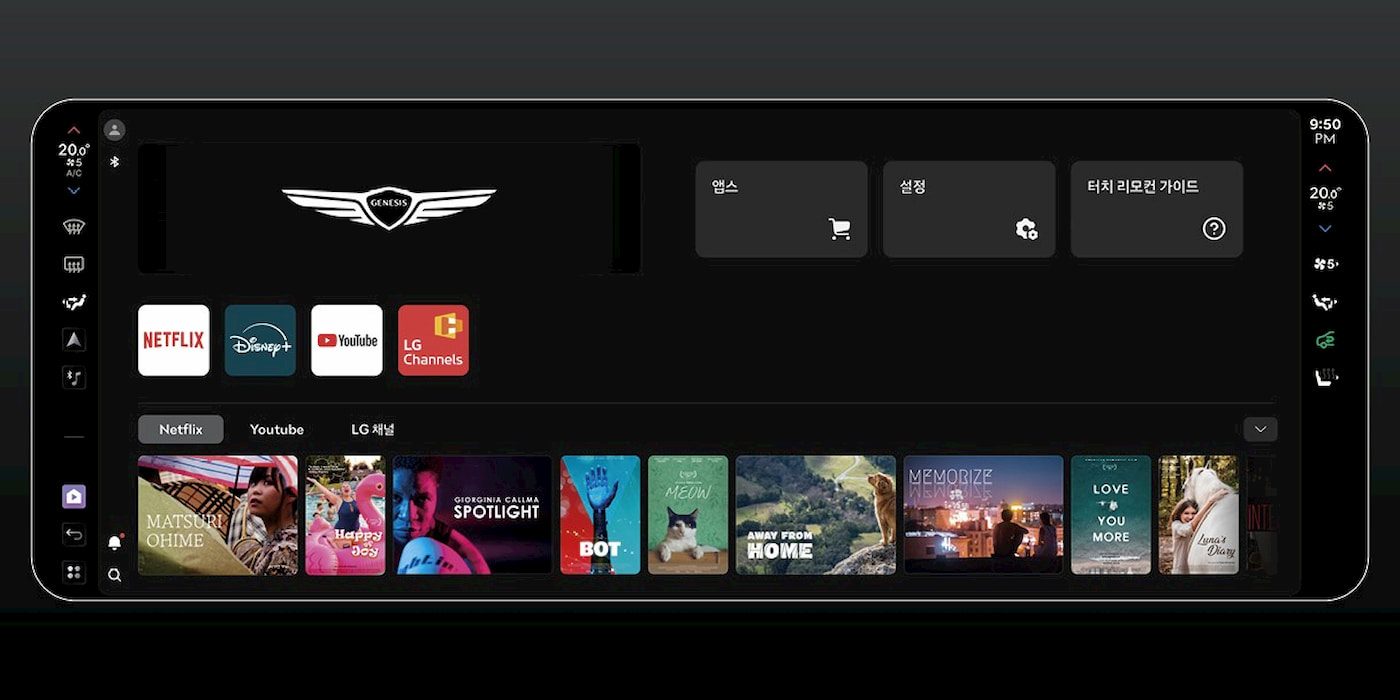
“I devoted considerable effort to designing the display’s app screen policies so that the experience of using navigation and other apps simultaneously could flow seamlessly,” Min-ah explained.
Unlike other applications of Pleos Connect within the corporate family, the GV90 introduces a unique split-menu bar positioned along both flanks of the screen, housing dedicated seat-control buttons alongside standard interfaces. The driver’s side focuses on navigation, climate control, and vital vehicle management systems, while the passenger side acts as an isolated zone for media curation and application management. Furthermore, the integration of Gleo AI—Hyundai’s proprietary in-car conversational assistant—allows occupants to execute natural-language voice commands to query web-based information, search for real-time news, check local weather, or locate nearby dining establishments without diverting attention from the road.
Complementing the central interface is a custom 25-inch Head-Up Display (HUD) projected directly onto the windshield. This wide-format projection system overlays critical driving metrics, including current velocity, advanced battery telemetry, and turn-by-turn routing directives, cleanly into the driver’s natural line of sight. Notably, despite the heavy reliance on advanced digital displays, Genesis resisted the industry trend of purging tactile controls entirely. The dashboard retains a thoughtfully curated array of physical buttons positioned beneath the infotainment screen for immediate, eyes-free adjustments to core climate and media functions.
Powertrain, Range, and Platform Specifications
Beneath its avant-garde exterior and tech-laden interior lies a robust technical foundation designed to support long-distance grand touring. The GV90 draws its energy from a massive 123.5 kWh battery pack—the largest ever deployed in a production electric vehicle from the Hyundai Motor Group.
According to preliminary manufacturing estimates, the standard seven-seater configuration is projected to deliver an estimated driving range of approximately 310 miles (500 kilometers) on a single charge. Given the vehicle’s considerable size and luxury appointments, this range represents a competitive benchmark in the high-end electric SUV segment, balancing everyday usability with substantial energy storage capacity.
Market Implications and Strategic Analysis
The commercial rollout of the Genesis GV90 arrives at a pivotal juncture for the global luxury automotive sector. For years, traditional European legacy manufacturers—such as Mercedes-Benz, BMW, and Audi—have dominated the upper echelon of full-sized luxury SUVs. However, the rapid maturation of dedicated electric vehicle architectures has leveled the playing field, allowing emerging luxury brands to disrupt established hierarchies.

Analysts point to the GV90 as tangible proof that Genesis has successfully shed its early reputation as an automotive "dark horse." By combining audacious styling elements like B-pillarless coach doors with forward-thinking digital innovations such as the extendable cinematic OLED display and Gleo AI integration, the brand is actively courting a younger, tech-forward demographic of affluent buyers.
The vehicle’s ability to seamlessly transition from an ergonomic, high-performance touring machine into a stationary entertainment lounge underscores a broader philosophical shift in automotive design. As electric vehicles continue to redefine the boundaries of interior packaging, power delivery, and connectivity, flagship models like the Genesis GV90 establish a new baseline for what consumers can expect from ultra-luxury mobility in the latter half of the decade.