2027 Mercedes-Benz EQS Shatters Expectations with 539-Mile Real-World Range Test

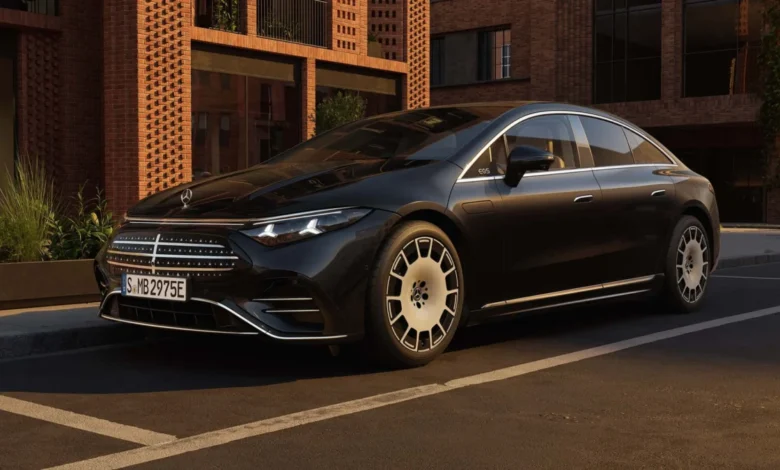
The evolution of electric vehicles has reached a significant milestone as modern engineering continues to dismantle long-held consumer reservations about battery longevity and performance. In a rigorous real-world assessment conducted by automotive testing authority Edmunds, the upcoming 2027 Mercedes-Benz EQS 450+ luxury sedan traveled an extraordinary 539 miles on a single charge. This exceptional performance not only eclipsed the vehicle’s official Environmental Protection Agency (EPA) rating by a margin of 72 miles—which stood at 467 miles—but it also established a new benchmark for sedans evaluated by the publication, surpassing the previous record-holder, the Lucid Air Dream Edition, by 34 miles.
As the automotive industry pivots aggressively toward electrification, achievements of this scale provide tangible evidence that long-distance travel without frequent refueling stops is becoming an operational reality for premium vehicle owners. While range anxiety has historically served as a primary deterrent for prospective electric vehicle buyers, the latest generation of luxury and mainstream battery-electric vehicles (BEVs) suggests that this psychological hurdle is rapidly losing its foundation.
Engineering Upgrades and Technical Architecture
The remarkable efficiency displayed by the 2027 Mercedes-Benz EQS 450+ is not an isolated anomaly; rather, it is the direct result of targeted mechanical and electrical refinements introduced by the German automaker. For the 2027 model year, Mercedes-Benz implemented a comprehensive update package designed to optimize energy consumption, thermal management, and power delivery.
Central to these enhancements is an increased battery capacity, which now stands at a usable 122 kilowatt-hours, up from the 118 kilowatt-hours found in preceding iterations. Beyond the expanded energy storage, engineers integrated a sophisticated two-speed transmission coupled with the vehicle’s rear electric motor. This dual-ratio setup allows the electric motor to operate within its optimal efficiency band across varying driving conditions—delivering immediate torque for lower-speed acceleration while minimizing energy draw at sustained highway velocities.
Furthermore, the entire vehicle architecture has transitioned to an advanced 800-volt electrical system. This high-voltage framework reduces resistive energy losses throughout the wiring harness, enhances thermal stability during high-output driving, and drastically improves charging capabilities. The convergence of these technological upgrades enabled the EQS 450+ to substantially exceed its paper metrics during standardized testing.
Rigorous Testing Methodologies and Context
Understanding the significance of Edmunds’ evaluation requires a closer examination of the testing protocol. Unlike standardized laboratory cycles, Edmunds administers its evaluations on a carefully curated route that features a 60-to-40 split between city and highway driving. This real-world circuit exposes vehicles to variable traffic flows, elevation changes, aerodynamic drag at highway speeds, and temperature fluctuations, thereby simulating typical consumer usage far more accurately than theoretical laboratory estimates. For perspective, the EPA utilizes a slightly different baseline, targeting a 55/45 city-to-highway breakdown.
Within Edmunds’ extensive historical database of tested electric vehicles, the EQS 450+ performance places it in an elite tier. Only one vehicle across all segments—the massive Cadillac Escalade IQ—has managed to outperform the EQS 450+’s distance benchmark, logging an astonishing 558 miles on the same circuit. However, among low-slung, aerodynamically optimized sedans, the Mercedes flagship now reigns supreme.
Charging Dynamics and High-Voltage Infrastructure
Range capability represents only one component of long-distance usability; the speed at which energy can be replenished is equally critical for eliminating travel friction. Thanks to its newly implemented 800-volt architecture, the 2027 Mercedes-Benz EQS does not merely travel farther than its predecessor—it also recovers energy at a significantly accelerated pace.
According to Edmunds’ charging efficiency metrics, which measure the miles of range added per minute of DC fast-charging, the EQS 450+ ranks as the third-fastest charging electric vehicle the publication has ever evaluated. During testing, the vehicle demonstrated the capacity to absorb approximately 100 miles of driving range in a mere seven minutes when connected to a sufficiently powerful DC fast-charging station.
This performance places the flagship sedan in elite company, trailing only the Hyundai Ioniq 6 and its stablemate, the newly introduced Mercedes-Benz CLA 250+. The CLA 250+ utilizes a similar technological playbook—including an 800-volt platform and a multi-speed transmission strategy—underscoring Mercedes-Benz’s broader corporate commitment to harmonizing high-capacity storage with rapid replenishment capabilities across its vehicle lineup.
Market Realities and Financial Accessibility
Despite the technical triumphs demonstrated by the EQS 450+, industry analysts are quick to contextualize the vehicle’s market position. The specific test vehicle evaluated by Edmunds carried a sticker price approaching $122,000. At this price point, the vehicle remains an exclusive luxury commodity, attainable primarily for high-net-worth consumers rather than the average automotive buyer.
Nevertheless, automotive economists emphasize that high-end flagships frequently serve as incubators for technologies that inevitably trickle down to more affordable market segments over time. The proliferation of ultra-long-range electric vehicles is no longer restricted to six-figure flagships. A burgeoning cohort of luxury and premium models—including upcoming iterations of the BMW iX3, i3, and iX5, alongside offerings from Volvo and Porsche—now routinely exceed the 400-mile threshold on paper and in early testing. In total, Edmunds has cataloged six distinct EV models that have crossed the coveted 500-mile mark in real-world evaluations.
The Broader Landscape: Mainstream Adoption of 300-Mile Range
While luxury cars capture headlines with 500-mile capabilities, the true barometer of the electric vehicle market’s maturation lies in the availability of dependable, mid-tier products. A decade ago, achieving a 300-mile driving range was considered an exceptional engineering feat, largely exclusive to high-end pioneers like the Tesla Model S.
Today, that benchmark has transformed into an industry baseline. Edmunds’ testing archives confirm that more than 90 individual EV models have successfully surpassed 300 miles of range in real-world evaluations. Consumers shopping for everyday family transportation can now select from accessible models such as the Chevrolet Equinox EV or the Kia EV3, both of which deliver sufficient daily range at price points closely mirroring traditional internal-combustion crossovers.
Remaining Industry Hurdles and Future Outlook
Even as battery chemistry and powertrain efficiencies neutralize range anxiety as a primary barrier to entry, the global automotive market acknowledges that challenges remain. Public charging infrastructure continues to exhibit regional disparities in reliability and availability, while upfront purchase prices—though declining steadily—require continued macroeconomic stabilization and manufacturing scale. Furthermore, consumer education regarding charging habits, home installation incentives, and battery longevity remains an ongoing project for automakers and dealerships alike.
However, the performance of the 2027 Mercedes-Benz EQS 450+ signals an undeniable directional shift. As engineering efficiency outpaces skepticism, the narrative surrounding electric vehicles is transitioning from a discussion of compromise to one of capability. With cars now capable of traveling well past 500 miles between charges and replenishing their reserves in minutes, the traditional limitations of the internal combustion engine are steadily meeting their match.