Apple Has Introduced the iPhone Duo, Its First Foldable Smartphone Featuring a 7.6-Inch Inner Display and A20 Pro Performance

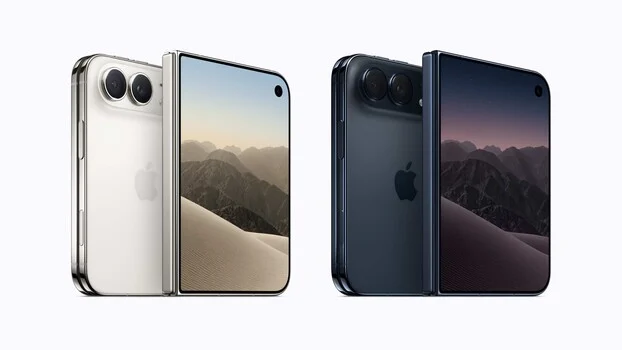
Apple has officially entered the foldable smartphone market with the debut of the iPhone Duo, a device that represents the most significant departure from the traditional iPhone form factor since the line’s inception in 2007. Featuring a dual-display design that pairs a 5.4-inch outer Super Retina XDR screen with a sprawling 7.6-inch folding inner display, the device is positioned as a productivity and creative powerhouse. The hardware launch, which coincides with the release of iOS 27, marks a strategic pivot for Apple, addressing long-standing market demand for a "phablet" device that bridges the gap between smartphone portability and tablet-level screen real estate.
A New Era of Hardware Engineering
The development of the iPhone Duo follows years of intensive research and development, characterized by Apple’s trademark focus on material science. The chassis is constructed from grade 5 titanium, chosen for its exceptional strength-to-weight ratio. Central to the device’s longevity is a proprietary 3D-printed titanium hinge mechanism comprising over 100 individual components. To ensure structural integrity, Apple has integrated internal support ribs and ceramic fiber inserts, safeguarding the device against the mechanical stresses of daily folding.
The display technology itself is a feat of engineering. Both the inner and outer screens feature ProMotion technology with Always-On functionality, capable of reaching 3,000 nits of peak outdoor brightness. The inner folding panel utilizes a multi-layered high-strength glass construction topped with a polymer layer that Apple claims offers 40% greater stiffness than competitive folding materials. To minimize the visual impact of the crease—a common critique of foldable devices—the inner display features a specialized nano-texture finish that also serves to reduce glare.
Chronology and Market Launch
Apple’s roadmap for the iPhone Duo reflects a calculated rollout strategy. Following the official announcement, the company has confirmed that preorders for the device will commence on October 16, 2026, at 5 a.m. PT. Global availability is scheduled for October 23, 2026, across more than 70 countries, with a secondary wave of expansion hitting 28 additional regions on October 30, 2026. This staggered launch allows Apple to manage supply chain logistics for what is arguably its most complex manufacturing process to date.
The pricing structure begins at $1,999 for the 256 GB base model. Given the $1,999 entry point, industry analysts suggest that Apple is targeting "power users," creative professionals, and enterprise clients who require high-performance mobile computing. Storage options extend up to 2 TB, catering to the intensive needs of 4K video creators and photographers.
Computational Photography and Dual-Screen Utility
While the foldable form factor provides the headline, the primary utility of the iPhone Duo lies in the synergy between its hardware and the dual-screen interface. The camera system features a 48 MP Main sensor and a 48 MP Ultra Wide sensor, both utilizing Apple’s latest computational imaging pipeline. By leveraging the outer screen, Apple has introduced "Duo Preview," a feature that allows subjects to view a live feed of the frame while the photographer uses the primary lens. This innovation effectively eliminates the need for external field monitors for solo creators, portrait photographers, and vloggers.
The device also introduces "Kid Cue," a feature that utilizes the outer display to show animated characters—specifically Peanuts-branded content—to engage children during photo sessions. Furthermore, the ability to partially fold the phone allows it to act as its own tripod, facilitating hands-free 4K video recording at 120 fps in Dolby Vision, or long-exposure time-lapses without the need for additional accessories.
Under the Hood: A20 Pro and Thermal Management
Powering the iPhone Duo is the A20 Pro chip, manufactured on a cutting-edge 2 nm process. The processor delivers a 20% increase in CPU speed and a 40% improvement in GPU efficiency compared to its predecessor. Recognizing the heat generation inherent in such a compact, high-performance device, Apple has integrated a custom vapor chamber thermal management system. This system is designed to sustain peak performance during extended periods of multitasking or heavy AI processing, with Apple reporting a 35% improvement in sustained performance over the iPhone 17 Pro.
The device also introduces a Dual 16-core Neural Engine, doubling the compute performance for Apple Intelligence features. This allows for advanced on-device AI tasks, such as spatial reframing of photos, real-time image extension, and sophisticated Siri AI interactions that leverage personal context from messages, emails, and calendar data.
Software Innovation: iOS 27 and Multitasking
The iPhone Duo runs on iOS 27.1, an operating system specifically re-architected for foldable hardware. The most impactful addition is "Split View," which allows for true side-by-side application usage. This enables users to run two distinct apps simultaneously or open two instances of the same application. This functionality is expected to transform mobile productivity, allowing users to drag and drop files between apps, compare documents, or maintain communication channels while editing media.
The user interface automatically adapts to the physical orientation of the device. Whether the phone is partially folded, held in landscape, or fully open, the Dock and app navigation elements shift to maximize vertical space. The Dynamic Island has also been redesigned to function effectively on both the outer and inner displays, ensuring a consistent user experience regardless of which screen is active.
Connectivity and Battery Architecture
To power such a display-heavy device, Apple has opted for a dual-battery configuration managed by a unified power software system. The battery life is rated for up to 31 hours of video playback on the inner screen and up to 44 hours on the outer display. Under mixed-use conditions, users can expect roughly 24 hours of endurance.
In terms of connectivity, the device is eSIM-only, continuing Apple’s transition away from physical SIM trays. The N1 wireless networking chip provides the latest standards in Wi-Fi 7, Bluetooth 6, and Thread. Additionally, the new iPhone Handoff feature allows users with compatible carriers—initially T-Mobile in the U.S. and Telekom in Germany—to seamlessly switch their phone number between two active iPhones, a convenience for professionals who may carry a standard iPhone for daily use and an iPhone Duo for project-specific tasks.
Industry Implications and Strategic Outlook
The release of the iPhone Duo signals a shift in the smartphone landscape. By entering the foldable space, Apple is validating a form factor that was previously relegated to "experimental" status by competitors. However, Apple’s approach differs by emphasizing software integration and professional-grade camera tools rather than just the novelty of a folding screen.
Industry analysts observe that while the $1,999 price tag may limit initial adoption, the device sets a new standard for mobile productivity. The inclusion of Apple Pencil support (scheduled for later in 2026) suggests that Apple intends for the Duo to eventually displace the need for entry-level tablets in certain professional workflows.
However, questions remain regarding long-term durability. While Apple’s use of Ceramic Shield 2 and advanced polymer layers indicates a high degree of confidence in the hardware, the "real-world" longevity of a foldable hinge will be the ultimate test for the brand. For now, the iPhone Duo stands as a sophisticated synthesis of Apple’s most advanced mobile technologies, designed to cater to a demographic that views the smartphone as a primary workstation rather than a secondary device.
As preorders approach, the tech industry will be watching closely to see if the foldable form factor achieves mass-market appeal or remains a specialized tool for the high-end creator economy. With the integration of Apple Intelligence, superior thermal management, and a robust multitasking environment, the iPhone Duo is undoubtedly the most ambitious mobile hardware launch from Apple in over a decade.