AI-Driven Vulnerability Discovery Triggers Record-Shattering July Patch Tuesday as Microsoft Fixes 570 Security Flaws

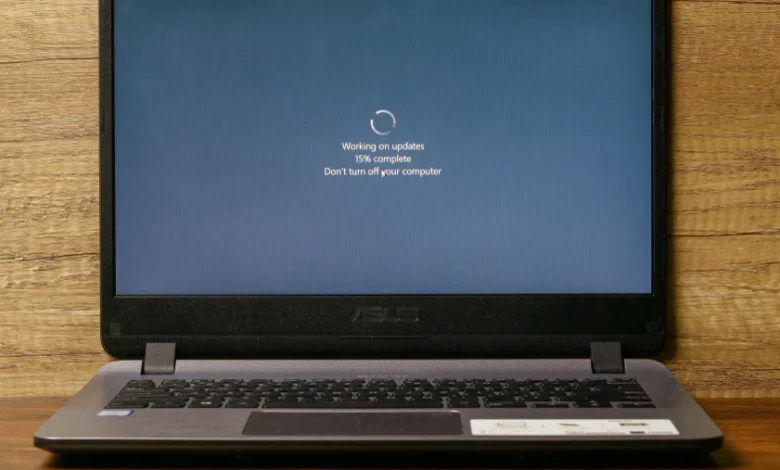
Microsoft Corp. has shattered previous cybersecurity records by releasing software updates to address 570 security vulnerabilities across its Windows operating systems and associated software suite, a figure that nearly triples the previous record set only last month. This unprecedented surge in security patches marks a pivotal moment in the history of software maintenance, with Microsoft officially attributing the massive volume to the integration of artificial intelligence in vulnerability discovery and analysis. The July 2026 Patch Tuesday release signals a paradigm shift in how software giants manage code security, moving from human-led manual audits to high-velocity, AI-augmented scanning processes that are uncovering flaws at a rate previously thought impossible.
Among the 570 vulnerabilities addressed in this month’s release, approximately 60 have been classified with a "critical" severity rating. This classification indicates that the flaws could allow malicious actors or automated malware to gain full remote control over a target Windows device with minimal or no interaction from the end user. Furthermore, the update includes fixes for three "zero-day" vulnerabilities—flaws that were known to the public or already being exploited by hackers before a formal patch was available. Two of these zero-days were confirmed by Microsoft to be actively exploited in the wild at the time of the release, heightening the urgency for enterprise and individual users to secure their systems.
The AI Catalyst: A New Era of Vulnerability Discovery
The primary driver behind this "record-smashing" volume of patches is the rapid advancement and deployment of generative AI and machine learning tools within Microsoft’s security divisions. Pavan Davuluri, Microsoft’s Executive Vice President, emphasized in an official briefing that the cybersecurity landscape is undergoing a fundamental transformation. According to Davuluri, AI is now capable of performing deep-code analysis across vast repositories, identifying complex logic errors and memory corruption issues that might have eluded human researchers for years.
"The pace of vulnerability discovery is changing with advances in AI making it possible to find more issues, faster, across more code," Davuluri stated. He noted that these new mechanisms accelerate both the discovery and the subsequent analysis of bugs, leading to a "higher volume of security updates included in each security release." This shift is part of Microsoft’s broader "Secure Future Initiative," which aims to harden the company’s software ecosystem against increasingly sophisticated nation-state actors and cyber-criminal syndicates.
However, the use of AI is a double-edged sword. While Microsoft uses these tools for defense, threat actors are leveraging similar technologies to reverse-engineer patches and develop functional exploits in a fraction of the time it once took. This "AI arms race" has forced software vendors to increase their patch cadence, leading to the massive clusters of updates seen in mid-2026.
Analysis of Key Vulnerabilities and Zero-Days
The July update is particularly heavy on Elevation of Privilege (EoP) vulnerabilities, with approximately 250 such flaws addressed. These bugs are highly sought after by attackers because they allow a user with limited access to gain administrative or "system-level" permissions, effectively taking over the machine.
Three vulnerabilities stood out due to their immediate threat level:
-
CVE-2026-56155 (Active Directory Federation Services): This zero-day vulnerability allows for an elevation of privilege within Active Directory environments. Because Active Directory is the backbone of identity management for most global corporations, a flaw here could allow an attacker to move laterally across an entire corporate network, compromising thousands of accounts.
-
CVE-2026-56164 (Microsoft SharePoint): Another zero-day currently being exploited, this SharePoint vulnerability allows attackers to gain unauthorized rights within a collaborative environment. Given SharePoint’s role in storing sensitive corporate documents, this flaw poses a significant risk for data exfiltration and corporate espionage.
-
CVE-2026-50661 (Windows BitLocker): This security feature bypass affects BitLocker drive encryption. While it requires physical access to the device, the flaw could allow an attacker to bypass encryption and access sensitive data on a stolen or lost laptop. Microsoft noted that while this bug was detailed publicly before the patch, they had not yet seen widespread active exploitation.
Perhaps most concerning for the burgeoning AI sector is CVE-2026-48561, a remote code execution (RCE) flaw found in Microsoft Copilot. With a Common Vulnerability Scoring System (CVSS) score of 9.6, this is one of the most dangerous bugs in the July batch. Jack Bicer, director of vulnerability research at Action1, explained that an attacker could exploit this by hosting a malicious website. When a user visits the site via Microsoft Edge for Android, the browser could be forced to send specially crafted prompts to Copilot, executing malicious code on the user’s behalf.
The Crisis of the Exploitability Index
As the volume of patches grows, industry experts are beginning to question the reliability of traditional risk assessment metrics. For years, Microsoft has utilized an "Exploitability Index" to help IT administrators prioritize which patches to install first. This index provides a forecast of how likely a vulnerability is to be exploited by hackers.
Satnam Narang, a senior staff research engineer at Tenable, argues that this human-centric indexing system is failing in the age of AI. For instance, the SharePoint zero-day fixed this month was originally labeled by Microsoft as "Exploitation Less Likely," yet it was added to the Cybersecurity and Infrastructure Security Agency (CISA) "Known Exploited Vulnerabilities" list on July 1, well before the patch was released.
Narang pointed to recent research involving Anthropic’s "Mythos Preview" model, which demonstrated that AI could generate working proof-of-concept exploits for 13 out of 14 vulnerabilities that human analysts had deemed "unlikely" to be exploited. "The exploitability index is centered around humans, not AI tools," Narang said. "As these tools continue to improve, defense needs to improve alongside it." This suggests that IT departments can no longer rely on vendor-provided "likelihood" scores and must instead treat almost all critical patches as high-priority.
Industry-Wide Trends: The "New Normal" for IT Departments
Microsoft is not alone in its struggle to manage the deluge of AI-discovered flaws. The July 2026 reporting period has seen a synchronized surge in security bulletins across the entire tech sector.
- Adobe: The creative software giant announced it is moving to a twice-monthly security bulletin schedule, publishing on the second and fourth Tuesday of every month. Adobe also cited AI-driven discovery as the reason for the increased frequency.
- Google: In June 2026, Google released a staggering 900+ security fixes for the Android ecosystem and Chrome browser, a record for the company.
- Cisco and Oracle: Both companies have moved toward "continuous patching" models, breaking away from traditional quarterly cycles to address the speed of modern threats.
Chris Goettl, Vice President of Security Product Management at Ivanti, noted that this trend is creating a "patching crisis" for enterprise IT teams. "The sheer volume of updates is reaching a breaking point for manual testing and deployment," Goettl observed. "Organizations are being forced to choose between the risk of an unpatched system and the risk of a patch breaking a critical business application."
Chronology of the July Update
The lead-up to this record-breaking release followed a tense timeline for security researchers:
- June 25, 2026: Independent researchers report a surge in "prompt injection" vulnerabilities affecting Microsoft Copilot.
- July 1, 2026: CISA issues an emergency alert regarding the SharePoint zero-day (CVE-2026-56164), noting it is being used in targeted attacks against government contractors.
- July 5, 2026: Microsoft’s internal AI-fuzzing tools flag a record number of memory-handling bugs in the Windows Kernel.
- July 9, 2026 (Morning): Microsoft Executive VP Pavan Davuluri publishes a blog post preparing the industry for a "higher volume" of updates.
- July 9, 2026 (10:00 AM PST): Microsoft officially releases the 570-patch payload, the largest in its history.
Strategic Recommendations and Implications
For the average Windows user and corporate IT administrator, the July 2026 Patch Tuesday represents a daunting challenge. The high volume of changes to the operating system increases the statistical likelihood of "regressions"—errors where a security fix inadvertently breaks other software functionality.
Security experts recommend a tiered approach to this month’s updates. Critical infrastructure and systems exposed directly to the internet (such as SharePoint servers and Active Directory controllers) should be patched immediately due to the active exploitation of zero-days. However, for general workstations, a brief "soak period" of 48 to 72 hours may be advisable to ensure the patches do not cause widespread system instability or "Blue Screen of Death" (BSOD) loops.
The broader implication of this release is clear: the era of predictable, manageable software maintenance is over. As AI continues to peel back the layers of legacy code, the number of vulnerabilities discovered will likely remain at these elevated levels. The cybersecurity industry must now evolve to include AI-driven patching and automated testing to keep pace with the AI-driven discovery of flaws. Failure to do so will leave a widening gap between the discovery of a hole and the ability of a human-led team to plug it.
Related posts: