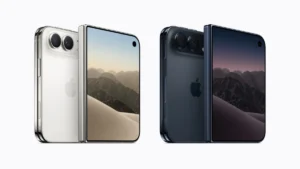
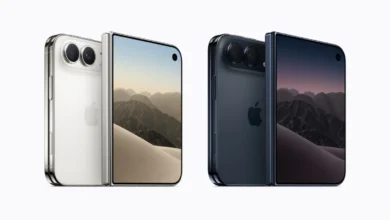
Apple updates official Design Resources portal to include iPhone Duo and iPhone 18 Pro assets following the Surprise and Shine event.

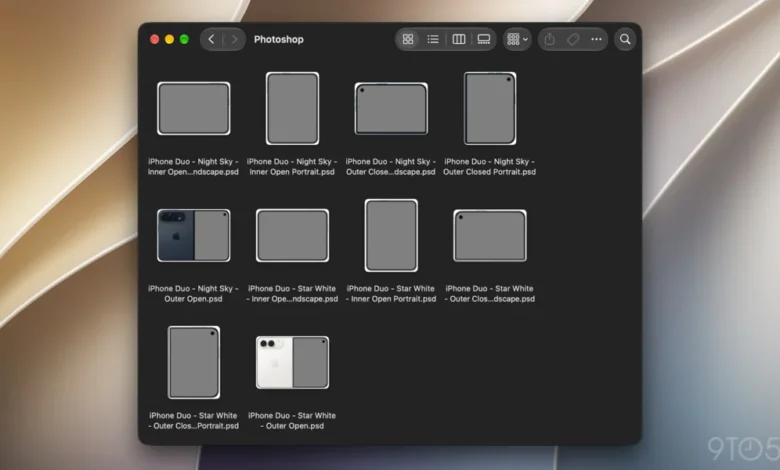
The recent conclusion of Apple’s “Surprise and Shine” keynote has sent ripples through the technology sector, signaling a pivotal shift in the company’s mobile hardware strategy. Following the formal introduction of the groundbreaking iPhone Duo—Apple’s first foray into the foldable smartphone market—and the high-performance iPhone 18 Pro, the company has taken swift action to support its developer and designer communities. Apple has officially updated its comprehensive Design Resources portal, providing professional-grade assets that allow creators to integrate these new form factors into their digital mockups, marketing materials, and software interfaces.
Expanding the Apple Design Ecosystem
For UI/UX designers, creative directors, and software developers, the Apple Design Resources portal serves as the definitive source for maintaining brand consistency across the ecosystem. By offering high-fidelity hardware and software assets, Apple ensures that third-party applications and marketing materials maintain the same aesthetic polish as the company’s own first-party software.
The latest update introduces a suite of new assets, including Photoshop (PSD) files and high-resolution PNGs, covering the distinct silhouettes of the new devices. Most notably, the portal now includes visual representations of the iPhone Duo, allowing designers to showcase the foldable device in both its fully open tablet-like state and its closed, compact configuration. Given that the iPhone Duo represents a new hardware paradigm for the company, these assets are critical for developers who must now account for varying screen aspect ratios and hinge-integrated user interfaces.
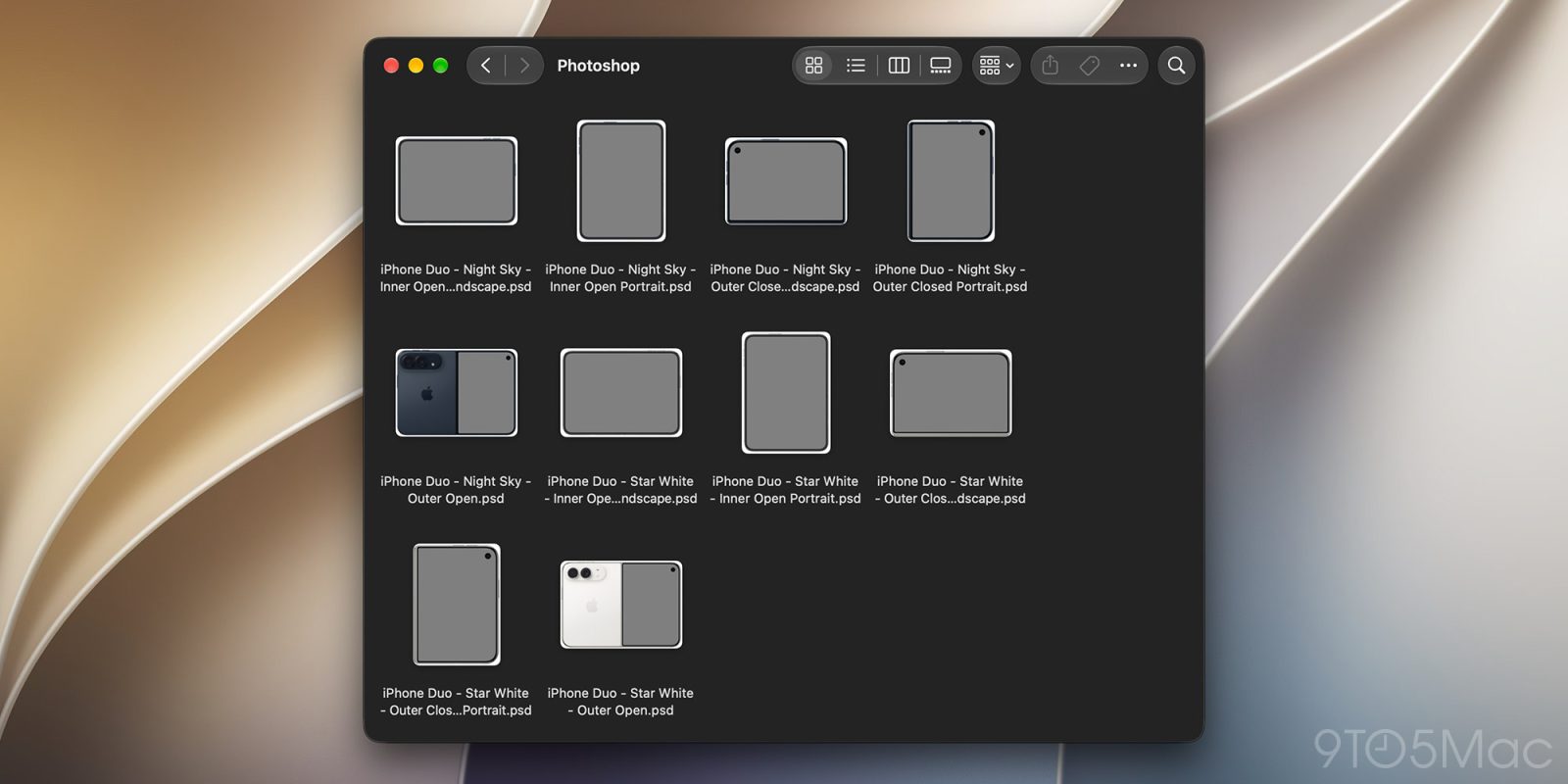
In addition to the foldable assets, the portal now features updated bezels for the iPhone 18 Pro. These assets highlight the device’s refined hardware, specifically the iteration of the Dynamic Island, which appears to feature a reduced footprint compared to previous generations, maximizing the available active display area.
Chronology of the Surprise and Shine Event
The release of these design assets follows a highly choreographed product reveal that underscored Apple’s current R&D trajectory. The “Surprise and Shine” event, held in September 2026, was characterized by a focus on hardware modularity and display efficiency.
- Early 2026: Persistent industry rumors regarding a "Project V" foldable device began to gain traction, with supply chain analysts suggesting that Apple was stress-testing hinge durability and display folding mechanisms.
- September 9, 2026: Apple officially unveiled the iPhone Duo. The device was positioned not just as a consumer handset, but as a productivity tool capable of multitasking in ways previously limited to the iPad line.
- September 9, 2026 (Afternoon): Simultaneously, the iPhone 18 Pro was introduced as the definitive "Pro" device, emphasizing a focus on optical advancements and internal computational power.
- September 9, 2026 (Evening): Apple updated its Design Resources portal to provide developers with the necessary tools to begin updating their applications to support these new screen dimensions.
This rapid turnaround—making design assets available almost immediately after the keynote—reflects Apple’s desire to ensure that the App Store is ready for the new hardware on day one. By enabling developers to iterate on their designs immediately, Apple minimizes the transition friction typically associated with new screen form factors.
Technical Context and Supporting Data
The introduction of the iPhone Duo marks a significant departure from the standard "slab" design that has defined the iPhone since its inception in 2007. The transition to a foldable architecture requires a complete rethinking of iOS interaction patterns. According to internal documentation provided alongside the new design assets, the iPhone Duo operates in three distinct states: Closed (Compact Mode), Partially Folded (Flex Mode), and Open (Full-Screen Mode).
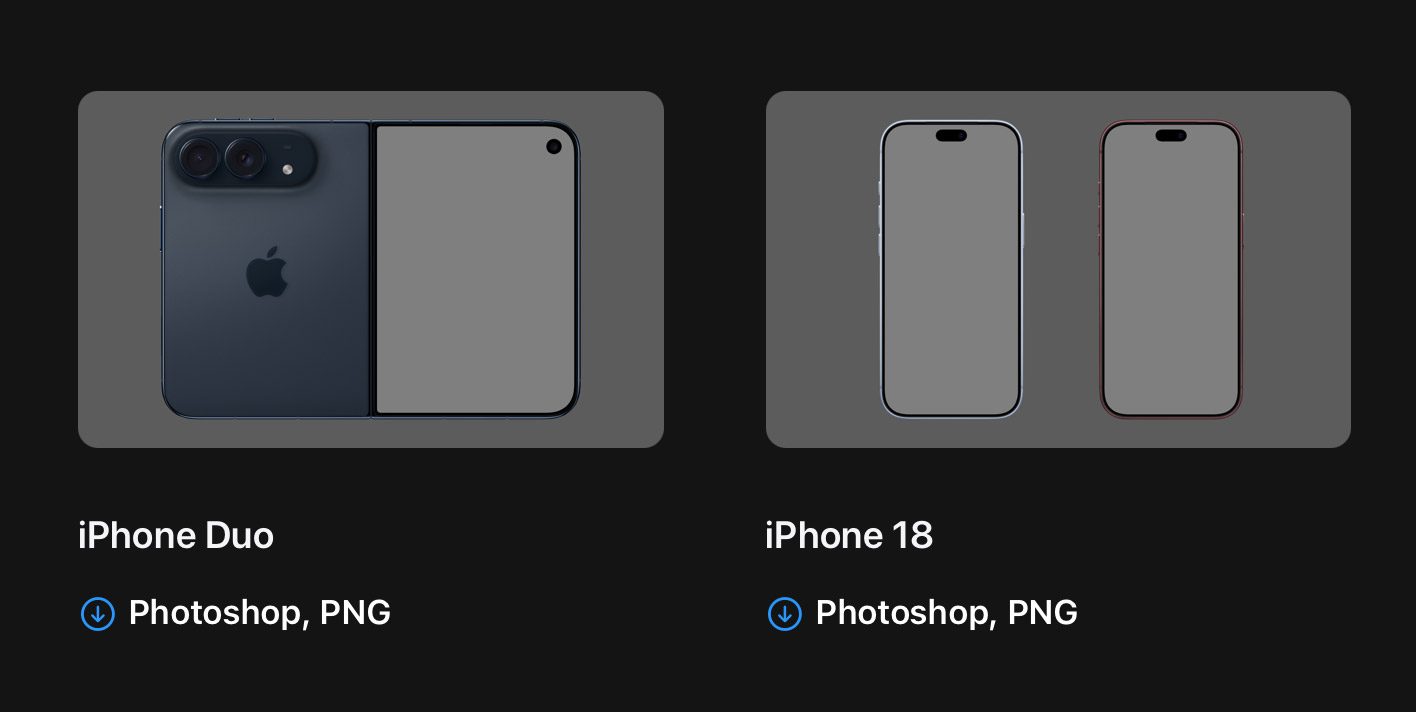
The iPhone 18 Pro, while adhering to the traditional form factor, continues to refine the user experience through hardware-level adjustments. The updated bezels available on the portal confirm that the Dynamic Island has undergone further optimization. Data from the design files suggests a 15% reduction in the total surface area occupied by the camera and sensor housing compared to the iPhone 17 Pro. This change, while seemingly minor, allows for a more immersive viewing experience for media consumption and gaming, which are central pillars of the iPhone 18 Pro’s marketing strategy.
Implications for the Developer Community
The availability of these resources is more than a mere convenience; it is a necessity for the professional design community. When Apple introduces a new device, the immediate challenge for app developers is to ensure that their software does not appear "letterboxed" or improperly scaled.
By providing these Photoshop and PNG files, Apple allows designers to:
- Create Accurate Prototypes: Designers can now visualize how their app layouts react to the crease or the transition between the folded and unfolded states of the iPhone Duo.
- Marketing Continuity: Agencies and marketing teams can produce promotional imagery that aligns with Apple’s strict design language, ensuring that the new hardware is represented accurately in third-party advertisements.
- Interface Optimization: The assets allow for precise alignment of UI elements relative to the new, thinner bezels of the iPhone 18 Pro, ensuring that buttons and interactive elements remain accessible despite the smaller footprint of the Dynamic Island.
Industry and Expert Analysis
Market analysts have noted that the release of these assets is a clear indicator that Apple is prioritizing the software-hardware integration cycle. By equipping developers with these tools immediately, the company is effectively crowdsourcing the optimization of the App Store for its new hardware.

"The immediate availability of these design assets is a strategic move to ensure that the iPhone Duo is not just a hardware novelty, but a functional platform," says one industry analyst. "If the apps don’t look good on the foldable display, the device fails. Apple understands this, which is why they are putting these tools in the hands of the people who actually build the user experience."
Furthermore, the focus on the iPhone 18 Pro’s bezel reduction signals that Apple is continuing to push toward an "all-screen" aesthetic. This trend necessitates that developers move away from hard-coded dimensions and toward more fluid, adaptive design systems—a shift that Apple has been encouraging through its design guidelines for several years.
Accessing the Resources
For those looking to integrate these new devices into their workflows, the assets can be accessed through the official Apple Design Resources portal. The files are categorized by product and are available in a variety of formats, including SVG for vector-based workflows and high-resolution PNGs for quick mockups.
In addition to the physical hardware assets, the portal continues to offer a wealth of supporting materials, including system fonts, SF Symbols, and standardized badges for services such as Apple Health and Apple Wallet. These resources, combined with the new device bezels, provide a comprehensive toolkit for anyone involved in the Apple development ecosystem.

Broader Impact on the Mobile Landscape
The launch of the iPhone Duo and the subsequent release of its design assets will likely set a new standard for the foldable market. While competitors have experimented with foldable devices for years, the entry of a company with as large a developer base as Apple typically shifts the entire industry toward standardizing how foldable UIs should function.
As developers begin to adopt these new assets, we can expect a wave of updates to popular applications in the coming months. These updates will likely focus on leveraging the dual-screen capabilities of the iPhone Duo, potentially introducing features like side-by-side multitasking or secondary-display content interaction that were previously impossible on a single-screen device.
The "Surprise and Shine" event has set the stage for a new era of Apple hardware, and by providing these design resources, the company has ensured that the creative and development communities have the foundation required to build the next generation of mobile experiences. Whether it is the fold-ready interface of the iPhone Duo or the optimized display real estate of the iPhone 18 Pro, the tools for innovation are now in the hands of the developers.
Related posts: