U.S. Treasury Secretary Scott Bessent Signals Potential Sanctions on Chinese AI Firms for Intellectual Property Theft

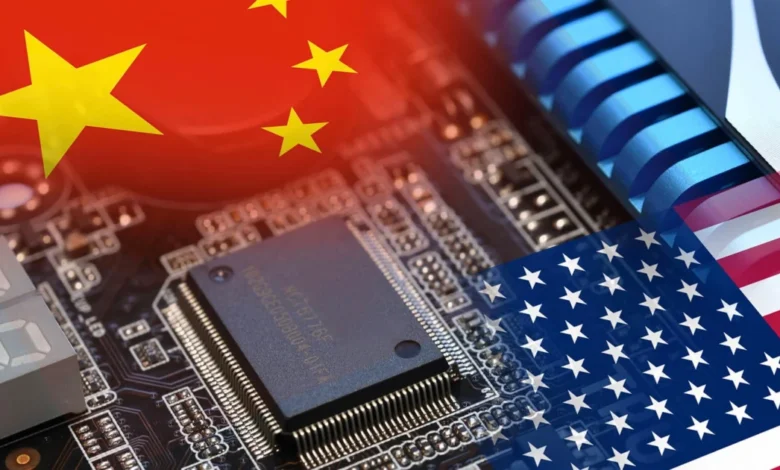
The United States is poised to take a more aggressive stance against Chinese artificial intelligence (AI) companies accused of intellectual property (IP) theft, with Treasury Secretary Scott Bessent issuing a stern warning of potential sanctions. Bessent explicitly stated that the administration would not tolerate the misappropriation of American technological advancements, signaling a significant escalation in the ongoing trade and technology tensions between the two global powers.
The threat of sanctions comes at a critical juncture, as Chinese AI models are increasingly demonstrating capabilities that challenge the United States’ long-held dominance in the technology sector. The recent release of Moonshot AI’s Kimi K3 model, which exhibits impressive performance despite operating without access to the most advanced U.S.-developed computer chips, has amplified concerns within American tech circles. This development underscores a growing competitive landscape where innovation is not only rapid but also subject to intense scrutiny regarding its origins and methods of development.
A Growing Tide of Concern: The IP Theft Allegations
For months, American technology companies have been voicing their anxieties to the White House regarding the potential for foreign firms, particularly those in China, to replicate and then disseminate their proprietary AI technologies, often under the guise of open-source initiatives. This concern is rooted in the fundamental nature of AI development, where vast datasets and sophisticated algorithms form the bedrock of innovation.
A significant flashpoint occurred earlier this year when Anthropic, a prominent AI research company, formally accused Moonshot AI, alongside two other Chinese AI firms, DeepSeek and MiniMax, of "illicitly" extracting the capabilities of its advanced language model, Claude. This practice, known as "distillation," involves using the output of a highly sophisticated, proprietary "teacher" model to train a smaller, more accessible "student" model. While distillation is reportedly a common technique within the AI industry, Anthropic’s accusation highlights the ethical and legal boundaries being tested. The core of the complaint lies in the argument that this process, when applied without authorization to proprietary models, constitutes a form of intellectual property theft, undermining the substantial investment and research that went into developing the original technology.
The implications of such practices extend beyond mere competitive disadvantage. They raise questions about the integrity of the AI development ecosystem and the protection of intellectual property rights in an increasingly interconnected digital world. If advanced AI capabilities can be so readily replicated and disseminated, it could stifle further investment in cutting-edge research and development, as companies become hesitant to pour resources into innovations that may be quickly appropriated by rivals.
The Irony of "Pot Calling the Kettle Black"
The current U.S. government’s stance on IP theft in AI development is met with a significant degree of irony, particularly from the perspective of those in creative industries who have long voiced concerns about AI models being trained on copyrighted material without permission or compensation. This "pot calling the kettle black" scenario has not gone unnoticed.
Microsoft CEO Satya Nadella, in a widely discussed tweet earlier this month, obliquely addressed this apparent hypocrisy. He stated, "While the great innovation that comes from model providers having fair use rights to train models on public data is needed, I find it ironic that the status quo is to then turn around and impose restrictive terms on distillation." Nadella’s comment suggests a perception that some AI companies are advocating for broad access to data for their own training purposes, while simultaneously seeking to prevent others from using their models’ outputs for similar training processes. This highlights a complex and often contentious debate surrounding data usage, copyright, and the evolving definition of "fair use" in the age of AI.
Adding further weight to the U.S. government’s concerns, Secretary Bessent revealed that watermarks, a form of digital identification often embedded in proprietary AI models to track their origin and usage, have been discovered on Chinese AI models. This observation draws a parallel to past controversies, such as the case where Getty Images alleged that its watermark could be reproduced on images generated by Stability AI’s Stable Diffusion model. Such instances fuel the argument that Chinese firms are not merely innovating independently but are actively leveraging or mimicking the outputs of American AI systems without proper attribution or licensing.
A Timeline of Escalation and Potential Policy Shifts
The recent pronouncements by Secretary Bessent are not isolated incidents but rather the latest development in a series of escalating concerns and actions.
- Early 2024: Anthropic formally accuses Moonshot AI, DeepSeek, and MiniMax of illicitly extracting Claude’s capabilities. This marks a significant public accusation of intellectual property theft within the AI domain.
- Months Leading Up to July 2026: American technology companies begin to express their concerns to the White House about potential IP theft by foreign AI firms and the implications of open-source AI models.
- July 2026 (Specific Date Unclear): Microsoft CEO Satya Nadella tweets about the irony of AI companies seeking broad data access for training while imposing restrictions on distillation.
- July 2026 (Tuesday): U.S. Treasury Secretary Scott Bessent states on Fox Business that the administration is prepared to sanction Chinese AI firms for IP theft and notes the discovery of U.S. LLM watermarks on Chinese models.
- July 2026 (This Week): Axios reports that the U.S. government is considering a comprehensive ban on Chinese open-source AI models.
- Coming Days or Weeks: Secretary Bessent indicates that the Trump administration will be actively investigating these matters.
This timeline suggests a deliberative and increasingly firm approach from the U.S. government. The shift from expressing concerns to issuing direct threats of sanctions, coupled with the exploration of outright bans, indicates a significant recalibration of U.S. policy toward Chinese AI development.
Supporting Data and the Global AI Landscape
The global AI market is experiencing explosive growth, with significant investments and rapid advancements being made by both the United States and China. According to various market research reports, the AI market size was valued in the hundreds of billions of dollars in the early 2020s and is projected to reach trillions by the end of the decade. This immense economic potential fuels the competitive drive and, consequently, the heightened concerns over IP protection.
The U.S. has historically been a leader in AI research and development, boasting a strong ecosystem of universities, research institutions, and private companies that have driven innovation. Silicon Valley, in particular, has been a hub for AI breakthroughs. However, China has rapidly closed the gap, investing heavily in AI research, talent, and infrastructure. Its government has made AI a national priority, aiming to become a global leader in the field by 2030.
This intense competition creates a fertile ground for disputes over intellectual property. The very nature of AI, particularly large language models (LLMs), involves the synthesis and application of vast amounts of data. Distinguishing between legitimate innovation and IP infringement can be challenging, especially when dealing with open-source models that are designed for widespread adoption and modification.
Broader Implications and Analysis
The potential imposition of sanctions and the consideration of a ban on Chinese open-source AI models carry significant implications for the global technology landscape.
- Geopolitical Tensions: This move will undoubtedly exacerbate already strained U.S.-China relations, potentially leading to retaliatory measures and a further fragmentation of the global technology supply chain.
- Innovation and Access: A ban on open-source models could limit access to advanced AI tools for researchers and developers outside of major AI-producing nations, potentially slowing down global innovation and creating a divide in AI capabilities.
- Economic Impact: Sanctions could disrupt trade, impact companies that rely on Chinese AI technologies, and lead to increased costs for consumers and businesses.
- The Future of Open Source: The debate over distillation and IP theft raises fundamental questions about the future of open-source AI. While open-source principles foster collaboration and accessibility, they also present challenges in protecting the intellectual property of the original creators. Striking a balance between these competing interests will be crucial.
- Regulatory Scrutiny: The U.S. government’s actions signal a growing trend toward increased regulatory scrutiny of AI development, particularly concerning data privacy, ethical considerations, and intellectual property. Other nations may follow suit, leading to a more complex and fragmented global regulatory environment for AI.
The discovery of U.S. LLM watermarks on Chinese models is a tangible piece of evidence that could bolster the U.S. case for sanctions. Watermarks are designed to be difficult to remove and serve as a digital fingerprint. Their presence on competing models suggests a direct appropriation of technology, rather than independent development.
The Trump administration’s stated intention to "look into the matter in the coming days or weeks" suggests that this is not merely a rhetorical threat but the precursor to concrete policy actions. The reported consideration of a total ban on Chinese open-source models, if implemented, would represent a drastic measure, signaling a high level of concern and a willingness to employ significant economic levers to protect perceived U.S. technological interests.
As the AI race intensifies, the United States and China find themselves at a critical juncture. The accusations of IP theft and the U.S. response highlight the complex interplay of innovation, competition, and national security in the rapidly evolving field of artificial intelligence. The decisions made in the coming weeks and months will have far-reaching consequences for the global technology industry and the broader geopolitical landscape.