Anduril Industries Partners With Qualcomm to Launch BlueChip Domestic Laptop Line by 2027

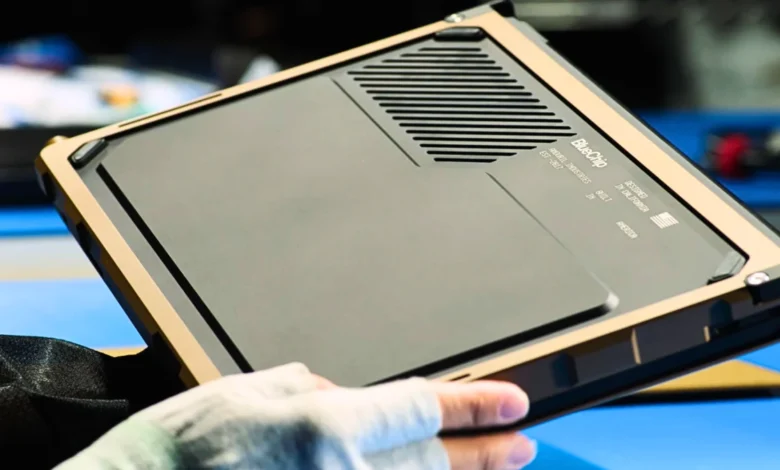
Defense technology innovator Anduril Industries has formally announced a strategic venture into domestic computer hardware manufacturing, unveiling plans to produce a secure, high-performance laptop line dubbed BlueChip. Revealed through a joint corporate announcement with semiconductor giant Qualcomm, the initiative represents a concerted effort to onshore critical computing supply chains and reduce reliance on foreign manufacturing hubs, particularly in East Asia. The company has confirmed that pre-orders for the BlueChip devices will commence in 2027, backed by functional prototypes that are already undergoing internal evaluation and testing phases.
The BlueChip initiative signals a significant expansion for Anduril, a firm traditionally recognized for its autonomous military drones, counter-unmanned aerial systems (C-UAS), command-and-control software platforms, and border security hardware. By moving into the personal computer and enterprise workstation market, Anduril is directly addressing long-standing vulnerabilities in the United States defense and critical infrastructure technology stack. The hardware will leverage Qualcomm’s Snapdragon X Series System-on-Chip (SoC) architecture, tapping into advanced ARM-based processing capabilities designed to deliver high computational power alongside exceptional energy efficiency.
Main Facts of the BlueChip Initiative
At the core of the announcement is the BlueChip product line, engineered specifically to meet the rigorous security, reliability, and performance demands of government agencies, defense contractors, and enterprise organizations operating in sensitive environments. According to official corporate disclosures, Anduril has already developed operational prototypes of the hardware, proving the technical feasibility of the design ahead of the targeted 2027 commercial rollout.
A central pillar of the BlueChip strategy is supply chain resilience. Anduril has reported that approximately 90 percent of the procurement cost for the components utilized in the current prototypes originates from suppliers located within the United States or trusted allied nations. This metric underscores a deliberate pivot away from single-source manufacturing ecosystems that have historically exposed Western technology sectors to geopolitical disruptions, trade restrictions, and intellectual property risks.
Furthermore, Anduril has established a long-term roadmap aimed at achieving a fully domestic supply chain. This objective entails not only final assembly within American borders—a practice already adopted by several niche ruggedized computer manufacturers—but also the sourcing of raw materials, printed circuit board fabrication, and advanced semiconductor packaging domestically or within allied territories.
The integration of Qualcomm’s Snapdragon X Series SoC is another critical technical detail. These processors incorporate advanced neural processing units (NPUs) capable of handling local artificial intelligence and machine learning workloads without relying on cloud-based infrastructure. For military personnel, intelligence analysts, and corporate executives handling classified or proprietary data, on-device AI processing represents a major security enhancement, minimizing the risk of data interception during transmission.
Background Context and Geopolitical Drivers
The launch of the BlueChip initiative does not occur in a vacuum; it is the direct result of compounding vulnerabilities within global electronics supply chains that have drawn intense scrutiny from lawmakers, defense officials, and industry leaders over the past decade. For decades, the vast majority of the world’s consumer electronics, personal computers, and semiconductor components have been manufactured in East Asia, creating a profound dependency on overseas fabrication plants and logistics networks.
The fragility of this globalized supply chain model was starkly highlighted during the COVID-19 pandemic, which triggered severe shortages of semiconductors and electronic components across multiple industries. More recently, escalating geopolitical tensions surrounding Taiwan, trade disputes involving critical minerals, and concerns regarding state-sponsored cyber espionage have transformed supply chain security into a matter of national security.
Federal policymakers have responded with landmark legislative packages, most notably the CHIPS and Science Act of 2022, which allocates tens of billions of dollars to subsidize domestic semiconductor manufacturing. While the primary focus of the CHIPS Act has been advanced wafer fabrication facilities—commonly known as fabs—industry observers have repeatedly emphasized that building chips domestically is only half the battle. The United States must also rebuild its capability to package, test, and integrate those semiconductors into finished products such as servers, tactical gear, and enterprise laptops.
Anduril, founded in 2017 by Palmer Luckey, Trae Stephens, Brian Schimpf, and Matt Grimm, was built on the premise that traditional defense primes were moving too slowly to adopt modern software, artificial intelligence, and commercial hardware innovations. By applying Silicon Valley venture-backed methodologies to national security challenges, Anduril has rapidly scaled into a prime contractor for the Department of Defense. Entering the computer manufacturing space is a logical extension of the company’s mission to secure the technological infrastructure of the United States and its allies.
Chronology and Development Timeline
While the official commercial rollout of the BlueChip laptop is scheduled for 2027, the groundwork for this initiative has been laid over several years through incremental developments in domestic manufacturing capacity, software engineering, and strategic corporate partnerships.
The partnership with Qualcomm represents the culmination of extensive engineering collaboration focused on adapting high-efficiency mobile architectures for high-security, professional environments. Qualcomm’s Snapdragon X Series, initially deployed in commercial consumer laptops, offers a compelling alternative to traditional x86 architectures by combining multi-core CPU performance with robust security features baked directly into the silicon.
Prior to the public announcement, Anduril quietly assembled engineering teams dedicated to hardware design, firmware development, and secure supply chain auditing. The successful fabrication of functional prototypes indicates that the foundational hardware architecture has cleared initial design reviews. Between now and the 2027 order fulfillment date, Anduril will likely subject these prototypes to rigorous testing, government certification processes, and pilot deployments with select defense and enterprise partners.
The timeline leading up to the 2027 launch is expected to follow several distinct phases:
- Prototype Refinement and Certification: Securing necessary federal and military certifications for hardware security, electromagnetic compliance, and cryptographic integrity.
- Supply Chain Vetting: Expanding partnerships with domestic and allied component suppliers to drive the 90 percent allied-sourcing metric closer to 100 percent domestic production.
- Manufacturing Facility Establishment: Securing or expanding physical assembly and testing facilities within the United States capable of scaling production to meet enterprise and government demand.
- Initial Order Intake (2027): Opening the order books for government agencies, defense contractors, and select enterprise clients.
Supporting Data and Technical Architecture
Evaluating the viability of the BlueChip initiative requires examining the economic and technical realities of computer manufacturing in the United States. Historically, high labor costs, stringent environmental regulations, and the absence of an integrated domestic component ecosystem have made the mass production of consumer-grade laptops economically unviable on American soil.
However, Anduril’s strategy is not aimed at competing directly with low-cost consumer electronics manufacturers in the retail market. Instead, the BlueChip line targets the high-value, high-security segment of the market—sectors where cost is secondary to security, reliability, and supply chain integrity. Federal agencies, defense departments, and critical infrastructure operators routinely pay premium prices for specialized hardware that meets stringent tamper-resistance and provenance standards.
The decision to utilize Qualcomm’s Snapdragon X platform is supported by macroeconomic trends in the semiconductor industry. ARM-based architectures have demonstrated significant performance-per-watt advantages over traditional x86 processors, making them ideal for mobile computing environments where battery life and thermal management are critical. Furthermore, Qualcomm has invested heavily in hardware-based security enclaves, secure boot protocols, and cryptographic acceleration features that align closely with federal cybersecurity mandates, such as those outlined by the National Institute of Standards and Technology (NIST).
Regarding supply chain geography, the metric of 90 percent procurement costs originating from the U.S. and allied nations represents a formidable benchmark. Achieving this level requires sourcing memory, storage controllers, displays, chassis materials, and power management integrated circuits from trusted jurisdictions such as South Korea, Japan, Taiwan, members of the European Union, and domestic American manufacturers. By insulating the supply chain from jurisdictions considered high-risk by national security agencies, Anduril aims to eliminate the threat of hardware-level trojans, unauthorized firmware modifications, and supply chain interdiction.
Official Responses and Industry Reactions
The announcement of the BlueChip initiative has generated widespread discussion across both the defense technology sector and the broader consumer electronics industry. While the partnership between a defense tech unicorn and a leading mobile chip designer is unconventional, industry analysts view it as a pragmatic response to shifting government procurement priorities.
Representatives from Anduril and Qualcomm have emphasized that the collaboration is designed to bridge the gap between commercial technological innovation and national security requirements. In official statements accompanying the launch, executives highlighted the urgency of re-establishing domestic manufacturing capabilities not merely as an economic endeavor, but as an imperative for sovereign technological independence.
Defense procurement experts have similarly reacted with cautious optimism. For years, acquisition officials within the Pentagon have expressed frustration over the vulnerability of the defense supply chain, noting that even advanced military systems often rely on commercial off-the-shelf components manufactured in geopolitical rival nations. A domestic laptop line built on a trusted, allied-sourced supply chain directly addresses recommendations put forth by various defense task forces and congressional oversight committees.
Competitors in the ruggedized and enterprise computing space may view Anduril’s entry as a disruptive force. Traditional defense contractors that produce rugged laptops and workstations have historically operated with legacy supply chains and slower development cycles. Anduril’s agile approach, combined with Qualcomm’s aggressive push into the personal computing processor market, could pressure established players to accelerate their own domestic manufacturing initiatives.
Broader Impact and Strategic Implications
The implications of the BlueChip initiative extend far beyond the introduction of a new enterprise laptop; they touch upon broader questions of industrial policy, national security, and the future of global technology manufacturing.
As nation-states increasingly view technology through a geopolitical lens, the concept of "technological sovereignty" has gained prominence. Governments are no longer willing to tolerate deep dependencies on foreign manufacturing nodes for critical infrastructure, communications equipment, and computing hardware. By spearheading an effort to rebuild American computer manufacturing, Anduril is positioning itself at the vanguard of this industrial policy shift.
If successful, the BlueChip model could serve as a blueprint for other technology sectors seeking to onshore hardware production. It demonstrates that while complete immediate self-sufficiency in complex electronics remains challenging, a phased approach—beginning with allied sourcing and transitioning toward fully domestic supply chains—is a viable path forward.
Moreover, the integration of advanced neural processing units via the Snapdragon X Series highlights the convergence of personal computing and artificial intelligence in secure environments. As military and government operations become increasingly reliant on localized AI tools for data analysis, intelligence processing, and tactical decision-making, the hardware running those algorithms must be impervious to tampering. A domestically manufactured, secure laptop equipped for local AI workloads addresses a critical operational gap for modern defense personnel.
In conclusion, Anduril Industries’ unveiling of the BlueChip laptop line represents a bold and calculated step toward securing the technological backbone of the United States and its allies. By combining Qualcomm’s advanced semiconductor technology with a rigorous commitment to domestic and allied supply chains, the company is challenging the status quo of global electronics manufacturing. As the technology moves from functional prototypes toward its 2027 commercial rollout, it will serve as a key test case for the feasibility and scalability of onshoring advanced computer hardware production in the twenty-first century.