Critical Security Flaw in 7-Zip XZ Archive Handling Exposes Users to Arbitrary Code Execution Risks

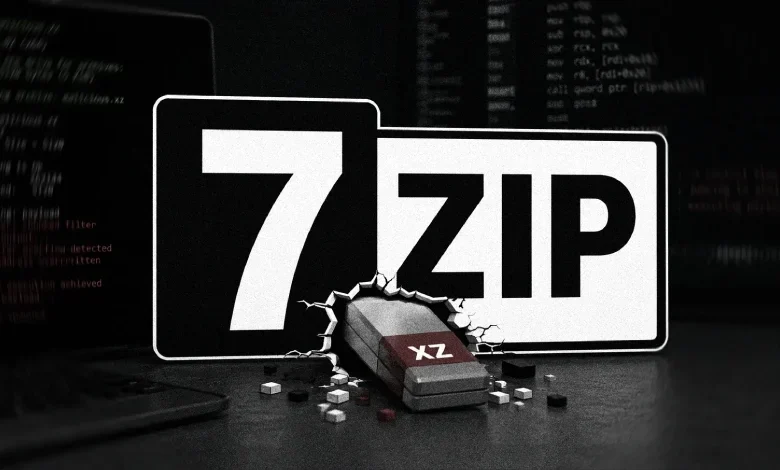
The widely utilized open-source file archiver 7-Zip has been identified as containing a significant security vulnerability that could allow for remote code execution when a user opens a specially crafted XZ archive. Registered as CVE-2026-14266, the flaw is categorized as a heap-based buffer overflow stemming from an error in how the application processes XZ chunked data. The vulnerability was publicly detailed by Trend Micro’s Zero Day Initiative (ZDI) following a coordinated disclosure process with the software’s developers. While the vulnerability requires user interaction to be exploited, its potential impact on endpoint security has prompted urgent calls for users and system administrators to update to the latest version of the software.
The discovery of CVE-2026-14266 adds to a growing list of memory-safety concerns involving archive utilities, which remain a primary vector for initial access in many cyberattack chains. Because 7-Zip is frequently integrated into third-party applications and automated scripts, the reach of this vulnerability extends beyond standalone desktop installations, potentially affecting a vast array of software that utilizes the 7-Zip compression libraries.
Technical Analysis of the Heap Buffer Overflow
At the core of CVE-2026-14266 is a memory management error within the XZ decoder component of 7-Zip. A heap-based buffer overflow occurs when an application writes more data to a heap-allocated memory block than it was intended to hold. In the context of 7-Zip, this occurs during the handling of XZ chunked data, specifically when the decoder processes output through various filters.
Technical analysis of the 7-Zip source code reveals that the vulnerability resided in the MixCoder_Code function located within the C/XzDec.c file. In versions prior to the fix, the decoder was incorrectly provided with the full length of the output buffer during each processing pass. It failed to account for the data that had already been written to the buffer in previous steps. Consequently, the decoder operated under the assumption that more memory was available than actually remained, leading to an out-of-bounds write condition.
An attacker can exploit this by creating a malicious XZ file with specific chunking parameters that trigger this miscalculation. When the victim attempts to extract or open this file using a vulnerable version of 7-Zip, the application overwrites adjacent memory on the heap. This corruption can be leveraged to hijack the execution flow of the process, allowing the attacker to run arbitrary code.
Chronology of Discovery and Remediation
The timeline for CVE-2026-14266 reflects a standard coordinated vulnerability disclosure (CVD) process, beginning in early June 2026. The flaw was identified and reported by Landon Peng of Lunbun LLC, who submitted the findings to the 7-Zip development team through the Zero Day Initiative.
- June 5, 2026: Initial vulnerability report submitted by Landon Peng to the 7-Zip development team.
- June 25, 2026: 7-Zip developers release version 26.02, which includes a silent fix for the XZ decoder vulnerability.
- July 15, 2026: Trend Micro’s Zero Day Initiative publishes security advisory ZDI-26-444, providing the first public details of the flaw and assigning it the CVE-2026-14266 identifier.
- July 20, 2026: Cybersecurity researchers and news outlets confirm the technical details of the patch and the historical presence of the flawed logic in previous versions of the software.
The release of the patch nearly three weeks before the public advisory allowed proactive users and automated update systems to secure installations before the vulnerability became common knowledge among potential threat actors.
Severity Assessment and CVSS Vector
The Zero Day Initiative has assigned CVE-2026-14266 a CVSS 3.0 score of 7.0, classifying it as a "High" severity vulnerability. While some initial reports speculated a "Critical" rating, the specific constraints of the exploit justify the High classification. The full CVSS vector is AV:L/AC:H/PR:N/UI:R/S:U/C:H/I:H/A:H.
The "Local" (AV:L) attack vector indicates that the vulnerability cannot be exploited directly over a network without user interaction. An attacker must deliver the malicious file to the victim—via email, a web download, or a shared drive—and the victim must manually open it. Furthermore, the "High" Attack Complexity (AC:H) suggests that creating a reliable exploit that bypasses modern memory protections (such as Address Space Layout Randomization or ASLR) is non-trivial.
Crucially, the code execution occurs within the context of the current 7-Zip process. On modern Windows environments, 7-Zip typically runs with a filtered standard-user token, even if the user is logged in as an administrator. This limits the attacker’s immediate reach to the privileges of the current user, preventing an immediate full-system compromise unless the 7-Zip process was specifically launched with elevated administrative privileges.

Broader Context of 7-Zip Vulnerabilities
CVE-2026-14266 is not an isolated incident but rather part of a series of memory-safety vulnerabilities discovered in 7-Zip throughout 2026. In April, the developers released version 26.01 to address a suite of issues identified by GitHub Security Lab. Among those was CVE-2026-48095, a heap-write overflow in the NTFS handler that received significant attention due to the release of a working proof-of-concept (PoC).
The recurring nature of these flaws highlights the inherent difficulty of safely parsing complex, untrusted file formats in languages like C and C++, which do not provide built-in memory safety. 7-Zip’s architect, Igor Pavlov, has historically focused on performance and high compression ratios, but the recent influx of security reports has shifted focus toward hardening the codebase.
The XZ format itself has been under intense scrutiny following the unrelated "XZ Utils" backdoor discovery in early 2024. While the current 7-Zip vulnerability is a traditional software bug rather than a malicious backdoor, the heightened sensitivity surrounding the XZ format has amplified the industry’s response to any flaws found in its decoders.
Supply Chain and Integration Risks
One of the most significant challenges posed by vulnerabilities in 7-Zip is its role in the global software supply chain. Many developers integrate 7-Zip’s source code or its dynamic link libraries (DLLs) into their own products to provide archive support. These "downstream" applications are often not updated as frequently as the standalone 7-Zip utility.
Enterprises must conduct a thorough audit of their software inventory to identify applications that may be bundling vulnerable versions of the 7-Zip XZ decoder. Since 7-Zip does not feature an auto-update mechanism, the responsibility for patching falls squarely on individual users and IT departments. In corporate environments, this often requires manual intervention or the use of centralized patch management tools to push the 26.02 installer to all endpoints.
The same flawed length handling found in CVE-2026-14266 has been traced back in the 7-Zip source code to at least version 21.07, released in 2021. This suggests that the vulnerability has been latent in the ecosystem for several years, potentially affecting a massive legacy install base.
Recommendations for Mitigation
The primary and most effective mitigation for CVE-2026-14266 is the immediate installation of 7-Zip version 26.02 or later. This version contains the necessary logic to correctly calculate buffer lengths in the MixCoder_Code function, effectively neutralizing the overflow condition.
For organizations unable to update immediately, the following defensive measures are recommended:
- Restrict File Types: Use email gateways and web filters to block or quarantine XZ files from untrusted external sources until patching is complete.
- Principle of Least Privilege: Ensure that users are not running archive utilities with administrative rights. This limits the potential impact of a successful exploit by containing the malicious code within a standard user context.
- Endpoint Detection and Response (EDR): Monitor for unusual child processes spawning from
7z.exeor7zFM.exe. Since an exploit would involve running code in the context of the archiver, unexpected network connections or shell executions from these processes are strong indicators of compromise. - Developer Audits: Software vendors who utilize the 7-Zip SDK should immediately recompile their applications using the updated source code provided in the 26.02 release.
Conclusion and Future Outlook
The disclosure of CVE-2026-14266 serves as a reminder of the persistent security risks associated with legacy archive formats and the tools used to process them. As threat actors continue to favor file-based delivery methods for malware, the security of utilities like 7-Zip remains paramount to endpoint integrity.
While the "High" complexity and requirement for user interaction provide some level of buffer against widespread exploitation, the lack of an automated update path for 7-Zip means that many systems will remain vulnerable for the foreseeable future. The security community continues to advocate for the adoption of memory-safe languages for critical parsing tasks, but until such transitions occur, rigorous code auditing and rapid patch deployment remain the industry’s best defenses against memory-corruption vulnerabilities. As of late July 2026, no public proof-of-concept for this specific XZ flaw has emerged, but the technical details provided by ZDI and subsequent source code comparisons have made the path to exploitation clear for sophisticated actors.
Related posts: