The intersection of the Internet of Things (IoT), consumer hardware, and enterprise technology experienced significant shifts during the second week of August 2023. From the expansion of major smart home ecosystems into home security and standardized connectivity protocols to corporate divestments in voice AI and the escalating scrutiny of insure-tech surveillance, the technology sector demonstrated both rapid innovation and evolving regulatory challenges. Industrial monitoring also secured substantial venture capital backing, while academic researchers unveiled novel kinetic energy-harvesting materials capable of transforming how smart buildings monitor occupancy.
Philips Hue Pivots Toward Home Security and Subscription Models
Signify, the parent company of the globally recognized Philips Hue smart lighting brand, has confirmed strategic plans to enter the home security market. Following initial hints dropped during corporate earnings calls by Signify leadership, subsequent industry reports indicate that the company is actively developing a hardware lineup consisting of four dedicated security cameras and accompanying contact sensors.
Background Context and Market Evolution
Launched originally in 2012, Philips Hue established itself as the premier brand in smart lighting, building a massive base of brand recognition and consumer loyalty over the past decade. However, the consumer lighting sector has increasingly commoditized. With high-quality LED bulbs lasting a decade or longer, replacement cycles have lengthened, prompting hardware manufacturers to seek new avenues for recurring revenue.
Industry Implications
The smart home industry has universally converged on subscription-based video storage, cloud monitoring, and automated security services as primary monetization channels. By leveraging its established household name, secure app interface, and millions of existing bridge users, Signify’s entry into home security represents a logical evolution. Industry analysts suggest that while hardware margins on bulbs have compressed, integrated security ecosystems offer a sustainable pathway to high-margin recurring software and cloud service revenue.
TP-Link Expands Matter Portfolio with New Kasa Smart Switches
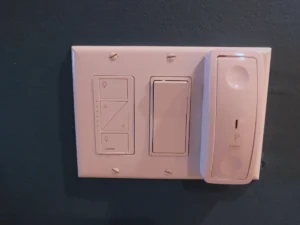
Networking and smart home hardware manufacturer TP-Link continues to broaden its integration with the universal Matter interoperability standard. Following months of rolling out Matter-compatible smart plugs and switches under its budget-oriented Tapo subsidiary, the company has introduced two new Matter-enabled light switches under its more established Kasa brand.
Product Specifications and Pricing
The newly announced hardware includes the Kasa KS205 Smart Wi-Fi Light Switch, priced at $27.99, and the Kasa KS225 Smart Wi-Fi Light Dimmer Switch, retail-priced at $29.99. Both units require a physical neutral wire for installation—a standard requirement for robust smart switch wiring—and offer advanced features including automated scheduling and an integrated away mode.
Standardization and Interoperability Impact
The deployment of Matter-certified devices across both Tapo and Kasa lines signifies TP-Link’s commitment to a fragmented-free smart home ecosystem. Matter, backed by major tech conglomerates including Apple, Google, Amazon, and the Connectivity Standards Alliance (CSA), aims to eliminate platform lock-in. By ensuring that these new Kasa switches seamlessly bridge with Apple Home, Google Home, Amazon Alexa, and Samsung SmartThings without proprietary hubs, TP-Link is positioning its product lines to capture value-conscious consumers looking for reliable cross-platform compatibility.
Microsoft Officially Retires Cortana from Windows
Microsoft has taken the final step in the wind-down of its virtual assistant, Cortana, formally terminating the standalone application on Windows 11 via a routine system update. The software giant has also indicated that support and functionality for Cortana on Windows 10 will cease in the near future.
Chronology of an Assistant
- April 2014: Microsoft introduces Cortana at its Build developer conference, positioning the voice assistant as a direct competitor to Apple’s Siri and Google Now. Named after the artificial intelligence character in Microsoft’s flagship Halo franchise, Cortana initially gained traction on Windows Phone and later expanded to Windows 10 desktops.
- 2019–2020: Recognizing that it could not effectively compete against deeply entrenched mobile ecosystems dominated by Android and iOS, Microsoft shifts Cortana’s strategic focus away from consumer tasks toward enterprise productivity, integrating it into Microsoft 365 and Office apps.
- 2023: Microsoft removes Cortana from consumer-facing mobile apps and finally deprecates the Windows application interface, paving the way for next-generation generative artificial intelligence tools, such as Windows Copilot, powered by OpenAI technologies.
Strategic Shift Toward Generative AI
The sunsetting of Cortana underscores a broader industry pivot from rule-based, voice-activated command assistants to large language model (LLM) driven conversational interfaces. While Cortana served as a functional utility for basic operating system navigation and reminders, it lacked the platform leverage required to sustain an independent consumer ecosystem against competitors possessing dominant mobile operating systems.
Tractian Secures $45 Million in Funding for Industrial AI Monitoring
Enterprise predictive maintenance platform Tractian has closed a substantial $45 million funding round, bringing its total capital raised to over $60 million since its founding in 2019. The Atlanta-based industrial tech firm specializes in proprietary software and Internet of Things (IoT) sensors designed to monitor the operational health of heavy machinery in manufacturing and industrial sectors.
Financial Backing and Growth Metrics
The latest funding round will be channeled directly into expanding sales operations and accelerating research and development into machine-learning algorithms for industrial asset health. Tractian has experienced rapid adoption, boasting a client roster exceeding 500 enterprise customers.
Market Drivers in Predictive Maintenance
Industrial machinery downtime carries severe financial consequences for manufacturing facilities. Traditional maintenance schedules are often reactive or purely calendar-based, frequently leading to premature part replacements or catastrophic unexpected failures. By deploying IoT sensors capable of real-time vibration, temperature, and electrical current analysis—marketed under the banner of AI-driven anomaly detection—Tractian allows facility managers to predict mechanical failures weeks in advance. Investors continue to pour capital into industrial IoT (IIOT) sectors that demonstrate clear, quantifiable return on investment through minimized downtime and optimized supply chain operations.
Insure-Tech and Drone Surveillance Raise Consumer Privacy and Policyholder Concerns
As property and casualty insurance companies grapple with rising building replacement costs, high inflation, and escalating climate-related natural disasters, insurers are aggressively tightening underwriting standards. In high-risk regions such as California, where numerous legacy insurers have entirely ceased writing new homeowners policies, companies are increasingly deploying advanced surveillance technologies—including commercial drones—to audit existing policyholder properties and purge perceived high-risk accounts.
Surveillance Methods and Consumer Impact
Reports indicate that insurance carriers are utilizing aerial drone flyovers to scan residential roofs, yards, and outbuildings for deferred maintenance hazards or unapproved property modifications. In documented cases, homeowners have faced abrupt policy non-renewal notices due to aging roofs or routine yard conditions, such as temporarily drained swimming pools. While policyholders can occasionally reverse cancellations by providing formal proof of maintenance and repair receipts, the automated nature of drone audits has alarmed privacy advocates and consumer protection groups.
Implications of Connected Home Surveillance
The intersection of insure-tech and consumer privacy represents a growing regulatory battleground. Beyond aerial drones, modern insurance models increasingly incentivize or mandate the installation of smart home water leak detectors, smoke monitors, and connected security systems. Legal experts and consumer advocates warn that while these technologies promise lower premiums for compliant users, they simultaneously provide insurance conglomerates with granular surveillance data that can be legally weaponized to cancel coverage, raise rates, or drop high-risk policyholders entirely as climate and economic pressures mount.
Graphene Foam Research Unveils Kinetic Energy-Harvesting Flooring
Researchers in Scotland have successfully demonstrated a novel application of graphene foam capable of functioning as an energy-harvesting floor sensor. When subjected to physical pressure from footsteps, the nanogenerator material generates approximately 10 watts of electrical power—more than sufficient to self-power the embedded sensor unit without relying on external battery packs or hardwired electrical grids.
Technical Functionality and Applications
The integrated sensor is capable of running edge-computing software that analyzes the force, cadence, and timing of footsteps. By processing this kinetic data locally, the system can determine room occupancy, track movement vectors (whether occupants are entering or exiting), and identify specific movement patterns.
Future Outlook for Smart Buildings
Kinetic energy harvesting represents a critical frontier in sustainable IoT infrastructure. Traditional smart building sensor networks require thousands of disposable batteries that present maintenance bottlenecks and environmental disposal challenges, or complex wiring arrays that drive up installation costs. Materials like graphene foam offer a scalable pathway toward self-sustaining buildings, where human movement actively powers the ambient intelligence infrastructure required for climate control, security monitoring, and space optimization.
SaaviHome Launches Franchise Model for Smart Home Integration
Ahead of the upcoming CEDIA professional home technology integration trade show, smart home installation firm SaaviHome has officially opened applications for franchise ownership. Established in 2004, the company spent decades refining its professional integration workflows before developing a proprietary software and business services package in 2020 designed specifically for franchising.
Strategic Expansion Plans
SaaviHome has selected Control4 as its primary software automation platform for franchise deployments. The company is initially targeting franchise expansion across the Mountain West region of the United States, with a specific geographical focus on Colorado, Utah, Nevada, and Arizona.
The Professional Integration Market
The residential integration sector has evolved significantly over the past two decades, transitioning from high-end bespoke home theaters to complex, multi-protocol smart home ecosystems involving lighting, climate, security, and networked audio-visual gear. As consumer demand for integrated automation grows—coinciding with the proliferation of complex interoperability standards like Matter—professional installation and support services are experiencing high demand. By franchising its established business model, SaaviHome aims to standardize professional installation quality and scale operations across high-growth suburban housing markets.