Tailscale Vulnerability Report Reveals Potential for Wormable Privilege Escalation Across Mesh Networks

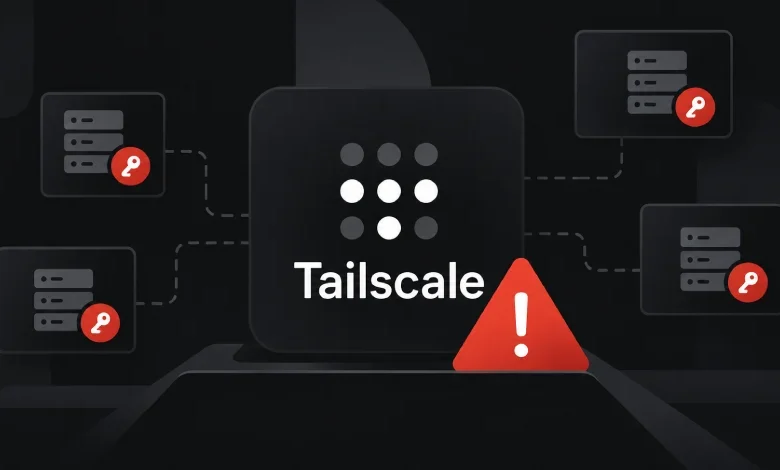
A significant security vulnerability affecting the popular Tailscale mesh networking platform has been brought to light, raising concerns about the potential for rapid, automated privilege escalation across interconnected corporate and personal devices. The findings, detailed in a report titled Tailworm by security researcher Erica Windisch of Cyberdione Labs, suggest that a single compromised device within a Tailscale network could, under specific configurations, be leveraged to gain unauthorized root-level access to other reachable servers.
The core of the issue lies within Tailscale SSH, a feature designed to streamline secure access by replacing traditional credential-based authentication with device identity and access control lists (ACLs). When combined with port forwarding, this architecture may inadvertently grant an attacker the ability to pivot from an initial foothold—gained via conventional means such as phishing or vulnerable web applications—to a full-scale compromise of the entire network fleet.
The Anatomy of the Tailworm Vulnerability
Tailscale operates by creating a peer-to-peer virtual private network, often utilizing the WireGuard protocol, to connect disparate devices regardless of their physical location. The Tailscale SSH feature simplifies administration by allowing users to connect to machines using their Tailscale identity rather than managing individual SSH keys or passwords. However, the Tailworm report demonstrates that this convenience may come at a steep security cost.
According to Windisch’s lab tests—conducted on Tailscale version 1.104.2 and headscale version 0.29.5—the attack chain functions through three distinct methods of exploitation:

- Direct Socket Access: By utilizing standard SSH port forwarding, an attacker can coerce the root-level Tailscale process into connecting to a privileged system socket. In laboratory conditions, this allowed the researcher to bypass standard access controls and read sensitive files, such as the system password file, almost instantaneously.
- Socket Replacement: A secondary technique involves replacing a root-owned socket with one controlled by the attacker. This maneuver permits the direct execution of commands with root privileges against specific services running on the target machine.
- Race Condition Exploitation: The third, and perhaps most alarming, method involves a race condition that circumvents file path validation checks. By manipulating the timing between the system’s security check and the subsequent file access, an attacker can gain deeper system control. In the reported lab scenario, this sequence enabled the capture of keys used for device enrollment, allowing an attacker to inject their own malicious machine into the trusted network as a legitimate server.
The term "wormable" used in the report refers to the speed and automated nature of this potential spread. The research suggests that in a permissive environment, the mesh architecture effectively converts a single, localized security failure into a fleet-wide administrative takeover in a matter of seconds.
Context and Chronology of the Disclosure
The disclosure of these findings has sparked a debate regarding the ethics of security research and the coordination of vulnerability reporting. The report was published publicly on October 25, following a brief period of private disclosure.
Erica Windisch confirmed that she provided the report and proof-of-concept (PoC) code to Tailscale’s designated security contact on the Saturday preceding the public release. She further noted that she had previously raised systemic architectural concerns with the company’s executive leadership. Despite this, the lack of a formal CVE (Common Vulnerabilities and Exposures) identifier or an immediate patch from the vendor led some observers to characterize the disclosure as "reported but not coordinated."
The timeline of events highlights the tension between researchers seeking to hold vendors accountable and the reality of the software development lifecycle:
- Pre-October 2026: Ongoing discussions regarding architectural concerns between the researcher and Tailscale.
- October 2026: Internal discovery of similar socket-handling vulnerabilities by Tailscale, leading to a fix in version 1.98.9.
- October 25, 2026: Publication of the Tailworm report by Cyberdione Labs.
- Late October 2026: Public acknowledgment by Tailscale’s VP of Engineering, Mike Shaver, via the r/Tailscale community forum.
Official Response and Vendor Stance
Tailscale has responded to the report with transparency, acknowledging the receipt of the findings and confirming that they had already been investigating similar vectors with external security consultants. Mike Shaver, Vice President of Engineering at Tailscale, stated that the company is actively working to remediate the identified issues.

Crucially, Tailscale has not issued a universal recommendation to disable the SSH feature. The company is currently conducting an impact assessment to determine which specific network configurations are most at risk. By avoiding a blanket "disable" directive, the company is attempting to balance the immediate need for security with the operational continuity of its enterprise users, many of whom rely on Tailscale for mission-critical infrastructure connectivity.
Technical Implications and Broader Impact
The implications of the Tailworm report extend beyond Tailscale SSH. The document also highlights risks associated with other features, such as app connectors and the serve feature, which handles traffic relaying between devices.
Of particular concern to security teams is the finding regarding the "conn25" experimental feature, which allows permitted users to route traffic to unauthorized destinations. An attacker who gains control of a machine using this feature could potentially query a cloud provider’s metadata service, which is often used to manage server credentials, thereby escalating the attack from a local network breach to a cloud infrastructure compromise.
The report highlights that certain defense-in-depth measures currently hold the attack back. These include:
- Access Control Lists (ACLs): Networks that utilize granular, single source-to-destination ACLs are significantly more resilient, as the attack cannot jump between arbitrary nodes.
- Hardware-Backed Keys: The use of TPM (Trusted Platform Module) or Secure Enclave hardware to bind device keys prevents the total cloning of identities, even if an attacker manages to capture session data.
- Tailnet Lock: Networks with Tailnet Lock enabled were able to detect and block the final stages of the attack chain, preventing the unauthorized enrollment of new, malicious nodes.
Mitigation Strategies for Administrators
While a comprehensive patch remains pending, security administrators are advised to review their Tailscale deployments immediately. The current recommended mitigations include:

- Limit SSH Access: Audit all existing Tailscale SSH rules and ensure they follow the principle of least privilege. Remove any overly permissive rules that allow wide access to sensitive servers.
- Disable Forwarding: For organizations using Tailscale’s hosted service, administrators can toggle off port forwarding per rule. This is a critical step in reducing the attack surface identified in the report.
- Headscale Considerations: Users of the self-hosted headscale platform should exercise extreme caution. Because headscale currently lacks the ability to disable forwarding at the rule level, every SSH grant should be treated as equivalent to granting root access to the target machine.
- Implement Check Mode: Enabling "SSH check mode" forces a secondary authentication step before a session can be established. While this does not patch the privilege escalation vulnerability itself, it adds a significant hurdle for an attacker attempting to leverage an existing, compromised session.
- Update Regularly: Maintaining the latest version of the Tailscale client is essential, as the company is likely to release silent hardening updates or architectural changes in the coming weeks to mitigate these specific socket-handling risks.
Conclusion
The Tailworm report serves as a stark reminder of the complexities inherent in modern mesh networking. As organizations move away from traditional perimeter-based security toward zero-trust models, the software providing that "trust" becomes the primary target for adversaries. While Tailscale remains a robust tool for secure connectivity, the discovery of potential privilege escalation pathways underscores the necessity of constant vigilance, the rigorous application of the principle of least privilege, and the importance of defense-in-depth strategies.
As the cybersecurity community awaits further updates from Tailscale regarding a formal resolution, the primary takeaway for administrators is clear: in a mesh environment, every device must be treated as a potential gateway, and configurations should be hardened accordingly to prevent localized compromises from escalating into systemic failures.