Strategic Exit Windows and the Defensibility Crisis: Elad Gil Advises AI Founders on Navigating the Twelve-Month Peak Valuation Cycle

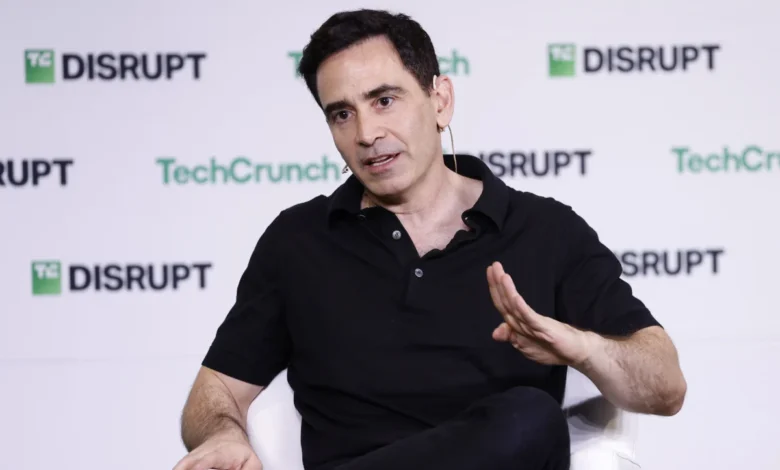
The rapid acceleration of the artificial intelligence sector has created a paradox for modern entrepreneurs: while valuations have reached historic highs, the window for a successful and lucrative exit has narrowed significantly. In a recent episode of the influential "No Priors" podcast, veteran investor and serial entrepreneur Elad Gil, alongside co-host Sarah Guo, provided a sobering analysis of the current venture landscape. Gil, whose investment portfolio includes some of the most significant successes in Silicon Valley, posited that the majority of high-growth companies experience a specific, often fleeting, 12-month period during which their market value reaches its absolute zenith. Identifying this window, Gil argues, is the difference between securing a generational return and witnessing a slow decline into irrelevance or a distressed sale.
The concept of the "12-month peak" serves as a critical warning to founders who may be lulled into a false sense of security by consistent quarter-over-quarter growth. According to Gil, once a business reaches its peak value, it often "crashes out" if an exit is not executed. This phenomenon is not merely a product of market volatility but is frequently driven by the erosion of a company’s competitive moats. In the contemporary technology ecosystem, where foundation models are evolving at a breakneck pace, the time between a startup’s "moment of genius" and its commoditization by a larger platform player has never been shorter.
The Historical Context of the Strategic Exit
To illustrate his thesis, Gil pointed toward several landmark transactions in technology history where founders and boards "pulled the ripcord" at precisely the right moment. These examples serve as a playbook for modern AI founders who must decide whether to continue scaling independently or integrate into a larger ecosystem.
One of the most cited examples is Mark Cuban’s sale of Broadcast.com to Yahoo in 1999 for $5.7 billion. While the transaction was criticized at the time as an example of dot-com excess, Cuban’s foresight regarding the impending market correction and the limitations of streaming technology at the time allowed his team to capture value that would have evaporated months later. Similarly, Lotus Development Corporation’s sale to IBM for $3.5 billion in 1995 occurred just as Microsoft Office began to dominate the desktop software market. By selling when they did, Lotus leadership secured a premium that reflected their past dominance rather than their uncertain future.
AOL’s merger with Time Warner in 2000 represents perhaps the most famous example of "capturing the top." While the merger is often viewed as a failure for Time Warner, from the perspective of AOL’s shareholders, it was a masterclass in exit timing. AOL used its highly inflated stock as a currency to acquire hard assets and legacy media reach just before the dial-up internet model began to collapse under the weight of broadband expansion. Gil argues that these companies succeeded because their leadership teams recognized the shifting tides of "differentiation and defensibility" before those shifts became obvious to the broader market.
The Defensibility Crisis in the Age of Foundation Models
The urgency of Gil’s advice is particularly relevant to the current "AI gold rush." Many contemporary startups are built on top of foundation models provided by companies like OpenAI, Anthropic, and Google. While these startups initially find success by providing specialized interfaces or specific workflow automations, they face a constant threat: the "Foundation Model Overhang." This refers to the risk that a foundation model provider will release a native update that renders a third-party startup’s entire product suite obsolete.
This tension was recently highlighted by Alex Bouaziz, the CEO of Deel, a global payroll and compliance unicorn. In a social media post directed at Anthropic CEO Dario Amodei, Bouaziz jokingly requested that the "builder of minds" leave the mundane task of payroll to Deel. "We are but simple folk who process paystubs and chase compliance deadlines," Bouaziz wrote, adding a poignant caveat: "But if you do come for us, call me first."
While the tone was lighthearted, the underlying message reflects a deep-seated anxiety among "application-layer" AI founders. If a model like Claude or GPT-5 can eventually handle complex international tax compliance and payroll logic natively, the value proposition of a specialized platform like Deel could be fundamentally altered. Gil suggests that founders must constantly ask themselves: "Are these next six months when I’m going to be the most valuable I’ll ever be?"
Institutionalizing the Exit Strategy
To combat the emotional and psychological barriers to selling a company, Gil offers a practical, governance-based solution: pre-scheduling board meetings specifically dedicated to discussing exits. In many startup boardrooms, the topic of an exit is treated as a taboo subject, often raised only when the company is running out of cash or when an unsolicited "exploding offer" arrives. This reactive approach, Gil argues, is inherently flawed.

By making the exit discussion a standing calendar item—perhaps once or twice a year—the board can approach the topic with clinical objectivity. "If it’s a standing calendar item, it drains the emotion out of the equation," Gil noted. This allows the CEO and the investors to review market trends, competitor acquisitions, and the company’s internal roadmap without the pressure of an immediate crisis.
This "depersonalization" of the exit process is crucial. Founders often view their companies as their life’s work, making it difficult to recognize when the business has reached its peak. A scheduled review forces a cold hard look at the data:
- Is our growth rate sustainable against current CAC (Customer Acquisition Cost) trends?
- Are our primary competitors being acquired by platforms that could distribute our features for free?
- Has the underlying technology shifted so fundamentally that our "moat" has become a "puddle"?
Market Data and the 2026 Venture Landscape
The broader economic context of April 2026 further complicates these decisions. After the volatility of the mid-2020s, the venture capital market has become increasingly bifurcated. While seed and Series A funding for AI-native companies remain robust, the "bridge to IPO" has become more arduous. Late-stage companies are finding that the public markets are demanding profitability and clear long-term defensibility, metrics that many AI startups struggle to maintain as foundation models evolve.
Data from the first quarter of 2026 suggests that M&A (Mergers and Acquisitions) has become the primary liquidity event for 85% of venture-backed startups. However, the multiples being paid for these acquisitions vary wildly based on timing. Companies that sold during their "12-month peak" saw exit multiples of 10x to 15x revenue, while those that waited even six months past their peak often saw those multiples drop to 3x or 4x as the market shifted or a major platform player entered their space.
The "No Priors" discussion highlighted that the current era of "go-go dealmaking" can be deceptive. High valuations in a private funding round do not always translate to a successful exit. In many cases, a high "paper valuation" can actually trap a founder, making it impossible to sell the company at a price that satisfies the liquidation preferences of late-stage investors.
Implications for the AI Ecosystem
Gil’s advice signals a shift in the Silicon Valley ethos. For decades, the prevailing narrative was one of "blitzscaling" and "going long"—the idea that every startup should strive to be the next Amazon or Google. However, in an era of rapid technological displacement, the "AOL model" of strategic exit may be more viable for the majority of founders.
The implications for the AI ecosystem are profound. If founders begin to prioritize 12-month peak exits, we may see a massive wave of consolidation. This would likely result in a few "mega-platforms" (OpenAI, Microsoft, Google, Meta, Anthropic) absorbing thousands of smaller specialized tools. While this could stifle independent innovation in the long run, it may be the only way for founders and early investors to realize the value they have created before the "foundation model tide" rises.
Furthermore, this strategy places a premium on "exit readiness." Founders are being advised to maintain clean cap tables, robust compliance records, and modular architectures that can be easily integrated into a larger parent company. The goal is no longer just to build a lasting company, but to build a "highly acquirable" one.
Conclusion: The New Founder’s Mindset
The insights shared by Elad Gil on "No Priors" reflect a maturing view of the AI boom. The initial excitement of 2023 and 2024 has given way to a more calculated, strategic environment in 2026. For the modern founder, success is no longer defined solely by how long they can stay in the game, but by how effectively they can identify the moment to leave it.
As the industry moves forward, the ability to "pull the ripcord" will be recognized as a core competency of the elite entrepreneur. By institutionalizing the exit discussion and maintaining a hyper-awareness of the 12-month valuation peak, founders can protect their stakeholders from the inevitable "crash out" that follows a period of hyper-growth. In the words of Gil, recognizing that "this is my moment" is perhaps the most difficult, yet most rewarding, realization a leader can make.