Flipcorder brings the aesthetic of 1990s camcorders to modern iPhone photography

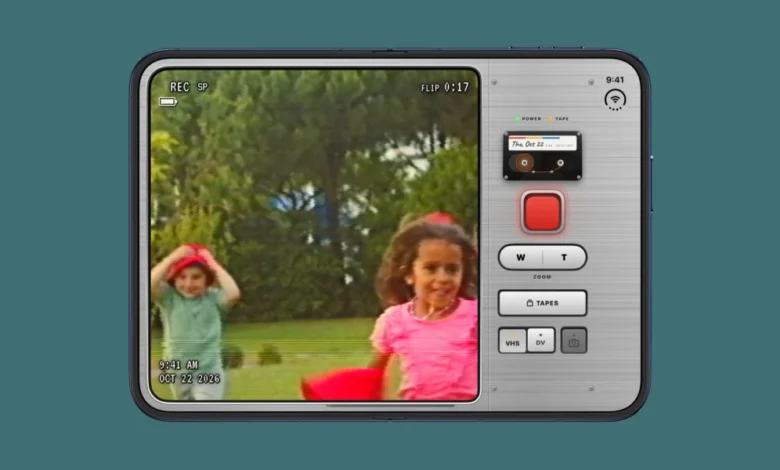
The landscape of mobile photography has shifted dramatically over the past decade, moving away from high-fidelity, polished perfection toward a preference for "authentic" and "nostalgic" content. As high-end smartphone sensors become increasingly capable of capturing clinical, hyper-realistic imagery, a counter-movement has emerged among younger demographics and photography enthusiasts who seek to recreate the tactile, imperfect charm of analog media. Enter Flipcorder, a new application designed to emulate the constraints and visual signatures of 1990s-era camcorders, providing a digital bridge to a pre-digital aesthetic.
The Resurgence of Analog Aesthetics in Mobile Media
The popularity of apps like Flipcorder is not an isolated phenomenon but rather the latest iteration of a broader cultural trend. Data from social media analytics firms suggests that short-form video content—specifically content that mimics the "lo-fi" look of early home movies—consistently achieves higher engagement rates than high-production, professional-grade footage. This shift is often attributed to a desire for raw, uncurated storytelling in an era dominated by heavily filtered, algorithmically optimized visuals.
Market research indicates that the "retro-camcorder" app category has seen a 25% year-over-year increase in user downloads. Developers are increasingly responding to this demand by integrating technical limitations—such as fixed-length recording, film grain, and chromatic aberration—into software that would otherwise be capable of capturing 4K, 60-frame-per-second footage. Flipcorder distinguishes itself within this saturated market by focusing on the "tape" metaphor, forcing users to treat their digital files with the same intentionality one might have applied to a physical VHS cassette.
Technical Functionality and Design Philosophy
At its core, Flipcorder operates on a philosophy of "constrained creativity." The application is engineered to mimic the physical experience of a vintage camcorder, specifically targeting users of the iPhone Duo, though it maintains compatibility across the broader iOS ecosystem. The software restricts users to a 30-minute total capacity per "tape," with individual clips limited to 20-second segments. This design choice is intended to discourage the "record everything" mentality inherent in modern smartphone usage, prompting users to curate their memories in real-time.
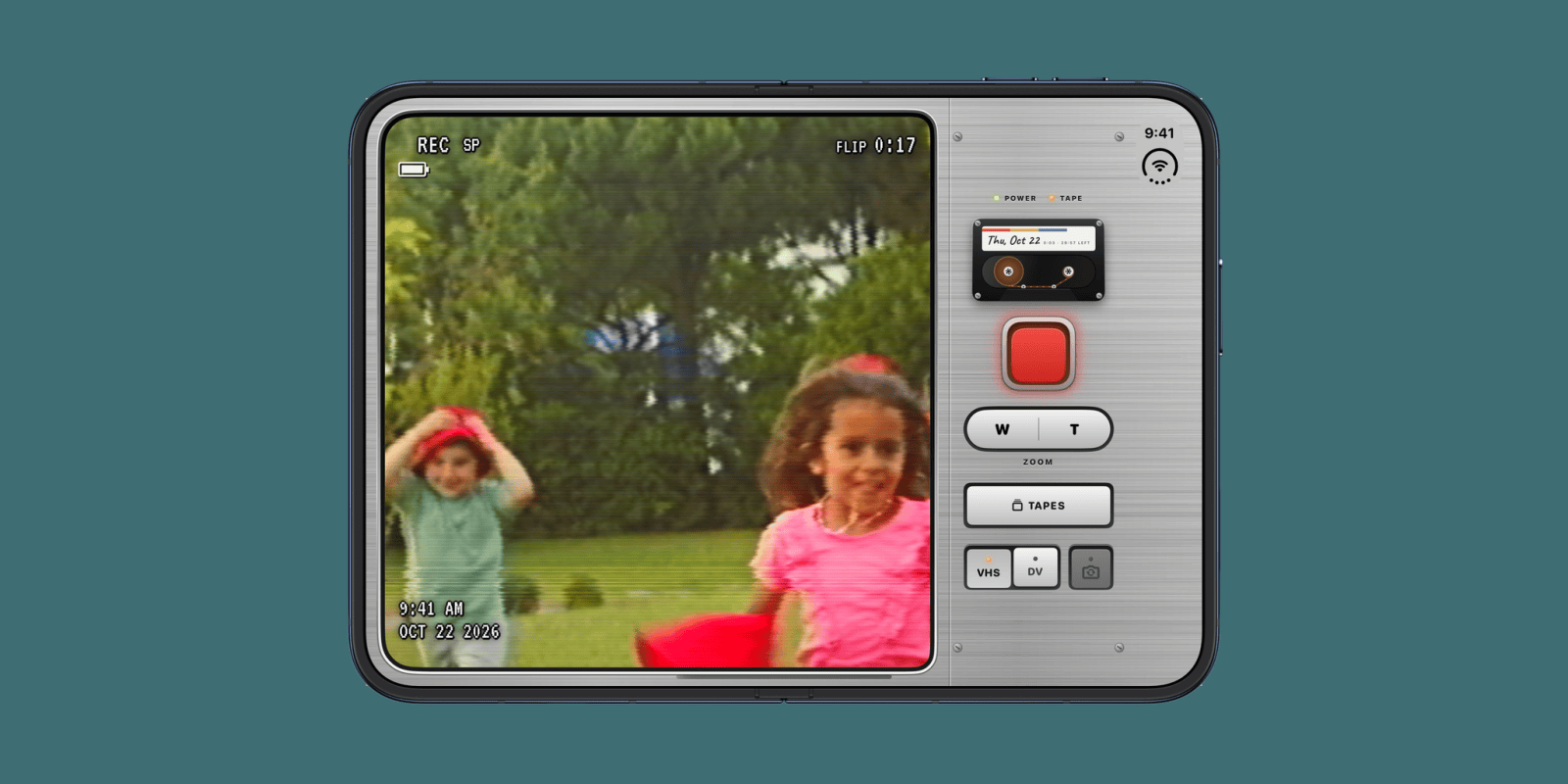
From a technical standpoint, the app utilizes the device’s advanced camera sensors to capture high-definition information, which it then processes through a series of proprietary filters to simulate the scanlines, color bleeding, and tape-hiss artifacts characteristic of legacy MiniDV and VHS formats. Notably, the app allows users to choose between a fully stylized "retro" output or a high-quality capture that retains the cassette-based organizational structure. This flexibility is a strategic design decision, allowing the application to serve both as a social-media-focused filter tool and as an organizational utility for those who prefer the look of physical media without the permanent loss of image data.
Chronology of Development and Release
The development of Flipcorder reflects the rapid iteration cycle of the indie app development community. The project began as a prototype in early 2026, aimed at testing how the unique folding-screen architecture of the iPhone Duo could be leveraged for viewfinder-style interfaces.
- Q1 2026: Initial conceptualization phase, focusing on the UI/UX design for dual-display devices.
- Q2 2026: Alpha testing of the "tape" file management system, which serves as the app’s primary differentiator.
- Q3 2026: Finalization of the visual rendering engine, ensuring that the VHS/MiniDV effects remained consistent across different camera hardware iterations.
- October 2026: Official release on the App Store for devices running iOS 26 and later.
By aligning the release with the launch of the latest iteration of iOS, the developers ensured that the app could utilize the most recent camera APIs, allowing for a more stable and high-performance experience that differentiates it from older, less optimized retro-camera apps that often suffer from lag or battery drain.
Market Positioning and Revenue Models
In an industry currently dominated by subscription-based models, Flipcorder has adopted a fixed, one-time purchase price of $4.99. This pricing strategy is becoming increasingly rare in the mobile space, where "freemium" models with recurring monthly costs are the standard. By eschewing in-app purchases and advertisements, the developers have positioned the app as a premium, utility-focused product rather than a data-collection vehicle.
Industry analysts suggest this model appeals to a specific subset of "prosumer" users who are increasingly fatigued by the "subscription fatigue" pervasive in the software-as-a-service (SaaS) era. By providing a clean, advertisement-free experience, the app positions itself as a tool for preservation rather than a platform for engagement optimization. The decision to avoid third-party ad networks also suggests a commitment to user privacy, a selling point that resonates with a growing demographic of privacy-conscious consumers.

Implications for Future Mobile Photography
The emergence of applications like Flipcorder highlights a significant shift in how mobile users perceive the "utility" of their cameras. Historically, the benchmark for camera excellence was technical perfection—the reduction of noise, the increase of dynamic range, and the enhancement of sharpness. However, as mobile hardware has largely plateaued in terms of "perceivable" quality for the average consumer, the value proposition has moved toward software-defined aesthetics.
This trend has implications for hardware manufacturers. If users are intentionally seeking to degrade their footage to achieve a specific, nostalgic look, manufacturers may eventually need to reconsider the focus on ever-increasing resolution. While high-resolution sensors remain necessary for post-processing and cropping, the "final output" is increasingly becoming a stylistic choice rather than a technical necessity.
Furthermore, the integration of these retro-styles into native camera apps—or the continued success of third-party developers in this space—suggests that the "camcorder era" is being re-contextualized for the post-digital age. The ability to "fill up a tape" provides a psychological boundary that creates a sense of scarcity, which in turn makes the footage feel more valuable to the user.
Conclusion
As Flipcorder establishes its place in the indie app ecosystem, it serves as a case study for how developers can successfully leverage nostalgia to create functional, high-quality digital experiences. By combining the convenience of modern smartphone technology with the intentional, slow-paced nature of 1990s analog equipment, the app addresses a distinct psychological need for digital "friction."
Whether this trend towards analog-emulation will persist remains to be seen, but the current data suggests that as long as digital technology continues to offer infinite, perfect, and disposable storage, there will be a corresponding market for tools that provide limits, imperfections, and a sense of permanence. For users of the iPhone Duo and beyond, Flipcorder offers a rare opportunity to step back from the edge of high-definition ubiquity and rediscover the charm of a 20-second tape. The application stands as a testament to the idea that in the world of software, sometimes less—or in this case, more "worn"—truly is more.