HMD Pulse Pro 2nd Edition Surfaces Via Thai Retailer Listing Revealing Substantial Performance and Display Upgrades

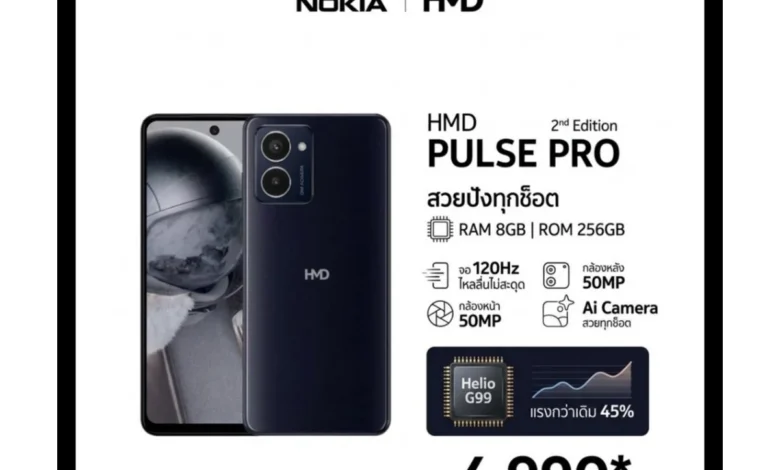
The smartphone landscape is witnessing another strategic refresh as HMD prepares to bolster its mid-range device portfolio. Originally launched in April 2024, the HMD Pulse Pro established a foundation for accessible, repairable mobile technology. Now, a successor iteration—tentatively designated as the HMD Pulse Pro 2nd Edition—has emerged via an accidental retail listing in Thailand. Discovered by a prominent tipster on the social media platform X, the device appeared on a storefront page associated with the Nokia Official Shop, carrying a price tag of THB 4,990, which translates to approximately $148 USD. This unexpected early listing provides a comprehensive look at how the manufacturer intends to modernize its popular budget-friendly lineup, addressing consumer demands for higher refresh rates, enhanced processing power, and greater storage capacity without drastically altering the core retail price.
Main Facts and Retail Specifications
According to the data retrieved from the Thai retail listing, the upcoming HMD Pulse Pro 2nd Edition retains the familiar aesthetic philosophy of its predecessor, sporting an identical physical design and appearing in a classic black colorway. Beneath the exterior, however, the hardware undergoes a significant transformation. The display has been upgraded to feature a smooth 120Hz refresh rate, a notable step up from the 90Hz panel found on the first-generation model.
Performance is driven by the MediaTek Helio G99 chipset, a processor that promotional materials claim delivers a performance boost of approximately 45 percent compared to the Unisoc T606 chip utilized in the original device. Memory and internal storage configurations have also been doubled to meet contemporary standards, with the listed model packing 8GB of RAM and 256GB of native storage capacity.
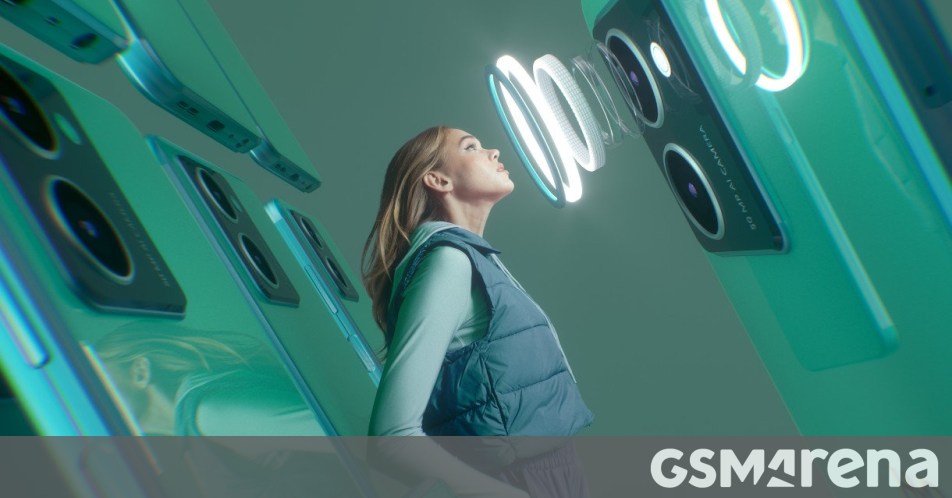
Imaging capabilities remain a core focus for the Pulse series, with the listing highlighting a 50-megapixel main rear camera alongside a matching 50-megapixel front-facing selfie camera. The marketing materials heavily emphasize "AI Camera" capabilities, suggesting that software-driven enhancements will play a vital role in processing images and optimizing user experiences. Further leaks from European regulatory and retail channels supplement these specifications, indicating that the device may also incorporate optical image stabilization (OIS) on the main sensor, a 5,000 mAh battery cell, and 20W wired charging support, though screen dimension listings have fluctuated between 6.56 inches and 6.65 inches depending on the regional variant.
Chronology of the HMD Pulse Evolution
To understand the trajectory of the HMD Pulse Pro 2nd Edition, it is essential to examine the chronological development of the Pulse family and HMD’s broader hardware strategy.
In April 2024, HMD introduced the original Pulse Pro alongside standard and budget variants, aiming to capture the entry-level market with a strong emphasis on "Gen 2 repairability," allowing users to easily swap out damaged screens, charging ports, and batteries at home.
Following the initial rollout, rumors and supply chain leaks began pointing toward an accelerated refresh cycle. Last week, industry tipsters uncovered European documentation outlining upgraded technical specifications for the refreshed lineup.
The strategy of releasing "2nd Edition" hardware is not entirely unprecedented for the company. In 2022, HMD released the Nokia C2 2nd Edition, establishing a precedent for refreshing successful budget models with minor structural and internal revisions.
The timeline grew increasingly complex around the period of the IFA consumer electronics trade shows. Earlier leaks indicated that a device named the Pulse 2 Pro had surfaced briefly via a Swiss retailer ahead of IFA 2025, though that specific iteration failed to secure a wide commercial release. Shortly thereafter, additional leaks detailed the Pulse 2T Pro—a higher-tier variant featuring an expansive 6.78-inch OLED 120Hz display, a MediaTek Helio G100 processor, an upgraded 6,000 mAh battery with 33W fast charging, an IP64 dust and water resistance rating, and a distinctive dot-matrix rear display panel.
Beyond the Pulse series, industry insiders report that other successful devices within HMD’s ecosystem, including the HMD Fusion and the HMD Crest Max, are slated to receive the "2nd Edition" nomenclature and internal upgrades. The HMD Fusion is reportedly transitioning to a Qualcomm Snapdragon 7s Gen 2 chipset, while the Crest Max is expected to adopt the MediaTek Dimensity 7025 system-on-chip.
Supporting Data and Comparative Analysis
A granular comparison between the original HMD Pulse Pro and the emerging 2nd Edition reveals a calculated effort by the manufacturer to eliminate historical performance bottlenecks.
| Hardware Specification | Original HMD Pulse Pro (2024) | HMD Pulse Pro 2nd Edition (Leaked) |
|---|---|---|
| Processor (SoC) | Unisoc T606 | MediaTek Helio G99 (~45% performance increase) |
| Display Panel | 6.65-inch HD+, 90Hz refresh rate | 6.56 / 6.65-inch HD+, 120Hz refresh rate |
| Memory (RAM) | Up to 8GB | 8GB standard configuration |
| Internal Storage | Up to 128GB | 256GB standard configuration |
| Rear Camera | 50 MP primary + auxiliary sensor | 50 MP primary (with potential OIS) + auxiliary sensor |
| Front Camera | 50 MP selfie shooter | 50 MP selfie shooter with AI enhancements |
| Battery & Charging | 5,000 mAh, 20W charging | 5,000 mAh, 20W charging |
| Estimated Price | ~$130 USD equivalent | ~$148 USD equivalent (THB 4,990) |
The transition from the entry-level Unisoc T606 to the MediaTek Helio G99 represents a crucial upgrade for consumers demanding fluid multitasking and stable frame rates in mobile applications and casual gaming. While the original Unisoc processor handled basic day-to-day communication and media consumption adequately, it struggled under heavier computational loads. The Helio G99, built on a more efficient 6nm fabrication node, offers superior thermal management, enhanced graphics processing via the Mali-G57 MC2 GPU, and native support for higher refresh rate displays.
Market Implications and Industry Context
The premature disclosure of the HMD Pulse Pro 2nd Edition via Thai retail channels highlights the persistent challenges manufacturers face in maintaining tight security over supply chains and regional distribution databases ahead of official announcements. However, from a strategic standpoint, the leak offers valuable insight into HMD’s competitive positioning.
As consumer demand shifts toward longevity, repairability, and consistent software performance in the budget and mid-tier segments, hardware manufacturers are under intense pressure to deliver specifications that compete directly with aggressive offerings from brands like Xiaomi, Realme, and Samsung. By upgrading foundational components—such as transitioning to a 120Hz display and doubling baseline storage to 256GB at an approximate price point of $148—HMD is signaling its intent to remain competitive in price-sensitive Southeast Asian and European markets.
Furthermore, the simultaneous pipeline updates involving the Pulse 2T Pro, Fusion, and Crest Max indicate a comprehensive restructuring of HMD’s product hierarchy. Rather than waiting for a complete generational overhaul, the company appears to be utilizing intermediate refreshes to bridge performance gaps, capitalize on newer silicon availability, and maintain consumer interest across diverse retail landscapes.
While HMD has yet to issue an official press statement confirming the global availability, pricing, or exact launch timeline for the Pulse Pro 2nd Edition, the existence of the retail listing suggests that a formal unveiling is imminent. Market analysts will be closely monitoring whether these hardware enhancements will translate into improved market share as consumers increasingly weigh the value proposition of repairable, long-lasting mobile technology against traditional disposable upgrade cycles.