Ford Motor Company Achieves Major Milestone With Start of Domestic LFP Battery Production at BlueOval Battery Park Michigan

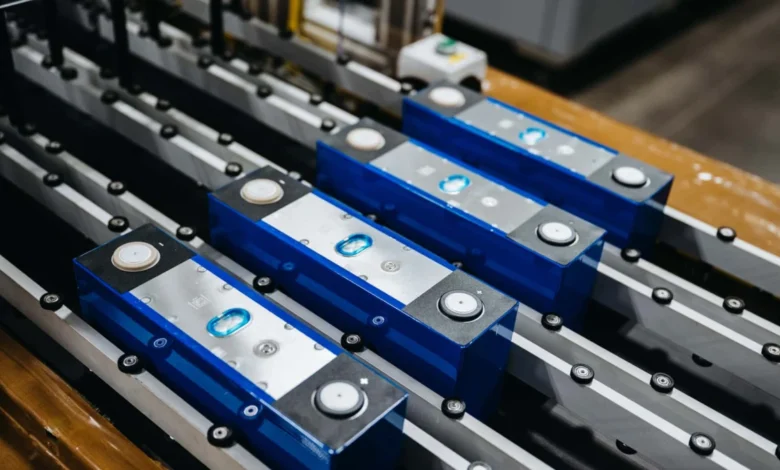
Ford Motor Company has officially crossed a major threshold in the development and industrialization of its upcoming Fathom electric truck by initiating the manufacturing of low-cost lithium-iron-phosphate (LFP) battery packs. The milestone production is taking place at the company’s expansive $3 billion BlueOval Battery Park Michigan facility, situated in Marshall, Michigan, roughly two hours west of Detroit.
These initial outputs are fully production-grade LFP batteries designated for use in early Fathom vehicle prototypes. Full-scale, commercial manufacturing of the battery packs is scheduled to commence next year, paving the way for consumer availability in the near future. This development marks a pivotal step not only for Ford’s ambitious electric vehicle (EV) strategy but also for the broader landscape
of domestic American automotive manufacturing.
Strategic Importance of the Marshall Facility
The establishment of the 2-million-square-foot BlueOval Battery Park Michigan represents a watershed moment for the United States automotive industry. It stands as the first facility in the United States dedicated entirely to manufacturing LFP batteries tailored specifically for mainstream consumer automotive use.
While other domestic entities, such as LG Energy Solution, produce LFP batteries within U.S. borders—primarily supplying companies like General Motors and Tesla—their operations are largely dedicated to stationary energy storage systems. In contrast, Ford’s massive Marshall plant is engineered from the ground up for automotive applications.
The facility boasts an impressive annual production capacity of 20 gigawatt-hours (GWh). At peak operational efficiency, the plant is designed to assemble up to 50 battery packs every hour. Operating on a vertically integrated model, the factory receives raw materials such as lithium and iron-phosphate powder at one end of the assembly line and outputs fully assembled, ready-to-install battery packs at the other. Major production processes, including comprehensive anode and cathode manufacturing, occur entirely within the confines of the facility.
Accelerated Development and Industry Pacing
During a media roundtable event at the Marshall facility, Alan Clarke, Ford’s vice president of advanced development projects, emphasized the unprecedented speed with which the company is bringing the Fathom to market. Clarke noted that in a remarkably compressed timeframe, Ford has managed to develop an all-new Universal EV Platform designed to underpin a wide array of future electric vehicles, engineer a completely new production system at the Louisville Assembly Plant, and establish domestic LFP battery manufacturing capabilities.
"Not having a team that existed to have a battery factory, a unicasting factory, an entirely new most automated vehicle production facility that Ford’s ever produced in less than five years would be, I think, faster than China speed," Clarke stated during the roundtable discussion.
Clarke brings substantial industry experience to his role at Ford, having previously spent 12 years at Tesla. During his tenure with the electric vehicle pioneer, he contributed significantly to the development of the Model S, Model X, Model Y, Model 3, and the Cybertruck. His transition to Ford underscores traditional legacy automakers’ aggressive efforts to adopt Silicon Valley-style iteration speeds and advanced manufacturing techniques.
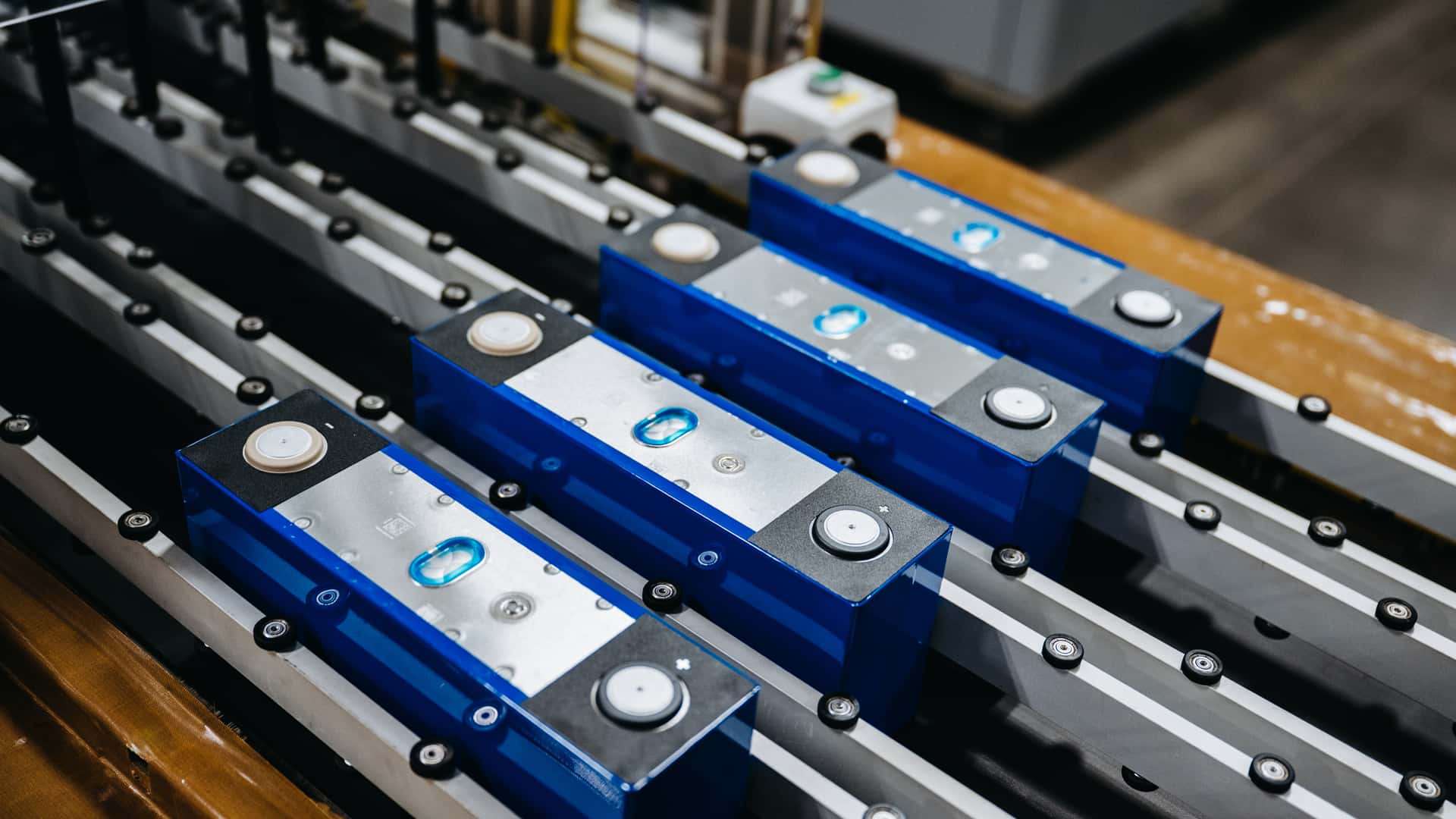
Industry analysts touring the Marshall plant have widely described it as one of the most advanced and highly automated battery production facilities in the United States. For the state of Michigan—which has served as a cornerstone of American automotive manufacturing for over a century—the facility represents a technological leap unlike anything seen in the region’s storied industrial history.
The CATL Partnership and Technology Transfer
A key driver behind the advanced capabilities of the BlueOval Battery Park Michigan facility is Ford’s strategic licensing agreement with Contemporary Amperex Technology Co. Limited (CATL), China’s premier and the world’s largest battery manufacturer. For years, the United States has lagged behind both China and Europe in the fiercely competitive battery technology race. By partnering with CATL, Ford is actively importing critical technical know-how to establish a domestic manufacturing footprint.
Despite utilizing licensed technology from the Chinese battery giant, Ford maintains complete ownership and operational control of the Marshall plant. CATL engineers played a crucial advisory role, assisting Ford in setting up thousands of complex production tools, training local American workers to operate high-tech machinery, and implementing rigorous quality control systems.
Significantly, the prismatic LFP cell produced at the Marshall facility is a proprietary design tailored specifically for Ford. It is distinct from existing products within CATL’s global portfolio.
Meng Wang, director and chief engineer of battery cell industrialization at Ford, elaborated on the collaborative relationship with CATL. "To shorten our time to market, we decided to learn from the best," Wang said. "Throughout the process, CATL passed on critical knowledge to Ford, including the equipment functions, manufacturing process, and also quality controls."
Compliance with Inflation Reduction Act Regulations
A critical consideration for domestic automotive manufacturing involves adherence to federal regulations outlined in the Inflation Reduction Act (IRA). Ford officials confirmed that the BlueOval Battery Park facility is fully compliant with current IRA guidelines, particularly regarding supply chain transparency and sourcing restrictions.
Under federal rules, vehicles containing battery components or critical minerals sourced from designated Foreign Entities of Concern (FEOC)—such as China, Russia, and North Korea—risk losing lucrative consumer tax credits. While the underlying battery technology originated through a licensing agreement with China’s CATL, Ford has structured the supply chain to ensure that critical raw materials are not procured from U.S.-designated FEOCs. This compliance strategy addresses a major hurdle for automakers attempting to leverage foreign expertise while remaining eligible for federal incentives in the American market.
Timeline and Market Implications
The launch of low-cost LFP battery production at the Marshall plant marks a foundational step toward Ford’s broader electrification goals, specifically centered around the upcoming Fathom electric truck. Industry observers anticipate that the combination of locally produced LFP chemistry, vertical integration, and advanced automation will substantially reduce vehicle production costs, enabling more competitive pricing structures for consumers.
Preorders for the Ford Fathom are officially scheduled to open in early 2027. Following the preliminary rollout of vehicle prototypes utilizing the newly manufactured battery packs, full-scale commercial vehicle production and customer deliveries are slated to begin by the end of next year. As the facility scales toward its 20-gigawatt-hour capacity, its performance will likely serve as a crucial bellwether for the viability of domestic, legacy-automaker-led EV supply chains in the United States.