BioWare co-founder Greg Zeschuk reflects on the closure of the iconic studio and the shifting landscape of the gaming industry


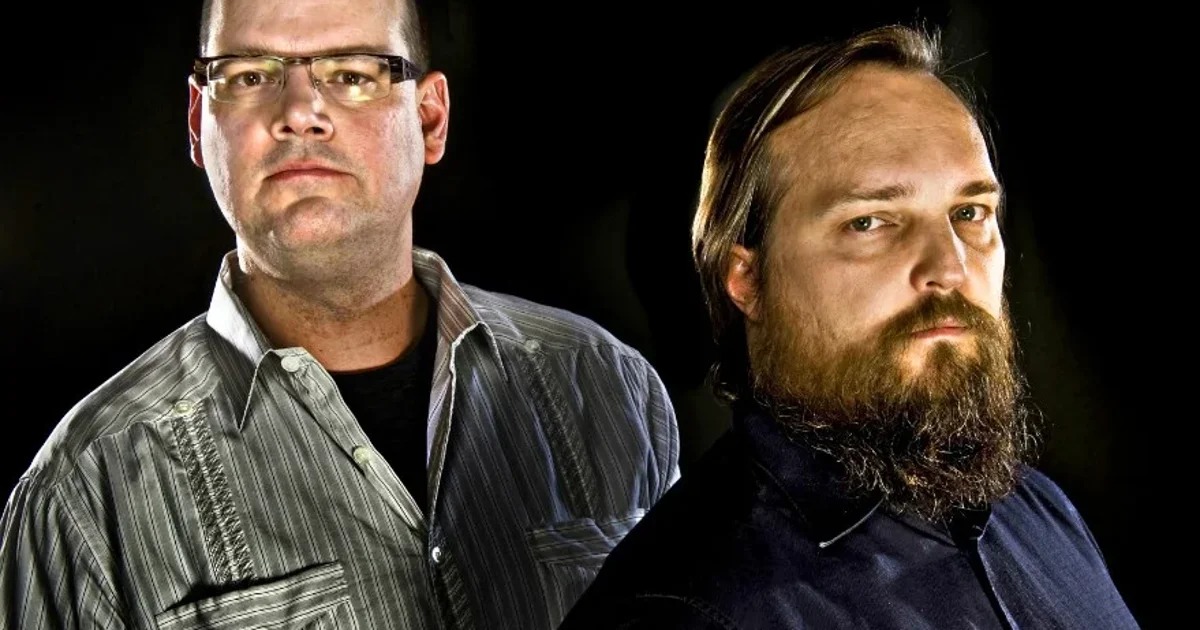
The sudden shuttering of BioWare, a studio once synonymous with the pinnacle of narrative-driven role-playing games, has sent shockwaves through the global gaming community. Following the recent announcement that the studio would cease operations, co-founder Greg Zeschuk has broken his silence, characterizing the closure as a somber conclusion to a legacy that spanned nearly three decades. In a candid interview with 80 Level, Zeschuk offered his perspective on the demise of the developer that he, along with fellow medical students Ray Muzyka and Augustine Yip, founded in Edmonton, Alberta, in 1995.
For many long-term fans and industry observers, the end of BioWare marks the closing of a chapter that defined the golden age of Western RPGs. From the isometric tactical depth of Baldur’s Gate to the sweeping space operas of Mass Effect and the high-fantasy world-building of Dragon Age, the studio functioned as a beacon of creative ambition. However, Zeschuk’s reflections suggest that the studio’s eventual dissolution was not a sudden accident, but rather the result of a gradual erosion of culture and the pressures of a changing corporate ownership model.
A Legacy of Innovation and the Edmonton Beacon
When BioWare was established in the mid-1990s, the notion of a world-class, multi-million-dollar software development house emerging from Edmonton was considered unconventional. At the time, the gaming industry was heavily concentrated in California, Seattle, and Japan. By successfully scaling operations in the Canadian prairies, BioWare proved that regional talent could compete on a global stage.
"It’s actually, in some ways, saddest for the city of Edmonton, where we’re from, because we were kind of this beacon of hope and excitement and possibility," Zeschuk noted. "We showed you could do something really special in a place that was not known for doing things like that."
The studio’s influence was instrumental in putting Canada on the map as a premier destination for high-end game development. Throughout the late 90s and early 2000s, BioWare attracted top-tier talent from across the globe, fostering an environment where intricate storytelling and complex character development were prioritized over safer, annualized development cycles.
Chronology of a Corporate Transition
The trajectory of BioWare shifted significantly in 2008 when the studio was acquired by Electronic Arts (EA). At the time, the deal was viewed as a strategic move to provide the studio with the capital necessary to reach broader audiences. Zeschuk acknowledged that while they had alternative options during that acquisition process, the decision was made with the intent of scaling their reach.
However, the subsequent years saw a gradual transformation in how the studio operated. The departure of the founders in 2012—coinciding with the release of Mass Effect 3—marked the end of the original leadership era. Zeschuk is quick to deflect the idea that the departure of the founders was the singular cause of the studio’s decline. Instead, he points to a "slow and insidious" process of cultural dilution.
"I’m not going to have so much hubris to say Ray and I were the lynchpin in the chain, our departure ruined everything," Zeschuk clarified. "It wasn’t that at all. It’s a slow and insidious kind of thing and again, it’s the people. The people are the key."
The final blow, according to Zeschuk, was the recent private acquisition of EA by an investment consortium involving Saudi Arabia’s Public Investment Fund (PIF) and other private stakeholders. He identified this shift as "the final nail in the coffin," suggesting that the new ownership structure favored the reliability of recurring revenue streams—such as sports games—over the volatile and expensive nature of prestige, story-driven development.
The Business of Gaming: A Divergence of Models
The closure highlights a systemic tension within the modern AAA gaming industry. BioWare’s model of game development is historically capital-intensive and time-consuming. These titles require years of pre-production, high-fidelity art assets, complex narrative scripting, and extensive quality assurance. In an era where investors prioritize predictable "live service" models and recurring microtransactions, the traditional single-player RPG has faced increasing scrutiny.
Data from the past decade indicates that while narrative games like Elden Ring or Baldur’s Gate 3 can achieve immense commercial success, they carry higher risks for publicly traded publishers. EA’s portfolio, bolstered by the massive success of its sports franchises like EA Sports FC (formerly FIFA) and Madden, operates on a vastly different fiscal timeline than that of an expansive RPG. Zeschuk’s observation—that it is "easier just to pump out sports games every year"—underscores the divergence between the "artisan" approach to game design and the "industrial" approach favored by contemporary financial backers.
Industry Reactions and the Silence of Leadership
The response to the closure has been widespread, with former developers and industry veterans expressing their grief on social media. Many have noted that the studio’s closure is not just the end of a brand, but the loss of a specific type of creative culture that has become increasingly rare in the industry.
While Greg Zeschuk has provided a rare, candid look at the studio’s final years, his partner, Ray Muzyka, has remained silent. Muzyka’s refusal to comment highlights the finality of their departure from the industry; both founders pivoted away from games long ago, with Zeschuk finding success in the craft beer industry through his company, Blind Enthusiasm. This transition away from the spotlight serves as a poignant reminder that for the original architects of BioWare, the studio exists now only as a memory of a time before the industry prioritized short-term fiscal efficiency over long-term creative legacy.
Implications for the Future of RPGs
The closure of BioWare serves as a cautionary tale for the industry. As consolidation continues to occur, with fewer, larger entities controlling the majority of the market, the diversity of gaming experiences may be at risk. The "prestige" project, which once served as a flagship for publishers to demonstrate technical and narrative prowess, is increasingly seen as a liability on a balance sheet.
Furthermore, the loss of a studio with BioWare’s history impacts the labor market. The concentration of veteran developers, writers, and technical artists within a few mega-studios can stifle the kind of independent innovation that birthed companies like BioWare in the first place. When a studio of this magnitude closes, the industry loses not just its current projects, but the institutional knowledge accumulated over decades of problem-solving and creative iteration.
Looking Back to Move Forward
Zeschuk’s reaction to the news—receiving text messages while fishing and subsequently processing the information in isolation—offers a human perspective on what is often viewed as a cold, corporate event. He has spent the years since his 2012 retirement watching the industry from the sidelines, acknowledging that his own tastes have shifted toward the mechanical depth of action titles like Nioh and the world-building of Elden Ring.
Ultimately, the story of BioWare is a narrative arc that mirrors the history of the industry itself: from a small, passionate group of doctors in Edmonton to a global powerhouse, and finally, to a casualty of the modern corporate machine. While the studio’s doors are now closed, the impact of its work remains embedded in the DNA of contemporary role-playing games. The legacy of their commitment to "the people" and the stories they told will continue to influence developers for years to come, even as the entities that fostered those stories continue to evolve or fade away. As the industry moves toward an uncertain future dominated by consolidated interests, the loss of BioWare remains a definitive marker of an era that will not soon be replicated.