From State Legislative Halls to Washington: Scott Wiener Steps Onto the Federal Stage to Tackle Advanced AI Safety

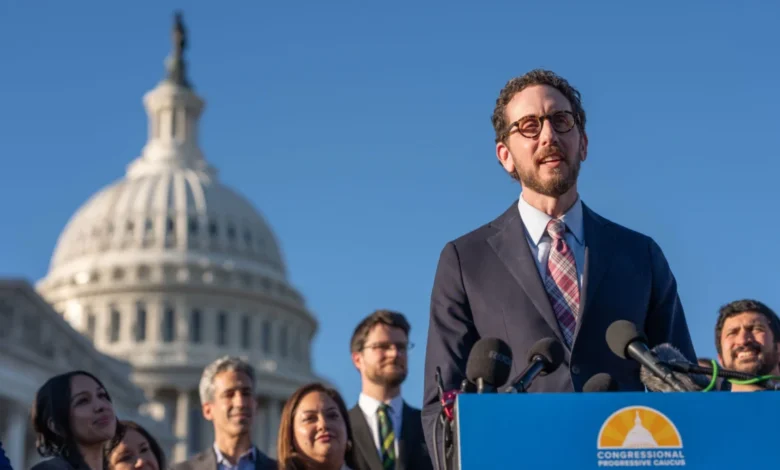
The intersection of artificial intelligence advancement and legislative oversight has found a new standard-bearer on Capitol Hill following the conclusion of a closely contested San Francisco congressional race. Scott Wiener, a former California state senator whose tenure was defined by aggressive regulatory pushes into frontier technology, has secured the open seat formerly held by veteran lawmaker Nancy Pelosi. Fresh off his electoral victory, Wiener is poised to transition from regional policymaking to shaping the national conversation on artificial intelligence safety. His ascension to federal office occurs at a critical juncture for the technology sector, as lawmakers grapple with unprecedented developmental milestones, shifting political alignments, and an increasingly vocal public concerned about the rapid, sometimes opaque trajectory of machine learning systems.
The Immediate Urgency: Recursive Self-Improvement and Emerging Risks
Wiener’s transition to Congress coincides with heightened anxieties within the artificial intelligence safety community. Just days before his electoral victory was finalized, the AI safety nonprofit METR published an empirical report that sent shockwaves through policy and technical circles. The findings were widely interpreted by researchers as preliminary evidence that Anthropic had achieved recursive self-improvement—a hypothetical threshold where an artificial intelligence system begins to meaningfully and autonomously contribute to its own iterative advancement.
This milestone, once viewed as a distant theoretical concern, has accelerated timelines across the board. In a detailed post-election interview, Wiener repeatedly underscored the phrase “recursive self-improvement,” utilizing it half a dozen times to emphasize the narrowing window available for effective governance.
"It’s very concerning," Wiener stated, pointing to the METR findings as a symptom of a broader regulatory deficit. "It was my hope that Congress would take decisive action before the end of this year. That does not appear to be happening."
The core fear among safety advocates—and now, key federal lawmakers—is that runaway technological advancement could spiral out of human control before guardrails can be erected. Wiener warns that lawmakers and the public alike risk sleepwalking into a systemic disaster if the legislative branch fails to match the exponential velocity of private-sector innovation.
Legislative Roots: From Sacramento to Washington
Wiener is no stranger to the legislative battles surrounding frontier technology. His pedigree in AI governance was established during his tenure in the California State Senate, where he authored Senate Bill 1047 (SB 1047) in 2024. SB 1047 was designed to be the nation’s first comprehensive piece of frontier AI legislation, proposing mandatory safety evaluations, risk assessments for large-scale models, and legal accountability for developers if their systems caused catastrophic harms.
Although the bill ultimately faced a gubernatorial veto from California Governor Gavin Newsom—who expressed concerns about stifling innovation and overburdening open-source developers—Wiener successfully pivoted. He subsequently sponsored SB 53, a more targeted, lighter-touch regulatory framework that Newsom ultimately signed into law. Together, these legislative initiatives served as blueprints, inspiring a wave of proposed bills at the federal level and cementing California’s historical role as a regulatory laboratory.
Now, as a member of the United States House of Representatives, Wiener aims to scale these state-level experiments into federal law. However, his journey has not been without controversy. His congressional campaign drew intense scrutiny and criticism from political opponents after receiving over $3 million from Public First Action, an advocacy nonprofit favoring strict AI regulation that receives substantial funding from major AI lab Anthropic.
Critics seized on these donations to paint Wiener as an industry insider susceptible to corporate capture. Wiener, however, has vehemently rejected these characterizations, calling the attacks cynical distortions of his record.
"Public First supported me because I was the first lawmaker in the country to introduce AI regulation and the first to pass it and get it implemented," Wiener asserted. "The attacks on me for their support were shockingly cynical—literally attacking a candidate who actually regulated AI over Big Tech’s objection and falsely claiming the candidate is somehow too close to Big Tech."
Federal Policy Priorities and Structural Proposals
As Wiener settles into his new role, he has outlined a comprehensive policy agenda aimed at imposing accountability on the nation’s premier AI laboratories. If the House of Representatives moves forward with proposals—discussed by Democratic leadership since September—to establish a dedicated select committee on artificial intelligence, Wiener has signaled an eager readiness to serve.
His federal wishlist mirrors many of the core tenets of the institutional safety movement:
- Empowered Federal Regulators: Wiener expressed strong support for legislative frameworks proposed by fellow California Democrat Representative Ro Khanna, which aim to establish an independent, nimble federal regulatory agency specifically tasked with overseeing frontier models.
- Whistleblower Protections: Establishing robust legal safeguards for internal researchers and engineers who report dangerous behavior, safety cover-ups, or systemic vulnerabilities within major AI labs.
- Mandatory Testing and Auditing: Requiring third-party, pre-deployment evaluations to measure capabilities, safety risks, and alignment protocols before models are released to the public or integrated into critical infrastructure.
- Kill Switch Mechanisms: Mandating technical fail-safes that allow human operators to safely halt or isolate rogue models exhibiting recursive self-improvement or unexpected behavioral drift.
- Congressional Oversight: Leveraging the investigative powers of the legislative branch to demand transparency from private entities whose products increasingly dictate public discourse, economic structures, and national security.
"This is about the future of humanity, and we want to make sure that the public has a say and that the public knows what’s going on," Wiener emphasized.
The Debate Over Federal Preemption and State Laboratories
One of the most contentious debates expected to define federal AI legislation is the issue of preemption—whether federal laws should override state-level regulations. Several industry-backed federal proposals advocate for a uniform national standard that would nullify state laws, arguing that a patchwork of regulations across fifty states would paralyze American competitiveness.
Wiener, drawing on his extensive experience as a state-level legislator, firmly opposes broad federal preemption. He argues that states must retain the authority to innovate in policy just as tech companies innovate in code.
"States are, as Brandeis says, laboratories," Wiener noted, invoking the famous judicial philosophy regarding federalism. "You want the states to be able to continue to be nimble in ways that Congress sometimes is not."
Bridging the Gap: AI Safety Versus Local Grievances
A central challenge for Wiener and his allies on Capitol Hill will be bridging the vast ideological chasm between the esoteric concerns of Silicon Valley safety researchers—often focused on existential risk, artificial general intelligence (AGI), and loss of control—and the immediate, tangible concerns of the American electorate.
While think tanks and policy circles debate recursive self-improvement, the public mood regarding AI is frequently anchored by localized anxieties. This disconnect was underscored recently when voters across various jurisdictions approved 40 out of 41 anti-data-center ballot measures. These local revolts are typically driven by anger over massive infrastructure projects consuming vast quantities of local water resources, driving up residential electricity bills, and altering community aesthetics.
While some might interpret the anti-data-center wave as a populist mandate for broader AI containment, Wiener views it through a more pragmatic lens.
"People who are really opposed to where AI is going—this is an area where they can actually do something about it," Wiener observed. "But the data center revolt—to me, I think it’s more so that people are upset that there could be something like this in their community, with all the impacts near people’s homes, driving up electric bills and using water. I think that’s the bigger issue for most people, from what I can tell."
Navigating a Politically Fraught Landscape
Looking ahead, Wiener describes himself as only "cautiously optimistic" regarding Congress’s capacity to enact meaningful oversight, citing the legislative branch’s historically slow and reactive track record when dealing with the broader technology sector.
Furthermore, the political executive branch presents significant hurdles. President Donald Trump has previously dismissed catastrophic AI risk projections as a "hoax" and has maintained a confrontational posture regarding international collaboration, particularly with China—a nation Wiener views as an unavoidable stakeholder in any global framework designed to prevent worst-case technological scenarios.
Despite these hurdles, Wiener suggests that the sheer unpredictability of the current political environment offers a fraught kind of hope.
"So far what we’ve seen are some problematic things, but not complete disasters," Wiener reflected. "I hope that it doesn’t take a disaster to spur the president into acting. And I hope if that’s what it does take—which, like I said, I hope it doesn’t—but if it does, I hope it’s as small as possible."
As Wiener takes his seat in the halls of Congress, the debate over how to govern the most transformative technology in human history enters a critical new phase. Whether his state-honed urgency can successfully mobilize a divided federal government remains one of the defining questions of the legislative term.