The Power Paradox: Why the Data Center Backlash is Driven by Electricity, Not Culture Wars

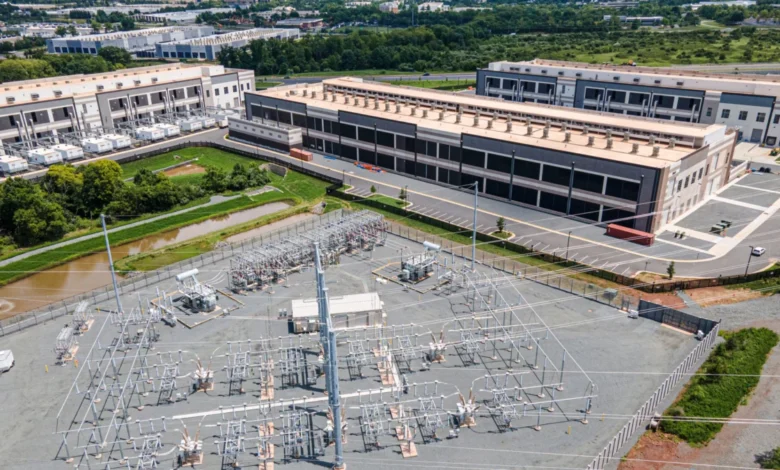
Driving through Ashburn, Virginia, a surreal landscape of concrete monolithic structures looms along every major thoroughfare. Bearing corporate monikers like Skybox and CloudHQ, this region—widely recognized as Data Center Alley—represents the largest data center hub in the world. Yet, it is also the epicenter of an increasingly fierce grassroots backlash that is now sweeping across the United States. As voters cast their ballots in recent elections, the physical and economic friction generated by the artificial intelligence boom collided directly with local communities, transforming quiet suburban and rural neighborhoods into battlegrounds over energy resources, grid stability, and industrial expansion.
The Main Facts of the Infrastructure Collision
For months, executives within Big Tech have attempted to frame the growing public resistance against data centers as a symptom of a broader culture war. Following the recent midterm elections, OpenAI’s chief global affairs officer, Chris Lehane, asserted in a public memorandum that data centers have "become a proxy for public unease about affordability, corporate power, and people losing control over their futures." According to this narrative, the resistance is largely psychological and political—a manifestation of anti-tech populism and existential anxiety regarding the rapid acceleration of artificial intelligence.
However, on-the-ground reporting and exhaustive local policy battles reveal a starkly different reality. While anti-tech sentiment certainly exists, the core driver of the backlash is fundamentally physical: electricity. The staggering, unprecedented power requirements of modern AI infrastructure have created an insatiable demand for energy that threatens local grids, drives up utility rates, and introduces heavy industrial footprints into residential areas. Regardless of how effectively tech companies polish their public relations campaigns or promise community investments, they cannot escape the thermodynamic and physical consequences of their vast appetite for power.
Chronology of the Backlash and Regulatory Shifts
The friction between local residents and data center developers has evolved rapidly over the past several years, culminating in significant legislative and regulatory interventions.
In Loudoun County, Virginia, where data centers have expanded at a steady, long-standing pace compared to the hyper-accelerated developments elsewhere in the country, facilities have traditionally tied directly into the existing electrical grid. A typical operational facility in this region consumes an average power capacity of 54 megawatts—surpassing the total electricity draw of major municipal infrastructure such as the Denver International Airport.
As these facilities multiplied, local opposition organized fiercely. Prominent activists, such as Virginia-based organizer Elena Schlossberg, spent years challenging the framing of the conflict as a culture war. "It was always about power—that is, electricity," Schlossberg noted, expressing frustration with corporate attempts to minimize local resource concerns as mere political posturing.
The sustained pressure from community activists eventually yielded tangible policy changes. In August 2026, the Governor of Virginia signed new regulatory rules mandating that incoming data centers pay the full cost of constructing new transmission lines to the grid, ensuring those multi-million-dollar infrastructure costs are not shifted onto everyday residential ratepayers. Furthermore, grid operators and developers have begun preparing for stringent new operational mandates that could automatically curtail data center power consumption during periods of peak regional demand.
The Scale of Energy Consumption: Grid Connections vs. Behind-the-Meter Power
The infrastructure challenges in Northern Virginia represent only the tamer end of the spectrum. Across the rest of the United States, the scale of AI training facilities being planned and constructed far exceeds the capacity of local and regional electrical grids.
The baseline power requirement for a viable AI training data center is approximately 300 megawatts. While substantial, this level of consumption can occasionally be accommodated by repurposing existing heavy industrial sites, such as decommissioned steel mills equipped with legacy high-voltage connections. However, the ultimate facilities desired by hyperscalers demand up to 6,000 megawatts of continuous power—an electrical draw equivalent to the entire city of Chicago, which relies on dozens of major power plants to meet its municipal needs.
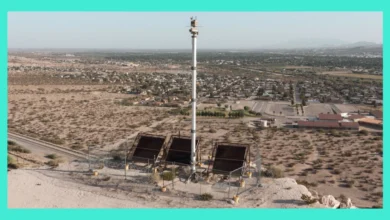
Because local grids cannot support loads of this magnitude, technology companies are increasingly bypassing public utilities altogether. Developers are establishing facilities in sparse rural regions, generating their own electricity "behind the meter" through massive natural gas-powered turbines supplemented by industrial-scale diesel generators for emergency backup.
This trend toward private power generation is staggering in scale. In late 2026, AI firm Anthropic reportedly agreed to a landmark $3.4 billion deal to secure dedicated natural gas turbines, marking one of the largest private power generation purchases in corporate history. Similarly, private entities have pushed forward with aggressive energy procurement strategies, occasionally bypassing environmental compliance standards in the rush to bring computing power online. Notably, the Environmental Protection Agency flagged violations after unauthorized natural gas turbines were deployed to power an xAI data center in Memphis, underscoring the friction between rapid technological expansion and environmental regulations.
Official Responses and Corporate Adjustments
Faced with mounting regulatory scrutiny, escalating utility bills, and organized public resistance, major technology firms have adjusted their strategic playbook. Industry leaders are actively courting local municipalities through lucrative tax agreements, promises of high-paying local jobs, and proactive community engagement initiatives. OpenAI and other industry stakeholders have published voluntary standards designed to foster responsible AI infrastructure development, aiming to mitigate local fears regarding resource depletion and corporate overreach.
Nevertheless, industry insiders acknowledge privately that public opposition is secondary to a more fundamental bottleneck: a sheer scarcity of electricity. As grid capacity tightens, technology giants are actively exploring alternative geographical strategies to circumvent domestic resistance.
Implications and Future Horizons
The structural collision between AI expansion and energy availability carries profound implications for the global economy, energy markets, and industrial geography. If domestic opposition and regulatory burdens continue to mount within traditional U.S. markets, capital investment will inevitably flow toward regions with sparse populations and flexible regulatory frameworks.
Domestically, developers are increasingly casting their gaze toward energy-rich corridors such as the Permian Basin, where extensive networks of natural gas pipelines provide ready access to fuel and local populations are minimal. Globally, major corporations are diversifying their geographic footprints to secure reliable power; Google recently announced a $15 billion investment toward massive data center expansions in Malaysia, where energy infrastructure development faces fewer public hurdles.
Perhaps most illustrative of the extreme measures under consideration is the burgeoning interest in extraterrestrial infrastructure. Hours after the midterm election results underscored the mounting terrestrial backlash, industry figurehead Elon Musk posted on social media that "data centers in space looking pretty appealing right now." While orbital computing remains a long-term speculative frontier, the sentiment captures the urgent desperation of an industry whose earthly ambitions are rapidly outpacing the capacity of the planet’s electrical grids.
Ultimately, the data center controversy cannot be dismissed as a manufactured culture war or a misunderstanding of technology. It is a direct, physical negotiation over finite resources. Until artificial intelligence infrastructure can decouple its computational output from massive energy inputs, communities will continue to demand accountability, transforming the future of tech expansion into a referendum on the limits of power.
Related posts: