Photo of tiny seahorses gathered around their ‘father’ after being released into the world wins prestigious…

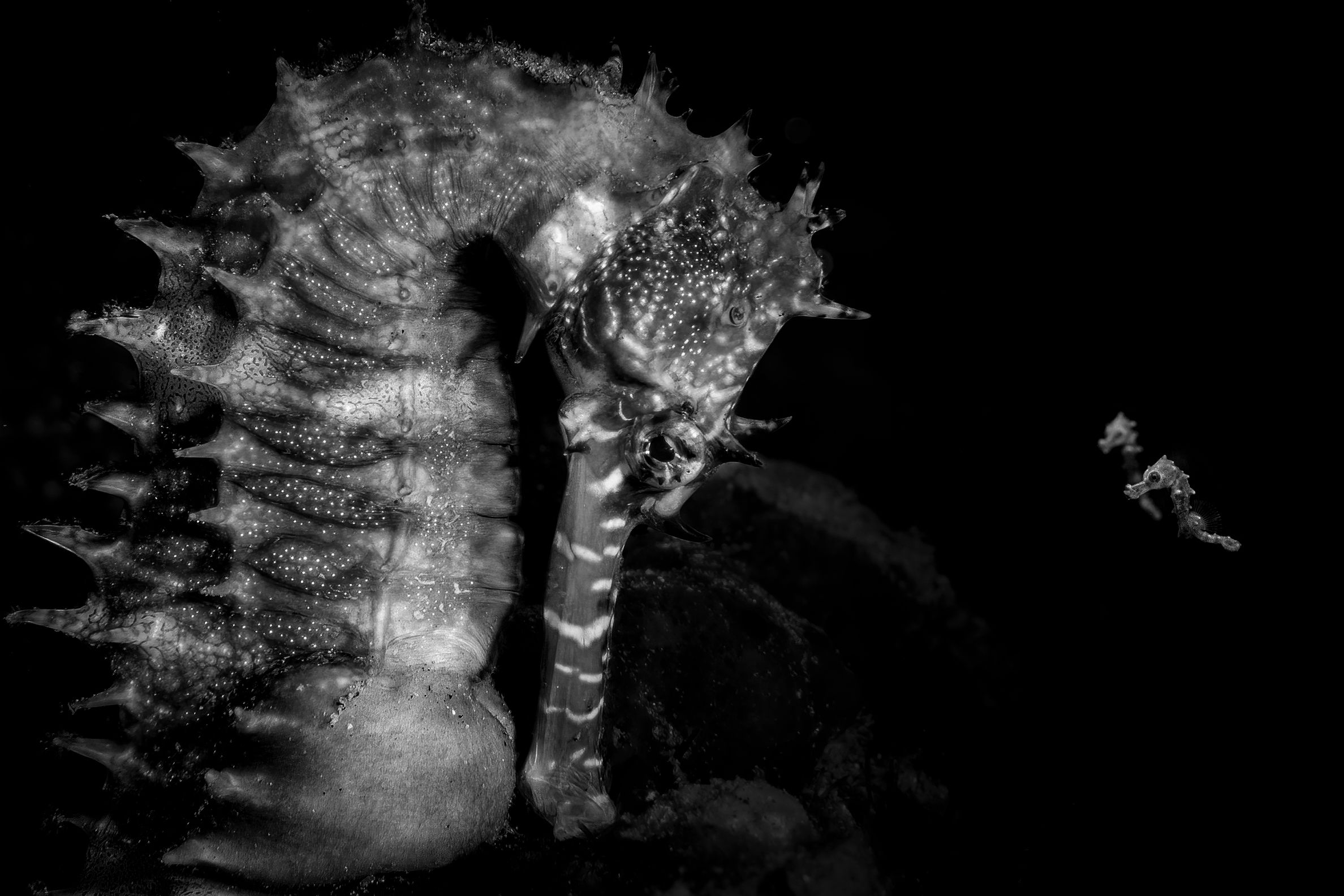
The winning photograph, which has garnered international acclaim, serves as both an aesthetic triumph and a sobering environmental statement. Captured in the shallow, seaweed-dense waters of Moorea, French Polynesia, the image depicts an adult seahorse in a moment of profound biological transition. By utilizing a stark, monochrome aesthetic, the photographer has stripped away the distractions of color to focus the viewer’s eye on the delicate, ephemeral nature of marine life. The composition, which features the juveniles appearing to turn back toward the parent, has invited a global discourse on the state of the world’s oceans and the precariousness of marine biodiversity in the 21st century.
The Journey to the Winning Shot
The image was captured by Julien Anton, a multi-award-winning photographer and filmmaker who spent countless hours conducting rebreather dives in the nutrient-rich, temperate waters surrounding French Polynesia. The process was far from straightforward. Marine photography of this caliber often requires extreme patience, specialized equipment, and an intimate understanding of the subject’s habitat.
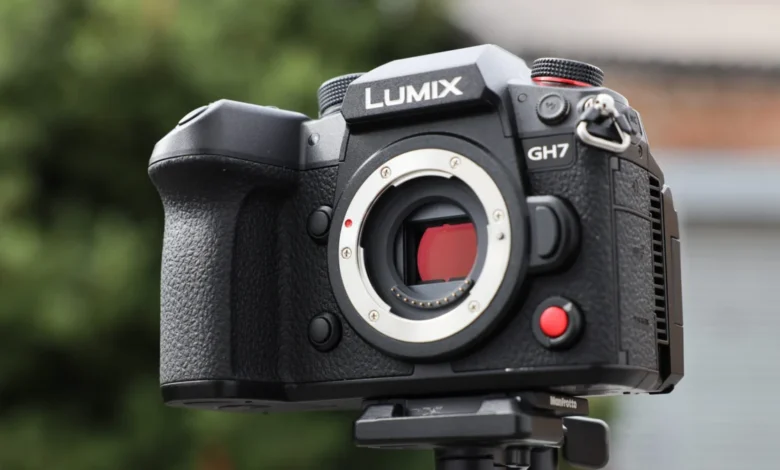
Anton’s technical setup for this shot included the Panasonic Lumix GH7 paired with a specialized SeaFrogs underwater housing. To illuminate the subject within the dark, seaweed-filled environment, he employed a rigorous lighting array, including two 36,000-lumen BigblueLights and one 12,000-lumen light, all balanced at an exposure of 1/320th of a second at f/5.6 and ISO 400. This configuration allowed for the sharp, high-contrast detail that ultimately captivated the jury.
For Anton, the experience was less about the equipment and more about the serendipity of the moment. "We spent countless hours searching in difficult conditions, with no guarantee of finding a single seahorse," he stated. "That is what made the moment so extraordinary—when the juveniles turned back towards the adult, it felt like something far beyond what I had dared to hope for."
Chronology of the 2026 Competition
The Ocean Photographer of the Year competition, presented by Oceanographic Magazine in partnership with Blancpain, has grown significantly in prestige since its inception. The 2026 edition saw a record number of submissions from across the globe, reflecting a growing public interest in marine conservation and underwater photography.
The judging process for the 2026 cycle began in early summer, with a panel of experts tasked with reviewing thousands of entries. The competition is designed to highlight not only the technical prowess of photographers but also their ability to communicate the urgency of ocean health. When Anton’s entry was presented to the judges, the panel’s reaction was immediate. According to Will Harrison, the founder and director of the competition, the image caused the panel to fall into a collective silence—a rare response that signaled the photograph’s profound emotional resonance.
The Science of Seahorse Reproduction
The biological behavior captured in the winning photograph offers a unique glimpse into the life cycle of the Hippocampus genus. Unlike most animal species, it is the male seahorse that carries the developing young. After the female deposits eggs into the male’s brood pouch, the male fertilizes them internally. Over a period of several weeks, the male provides nutrients and protection to the embryos until they are ready to be expelled.
The moment of birth, or "releasing," is a high-stakes event. A single male can release anywhere from a few dozen to over a thousand miniature seahorses, depending on the species. However, survival rates for these juveniles are exceptionally low in the wild. Research suggests that fewer than 0.5% of seahorse offspring reach maturity due to predation, environmental shifts, and habitat degradation. This biological context heightens the impact of Anton’s image; the "farewell" observed by the photographer is, in reality, the start of a perilous journey for the newborns.
Broader Environmental Implications
The question posed by the jury—"What kind of ocean are we leaving for those who come after us?"—is backed by sobering scientific data. The world’s oceans are currently facing unprecedented pressures, including ocean acidification, rising water temperatures, and the loss of critical habitats like the seaweed beds where this photo was taken.
Marine biologists emphasize that the health of shallow-water ecosystems, such as those in Moorea, is a vital indicator of global ocean stability. As carbon dioxide levels in the atmosphere continue to rise, the oceans absorb a significant portion of this heat, leading to coral bleaching and the disruption of breeding cycles for species like the seahorse. The Ocean Photographer of the Year competition serves as a visual record of these changes, acting as a bridge between scientific data and public awareness. By documenting the "intimate and urgent" nature of marine life, the competition aims to influence policy and encourage conservation efforts.
Official Responses and Industry Recognition
The selection of a black-and-white, nature-focused image as the overall winner marks a shift in the current landscape of wildlife photography. Where once the trend favored high-action, wide-angle shots of large marine mammals, the 2026 judges clearly favored images that evoke narrative and emotional depth.
"The image is full of quiet energy," Will Harrison remarked during the award ceremony. "It is ocean photography at its most powerful: intimate, urgent and impossible to ignore." The collaboration with Blancpain, a brand with a long history of supporting ocean exploration and conservation, further underscores the importance of this award. By providing a platform for photographers to display their work, the organizers hope to foster a global community of advocates who use their cameras to safeguard the future of the deep.
Looking Ahead: The Future of Marine Photography
For aspiring underwater photographers, the 2026 competition highlights that technical proficiency must be paired with environmental empathy. The tools of the trade—ranging from high-end mirrorless cameras like the Lumix GH7 to advanced underwater lighting systems—are becoming more accessible, but the "eye" of the photographer remains the deciding factor in creating impactful work.
The competition calendar for the coming year is already shaping up, with several major global photography contests currently accepting entries for the 2027 cycle. As interest in underwater photography continues to grow, the industry is seeing an influx of innovation in both gear and technique. However, the core mission of these competitions remains unchanged: to tell the story of the ocean.
As Julien Anton noted, he does not view himself as a career professional in the traditional sense, but rather as a witness to the natural world. "For me, photography is simply how I share what I see and feel," he said. "My hope is that this image can serve as a bridge between science, conservation, and a world that deserves to know what is at stake."
The winning photograph and the entire collection of 2026 finalists serve as a poignant reminder of the fragility of marine life. Whether it is the struggle of a newborn seahorse or the broader decline of coral reef systems, the visual evidence provided by photographers is becoming an essential component of the global environmental movement. As the world looks toward the future, the legacy of these images will likely be defined by their ability to provoke action, change perspectives, and ensure that the oceans of the future remain vibrant and alive.