Topping DX1 II Review: A Feature-Packed Desktop DAC and Headphone Amplifier That Redefines Budget Audio Performance

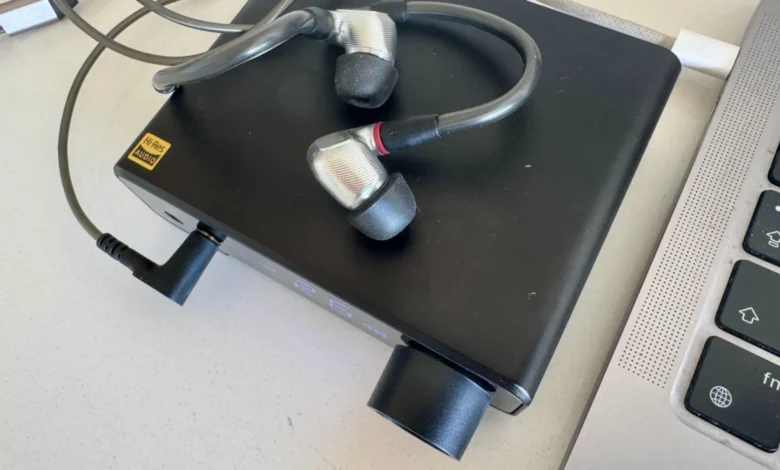
The personal audio market has long been saturated with compact digital-to-analog converters (DACs) and headphone amplifiers aimed at elevating the humble laptop listening experience. Amidst fierce competition from established audio brands, Topping has introduced its latest iteration, the Topping DX1 II. Available globally now—priced at $119 in the United States, £119 in the United Kingdom, and approximately AU$169 in Australia—the DX1 II represents a comprehensive refinement over its predecessor. Combining premium aesthetics, robust technical specifications, and extensive user-customization tools, this desktop audio unit positions itself as a formidable contender in the sub-$150 audio landscape.
Evolution of Desktop Audio and Market Context
Over the past decade, the proliferation of high-resolution streaming services and the gradual disappearance of dedicated headphone jacks from modern computing hardware have catalyzed a boom in external desktop DAC/amps. Consumers increasingly demand audiophile-grade performance without the financial and spatial burdens of traditional, component-heavy hi-fi racks.
Topping has built a strong reputation within the global audio community for producing measuring-centric, high-performance electronics at accessible price points. The original DX1 established a baseline for budget desktop audio, but the DX1 II introduces critical architecture shifts, including enhanced processing power and balanced connectivity options that were previously reserved for higher-tier equipment. Positioned slightly higher in price than ultra-portable dongles like the iFi Go Link Max or the flask-shaped iFi Uno, the DX1 II justifies its cost through a broader array of inputs, outputs, and software-driven customizability.
Comprehensive Technical Architecture and Specifications
At the heart of the Topping DX1 II is an advanced ESS ES9039Q2M DAC chipset, implemented within a dual-DAC architecture. By dedicating a separate digital-to-analog converter to each channel alongside fully independent signal processing, Topping aims to minimize cross-talk and maximize channel separation. The unit officially supports high-resolution digital audio files up to 32-bit/384kHz PCM and native DSD256 playback.
Signal processing duties are managed by a 16-core XMOS XU-316 microcontroller. This component works in tandem with the dual-DAC layout and a fully balanced analog stage to keep system noise and total harmonic distortion (THD) to absolute minimums.
Connectivity options are surprisingly robust for a device measuring a mere 32 x 100 x 100mm and weighing just 275 grams. Digital audio can be fed into the unit via a rear-mounted digital optical input or a versatile USB-C port, which simultaneously serves as the device’s power supply. On the output front, the DX1 II features an unbalanced 3.5mm headphone jack, a balanced 4.4mm headphone socket, a dedicated balanced 4.4mm line output for connecting to external powered speakers or audio systems, and traditional stereo RCA analog outputs.
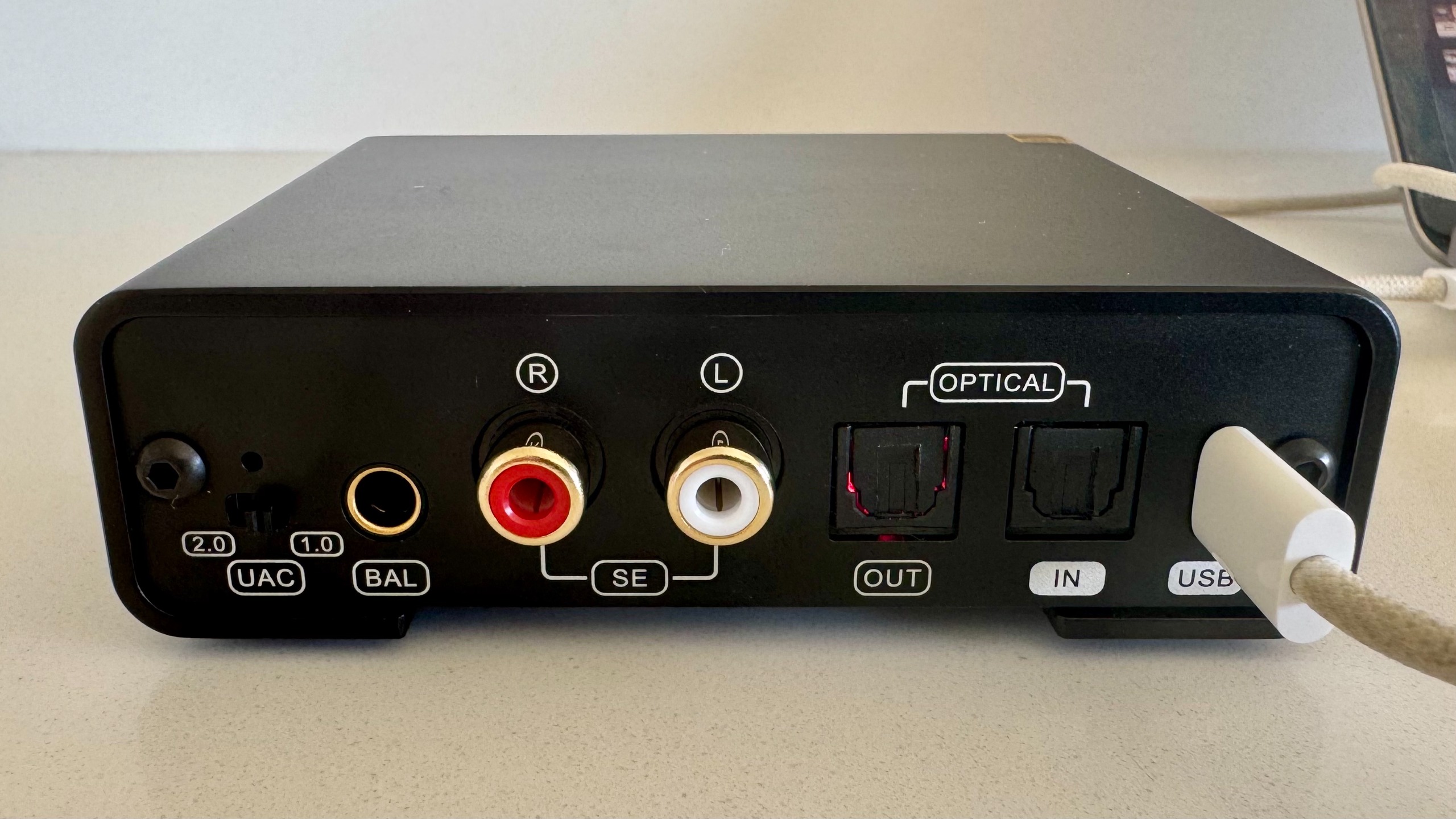
Furthermore, a dedicated toggle switch allows users to switch between UAC 1.0 and UAC 2.0 protocols. The UAC 1.0 setting ensures seamless plug-and-play compatibility with gaming consoles such as the Nintendo Switch and the Sony PlayStation 5, broadening the unit’s appeal beyond traditional music listening.
Advanced Customization: Topping Tune and Web Platforms
One of the standout attributes of the Topping DX1 II is the unprecedented level of control it offers the end-user. By connecting the device to a computer via USB, users gain access to Topping’s "Home Web" platform and the "Topping Tune" software suite.
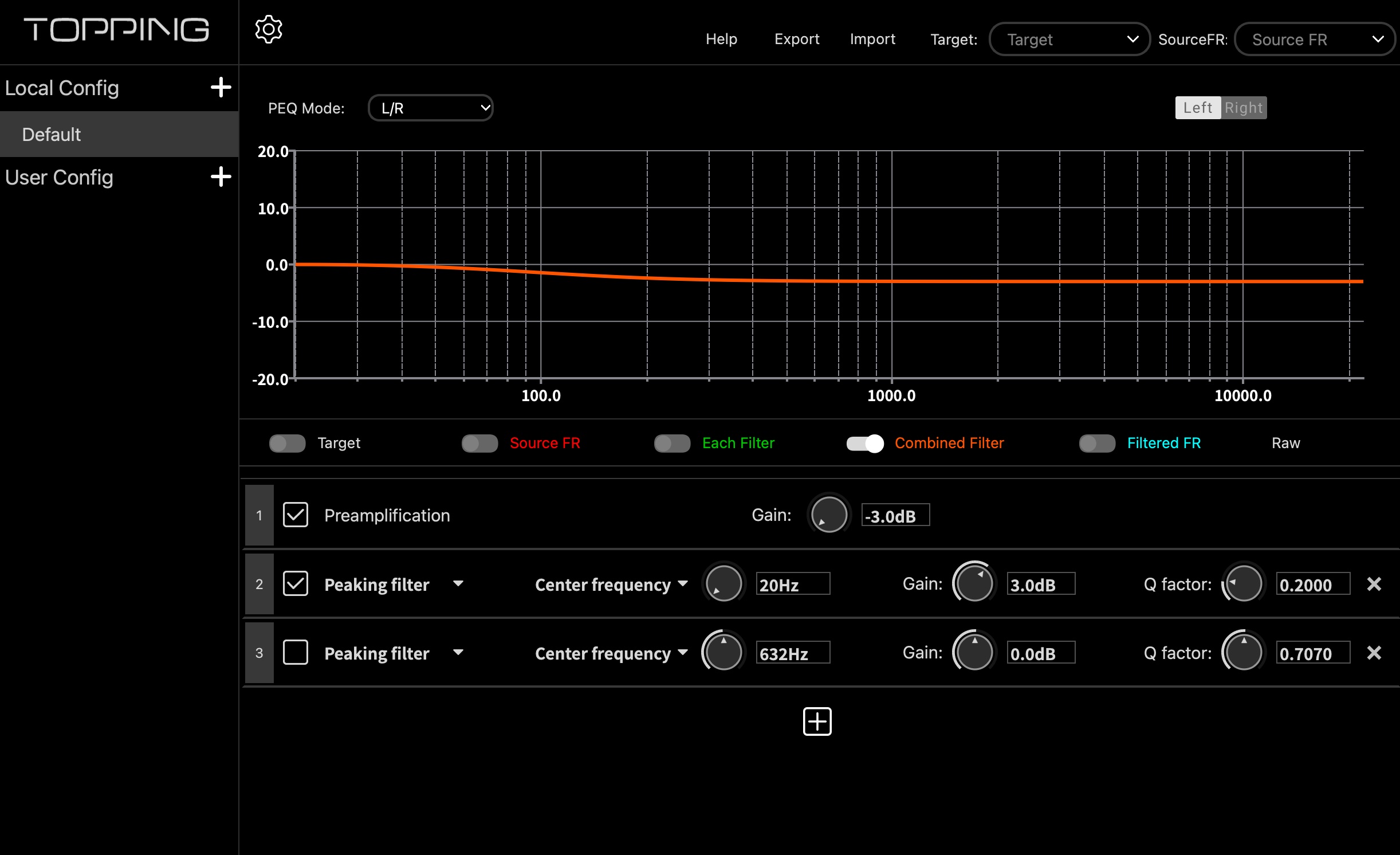
The Home Web portal allows for straightforward adjustments, including gain settings and the selection among eight distinct digital filters to fine-tune the high-frequency roll-off and impulse response. Meanwhile, Topping Tune features an intuitive drag-and-drop graphical user interface for creating and saving Parametric Equalizer (PEQ) settings. Users can manipulate frequency, gain, and bandwidth across a 10-band equalizer with independent adjustments for the left and right channels. This level of granular software control is rarely found in desktop DACs at this price tier and can be applied across all physical outputs.
Design, Build Quality, and Ergonomics
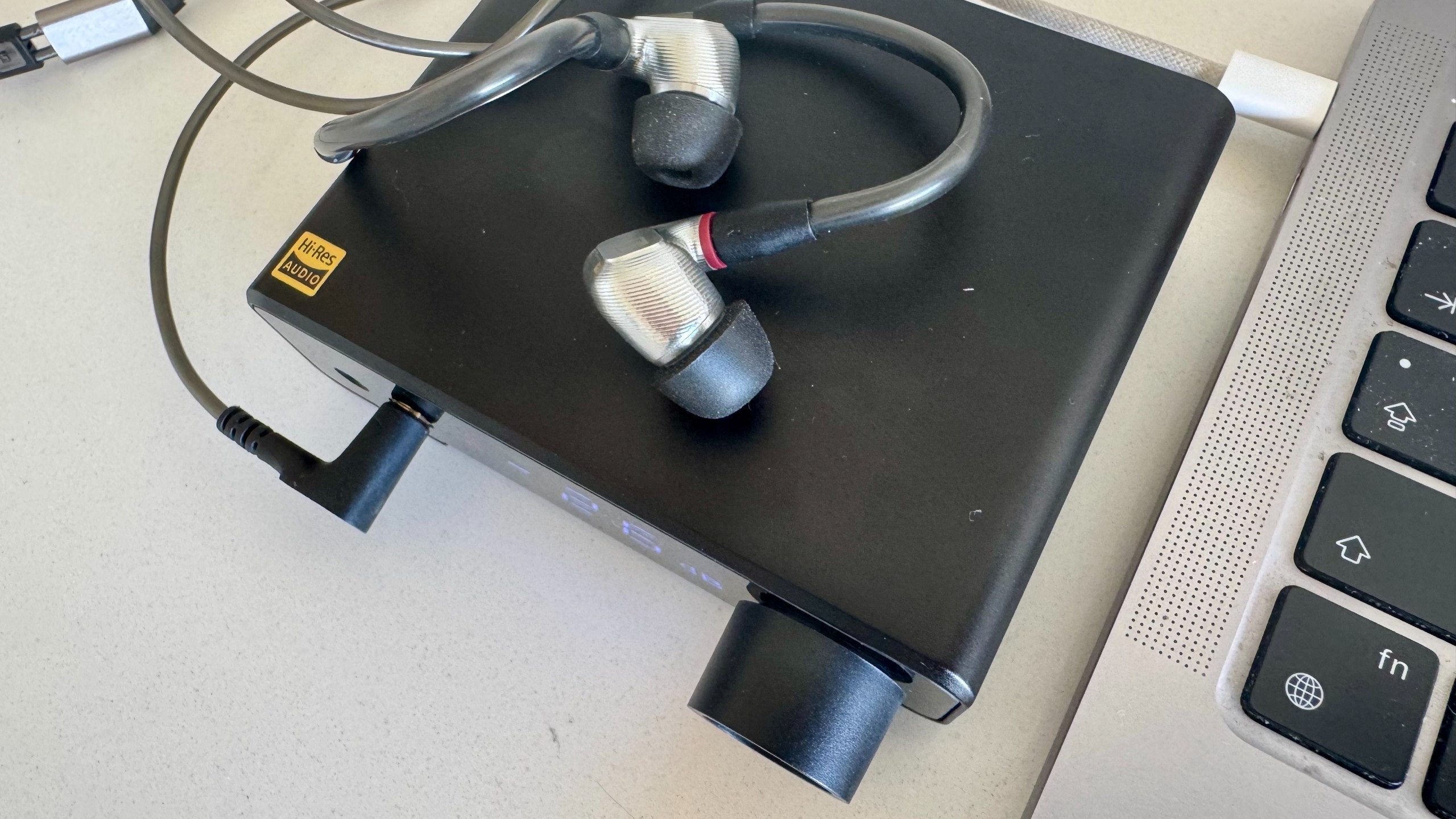
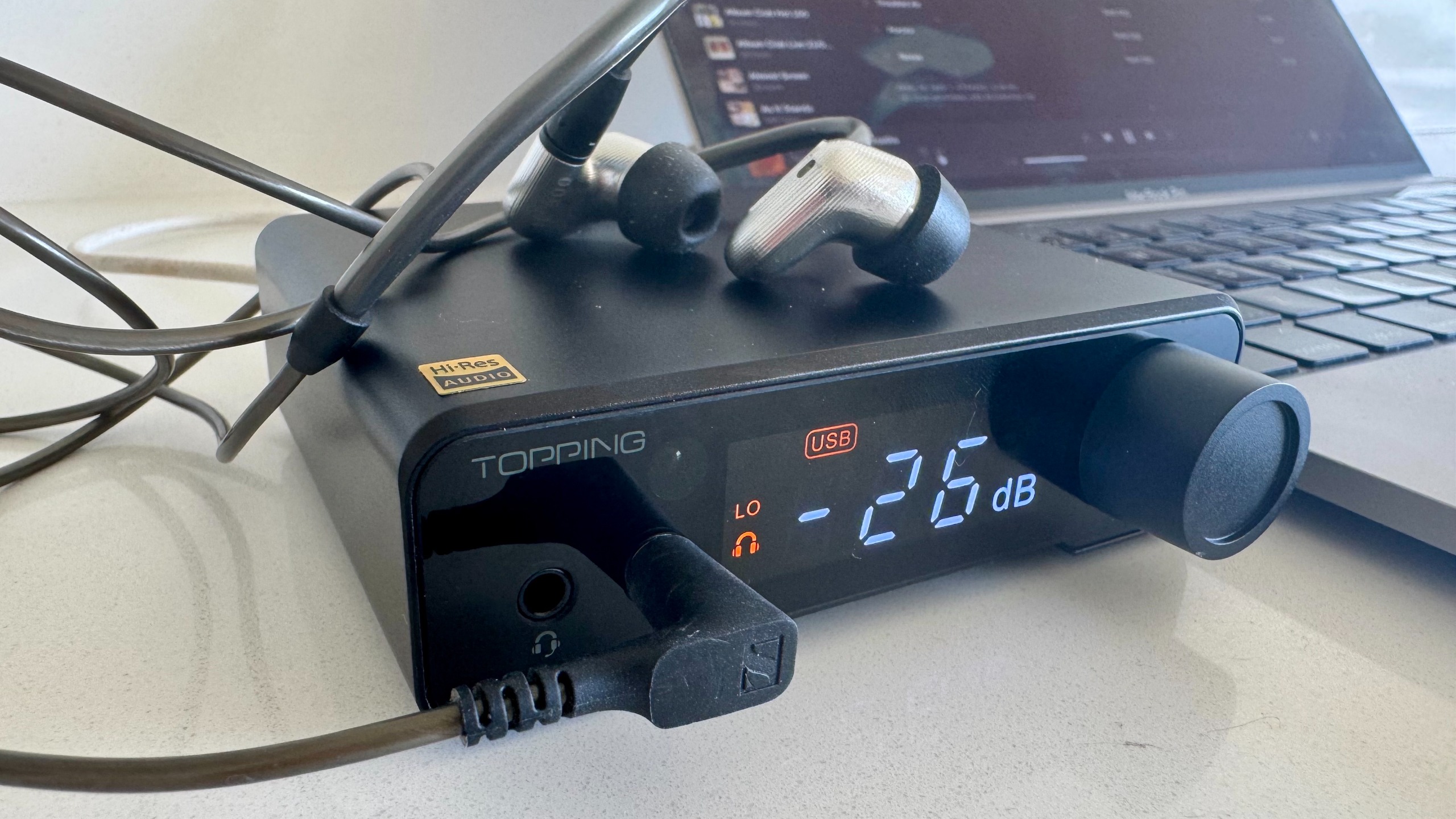
Constructed primarily from machined aluminum, the DX1 II exudes a tactile quality that punches well above its retail price. The chassis features gracefully rounded edges, eliminating sharp corners and giving it a refined, professional appearance on a desk or equipment rack. At 275g, the unit is heavy enough to remain stable on a surface and resist being dragged out of position by stiff headphone cables, yet light enough to remain portable.
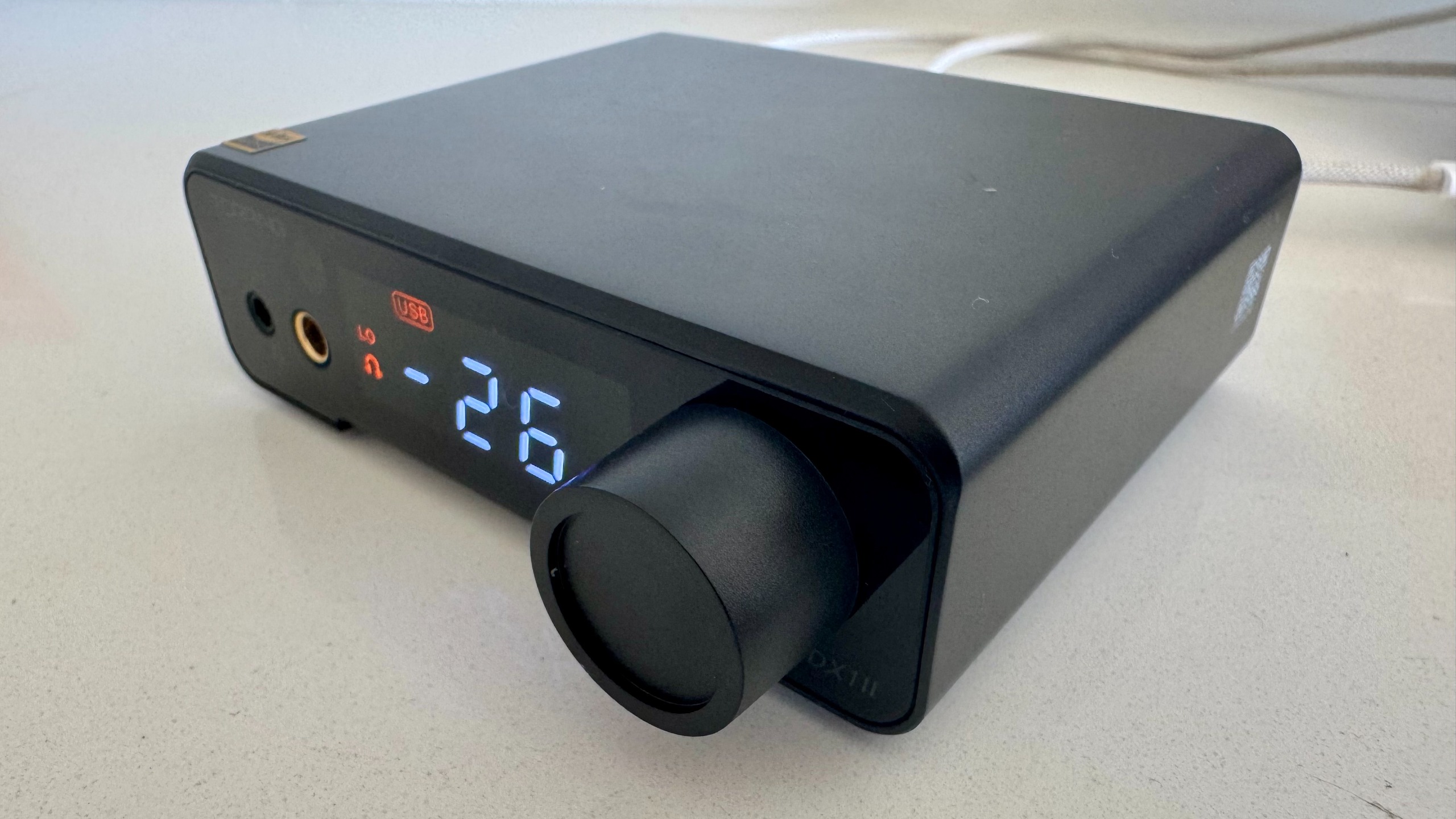
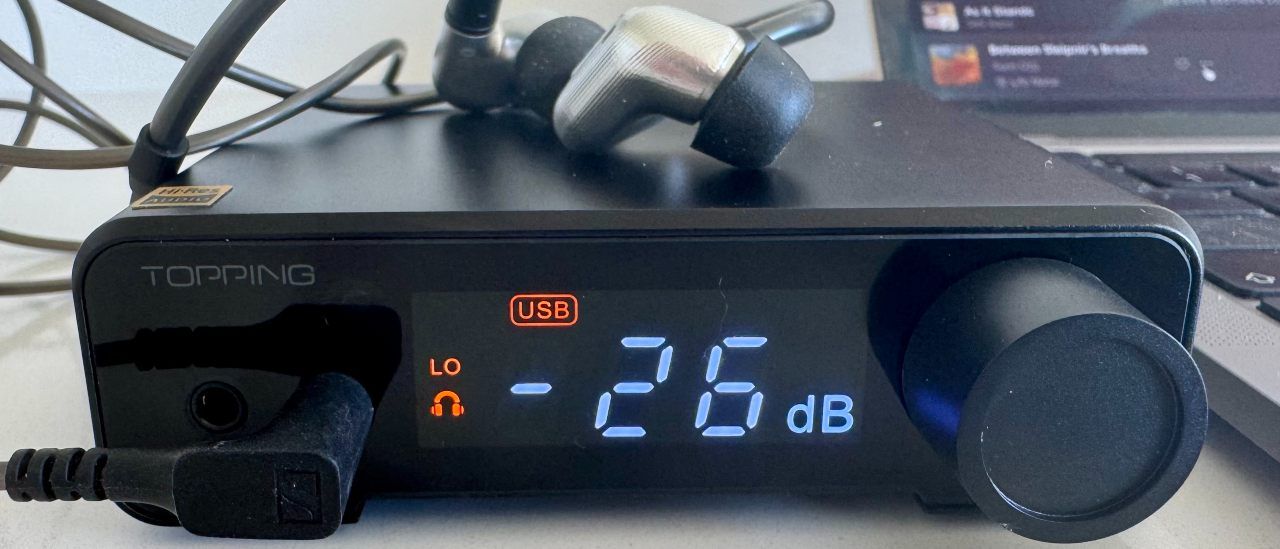
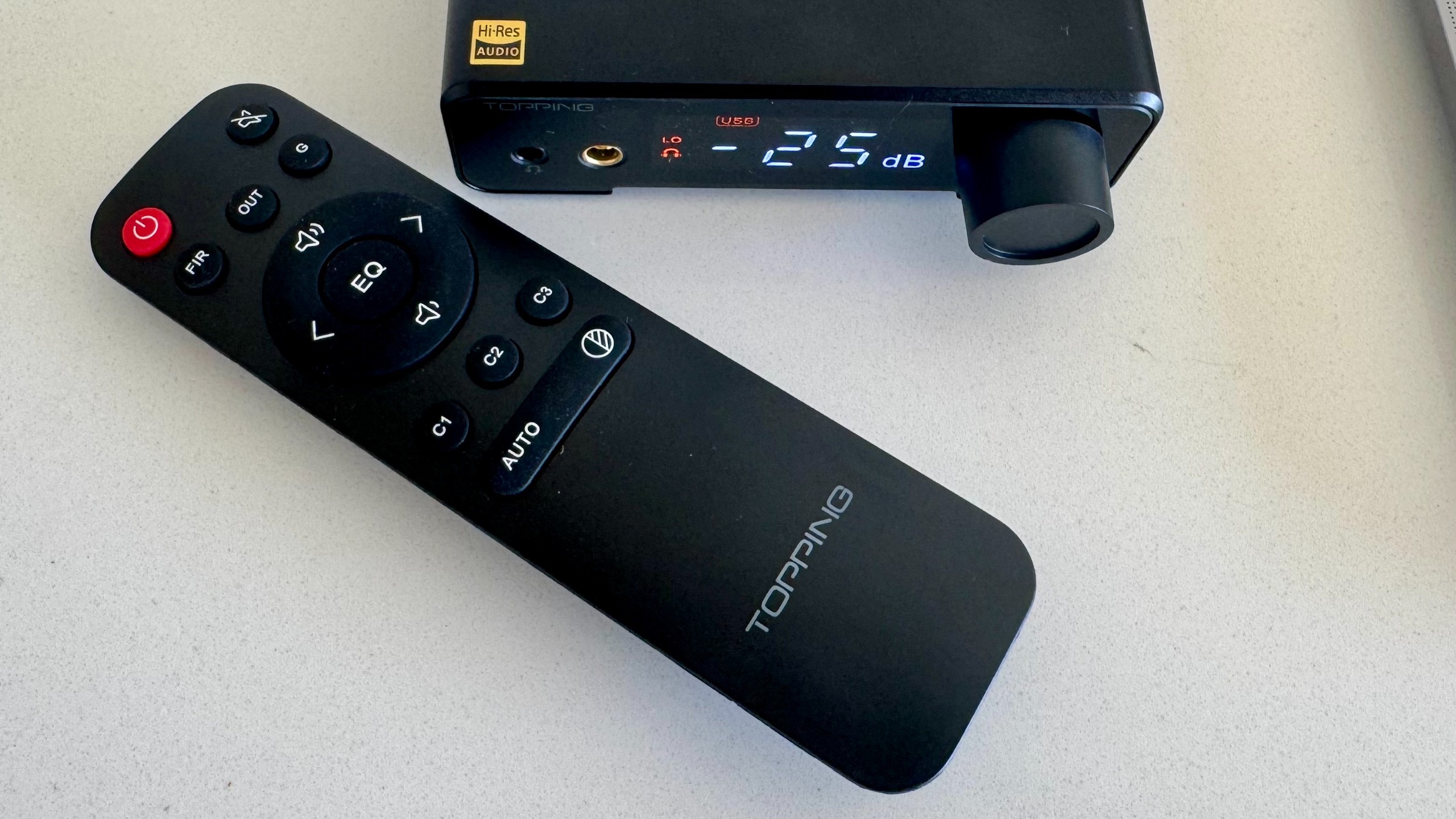
The front fascia is dominated by a clear, legible LED display that communicates current volume levels, active inputs, and system status. Interaction is primarily managed via a multi-function rotary encoder dial. While functional for volume adjustments and input switching, reviewers note that navigating deeper system menus via the dial alone can feel somewhat unintuitive. To mitigate this, Topping includes a compact infrared remote control handset, which greatly simplifies accessing equalization presets and system settings from a distance.
Sonic Performance and Listening Impressions
Evaluated with a MacBook Pro running Tidal and driving a pair of Sennheiser IE900 in-ear monitors via both balanced and unbalanced connections, the Topping DX1 II delivers a mature, refined musical presentation.
When streaming intricate tracks—such as Boygenius’s The Record in 24-bit/48kHz FLAC—the DX1 II immediately highlights its strengths in detail retrieval. The unit demonstrates an acute awareness of subtle micro-dynamics, harmonic overtones, and fast transients, presenting them with sufficient weight to keep the focus firmly on the music rather than clinical analysis.
The tonal balance is inherently natural, leaning toward a relaxed, easy-going character that prevents listening fatigue over extended sessions. Rhythm and tempo are handled with commendable fluency, and the soundstage is expansive enough to give complex arrangements adequate breathing room without losing control. Notably, the DX1 II maintains consistent sonic behavior across various volume levels, avoiding the tonal shifts that plague some competing entry-level amplifiers when pushed to extremes or played at very low volumes.
However, the unit is not without sonic limitations. Critical listeners may find that the DX1 II exhibits a slight compression in macro-dynamics. When testing heavy, dynamic-heavy recordings like Sunn O)))’s Life Metal, the distance between quiet passages and thunderous crescendos feels somewhat flattened due to a minor shortage of headroom. Additionally, the Topping demonstrates a distinct tendency to roll off the highest frequencies. While treble extension is acceptable, it lacks the aggressive bite and sparkle that some listeners prefer.
Market Implications and Verdict
The Topping DX1 II succeeds in bridging the gap between basic consumer audio equipment and enthusiast-grade desktop gear. By packing a high-end ESS DAC chipset, balanced architecture, extensive PEQ software support, and a premium aluminum chassis into a sub-$120 device, Topping has set a high benchmark for budget desktop audio.
While purists seeking blistering macro-dynamics or soaring treble brilliance might look toward more expensive alternatives, the DX1 II offers an undeniable upgrade for laptop users, desktop gamers, and headphone enthusiasts seeking versatile, high-resolution performance without a steep financial investment.