Google’s new Gemini-powered smart glasses let you get AI help without pulling out your phone

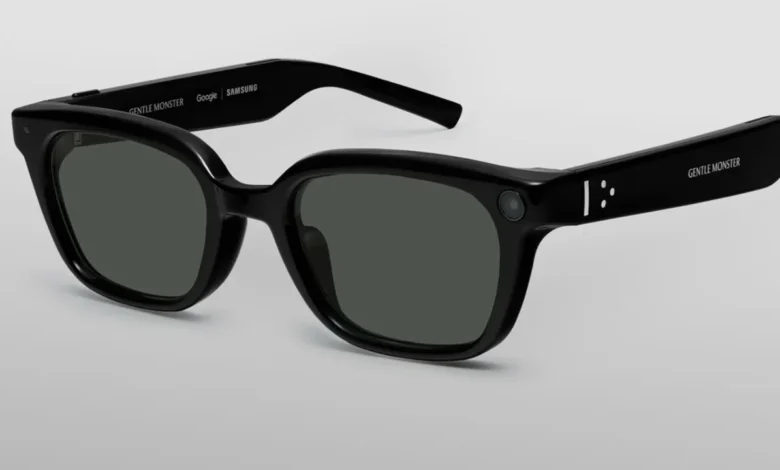
The product line is available for pre-order as of November 2026, with a wider commercial retail launch scheduled for December 10. These devices are designed to operate seamlessly across a broad mobile ecosystem, supporting both iOS and Android platforms, including Google’s own Pixel series and Samsung’s Galaxy range.

Design and Hardware Specifications
One of the primary hurdles for smart glasses in the past decade has been the "cyborg" aesthetic that discouraged mainstream adoption. Google’s latest strategy addresses this by partnering with industry veterans. Gentle Monster, known for its avant-garde approach to eyewear, offers six distinct, high-fashion silhouettes that leverage vibrant color palettes—ranging from deep reds and sunset pinks to classic yellows and grays. These units, retailing at a base price of $449, provide users with the flexibility to install custom prescription lenses, making them a functional substitute for standard eyewear.
Warby Parker, conversely, has leaned into a more minimalist, professional aesthetic. The three styles—Alden, Reid, and Wren—are crafted in more traditional tones such as Pine, Saddle, and Jet Black. With a starting price point of $395, these models target the professional demographic, emphasizing ergonomic comfort and diverse frame width options.

From a hardware standpoint, the engineering feat lies in the weight-to-performance ratio. Each pair of glasses maintains a lightweight profile of approximately 41 grams. Power management is facilitated by a proprietary charging case capable of providing up to seven full recharge cycles. When fully charged, the glasses offer approximately nine hours of active use, which is a significant improvement over previous wearable iterations, positioning them as a viable all-day accessory.
The Role of Gemini AI
The integration of Gemini, Google’s multimodal large language model, represents the core utility of these devices. The glasses are equipped with a 12-megapixel ultra-wide camera and a sophisticated array of microphones that allow users to interact with the AI without physically touching a phone.

The operational workflow for the device is designed to be intuitive. Users can trigger Gemini via a voice command or a haptic-sensitive tap on the temple of the frame. Once engaged, the AI can process visual data in real-time. Practical applications include:
- Contextual Assistance: Pointing the camera at a physical object allows Gemini to identify the item, explain its function, or provide historical context.
- Navigation: Integration with Google Maps allows for heads-up, real-time directional guidance, reducing the need for constant phone-checking during transit.
- Real-time Translation: Perhaps the most compelling feature for international travelers, the glasses support real-time audio translation for over 70 languages, facilitating seamless communication in diverse linguistic environments.
- Accessibility Tools: Guided Vision, a feature specifically designed for the visually impaired, provides descriptive audio narration of the user’s surroundings, while the Aira Explorer integration connects users to live, human-guided assistance for complex navigational tasks.
Privacy and Ethical Governance
Google has addressed the inevitable privacy concerns surrounding head-worn cameras by implementing a tiered security framework. According to official company documentation, image data captured by the glasses is not stored in a user’s permanent Gemini history, nor is it utilized for the training of future AI models.

Furthermore, the hardware includes physical indicators designed to notify bystanders when the device is recording. A dedicated hardware light illuminates during video capture, and the system is engineered with a manual "kill switch" that physically disconnects the camera and audio systems, effectively turning the smart device into a pair of standard, non-connected glasses. Google representatives have also noted that the software automatically masks faces detected in the field of view to further protect the privacy of individuals in public spaces.
The Evolution of Wearable Computing
The launch of these glasses represents a culmination of a multi-year effort to bring Ambient Computing to the mass market. The journey toward this release can be traced back through several milestones:

- 2023–2024: Google begins internal testing of "Project Iris" and related AR/XR initiatives, focusing on miniaturizing sensor arrays.
- Early 2026: Partnerships with Gentle Monster and Warby Parker are finalized, shifting the focus from lab-based prototypes to consumer-facing fashion accessories.
- November 2026: Formal product announcement and opening of global pre-order windows.
- December 2026: Retail release.
Market analysts suggest that this release is a strategic response to the increasing saturation of the smartphone market. By moving computing power to the face, Google is attempting to create a "frictionless" user experience. While the success of the product will ultimately depend on battery endurance and user comfort, the initial reception suggests that the market is ready for a move away from screen-dominant interaction.
Industry Implications and Future Outlook
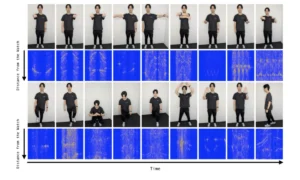
The introduction of these glasses is expected to disrupt several sectors, most notably the health-tracking and accessibility markets. By utilizing ultrasonic sound waves—a technology recently demonstrated by researchers at Cornell’s SciFi Lab—smart devices are increasingly capable of tracking full-body movement without the need for additional sensors. Integrating these findings into future iterations of Google’s glasses could eventually allow for posture correction and comprehensive fitness tracking.

Furthermore, the $395–$449 price bracket places these glasses in direct competition with premium fashion eyewear, rather than just consumer electronics. This suggests that Google is no longer selling a "gadget," but rather a lifestyle tool.
The broader impact of this rollout extends to the ethics of public surveillance. As smart eyewear becomes more common, the societal norms surrounding the use of AI in public spaces will likely face significant scrutiny. Google’s proactive measures, such as the recording light and the ability to manually disable the camera, indicate an awareness of the "Glasshole" stigma that plagued earlier iterations of smart eyewear in the early 2010s.

Official Stance and Market Reception
While Google has not released official sales figures, the inclusion of high-street brands like Warby Parker suggests a high degree of confidence in the product’s viability. The decision to make the software platform agnostic (supporting both iOS and Android) is a significant departure from Google’s traditional hardware-locked strategy, signaling a desire to capture a larger percentage of the wearable user base rather than restricting the product to the Pixel ecosystem.
For the average consumer, these glasses represent a step into a world where digital information is layered over the physical one. Whether the public will embrace the integration of constant AI monitoring in their daily lives remains to be seen, but the launch of these glasses on December 10 will serve as a critical litmus test for the future of wearable AI technology. As the industry watches, the success or failure of this venture will likely dictate the direction of consumer hardware for the remainder of the decade.