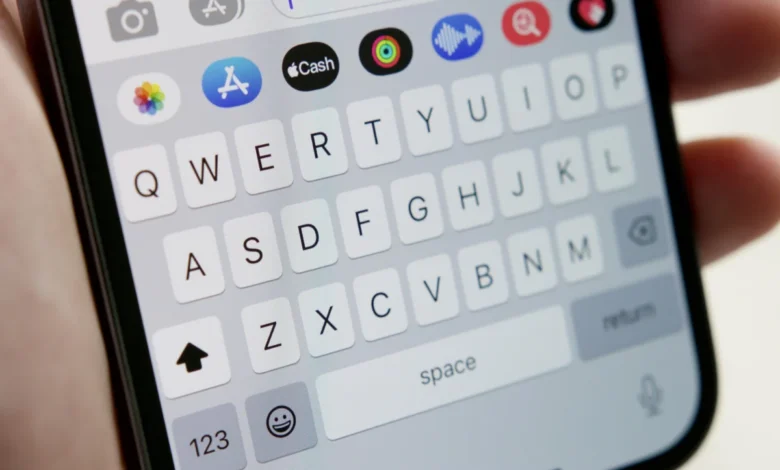
The digital landscape has long been defined by the tension between user freedom and the curated experiences provided by technology giants. For years, observers have scrutinized Chinese smartphone manufacturers for their integration of system-level text filtering, which often complies with local government mandates to restrict specific keywords or political discourse. However, recent findings suggest that this practice of "invisible censorship" is not confined to specific regional markets. Apple, a company that has built its brand on the pillar of user privacy and autonomy, appears to maintain a comprehensive, undisclosed list of thousands of words and phrases that are systematically excluded from the predictive text and swipe-typing capabilities of the iPhone keyboard.
The Mechanism of the Invisible Gray List
The discovery, brought to light by independent researcher Derik Kauffman, reveals that Apple does not outright block these terms—users remain capable of manually typing them. Instead, the limitation exists within the predictive engine. When a user begins to type or swipe, the iOS autocomplete algorithm identifies these specific entries as "off-limits," effectively ensuring they never appear as a suggested word or a swipe-to-type result. This creates a friction-filled user experience for specific terms, where the software actively bypasses or autocorrects the user’s input toward alternative, permitted language.

Kauffman’s investigation, supported by analytical tools including OpenAI’s Codex and Anthropic’s Claude Code, suggests that this "gray list" is not an accidental byproduct of machine learning but a deliberate, hard-coded architectural feature. The list spans multiple languages and appears to be baked into the foundational layer of the iOS keyboard, functioning globally regardless of the user’s location or regional settings.
Chronology of the Discovery
The suspicion that Apple’s predictive text was being curated began with anecdotal reports from users who found their typing experience hampered when attempting to use specific phrases. Over the past several years, scattered reports surfaced on forums and social media regarding the keyboard "refusing" to suggest certain words.
- Initial Observations: Users reported that common phrases, particularly those involving political figures or sensitive socio-political topics, were being consistently autocorrected or ignored by the predictive engine.
- Systematic Investigation: Researcher Derik Kauffman leveraged advanced AI coding models to scrape and analyze the internal dictionaries of the iOS keyboard.
- Verification: Testing by third-party outlets, including Reuters, confirmed that swipe-typing specific phrases—such as "Tibetan independence" or "United Ireland"—resulted in nonsensical autocorrect substitutions like "Tibetan independences" or "United Iceland."
- Current Status: The list remains active in the latest versions of iOS, with no public disclosure from Apple regarding the criteria used to curate these terms.
Scope of the Filtered Content
While it is standard practice for predictive text algorithms to filter out explicit profanity, hate speech, or content that violates safety policies, the scope of Apple’s list extends into the political and ideological realms. The findings indicate that the list includes:

- Political Commentary: Phrases such as "dictator Trump" and "sleepy Joe" are flagged, preventing the keyboard from suggesting them even when they are common in mainstream discourse.
- Geopolitical Sensitivity: Terms like "Tibetan independence" and "United Ireland" are actively suppressed, suggesting an attempt to avoid entanglement in complex international disputes.
- Political Figures: The list contains derogatory or mocking phrases regarding international leaders, including India’s Prime Minister Narendra Modi and opposition leader Rahul Gandhi.
- Ambiguous Categories: Other terms, such as "white man," are occasionally subject to these restrictions, leading to forced corrections like "white mean," whereas similar phrases like "blue man" or "red man" pass through the system without interference.
Official Responses and the Stance of Apple
When presented with evidence of this filtering, Apple provided a brief, generalized response to media inquiries. A representative stated that the iPhone’s built-in keyboard is designed to avoid suggesting words that could be deemed offensive or inappropriate. The company declined to provide a detailed explanation of the methodology used to curate the list, nor did it offer a list of criteria for what constitutes "inappropriate" content.
This lack of transparency has sparked debate among privacy advocates and digital rights organizations. Critics argue that while Apple has a legitimate interest in preventing the propagation of hate speech, the inclusion of political commentary and sensitive geopolitical phrases crosses the line into editorializing the user’s communication.
Implications for Digital Autonomy
The implications of this discovery are twofold: technical and ethical. From a technical standpoint, it highlights the immense power inherent in predictive text algorithms. As these systems become more integrated into our daily communication, the ability for a tech company to steer the conversation—even subtly—becomes a significant tool for information control.

David Greene, a lawyer for the Electronic Frontier Foundation (EFF), noted that the existence of such a list is "creepy." While he acknowledged the rationale for curbing inflammatory or harmful content, he emphasized that the lack of transparency is the primary issue. When a company hides its filtering logic, it prevents users from understanding why their own words are being modified or suppressed.
Broader Context: The Normalization of Algorithmic Curation
This situation occurs against the backdrop of an increasing trend in the tech industry to exert more control over the user experience. Whether it is through AI-driven content moderation on social media or predictive text and email completion in productivity software, the boundary between "helping the user" and "guiding the user" is becoming increasingly blurred.
For Apple, which has historically positioned itself as a guardian of user agency, this discovery poses a reputational risk. If the keyboard is seen as a tool for political or social engineering, it could undermine the trust that the company has cultivated with its user base. Furthermore, the global nature of this list implies that a single set of corporate values is being imposed on users across vastly different cultures and political systems.

Fact-Based Analysis of the "Gray List"
Data suggests that the list is extensive, containing tens of thousands of entries. Unlike a hard block, which would result in an error message or a refusal to type, the gray list operates on a psychological level. By failing to suggest a word, the software introduces a minor inconvenience that discourages the user from using that term. Over time, this can lead to a shift in the language used by the public—a phenomenon sometimes referred to as "algorithmic nudging."
The selection of terms on the list appears to be highly selective and somewhat inconsistent. The inclusion of names of specific politicians from various nations suggests that Apple may be attempting to appease a wide variety of regulatory bodies and stakeholders, perhaps to ensure that their products do not become flashpoints for local censorship laws. However, by attempting to be "neutral" or "safe" globally, the company has inadvertently created a system that many users find overbearing and opaque.
Conclusion
As the digital world continues to evolve, the tools we use to communicate are becoming increasingly sophisticated, yet also increasingly opaque. The discovery of Apple’s hidden keyboard word list serves as a reminder that the technology we carry in our pockets is not a neutral medium. It is a product of corporate decisions, designed with specific intent.

Whether this practice is viewed as a necessary safety feature or an overreach of corporate power depends on one’s perspective on the role of technology companies in policing language. However, the lack of transparency remains a common concern. For users, the takeaway is clear: the predictive text suggestions on an iPhone are not just a reflection of their personal vocabulary—they are a reflection of Apple’s corporate policies on what is, and is not, considered acceptable discourse. As the debate continues, it is likely that calls for greater transparency in algorithmic design will only grow louder, putting further pressure on tech giants to clarify exactly what they are doing to the words we use every day.