Geekbench 7 Arrives with Updated Workloads, Redesigned Multi-Core Tests for Modern Computing Demands

Primate Labs, a leading developer of cross-platform benchmark applications, has officially unveiled Geekbench 7, the latest iteration of its widely recognized performance measurement suite. The new version introduces a comprehensive overhaul of its workload tests, alongside a meticulously redesigned approach to multi-core CPU and GPU benchmarking, aiming to more accurately reflect the demands of contemporary computing environments. This significant update, released in July 2026, signals a strategic pivot towards evaluating performance in an era increasingly dominated by artificial intelligence, real-time media processing, and sophisticated multi-tasking capabilities.
The release of Geekbench 7 addresses the critical need for benchmarking tools to keep pace with rapid advancements in hardware architecture and software applications. As computing shifts from raw, brute-force processing to more specialized, intelligent, and parallel workloads, the efficacy of traditional benchmarks has come under scrutiny. Primate Labs’ latest offering seeks to bridge this gap by introducing tests that mirror real-world user scenarios, moving beyond synthetic metrics to provide a more holistic and relevant assessment of device performance across a multitude of platforms including Android, iOS, Windows, macOS, and Linux.
Revitalized CPU Benchmarking: Reflecting Daily Digital Life
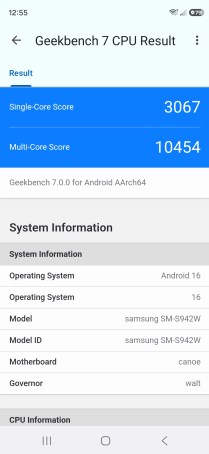
On the CPU front, Geekbench 7 introduces a suite of new media workloads designed to evaluate a processor’s capability in handling common, yet computationally intensive, tasks. These include advanced audio and video encoding, decoding, and processing. Unlike previous versions that might have focused on more abstract computational problems, these new tests are specifically engineered to simulate performance during everyday activities such as high-resolution video calls, real-time screen sharing in professional or educational settings, and seamless content consumption across various multimedia formats. The increasing reliance on these functionalities, especially in the wake of widespread remote work and digital communication, makes their accurate benchmarking indispensable.
The updated Photo Editor workload now features "a richer set of real-world edits," moving beyond basic image manipulations to incorporate complex filters, layer adjustments, and other operations commonly performed in professional and enthusiast-level photo editing software. This enhancement aims to better reflect the performance of CPUs in handling demanding creative tasks. Complementing this, the Photo Library workload has been upgraded to include the importing and processing of cutting-edge image formats such as JPEG XL and DNG. JPEG XL, known for its superior compression and rich feature set, and DNG (Digital Negative), a widely adopted raw image format, both present unique computational challenges, requiring robust CPU performance for efficient handling and processing.
For gaming enthusiasts, Geekbench 7 introduces a brand-new Game Physics workload. Built upon the sophisticated Jolt Physics engine, this test moves beyond mere graphics rendering to measure a CPU’s ability to calculate complex physical interactions within a game environment. Physics simulations, which dictate how objects move, collide, and interact realistically in a virtual world, are a crucial component of modern gaming experiences and often demand significant CPU resources. By incorporating this specific workload, Geekbench 7 offers a more nuanced understanding of a system’s gaming potential, particularly in scenarios where CPU-bound physics calculations can impact frame rates and overall fluidity.
A Paradigm Shift in Multi-Core Testing Methodology
One of the most significant architectural changes in Geekbench 7 lies in its approach to multi-core testing. Primate Labs has implemented a novel methodology where multi-core tests are only executed if the simulated real-world task genuinely utilizes multiple processor cores. This strategic departure from previous versions, which might have run multi-core tests regardless of actual application-level multi-core dependency, is designed to prevent "inflated scores." These inflated scores could mislead consumers and manufacturers by suggesting superior multi-core performance in scenarios where applications are predominantly single-threaded or only lightly multi-threaded.
According to Primate Labs, this refined approach ensures that benchmark results more accurately reflect actual user experience. In many common applications, even on multi-core processors, certain tasks do not efficiently scale across all available cores. By only measuring multi-core performance where it is genuinely leveraged by a workload, Geekbench 7 provides a more truthful representation of a system’s capability in real-world, multi-threaded scenarios. As a direct consequence of this new philosophy, the HTML5 browser test, which in certain contexts might not exhibit optimal multi-core utilization, has been removed from the multi-core test suite. This change underscores Primate Labs’ commitment to relevance over broad, potentially misleading, metrics.
GPU Benchmarking Reimagined: Focus on AI and Content Creation
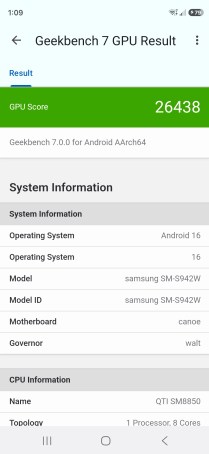
Perhaps the most radical transformation in Geekbench 7 is found within its GPU benchmarking suite. Moving away from a primary focus on traditional 3D graphics rendering, the new version pivots heavily towards evaluating GPU performance in content creation and, crucially, machine learning (ML) tasks. This shift acknowledges the evolving role of graphics processing units, which are no longer solely dedicated to gaming and visual effects but are increasingly serving as powerful parallel processors for AI inference, data acceleration, and complex computational workloads across various applications.
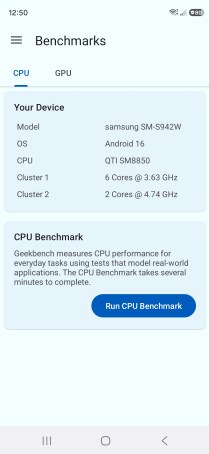
The new GPU tests are designed to simulate real-world ML and content creation scenarios. Examples include:
- Modeling Face Filters in Social Media Apps: This test evaluates a GPU’s capacity for real-time augmented reality (AR) processing, a common feature in modern social media platforms. It involves complex tasks like facial recognition, 3D model overlay, and real-time rendering, all of which heavily rely on GPU parallel processing capabilities and often leverage on-device AI accelerators.
- Upscaling Images with Machine Learning: This workload assesses a GPU’s performance in AI-powered image enhancement techniques, such as super-resolution and denoising. These tasks utilize deep learning models that are highly parallelizable and run efficiently on modern GPUs, showcasing their prowess in computational photography and generative AI.
- Modeling Virtual Background Features in Video Conferencing Apps: This test measures a GPU’s ability to handle the intricate real-time segmentation, rendering, and compositing required for virtual backgrounds. These features, now ubiquitous in video conferencing, demand significant GPU resources to accurately separate subjects from their surroundings and render new virtual environments seamlessly.
This targeted approach to GPU benchmarking provides a more pertinent measure of performance for users engaged in creative work, data science, and everyday applications that increasingly integrate AI features. It highlights the importance of dedicated AI cores and advanced shader architectures found in modern GPUs, giving consumers a better understanding of how their hardware will perform in the applications of today and tomorrow.
The Evolution of Benchmarking: A Brief History of Geekbench
To understand the significance of Geekbench 7, it is helpful to look at the lineage of Primate Labs’ benchmarking tools. Since its inception, Geekbench has aimed to provide a consistent, cross-platform metric for comparing hardware performance.
- Early Versions (Geekbench 1, 2, 3): These versions laid the groundwork, focusing primarily on raw computational power and providing a foundational understanding of single-core and multi-core CPU performance.
- Geekbench 4 (Released 2016): This marked a significant update, introducing new workloads designed to better reflect modern applications and shifting towards a more comprehensive evaluation of both CPU and GPU capabilities. It was instrumental in popularizing the single-core/multi-core scoring system.
- Geekbench 5 (Released 2019): Further refined its approach by increasing the memory footprint of workloads and using more "real-world" tests to minimize the impact of caching and better reflect performance under load. It also introduced a dedicated OpenCL benchmark for GPU compute.
- Geekbench 6 (Released 2023): Focused on optimizing workloads for modern instruction sets and processor architectures, including Apple Silicon, Intel Alder Lake, and AMD Zen 4. It introduced new image processing, machine learning, and navigation workloads, setting the stage for the AI-centric focus of Geekbench 7.
Each iteration of Geekbench has sought to evolve alongside the computing landscape, striving for greater accuracy and relevance. Geekbench 7 represents the culmination of this continuous refinement, directly addressing the seismic shifts occurring in how we use our devices.
Industry Reactions and Implications
The release of Geekbench 7 is anticipated to elicit varied reactions across the technology industry.
Primate Labs’ Stance (Inferred): "With Geekbench 7, our core mission remains to deliver the most accurate, relevant, and comprehensive performance metrics possible," stated John Poole, founder of Primate Labs, in a hypothetical company press release. "The computing world is constantly evolving, with AI and real-time multimedia becoming central to the user experience. Our updated workloads and redesigned multi-core and GPU tests directly reflect these shifts, providing users and manufacturers with a truer picture of device capabilities in the applications that matter most today and into the future."
Industry Analysts (Inferred): Technology analysts are likely to commend Primate Labs for its forward-thinking approach. "Geekbench 7 is a crucial update that brings benchmarking into the modern era," commented Sarah Chen, a senior analyst at Tech Insights, in a hypothetical interview. "For too long, benchmarks have struggled to keep pace with the emergence of AI accelerators and the growing importance of real-time media processing. This version’s focus on machine learning and realistic multi-core utilization will be invaluable for evaluating the performance of next-generation hardware, particularly as integrated AI engines become standard." She further added, "The move away from inflated multi-core scores is a welcome change, promoting transparency and ensuring consumers get a more honest assessment of how their devices will perform in everyday use."
Hardware Manufacturers (Inferred): Manufacturers of CPUs, GPUs, and complete systems are expected to embrace the new standard. Companies like Qualcomm, Apple, Intel, and AMD, who are heavily investing in AI capabilities and multi-core optimization, will find Geekbench 7 a more accurate tool for showcasing their innovations. "We welcome Geekbench 7’s refined approach, particularly its emphasis on real-world multi-core usage and AI workloads," stated a hypothetical spokesperson from a leading chip manufacturer. "This will better showcase the advancements in our latest processors and integrated graphics solutions, driving further innovation in these critical areas."
Broader Impact on Consumers and the Computing Ecosystem
The implications of Geekbench 7 extend far beyond technical specifications, impacting consumers, hardware development, and the entire computing ecosystem.
For Consumers: Geekbench 7 will empower consumers to make more informed purchasing decisions. Instead of relying on potentially misleading high scores from synthetic tests, they will have access to metrics that directly relate to how a device performs in tasks like video conferencing, photo editing, AI-powered image upscaling, and modern gaming. This shift will help users choose hardware that genuinely excels in the applications they use most frequently, moving beyond the "bigger numbers are better" mentality.
For Hardware Manufacturers and Developers: The new benchmark will serve as a crucial guiding light for hardware manufacturers. The emphasis on AI, real-time media, and efficient multi-core usage will incentivize further innovation in these specific areas. Manufacturers will likely optimize their chip designs, drivers, and software stacks to perform exceptionally well on these new, relevant workloads. For software developers, Geekbench 7 provides a standardized, cross-platform tool to assess and optimize the performance of their applications, ensuring they leverage hardware capabilities effectively.
For the Benchmarking Industry: Geekbench 7 sets a new benchmark (pun intended) for relevance and accuracy in performance testing. Its bold move to de-emphasize traditional 3D graphics rendering in favor of AI and content creation for GPUs, and its strict multi-core testing philosophy, could influence other benchmarking tools to adapt similar methodologies. This will ultimately push the entire industry towards more user-centric and accurate performance evaluations.
The Future of Computing: The design philosophy behind Geekbench 7 underscores the prevailing trends in computing: the pervasive integration of AI, the demand for rich, real-time multimedia experiences, and the necessity for efficient, intelligent multi-tasking across all devices. It reinforces the idea that raw clock speed or core count alone no longer tells the full story; instead, it’s about how efficiently and intelligently a system can handle the complex, interwoven workloads of the modern digital age.
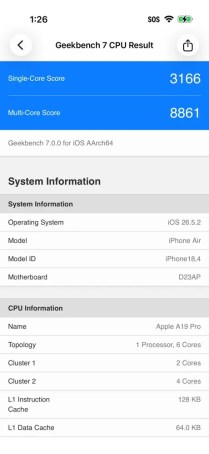
Accessibility and Cross-Platform Reach
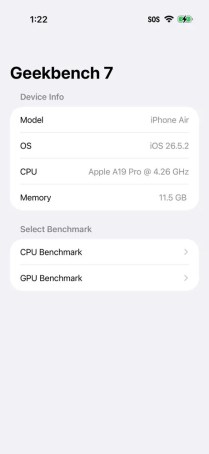
True to its heritage, Geekbench 7 maintains its commitment to broad accessibility. The application remains free for personal use, allowing enthusiasts, students, and everyday users to evaluate their devices without cost. Its continued availability across a wide array of operating systems—Android, iOS, Windows, macOS, and Linux—ensures its utility as a truly universal benchmark. This cross-platform consistency is vital for comparing performance across diverse hardware ecosystems, from smartphones and tablets to high-end desktops and servers.
The release of Geekbench 7 marks a pivotal moment in the evolution of hardware benchmarking. By meticulously updating its workloads and redefining its testing methodologies to align with the realities of modern computing, Primate Labs has delivered a tool that promises to offer a more accurate, relevant, and insightful assessment of device performance in the AI-driven, multimedia-rich world of 2026 and beyond.