Aotos Flux X26 Pro Review: Where the Line Blurs Between E-Bike and Electric Motorcycle

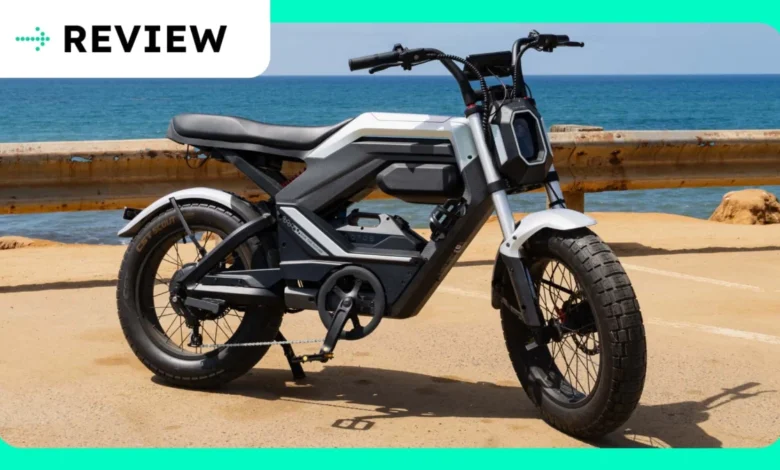
The modern urban and recreational landscape is undergoing a fundamental transformation driven by light electric vehicles. Across cities and suburban trails alike, traditional bicycles are rapidly being replaced by pedal-assisted machines, commonly known as e-bikes. These vehicles promise a unique blend of personal mobility, recreation, and low-impact transportation, allowing riders to bypass traffic congestion, minimize parking complications, and enjoy outdoor exercise with a fraction of the physical strain. However, the rapid evolution of propulsion technology has blurred the regulatory and functional boundaries of what constitutes an e-bike, giving rise to heavy, high-powered machines that closely mirror conventional motorcycles.
To evaluate this shifting paradigm, the Aotos Flux X26 Pro was subjected to a comprehensive three-week testing regimen covering approximately 90 miles of diverse terrain. Born out of a crowdfunding campaign, the Flux X26 Pro represents the debut product offering from startup manufacturer Aotos. Priced at $2,299 for the Pro variant—with a more modest $1,699 base model also available—the vehicle enters a highly competitive market populated by traditional commuters and emerging electric moped alternatives. This review examines how the Aotos Flux X26 Pro navigates the delicate balance between high-performance electric capability and practical everyday usability, while highlighting the broader implications of the burgeoning "e-moto" segment.
Regulatory Classifications and the Evolution of Power
In the United States, the regulatory framework governing electric bicycles is structured around a three-tier classification system, as defined by organizations such as the California Bicycle Coalition and adopted by numerous state legislatures. Class 1 e-bikes provide motor assistance exclusively while the rider is actively pedaling, cutting off assistance when the bicycle reaches 20 miles per hour. Class 2 e-bikes operate via either pedal-assist or a hand throttle, with assistance likewise capped at 20 mph. Class 3 e-bikes provide pedal-assist up to 28 mph, typically restricting throttle usage or prohibiting it altogether at higher speeds. Regardless of classification, federal and state statutes generally mandate that legal street-faring e-bikes maintain a nominal motor power output not exceeding 750 watts.
While a 750W motor is adequate for standard commuting and moderate incline traversal, it falls well short of delivering the aggressive acceleration and dynamic handling expected by enthusiasts seeking dirt bike performance or casual stunts. Consequently, many modern manufacturers incorporate "off-road" or "unlimited" modes into their vehicle software. When engaged, these modes bypass standard street limitations, unleashing significantly higher wattage—up to 1,200 watts on the standard Aotos model and an imposing 2,000 watts of peak power on the Flux X26 Pro.
This dual-personality functionality creates a distinct legal and operational grey area. Out of the box, the Aotos Flux X26 Pro complies with Class 2 regulations, capping speeds at 20 mph under a 750W nominal setting. However, unlocking the off-road mode transforms the vehicle into a high-powered machine capable of 28 mph throttle-driven speeds and a 2,000-watt output directed to the rear wheel. Because it lacks the mandatory vehicle registration, license plate mounting brackets, and lighting configurations required for street-legal mopeds or motorcycles, activating this off-road mode instantly relegates the vehicle to private property or specialized off-road tracks under current traffic laws. Despite these legal limitations, practical observation suggests that many consumers frequently utilize the unlocked power capabilities in public spaces, raising important questions about enforcement, safety, and infrastructure compatibility.
Design Philosophy: E-Bike Versus E-Moto
The physical architecture of the Aotos Flux X26 Pro immediately distinguishes it from conventional bicycles. Riding on bulky "e-moped" tires and featuring a fixed, non-adjustable seat, an aerodynamic frame fairing, and a single-speed drivetrain, the vehicle closely mimics the aesthetic and physical profile of a light motorcycle.
During the testing period, direct comparisons were drawn against a more traditional commuter model, the Tenways Wayfarer. Despite featuring a significantly smaller 720-watt-hour battery, the Tenways offered an operational range approximately 10 miles greater than the Aotos, while weighing roughly 40 pounds less. Furthermore, the traditional multi-speed transmission, adjustable bicycle saddle, and ergonomically optimized pedal positioning of the Wayfarer delivered a markedly different riding dynamic. Users could comfortably select optimal gear ratios for touring or sport riding, achieving a seamless synergy between human effort and motor assistance.
In contrast, the Aotos Flux X26 Pro presents distinct ergonomic and functional compromises when operated as a bicycle. The fixed seating position, single-gear configuration, and wide chassis design render the pedals largely decorative rather than functional. From a stationary stop, the single gear ratio makes initial propulsion awkward, while traveling at speeds approaching 25 mph requires the rider to pedal at an impracticably rapid cadence to engage the drivetrain.
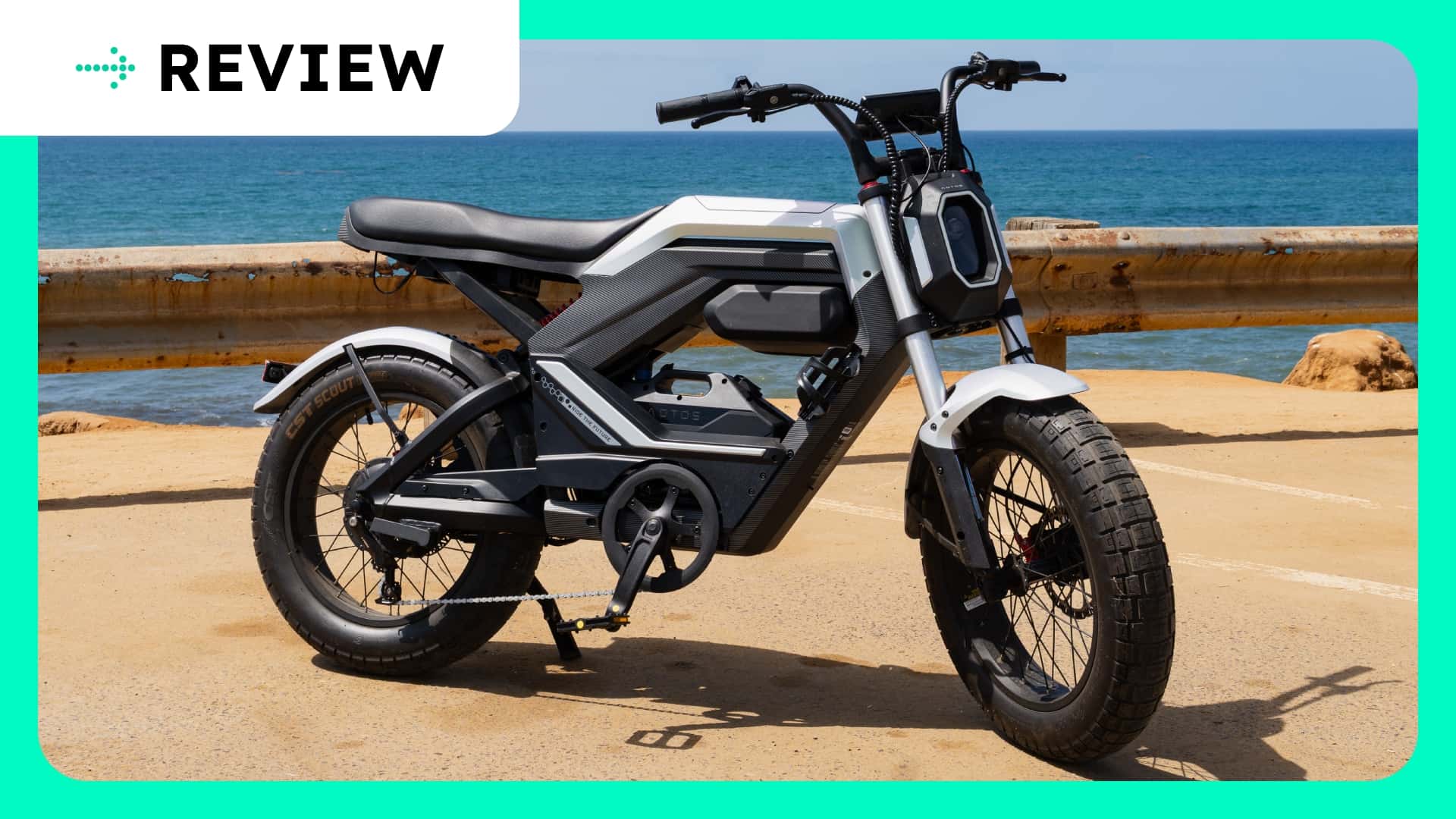
Compounding these ergonomic challenges is the vehicle’s reliance on a basic cadence sensor rather than an advanced torque sensor. While modern torque-sensing e-bikes measure the actual force applied by the rider to deliver proportional, natural assistance, cadence sensors merely detect whether the pedals are rotating. This mechanical limitation results in abrupt acceleration delivery; even a casual, defensive half-turn of the pedals to reposition the rider’s feet can inadvertently trigger an unprompted surge of motor power. Consequently, testers frequently abandoned pedaling entirely, relying exclusively on the handlebar-mounted throttle.
Battery Performance, Smart Features, and Cargo Limitations
The bulky frame architecture and wide tires of the Aotos Flux X26 Pro necessitate substantial electrical energy to maintain momentum. To achieve its advertised range of up to 75 miles, the vehicle incorporates a robust 48-volt, 21-amp-hour battery system, delivering just over one kilowatt-hour of energy storage. However, real-world efficiency is frequently compromised by the aforementioned inefficiency of the heavy chassis and the impracticality of utilizing human pedal power to supplement the electric motor.
As an introductory product originating from a Kickstarter crowdfunding campaign, the Flux X26 Pro integrates an array of advanced technological features designed to elevate the user experience. These include smartphone-based Bluetooth proximity unlocking, remote motor start capabilities, GPS tracking, an unauthorized motion alarm system, and integrated tire pressure monitoring systems accessed via a proprietary mobile application.
While these technological inclusions demonstrate ambition, initial implementation reveals significant areas for refinement. Testing revealed that the proximity unlock feature induced an aggressive standby battery drain while failing to operate reliably on a consistent basis. Similarly, the motion-sensitive security alarm proved overly sensitive during everyday parking scenarios, while the companion mobile application exhibited sluggish response times. Additionally, physical access to the centralized battery compartment presents a recurring administrative hurdle, requiring careful maneuvering and engagement with a finicky electrical connector, though the battery pack does double as a functional portable power bank via an integrated USB-C port.
Cargo management represents another area where the e-moto design diverges unfavorably from traditional utility e-bikes. The expansive frame fairing occupies valuable space, and the complete absence of a designated rear cargo rack forces riders to rely on traditional backpacks for transporting everyday items. While specialized e-moto frames often feature generous underslung storage bays or streamlined battery swapping mechanisms, the Aotos offers only a small zippered cubby and a compact compartment for personal electronics and keys, limiting its versatility as an errand-running vehicle.
The Target Demographic and Industry Implications
The market positioning of the Aotos Flux X26 Pro occupies a specialized niche. For consumers seeking a purely recreational vehicle to operate exclusively on private land or dedicated off-road parks, the 2,000-watt output delivers an undeniably engaging and powerful experience. Features such as the handlebar-mounted "rocket button" overboost mode—designed to facilitate maneuvers like wheelies—cater directly to this thrill-seeking demographic, even if novelty software additions like simulated engine and rocket ship noises are likely to be promptly deactivated by most operators.
However, for everyday urban commuting or recreational group rides alongside traditional e-bike users, the vehicle presents notable operational friction. Its heavy, unwieldy frame complicates transport via standard automotive bicycle racks, while its legal restrictions prevent utilization on public bicycle infrastructure when operating in unlocked off-road configurations. Conversely, adhering strictly to legal Class 2 limitations strips the vehicle of its primary performance advantages, leaving the user to manage the substantial weight, reduced efficiency, and ergonomic compromises of a 100-pound machine without enjoying any performance benefits over lighter, purpose-built commuter e-bikes.
Ultimately, the Aotos Flux X26 Pro serves as a fascinating case study in the ongoing convergence of bicycle and motorcycle engineering. For niche buyers who possess access to private riding land and desire the dual-natured capability of a street-compliant commuter combined with an unrestricted off-road machine, the Flux X26 Pro offers a compelling proposition. For the broader commuting public, however, traditional bicycle-style e-bikes continue to provide a more harmonious, efficient, and practical solution for everyday personal mobility.