Apple Watch Series 12 Review: Enhanced Biometrics and AI Integration Redefine the Wearable Experience

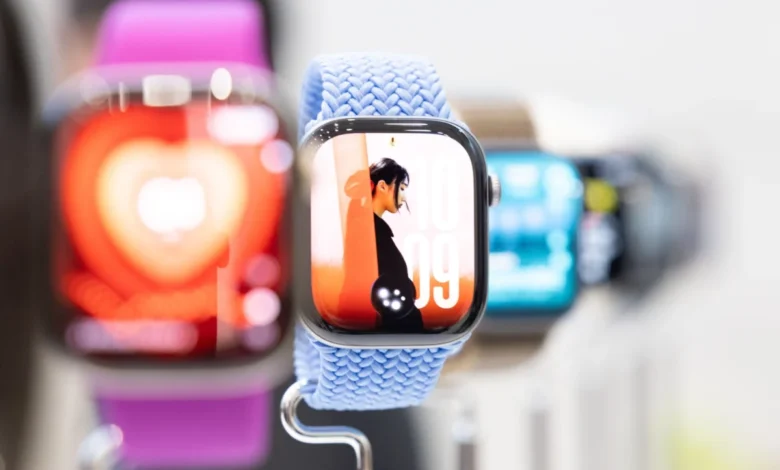
The evolution of the Apple Watch has reached a pivotal juncture with the release of the Series 12, a device that shifts the focus from incremental hardware updates to a profound integration of continuous health monitoring and ambient artificial intelligence. By refining the gesture-based navigation system, overhauling the internal sensor array, and introducing a sophisticated recovery tracking algorithm, Apple is positioning its latest wearable as a comprehensive physiological diagnostic tool rather than a mere extension of the smartphone.
The Evolution of Gesture Control and Navigation
Apple has significantly expanded the watch’s interaction paradigm to facilitate one-handed operation, a development that addresses user demand for discreet and efficient device management. While the Series 11 introduced double-tap and wrist-flick controls, the Series 12 refines these with a new single-tap gesture. By simply tapping an index finger and thumb together, users can now select widgets within the Smart Stack interface. This functionality, paired with the established double-tap to scroll and wrist-flicks to silence timers or dismiss notifications, provides a seamless user experience for individuals who are multitasking or operating in environments where tactile screen interaction is impractical.
These interface improvements are not merely aesthetic; they represent a fundamental shift in how human-computer interaction is handled on small-format wearables. By reducing the reliance on direct screen contact, Apple is lowering the barrier for accessibility and enhancing the utility of the device in professional, fitness, or social settings.
Precision Engineering: The S11 Chip and Sensor Overhaul
At the core of the Series 12 is the S11 silicon, which provides a notable increase in CPU and GPU throughput. More importantly, the integrated Neural Engine has been optimized to process complex biometric data streams locally, enhancing the efficiency of the watch’s health-sensing capabilities. This architecture powers a redesigned pedometer system, which has been calibrated to offer superior accuracy for indoor tracking—a historically difficult metric for inertial sensors.
The most substantial hardware departure from its predecessor is the introduction of the Health Sensing System. Where the Series 11 utilized two electrodes for ECG readings, the Series 12 employs an array of 32 electrodes to facilitate improved skin contact. This density of sensor points, combined with a ring-configured photodiode arrangement and larger green LED emitters, allows for significantly more precise optical heart rate tracking.
The technical implications of this hardware upgrade are profound. By shifting from a five-minute interval sampling rate (standard on the Series 11) to a five-second sampling rate on the Series 12, Apple has transformed the watch from a periodic monitor into a near-continuous health tracker. The device now measures heart rate variability (HRV) as frequently as every five minutes, providing two distinct metrics: recovery HRV and overall HRV. For medical professionals and fitness enthusiasts, this data represents a move toward high-fidelity physiological monitoring, capturing the nuances of a user’s response to stress and physical exertion in real-time.
The Readiness Metric and Holistic Health Analytics
A long-anticipated feature in the wearable industry, the Readiness score, has finally been integrated into the watch’s software suite. The Readiness app aggregates activity data, sleep metrics, and physiological stressors to generate a singular score representing the user’s preparedness for daily activities. Consistent with industry standards for baseline establishment, the feature requires seven consecutive days of sleep data before becoming operational.
While proprietary algorithms often face scrutiny regarding their opacity, the Readiness metric serves as a valuable shorthand for users to assess their internal health state without needing to interpret raw data points. Apple’s roadmap for later this year includes an even deeper expansion of the Health app, specifically the introduction of a Longevity tab. This feature will include "Health Age," a metric designed to contextualize a user’s physiological data against broader demographic cohorts. This move toward comparative health data reflects a growing industry trend: moving away from simple activity tracking toward predictive health management.
Audio Intelligence and the Privacy Debate
Perhaps the most contentious development in the Series 12 release is the suite of features under the banner of "Audio Intelligence." While Shazam integration and enhanced Sound Recognition are logical evolutions of existing iPhone capabilities, the introduction of Siri Recap and Live Rewind pushes the boundaries of ambient computing.
Siri Recap, powered by Apple Intelligence, utilizes the device’s microphone to capture, transcribe, and summarize conversations. During internal testing and demonstrations, the feature proved capable of distilling complex discussions—such as PTA meetings or academic lectures—into actionable notes and reminders. While the convenience of automated notetaking is undeniable, the implementation of such technology on a wearable device raises significant questions regarding privacy, consent, and the ethics of ambient audio recording.
Apple has attempted to mitigate these concerns by emphasizing that processing occurs via Apple’s Private Cloud Compute infrastructure, yet the capability remains a significant point of debate among privacy advocates. The industry is watching closely to see how consumers respond to the convenience of AI-driven synthesis versus the potential intrusiveness of a device that is perpetually listening.
Chronology of the Series 12 Development
The release of the Series 12 follows a decade of iterative growth for the Apple Watch line:
- 2015: Launch of the original Apple Watch, establishing the foundation for health tracking.
- 2018: Introduction of ECG and fall detection, marking the shift to medical-grade consumer features.
- 2022 (Series 8/Ultra): Introduction of temperature sensing for cycle tracking and advanced safety features.
- 2024 (Series 11): Optimization of gesture controls and initial integration of advanced Neural Engine capabilities.
- 2025 (Series 12): Deployment of the 32-electrode Health Sensing System, continuous HRV monitoring, and the debut of Apple Intelligence-driven audio features.
Broader Implications and Market Impact
The market impact of the Series 12 extends beyond the consumer electronics space. By increasing the frequency of heart rate sampling and introducing sophisticated recovery metrics, Apple is positioning the watch to compete more directly with dedicated medical monitoring devices. The Health Sensing System represents a technological plateau that competitors will find difficult to match without significant investment in sensor density and proprietary silicon.
Furthermore, the integration of Health Age and the Longevity tab signals a strategic pivot toward preventative health. By providing users with longitudinal data that benchmarks their wellness against peer groups, Apple is moving from a reactive model—where the user checks their stats after a workout—to a proactive model, where the device acts as a consultant for long-term health maintenance.
However, the "Audio Intelligence" features present a hurdle. As devices become more integrated into the minutiae of daily life, the threshold for user trust becomes higher. Apple’s success with the Series 12 will likely depend on its ability to balance the technical brilliance of its sensors with the transparent handling of sensitive biometric and conversational data.
As the wearable industry moves toward a future defined by AI and high-fidelity sensing, the Apple Watch Series 12 stands as a testament to the current state of the art. It is a device that is objectively faster, more accurate, and more observant than any of its predecessors. Whether it is "too attentive" remains a subjective judgment, but in the competitive landscape of modern wearables, the Series 12 has undeniably raised the bar for what a wrist-worn computer can, and perhaps should, do.