Apple unveils the first MacBook Pro with PROLED XDR and touch display capabilities marking a historic shift in computing

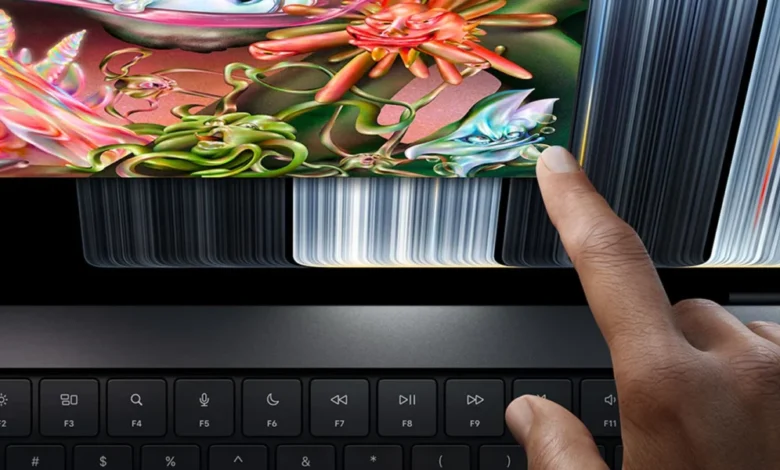
The technology industry witnessed a monumental transition this week as Apple officially unveiled the new MacBook Pro featuring the proprietary PROLED XDR display, the first laptop in the company’s history to incorporate native touch-screen functionality. This launch represents the culmination of years of internal research and development, effectively bridging the long-standing divide between the tactile interface of the iPad and the professional-grade performance of the Mac. By integrating these capabilities into the macOS 27 Golden Gate operating system, Apple has signaled a new trajectory for its hardware ecosystem, emphasizing a hybrid approach to professional workflows.
The move toward touch-enabled laptops has been the subject of intense speculation for over a decade. Since the introduction of the iPad in 2010, critics and users alike have questioned why Apple maintained a rigid distinction between its mobile touch-based devices and its cursor-driven desktop environment. The debut of the PROLED XDR-equipped MacBook Pro suggests that the company has finally resolved the technical hurdles—specifically regarding ergonomics, display durability, and software optimization—required to make touch viable for high-performance creative tasks.

A Chronology of the Touch-Interface Evolution
The journey to this announcement did not happen overnight. In the early 2010s, the late Steve Jobs famously dismissed the idea of a touchscreen Mac, arguing that vertical touch surfaces would cause "gorilla arm" fatigue for users. However, the internal landscape at Apple began to shift significantly with the introduction of the Touch Bar on the 2016 MacBook Pro. While the Touch Bar was eventually discontinued, it served as a functional experiment in how users might interact with a touch-sensitive surface on a laptop.
By 2023, rumors intensified that Apple was actively prototyping macOS versions with touch support. In early 2026, the company began seeding macOS 27 Golden Gate to developers, which included hidden frameworks for touch-event handling. This laid the groundwork for today’s announcement, which positions the new MacBook Pro not as a replacement for the iPad, but as a dual-input machine designed for professionals who require both the precision of a trackpad and the immediate, intuitive nature of touch.
Technical Enhancements and Interface Optimization
The transition to a touch-first interface required a fundamental rethink of the macOS user interface, which has historically been designed for the 1:1 precision of a cursor. To address the inherent limitations of "fat-finger" interactions on a high-resolution display, Apple has implemented a suite of UI modifications within macOS 27.

One of the most immediate changes is the implementation of adaptive traffic light icons. In previous iterations of macOS, the red, yellow, and green window controls were sized strictly for mouse pointers. On the new MacBook Pro, these icons dynamically expand when a user’s finger approaches the top-left corner of an app window. This increased touch target area minimizes input errors and ensures that closing or minimizing windows remains a fluid experience.
Furthermore, Apple has overhauled the system-wide gesture library. Users can now mirror trackpad gestures directly on the display surface. A three-finger swipe up activates Mission Control, while side-swipes facilitate navigation between virtual desktops and full-screen applications. Perhaps most notably, the integration of the Dynamic Island—a feature previously exclusive to the iPhone—into the MacBook Pro’s screen allows for centralized access to system alerts and Spotlight search, providing a unified interaction language across the Apple ecosystem.
Developer Integration and the iOS Simulator
For software developers, the new hardware offers a significant productivity boost. Previously, testing touch-based applications required navigating a simulated environment via a mouse or trackpad, which often failed to capture the nuances of multi-touch gestures or pressure sensitivity.

With the new MacBook Pro, developers can now interact with the iOS Simulator using direct touch. This allows for the testing of gestures, swipe-to-delete functions, and complex interface interactions exactly as they would appear on a mobile device. Industry analysts suggest that this will lead to a surge in high-quality, cross-platform application development, as the friction between Mac and iOS development workflows is drastically reduced.
Market Implications and Industry Response
The introduction of a touchscreen Mac is expected to exert significant pressure on competitors like Microsoft and Dell, who have long marketed their 2-in-1 laptops and touch-enabled workstations as superior to the Mac for creative professionals. By entering the market with the PROLED XDR display—which promises industry-leading brightness and color accuracy—Apple is positioning its new hardware as a premium choice for graphic designers, video editors, and animators who need to physically manipulate assets on-screen.
Early reactions from the developer community have been largely positive. "Being able to touch the screen while coding, specifically for mobile optimization, changes the development lifecycle," noted a lead software engineer at a major productivity software firm. "It’s not just about the novelty; it’s about the efficiency of the workflow."

However, some industry observers remain cautious about the long-term ergonomic implications. The "gorilla arm" concern mentioned by Steve Jobs remains a valid physical reality for users who spend eight to ten hours a day at a desk. Apple’s decision to keep the keyboard and trackpad as primary inputs suggests they recognize these limitations, positioning touch as a supplementary, rather than a primary, method of control.
The Future of macOS and Hardware Convergence
Apple’s official documentation accompanying the release indicates that these features are merely the beginning. The company has stated that further optimizations are planned for future versions of macOS, specifically targeting deeper integration with professional creative suites.
Data from recent consumer surveys indicates a growing demand for touch-screen laptops among younger users, particularly those entering the workforce who have grown up with iPads as their primary computing device. By bringing touch to the MacBook Pro, Apple is likely attempting to capture this demographic, ensuring that the Mac remains the primary tool for the next generation of digital creators.

As the industry moves toward the next Worldwide Developers Conference (WWDC), all eyes will be on how Apple continues to refine the synergy between macOS and touch. Will we see further iterations of the interface? Will the iPad and Mac continue to converge? For now, the introduction of the PROLED XDR MacBook Pro stands as a testament to Apple’s ability to refine and iterate on hardware, even when those changes challenge the company’s long-standing design philosophies.
The new MacBook Pro is available for order immediately, with a phased rollout expected across global markets throughout the remainder of the year. As users begin to adopt the hardware, the real-world performance of these touch optimizations will be the ultimate litmus test for whether Apple has successfully mastered the touch-screen laptop.