Elon Musk Says SpaceX Capex Efficiency Is Underestimated As Orbital Data Centers Loom By 2028

Elon Musk has directly challenged market concerns regarding the financial sustainability of SpaceX’s aggressive infrastructure expansion, asserting that the company’s capital expenditure (capex) efficiency is fundamentally misunderstood by external analysts. The rebuttal follows a surge of scrutiny directed at the aerospace giant’s projected spending, which some industry observers estimate could reach $470 billion over the next five quarters to support the company’s rapidly evolving artificial intelligence and compute infrastructure.
The discourse centers on SpaceX’s ambitious goal, outlined during its third-quarter earnings call, to deploy 13 gigawatts or more of compute capacity by the end of 2027. Analyst Kyle Reidhead, whose breakdown of the company’s financial trajectory triggered the current debate, suggests that such a massive buildout would necessitate record-breaking capital outlays, with the lion’s share of that funding—approximately 83 to 89 percent—flowing directly to Nvidia for advanced GPU hardware.
Financial Mechanics and Capex Efficiency
SpaceX ended the third quarter with 1.7 gigawatts of nameplate compute capacity. To bridge the gap to its 2027 target, the company has guided for capital expenditures ranging between $35 billion and $40 billion for the fourth quarter alone. CFO Bret Johnsen emphasized during the earnings call that the investment in new compute hardware is exceptionally efficient, noting that the equipment currently pays for itself within 12 months. Musk, looking ahead to the next fiscal year, suggested that this return-on-investment (ROI) window could potentially compress to just six months.
This accelerated recovery timeline is the crux of the disagreement between market analysts and the company’s internal projections. According to calculations by Reidhead, if the six-month ROI target is realized, roughly $230 billion of the total projected $470 billion spend could be covered by operating cash flow. Furthermore, SpaceX maintains a cash position of approximately $90 billion, $60 billion of which could be deployed toward these infrastructure projects, leaving an estimated $180 billion to be sourced through debt markets. Last week, Musk confirmed that SpaceX had successfully secured a $40 billion debt facility specifically earmarked for the acquisition of high-performance computing hardware.
The Shift Toward Orbital Compute
While the terrestrial infrastructure buildout is significant, Musk maintains that it represents only the preliminary phase of a much broader strategic vision. The ultimate objective is the establishment of an orbital compute network, a project Musk asserts will render ground-based data centers obsolete in terms of scale and utility.

In a recent exchange regarding modeling provided by Sequoia partner Shaun Maguire, Musk clarified that terrestrial compute capacity will eventually be dwarfed by orbital assets. Musk projected that monthly orbital compute deployment is likely to reach parity with terrestrial efforts by the end of 2028, with the orbital network significantly outpacing ground-based capacity throughout 2029.
The orbital architecture, designated internally as "Starmind," involves the deployment of a constellation of up to one million AI-enabled satellites. These units are designed to operate in clusters of ten, linked by a massive 10-terabit-per-second bandwidth network. According to documentation on SpaceX’s space safety portal, the company plans to begin launching these units from its "Gigasat" manufacturing facility in Bastrop, Texas, by late 2027. Each Starmind spacecraft is engineered to support over 250 kilowatts of solar power generation, providing the necessary energy to sustain advanced onboard AI processing in the vacuum of space.
Operational Milestones and Launch Frequency
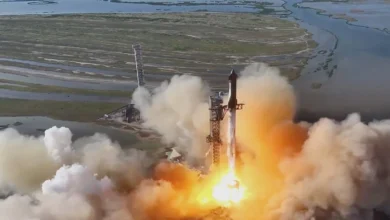
The success of the Starmind initiative is inextricably linked to the flight rate of the Starship launch vehicle. Current projections in the Maguire model assume a dramatic scaling of launch frequency, anticipating 38 Starship flights in 2027 and escalating to 250 flights in 2028. This represents a monumental leap from the current cadence, which has seen two flights so far in 2026.

Financial performance in the near term will serve as the primary indicator of whether these objectives remain realistic. SpaceX has provided guidance for revenue between $33 billion and $37 billion for the first quarter of 2027—more than double the $14.58 billion recorded in the third quarter of 2026. Musk’s continued emphasis on these targets underscores his confidence that the company’s current revenue trajectory can support its aggressive infrastructure roadmap without compromising long-term solvency.
Broader Corporate Synergies: The Roadster and Robotics
The financial and operational synergy between SpaceX and Tesla has become increasingly apparent as the companies align their R&D efforts. This was highlighted by the recent appearance of the next-generation Tesla Roadster at SpaceX’s Hawthorne, California headquarters. The vehicle, which utilizes SpaceX-developed cold gas thrusters and pressure vessels, serves as a tangible manifestation of the deep integration between the two entities.
This crossover in engineering has prompted widespread speculation regarding a potential formal merger. Musk confirmed during the third-quarter earnings call that special committees at both Tesla and SpaceX have been formed to evaluate the feasibility of such a structural integration. The Roadster, which is currently scheduled for production in 2028, stands as a primary example of this cross-pollination, utilizing hardware typically reserved for aerospace applications to achieve performance benchmarks—such as a 0-60 mph time of under 0.9 seconds—that were previously thought impossible for a production vehicle.
Consumer-Facing Impacts: Robotaxis and Automation
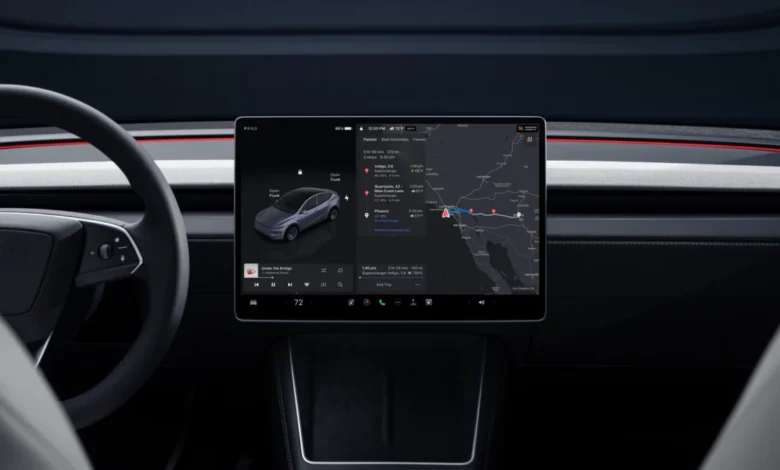
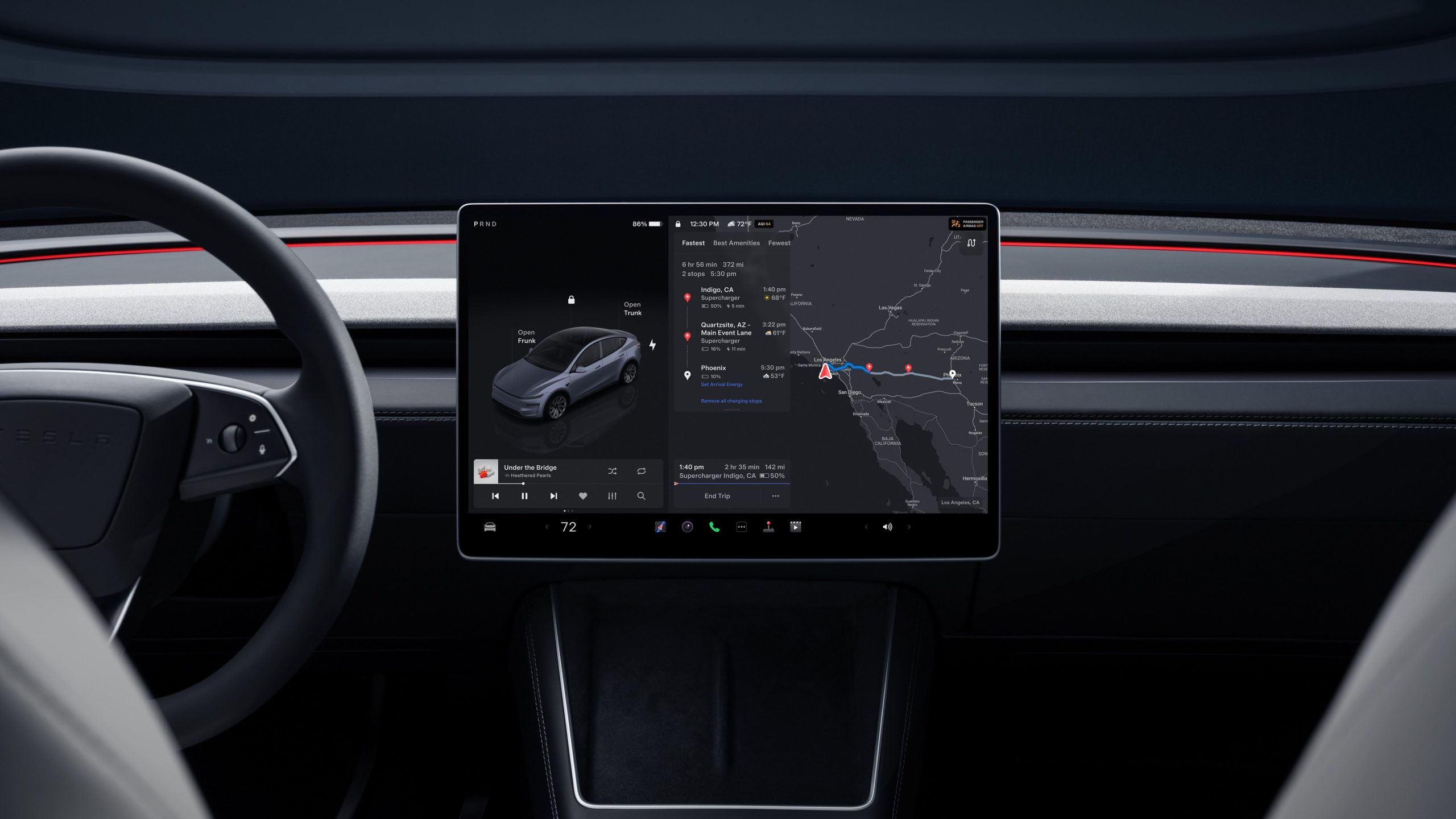
While the high-level financial and orbital projects dominate headlines, Tesla continues to refine the user experience for its autonomous platforms. The recent rollout of "Quiet Mode" for its Robotaxi fleet—initially debuted on the Cybercab—allows passengers to black out interior screens to facilitate sleep during transit.
This feature directly aligns with Musk’s decade-long ambition to transition from supervised Full Self-Driving (FSD) to a fully autonomous model where the passenger is a passive participant. The integration of this mode into the Model Y Robotaxi service currently operating in Dallas and Houston signifies a practical evolution in autonomous transportation. As Tesla prepares to launch Cybercab services in Dallas next month, the ability to offer a "sleep-capable" ride experience is positioned as a key differentiator in the competitive ride-hailing market.
Corporate Social Responsibility and Stock Distribution
Amid these complex technological shifts, the company’s leadership has also made headlines regarding equity distribution. SpaceX President Gwynne Shotwell announced that she and her husband, Robert, are distributing over 2 million shares of their personal SpaceX holdings to children’s "Trump Accounts."
This move, which began in December, serves as a significant pilot program for the broader distribution of SpaceX stock. The initiative addresses a gap in the national Trump Account program, which provides government-funded seed money to children born between 2025 and 2028 but excludes teenagers aged 11 to 17. By providing these shares, Shotwell’s gift ensures that thousands of families in lower-income zip codes and military households will have an early financial asset in their children’s accounts. This follows a broader pledge by Musk, who announced in October that he intends to gift one SpaceX share to every child in America, a commitment currently valued at approximately $10.5 billion.
Conclusion and Market Implications
The intersection of SpaceX’s orbital ambitions, Tesla’s autonomous fleet expansion, and the ongoing dialogue regarding corporate structural changes presents a complex landscape for investors and industry observers alike. While critics focus on the massive capital requirements of these ventures, Musk’s insistence on the efficiency of these investments suggests a high level of internal confidence in the company’s ability to generate cash from its compute infrastructure.
As SpaceX transitions from an aerospace provider to a multi-planetary data and logistics powerhouse, the coming years will be defined by its ability to scale both its launch cadence and its orbital compute capacity. With the 2028 deadline for the deployment of the Starmind constellation fast approaching, the company is effectively betting its future on the premise that space-based computing will provide a competitive advantage that outweighs the substantial upfront cost of development. For now, the markets remain in a "wait and see" position, tracking each earnings report and launch window as indicators of whether SpaceX can maintain its current pace of innovation and financial growth.
Related posts: