EV Startups Rivian Lucid and Slate Navigate a Pivotal Year Amid Market Hostility and Funding Injections

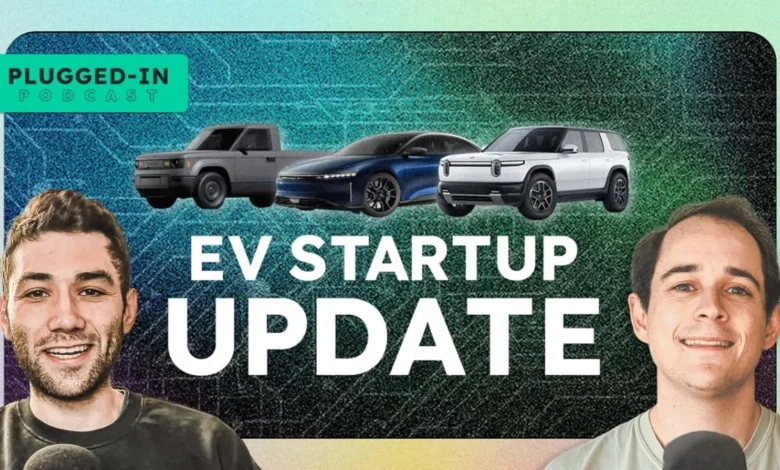
The electric vehicle industry has entered a volatile period characterized by cooling consumer demand, high interest rates, and a shift in focus from early adopters to the mass market. For emerging manufacturers like Rivian, Lucid, and Slate, the current fiscal year represents a critical juncture that will likely determine their long-term viability. As these companies race to scale production and achieve profitability, they are simultaneously forced to defend their relevance in a market that has become increasingly unforgiving toward startups. Each of these three entities is currently executing a high-stakes strategy involving new product launches, massive capital infusions, and a pivot toward more affordable, high-volume segments.
Lucid Motors Capitalizes on Strategic Partnerships and Sovereign Investment
Lucid Motors, once positioned exclusively as a competitor to the high-end luxury segments occupied by Mercedes-Benz and BMW, is undergoing a significant strategic pivot. The company recently announced the appointment of a new CEO and a $550 million investment from its majority owner, the Saudi Arabian Public Investment Fund (PIF). This capital injection is part of a broader trend of sustained support from the PIF, which has provided billions of dollars to keep the Newark, California-based automaker afloat during its capital-intensive growth phase.
In addition to sovereign wealth support, Lucid has secured a transformative agreement with Uber. The ride-sharing giant has committed to purchasing 35,000 Gravity robotaxis, a move supported by a $200 million investment. This deal provides Lucid with a guaranteed sales volume for its luxury SUV, the Gravity, while simultaneously positioning the brand within the burgeoning autonomous and fleet-service sectors. The Gravity, a three-row SUV, was designed to rectify the market limitations of the Lucid Air. While the Air sedan received critical acclaim for its industry-leading range and engineering, the global automotive market has largely shifted away from expensive sedans in favor of utility vehicles.
The survival of Lucid now hinges on its upcoming mid-size platform. This platform will serve as the foundation for three distinct vehicles: the Cosmos, the Earth, and a third, unnamed product focused on the "adventure" segment. By targeting the heart of the automotive market—the segment currently dominated by the Tesla Model Y and the Hyundai Ioniq 5—Lucid aims to transition from a niche luxury player to a high-volume manufacturer. Early market indicators suggest that the Cosmos and Earth models are being designed to maintain Lucid’s reputation for efficiency and range while offering a price point accessible to a broader demographic.
Slate and the Iconoclastic Approach to Affordable Mobility
While Lucid and Rivian target the premium and mid-market segments, Slate is pursuing a radically different strategy aimed at the entry-level consumer. The company recently announced a $650 million Series C funding round, anchored by TWG Global. This funding is specifically earmarked for the production of an electric pickup truck with a targeted starting price of approximately $25,000.
Slate’s business model is a departure from the "feature-creep" common in the modern EV industry. Rather than loading vehicles with expensive software and luxury amenities, Slate intends to offer a bare-bones, utilitarian vehicle. The truck will launch with manual crank windows, two doors, and a lack of traditional infotainment screens. This minimalist approach is designed to keep costs low and appeal to a "DIY-oriented" demographic and commercial fleet operators who prioritize utility over luxury.
One of Slate’s most unique offerings is an "SUV kit" that allows owners to convert the pickup truck into a closed-body SUV. This modularity is intended to appeal to tech-skeptical consumers and enthusiasts who value mechanical simplicity. However, Slate faces significant headwinds. The anticipated end of the $7,500 federal EV tax credit could impact the perceived value of the truck, though its $25,000 base price remains significantly lower than the average new vehicle price in the United States, which currently exceeds $47,000. Production is slated to begin this year, with a broader market launch expected by the end of 2026.
Rivian’s Critical Transition to the R2 Platform
Rivian Automotive remains perhaps the most high-profile of the three startups, having successfully navigated the initial production "hell" of its R1T pickup and R1S SUV. However, the company is now entering its most difficult phase: the launch of the R2, a more affordable mid-size SUV. Deliveries of the R2 are scheduled to begin this spring, marking a transition from low-volume luxury manufacturing to mass-market production.
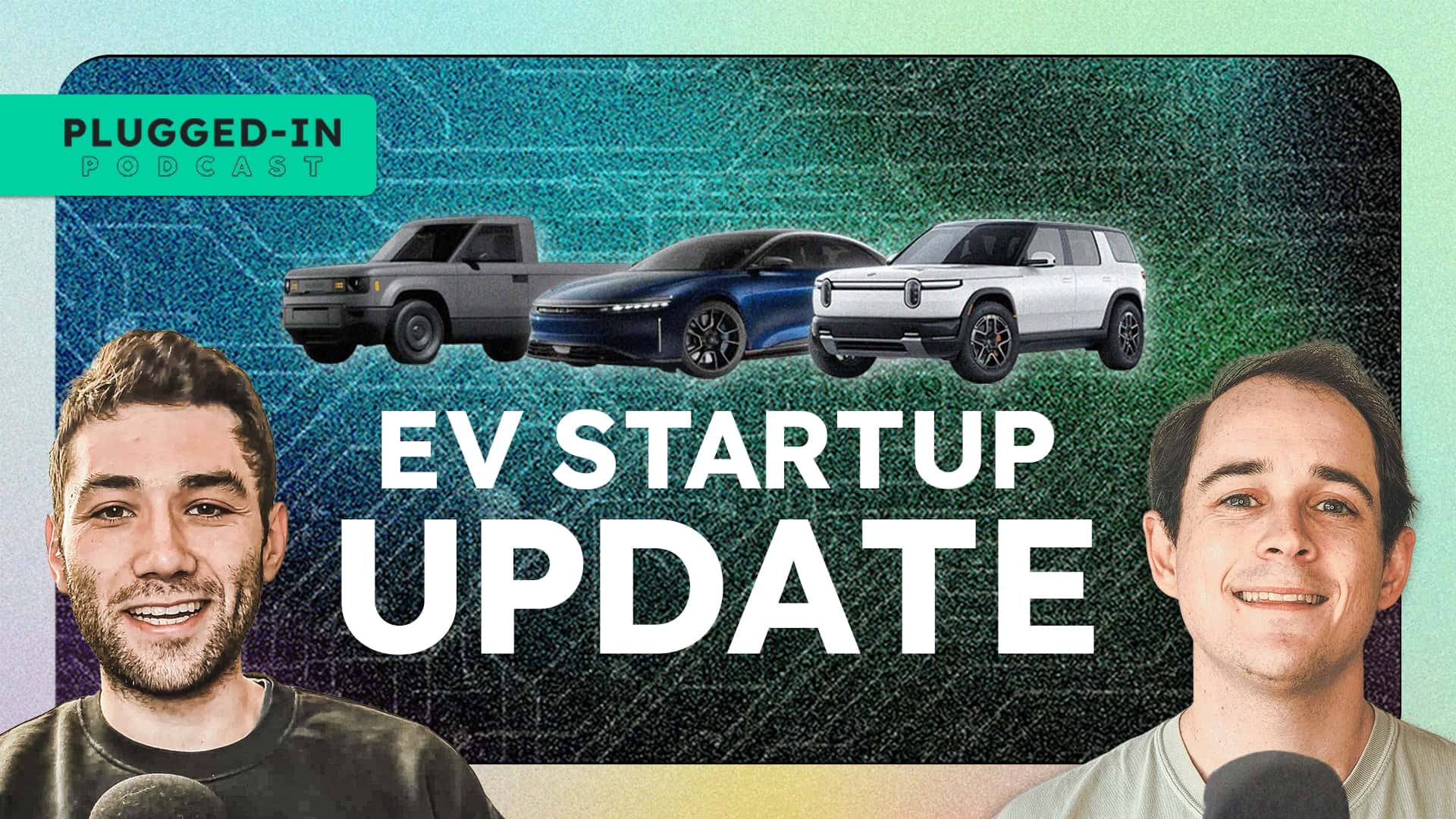
Rivian has maintained positive momentum through the early part of the year, with sales of its R1 platform and Electric Delivery Van (EDV) showing consistent year-over-year growth. Despite this, the company continues to burn cash as it expands its infrastructure. A key component of the R2 launch is the expansion of Rivian’s service and sales network. The company has acknowledged that its current service capacity must grow significantly to support the higher volume of vehicles expected with the R2.
The R2 has already garnered significant consumer interest, with early prototype reviews praising its design language and functional interior. Rivian’s brand identity—centered on outdoor adventure and aspirational lifestyle—has resonated well with consumers, helping the company outsell established competitors in specific EV segments. The primary challenge for Rivian in the coming months will be ensuring manufacturing quality and avoiding the software glitches that have plagued other recent EV launches. If Rivian can successfully scale the R2 while maintaining its brand prestige, it could solidify its position as the primary domestic challenger to Tesla.
Chronology of the EV Startup Evolution (2021–2025)
The current state of these three companies is the result of a multi-year trajectory characterized by massive initial investment followed by a "reality check" in the public markets.
- 2021-2022: The Capital Boom. Rivian and Lucid went public with multi-billion-dollar valuations. Rivian’s IPO was one of the largest in U.S. history, reflecting immense investor optimism.
- 2023: Production Hurdles. Startups struggled with supply chain disruptions and the technical challenges of scaling manufacturing. Legacy automakers like Ford and GM also began ramping up their EV efforts, increasing competition.
- 2024: The Demand Plateau. High interest rates began to impact consumer purchasing power. The "EV winter" narrative emerged as growth rates slowed, forcing startups to rethink their pricing strategies.
- 2025: The Year of the Pivot. Lucid, Rivian, and Slate have all shifted focus toward "affordable" or "mainstream" platforms. Funding rounds are no longer about speculative growth but about securing the runway needed to reach the next product cycle.
Broader Market Implications and Competitive Analysis
The success or failure of these three companies will have profound implications for the future of the automotive industry. A successful "sticking of the landing" by Rivian and Lucid would prove that the direct-to-consumer, EV-only business model is a viable alternative to the traditional dealership-based legacy model. Conversely, if these startups struggle to reach profitability, it may lead to a wave of consolidation, where smaller players are absorbed by larger automotive conglomerates or tech giants.
The competitive landscape is currently dominated by the "Big Three" of the EV world: Tesla, BYD, and the Hyundai Motor Group. These established players benefit from economies of scale that startups cannot yet match. For instance, the Tesla Model Y benefits from a refined manufacturing process that allows for aggressive price cuts—a luxury that Lucid and Rivian do not currently have.
Slate’s entry into the market represents a wild card. By targeting the $25,000 price point, Slate is entering a territory that legacy manufacturers have largely abandoned in the U.S. market. If Slate can prove that there is a significant appetite for "analog" electric vehicles, it could force the rest of the industry to reconsider the necessity of expensive, screen-heavy interiors.
Official Responses and Industry Outlook
While executives from these companies remain publicly optimistic, their internal actions suggest a defensive posture. Lucid’s reliance on Saudi funding indicates a "whatever it takes" approach to survival until the Cosmos and Earth models can generate volume. Rivian’s aggressive expansion of its service network is a direct response to consumer feedback regarding the difficulties of owning a vehicle from a company without a century-old dealership footprint.
Industry analysts suggest that the window for EV startups is closing. With legacy brands like Volkswagen and Ford now offering competitive electric SUVs, the novelty of being an "EV startup" has worn off. These companies must now compete on the same metrics as traditional automakers: build quality, service availability, and price-to-value ratio.
The coming twelve to eighteen months will be the most revealing period in the history of modern electric mobility. If Rivian’s R2 becomes a household name, if Lucid’s mid-size platform finds its footing, and if Slate’s "bare-bones" truck captures the imagination of the budget-conscious buyer, the automotive landscape will be permanently altered. However, the path is fraught with risk, and the margin for error has never been thinner. The "hostile market" described by industry insiders is not just a challenge; it is a filter that will separate the sustainable innovators from the ambitious experiments of the early EV era.