Google Expands Its AI Audio Capabilities With the Launch of Gemini 3.8 Flash TTS and Gemini 3.8 Flash-Lite TTS

Google has officially introduced two advanced additions to its artificial intelligence audio generation portfolio: Gemini 3.8 Flash TTS and Gemini 3.8 Flash-Lite TTS. Developed by the company’s core AI research and engineering teams—with leadership contributions from Group Product Manager Leland Rechis and Director of Research Science Alan Cowen—these new text-to-speech (TTS) models are designed to transform voice generation from static, pre-recorded presets into a flexible, real-time creative studio. Available immediately across Google AI Studio, the Gemini API, Gemini Enterprise, Gemini Notebook, and Google Vids, the new models aim to provide creators, developers, and global enterprises with unprecedented vocal expressiveness, custom voice design, and precise scene direction.

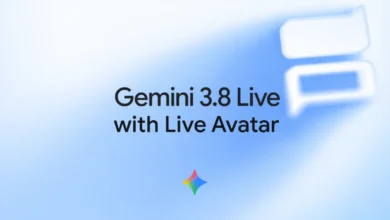
The launch of the Gemini 3.8 text-to-speech models represents a major milestone in Google’s ongoing effort to bridge the gap between written text and natural human-like speech. Over the past year, the Gemini Audio family has expanded rapidly to encompass sophisticated multi-modal and real-time audio functionalities. This lineage includes recent innovations such as 3.5 Live Translate, 3.5 Transcribe, 3.8 Live, and 3.8 Live Extended Thinking. While previous iterations focused primarily on understanding, translating, and transcribing spoken language in real time, the 3.8 Flash TTS and Flash-Lite TTS models shift the focus toward high-fidelity generation, offering complex character voices, rich emotional delivery, and multi-speaker script control.
Revolutionizing Voice Generation and Customization
Historically, text-to-speech systems relied on a limited collection of rigid, pre-selected voice profiles that often sounded robotic or lacked contextual nuance. The Gemini 3.8 Flash TTS model fundamentally alters this paradigm by scaling users up from a standard library of roughly 30 original voices to an essentially infinite vocal universe. Whether a developer needs to build an entirely original fictional character for an animated project or establish a consistent, recognizable brand ambassador for an enterprise customer service bot, the model acts as a comprehensive vocal studio.
Through natural language prompting, users can instruct the AI to generate completely bespoke vocal personas from scratch. For instance, creators can prompt the system to produce a high-energy regional radio DJ from Melbourne, a classic tinny and monotone robot voice, or a booming, theatrical Japanese dragon. Beyond merely outputting audio, the system gives directors and developers granular control over script delivery, line by line. This level of oversight allows for natural turn-taking in conversational agents, emotional highs and lows, and dynamic pacing that mirrors human theatrical performance.
Performance Benchmarks and Global Reach
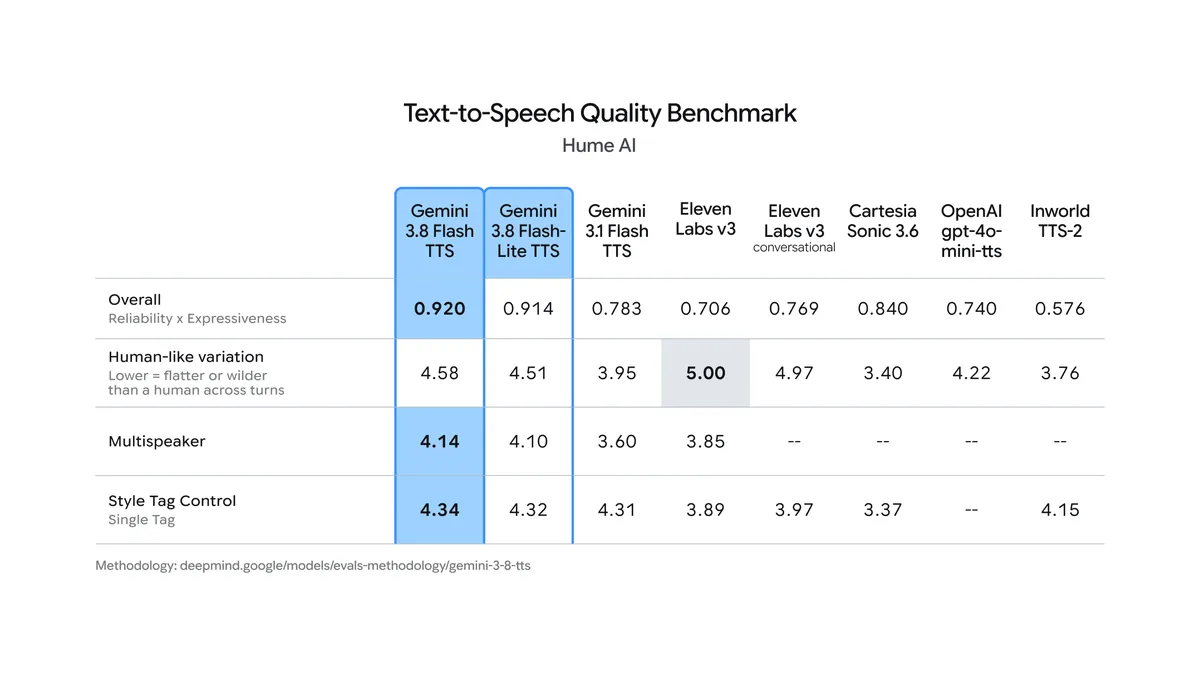
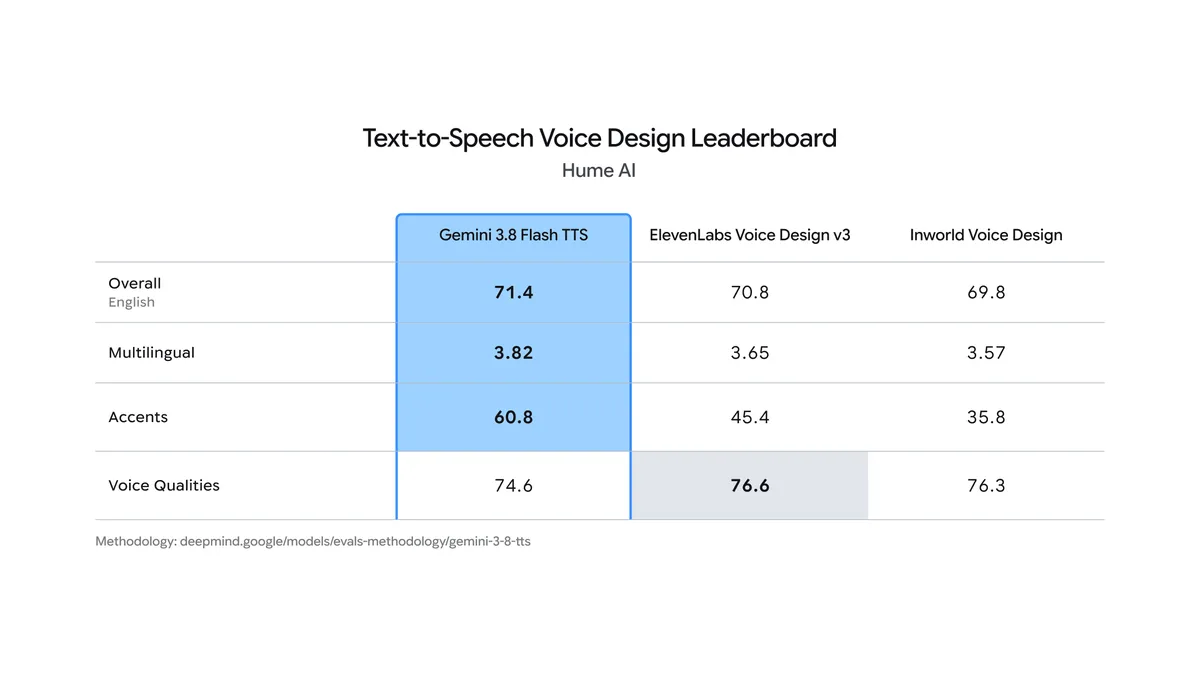
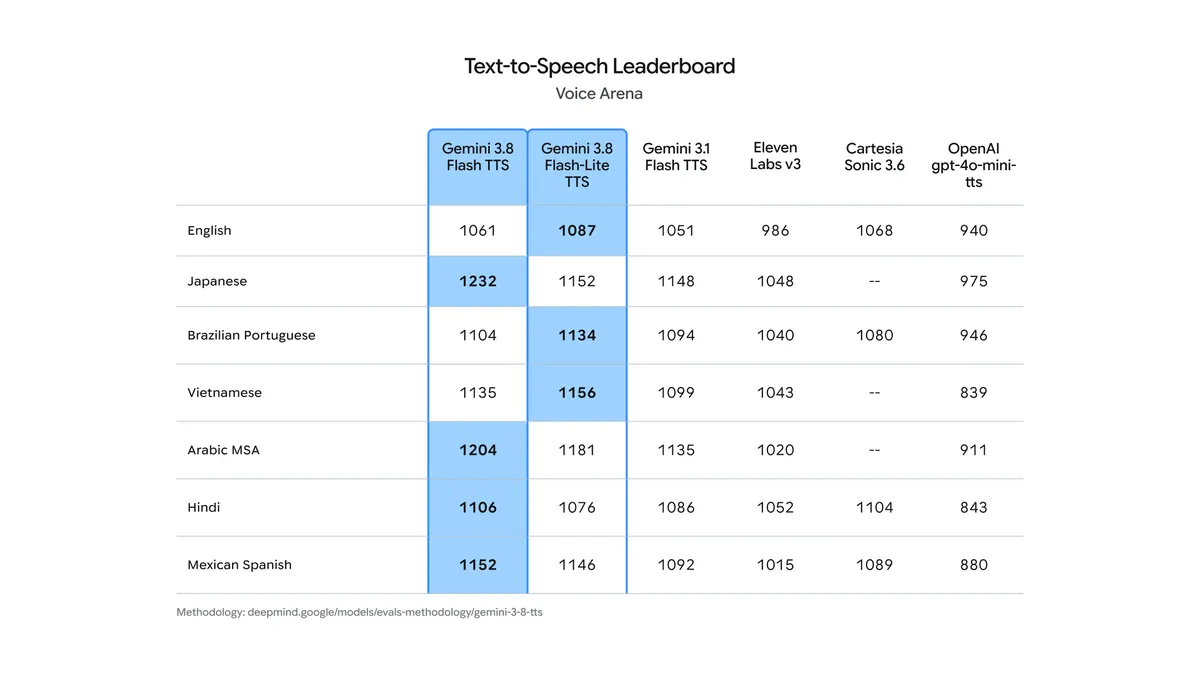
To substantiate the capabilities of Gemini 3.8 Flash TTS and Flash-Lite TTS, Google has highlighted performance data from independent AI evaluation platforms. According to Hume AI’s Voice Design Benchmark, Gemini 3.8 Flash TTS secured the number one overall position, achieving a score of 71.4, while also leading the category in accent modeling with a score of 60.8. Furthermore, both the Flash TTS and Flash-Lite TTS models captured the number one and number two spots, respectively, on Hume AI’s Overall Quality Index, outperforming many competing models in reliability and emotional depth.
In blind human preference evaluations conducted via Voice Arena for US English and other major global languages, the new models consistently ranked at the top of their class. Built to support over 100 languages, the models demonstrate significant advancements in regional localization. Blind preference tests confirm superior performance in key international languages and dialects, including Japanese, Brazilian Portuguese, Vietnamese, Modern Standard Arabic, Mexican Spanish, and Hindi. Compared to its predecessor, the Gemini 3.1 Flash TTS, the 3.8 generation shows marked improvements in handling long-form narrative content and managing complex dual-speaker screenplay controls.
Ecosystem Integration and Developer Accessibility
Google has prioritized widespread integration across its own productivity and developer ecosystems. Starting today, Gemini 3.8 Flash TTS and Flash-Lite TTS are integrated into Gemini Notebook and Google Vids, enhancing how users interact with documents and assemble multimedia presentations. For external developers, the models are accessible via Google AI Studio—which features a dedicated speech generation playground designed like a voice design workspace—and through the Gemini API.
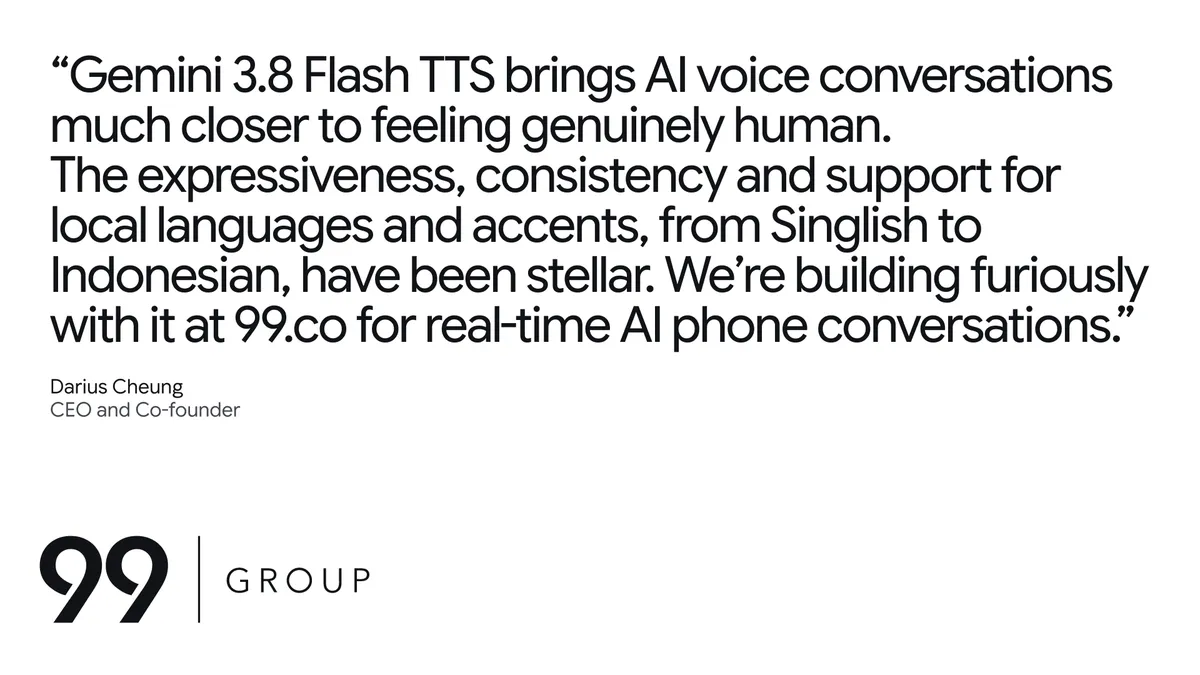
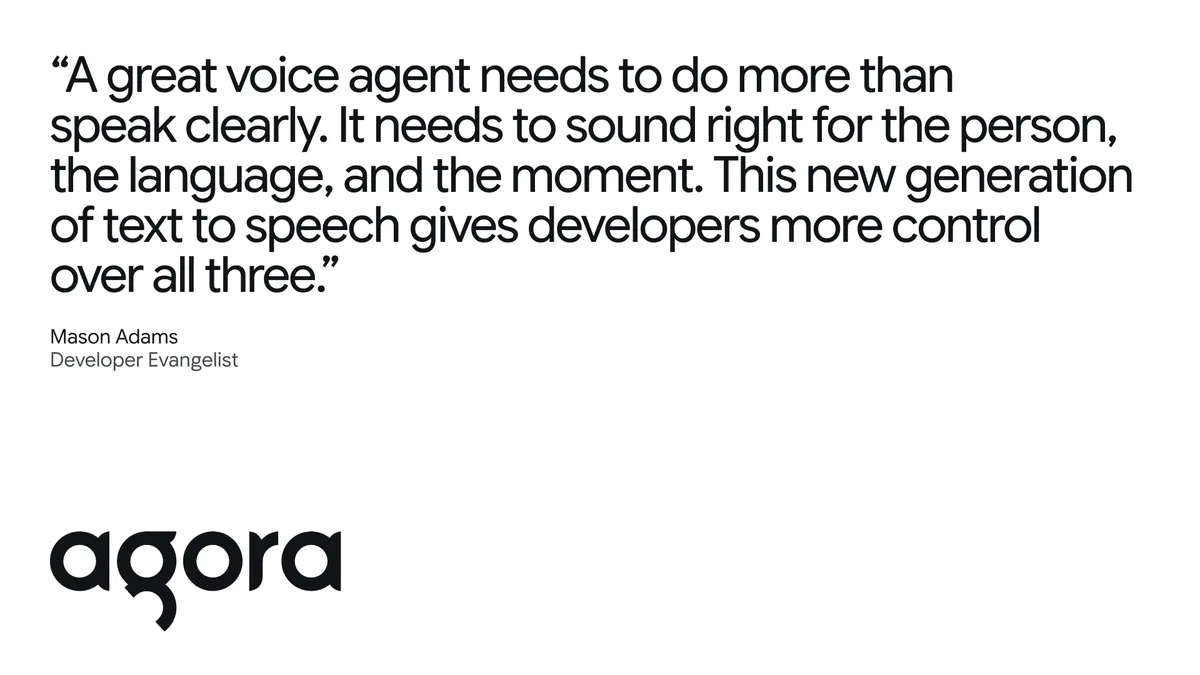
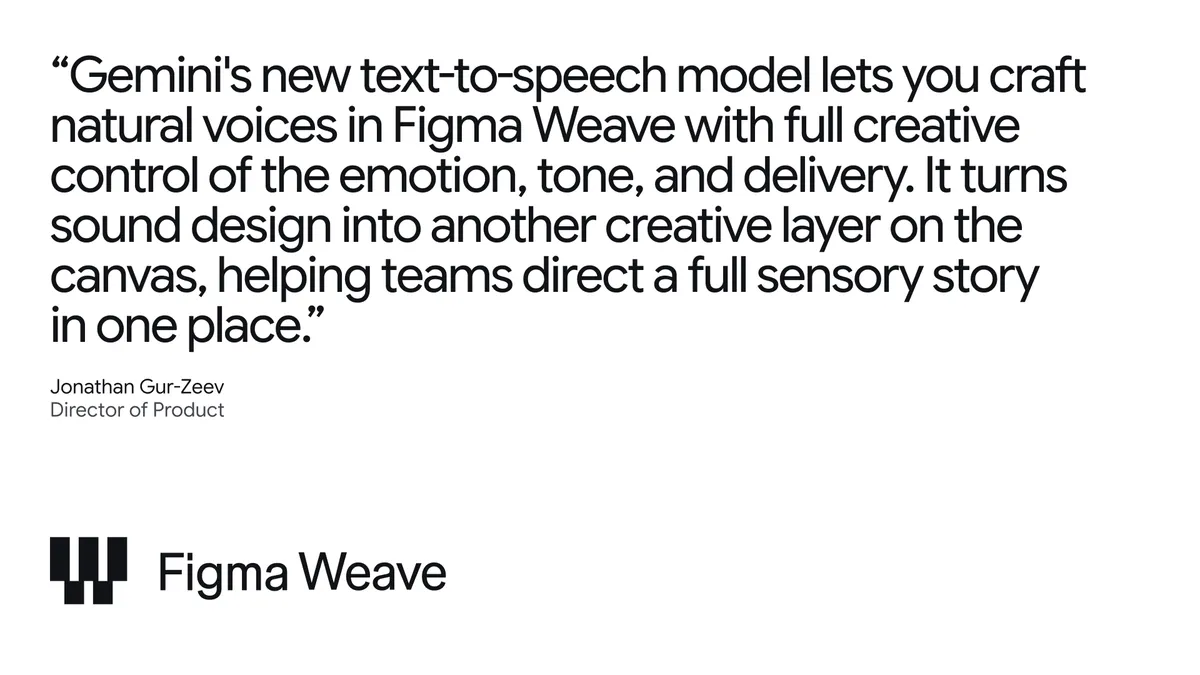
To ensure rapid adoption and seamless deployment, Google has partnered with several prominent developer platforms and infrastructure providers. Platforms such as Agora, LiveKit, Pipecat, and Vercel now support the new TTS models, enabling developers to build and deploy high-performance voice interfaces with minimal friction. Additionally, a diverse array of enterprise partners across media, localization, and design are already leveraging the technology. Companies including Figma, HeyGen, Linguana, Wondercraft, 99.co, Ollang, Spoken, and Kuku FM are integrating the models to accelerate global video dubbing, localize media content with regionally accurate accents, and power scalable conversational voice agents.
Trust, Safety, and Content Transparency
As generative AI audio technology advances, concerns regarding voice cloning, unauthorized replication, and the spread of synthetic misinformation have grown increasingly acute. Recognizing these challenges, Google has embedded rigorous safety safeguards, consent mechanisms, and transparency protocols directly into the architecture of the Gemini 3.8 audio models.
For voice replication workflows, the system enforces a strict consent verification process. Before a custom voice can be cloned or replicated, the user must provide a verified verbal consent recording from the actual voice owner, which the system cross-references and matches against the reference speaker.
Furthermore, to combat the potential misuse of synthetic media, every audio clip generated by Gemini Audio models is embedded with SynthID—Google DeepMind’s watermarking technology. This imperceptible watermark is woven directly into the audio waveform at the point of generation. Even if the audio file is compressed, edited, or converted, the watermark remains detectable, ensuring that synthetic speech can be identified by platforms and verification tools to prevent misinformation and identity deception. Comprehensive details regarding the safety evaluations and operational boundaries of the models are outlined in the official Gemini 3.8 audio model card.
Broader Implications for Industry and Media
The commercial release of Gemini 3.8 Flash TTS and Flash-Lite TTS underscores the rapid maturation of generative audio as a critical enterprise tool. By combining state-of-the-art emotional expressiveness, multilingual proficiency, and robust security frameworks like SynthID and mandatory voice consent, Google is positioning its AI audio infrastructure to capture significant market share in industries ranging from entertainment and advertising to customer service and education. As developers and enterprises begin deploying these capabilities at scale, the boundary between human and machine-generated speech will continue to blur, ushering in a new era of interactive, voice-first digital experiences.