SAP SuccessFactors Review: Navigating the Complexities of Global Enterprise Human Capital Management

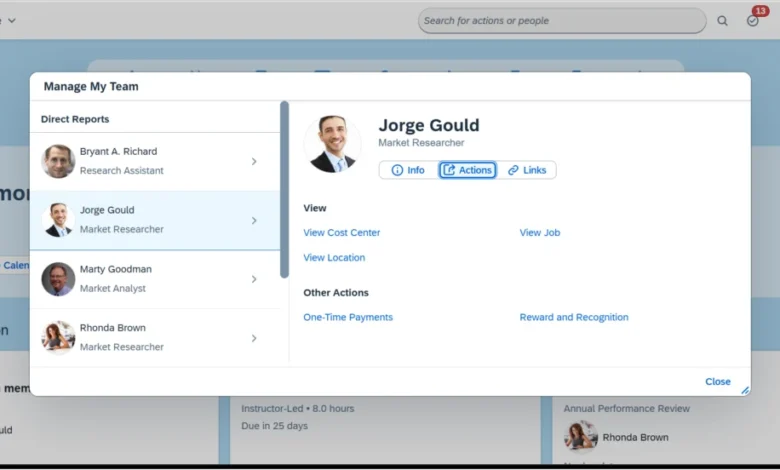
SAP SuccessFactors stands as a cornerstone in the global Human Capital Management (HCM) market, offering a comprehensive, AI-powered suite of tools designed to manage the entire employee lifecycle from recruitment to retirement. As a product of SAP, one of the world’s largest enterprise software providers, SuccessFactors is engineered to provide scalability and flexibility for large organizations and rapidly growing enterprises. However, the platform’s immense depth and modular architecture bring a level of complexity that requires a significant investment in training and implementation. While it offers unparalleled features for global compliance and talent management, its steep learning curve and enterprise-focused design may prove overwhelming for small to medium-sized businesses (SMBs) that do not require such an exhaustive array of functionalities.
Core Functionality and Modular Architecture
The strength of SAP SuccessFactors lies in its modularity, allowing businesses to construct a tailored HR ecosystem. The suite is divided into several key pillars: Core HR and Payroll, Talent Management, Workforce Management, and Sales Performance Management. This structure enables organizations to deploy only the modules they need, though most enterprise users find that the integration between these modules provides the most significant value.
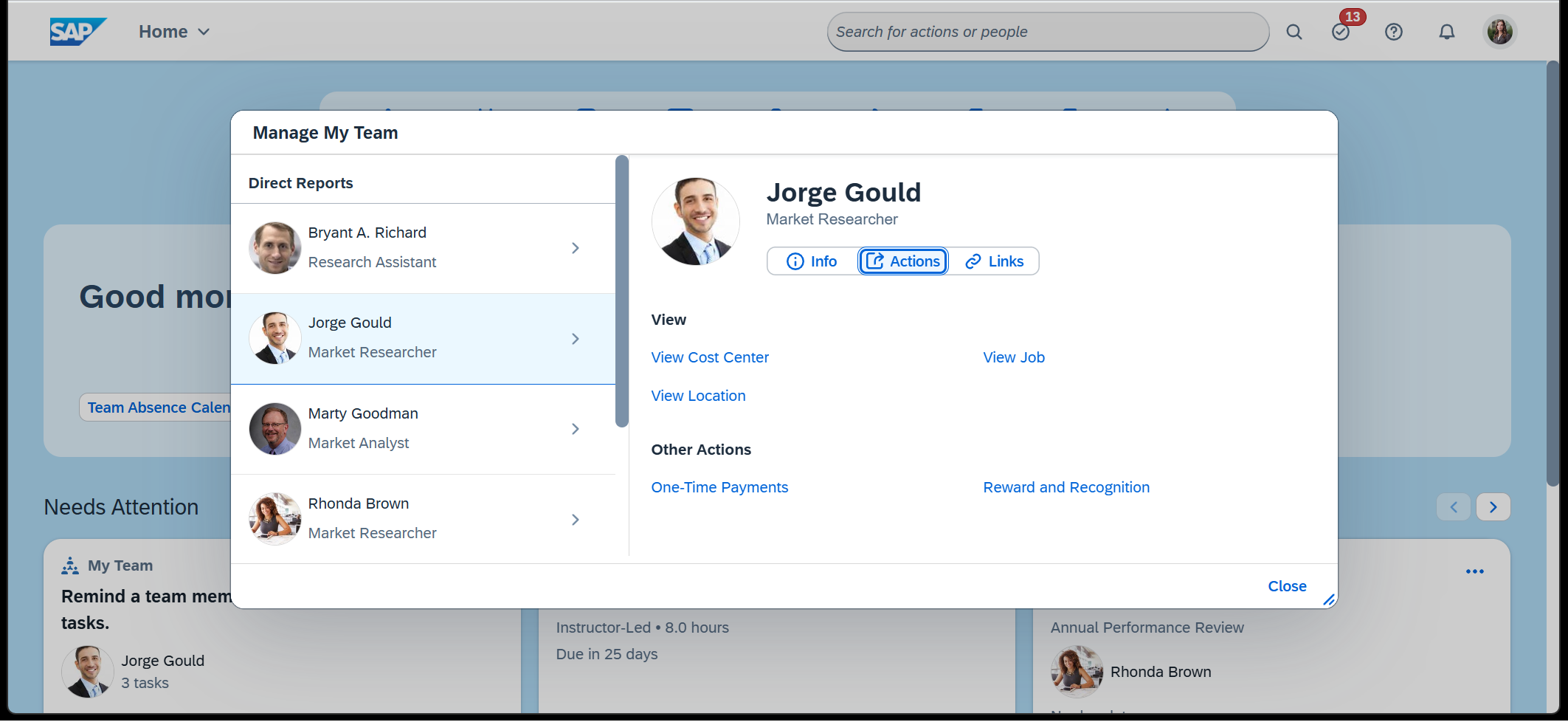
The Core HR module, known as Employee Central, serves as the "single source of truth" for employee data. It supports personalized employee profiles, global benefits administration, and sophisticated absence management. A standout feature within this module is the self-service portal, which empowers employees to manage their own data and requests, thereby reducing the administrative burden on HR departments. This is complemented by robust time and attendance tracking that functions across desktop and mobile platforms, integrating seamlessly with third-party hardware if necessary.
For organizations focused on growth, the Talent Management suite offers an advanced Applicant Tracking System (ATS), AI-enabled onboarding, and skills-based career development. By leveraging AI, the system can suggest tailored growth opportunities and learning experiences based on an employee’s current skill set and career goals. This forward-looking approach to "Human Experience Management" (HXM) reflects a broader industry shift from transactional HR to employee-centric development.
A Chronology of Innovation and Market Shift
To understand the current state of SAP SuccessFactors, one must look at its evolution within the broader technology landscape. Founded in 2001, SuccessFactors was a pioneer in the Cloud-based SaaS (Software as a Service) model. Its acquisition by SAP in 2012 for approximately $3.4 billion marked a pivotal moment in the enterprise software industry, signaling SAP’s aggressive move from on-premise solutions to the cloud.
Since the acquisition, SAP has steadily integrated SuccessFactors with its broader ERP (Enterprise Resource Planning) ecosystem, including SAP S/4HANA. In 2019, SAP rebranded its HCM offerings as Human Experience Management (HXM), emphasizing the importance of employee sentiment and engagement over simple record-keeping.
Most recently, in 2023 and 2024, SAP has focused on the infusion of "Business AI" across the suite. This includes the introduction of Joule, a natural-language generative AI assistant designed to help employees and managers complete tasks—such as checking leave balances or writing job descriptions—through simple conversational interfaces. This chronology illustrates a transition from a functional data repository to an intelligent, interactive platform.
Supporting Data and Technical Specifications
SAP SuccessFactors is built to handle the rigorous demands of global corporations. Its payroll engine is one of the most powerful in the industry, offering pre-configured localization frameworks for over 100 countries and direct payroll support for over 50. This ensures that organizations can remain compliant with varying local tax laws, labor regulations, and reporting requirements without maintaining separate regional systems.
From a security perspective, the platform adheres to the highest international standards. Data is protected through robust encryption (AES-256) and the platform maintains strict adherence to ISO 27001, SOC 1, and SOC 2 standards. For organizations operating in the European Union, SuccessFactors is fully GDPR compliant, with automated data retention and deletion rules that can be configured by the administrator.
Integration is another area where SAP provides significant technical depth. Through the SAP Business Technology Platform (BTP), SuccessFactors can connect with other SAP tools like Concur for expense management and SAP Fieldglass for external workforce management. It also offers a rich library of APIs (OData and SOAP) to facilitate integrations with third-party providers like Strada for payroll or iCIMS for specialized recruiting.
Implementation Realities and User Experience
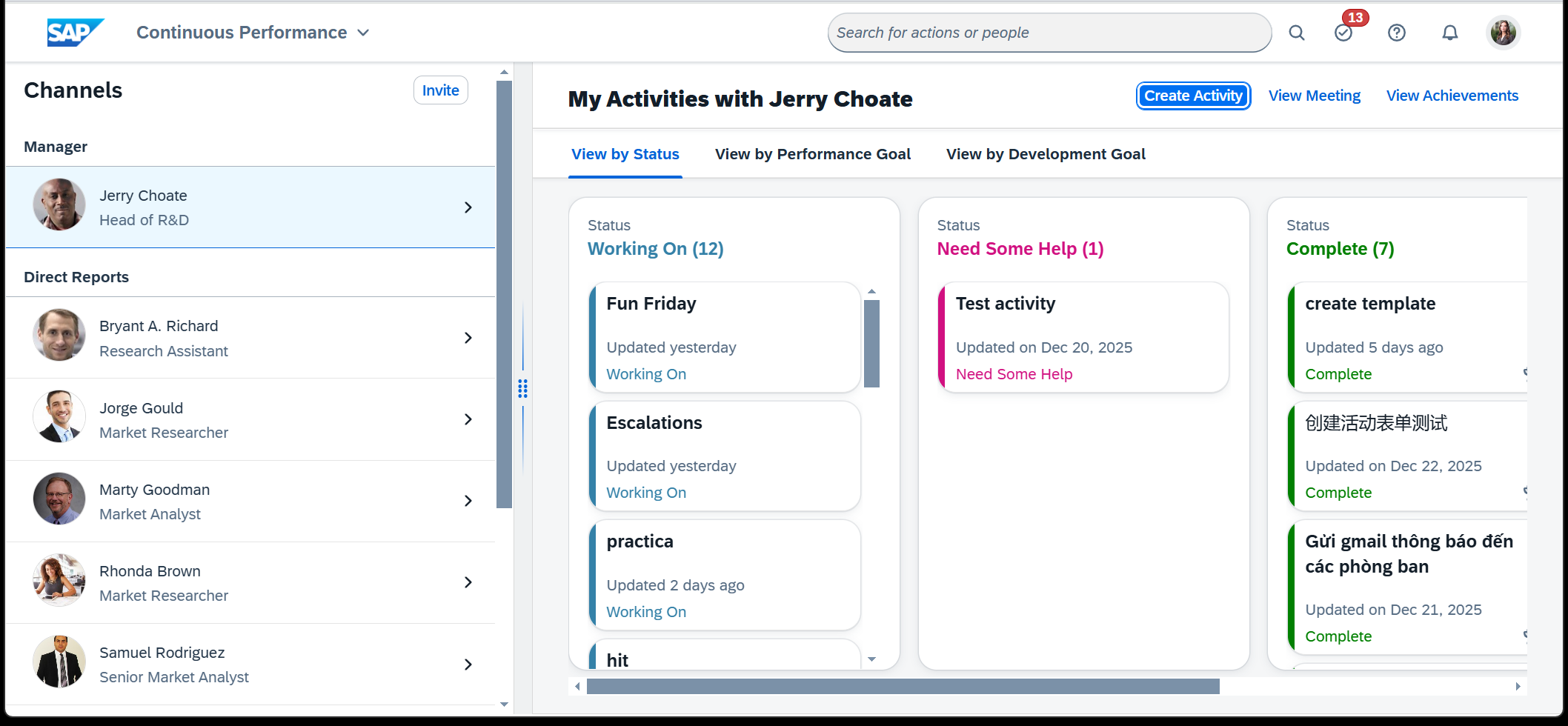
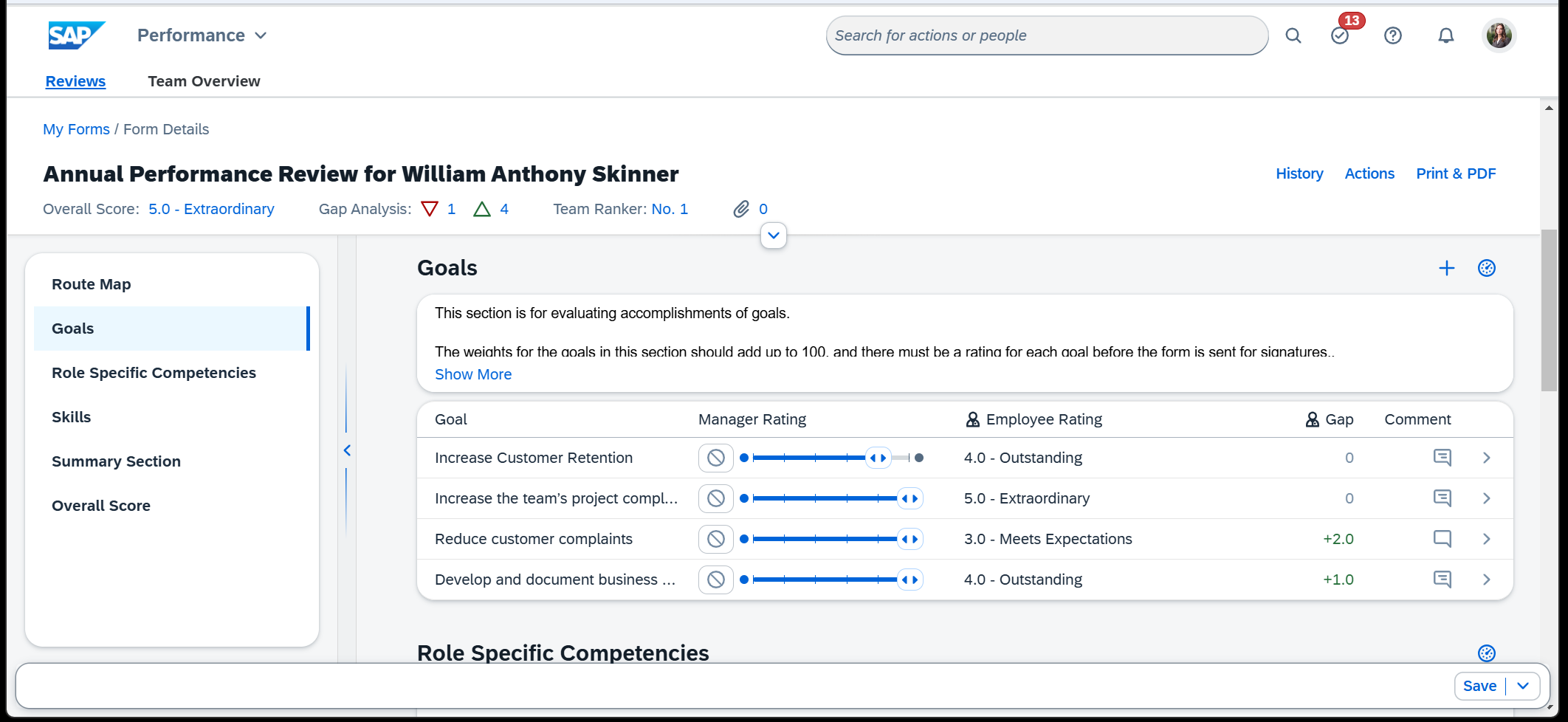
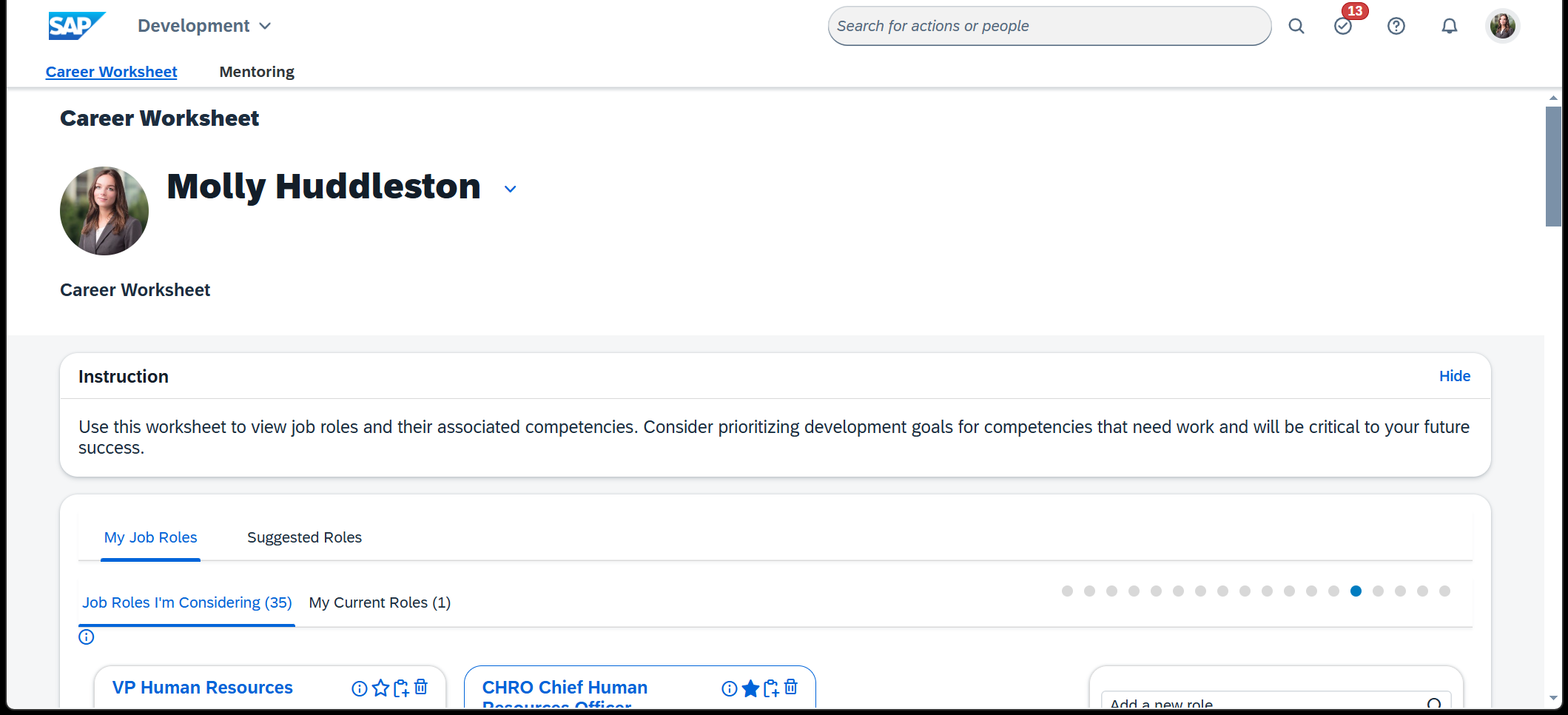
Despite its power, the user experience of SAP SuccessFactors is a point of contention. The interface is functional and professional, utilizing an enterprise-style UI that prioritizes data density and task management. While the Career Development and Analytics sections are visually engaging with colorful charts and intuitive dashboards, other modules can feel plain and overly complex.
Testing has revealed certain design inconsistencies. For instance, the navigation menus in the "Goals" and "Continuous Performance" modules differ slightly from the "Development" module, which can lead to friction for new users. The learning curve is undeniably steep; users transitioning from simpler platforms like BambooHR or Gusto will find the sheer number of menus and configuration options daunting.
Implementation is rarely a "plug-and-play" affair. Industry data suggests that a full-scale deployment of SAP SuccessFactors can take anywhere from six months to over a year, depending on the number of modules and the level of customization required. Most organizations rely on third-party SAP implementation partners to manage the transition, which adds to the overall cost and complexity. This process involves extensive data migration, process mapping, and user training, making it a significant undertaking for any IT and HR department.
Pricing and Market Positioning
SAP utilizes a case-by-case pricing model, which is standard for enterprise-level software. Costs are determined by licensing volume, the specific modules selected, and the length of the contract. However, some baseline figures are available to provide a sense of scale. The cloud-based Core HR system typically starts at approximately $6.30 per user per month for basic functionality, while more comprehensive Core HR packages are listed at around $18 per user per month.
It is important to note that these figures represent the starting point. The addition of Talent Management, Workforce Analytics, or Sales Performance modules can significantly increase the per-user cost. When compared to SMB-focused rivals, SAP SuccessFactors is often more expensive, but it justifies this through its ability to handle complex, multi-national organizational structures that smaller tools cannot support.
Comparative Analysis and Official Responses
In the competitive landscape of HR software, SuccessFactors faces pressure from both legacy providers and modern disruptors. For recruitment-heavy organizations, platforms like Workable or Greenhouse offer more specialized, agile tools. For mid-market companies seeking a modern, "social media" style interface, HiBob has become a popular alternative due to its focus on culture and engagement.
However, SAP’s response to this competition has been to double down on its "all-in-one" value proposition. By integrating HR data with financial and operational data via the SAP ERP, the company argues that SuccessFactors provides a level of business intelligence that standalone HR tools cannot match. SAP representatives often highlight that for a global 2000 company, the risk of non-compliance or payroll error outweighs the initial difficulty of a complex implementation.
Broader Impact and Implications for the Future of Work
The continued dominance of SAP SuccessFactors has broader implications for how large organizations approach the future of work. As AI becomes more deeply embedded in the platform, HR departments are shifting away from manual data entry toward strategic workforce planning. The ability to use real-time analytics to predict turnover or identify skill gaps allows executives to make data-driven decisions about their human capital.
Furthermore, the platform’s focus on mobile accessibility—offering full feature parity between Android and iOS—reflects the reality of a hybrid and deskless workforce. Employees can manage their benefits and track their time from anywhere, which has become a baseline requirement in the post-pandemic era.
In summary, SAP SuccessFactors remains a premier choice for large-scale enterprises that require a robust, secure, and highly customizable HR suite. Its strengths in global compliance, AI-driven talent development, and deep integration capabilities make it a formidable tool for organizations with complex needs. While the steep learning curve and lengthy implementation process may deter smaller businesses, for the global enterprise, the platform offers a level of depth and scalability that few competitors can replicate. The move toward HXM and the infusion of generative AI suggest that SAP will continue to lead the market by focusing on the "experience" of work as much as the "management" of it.