The Hidden Mechanics of Image Stabilization and Why Camera Spec Sheets Often Mislead You

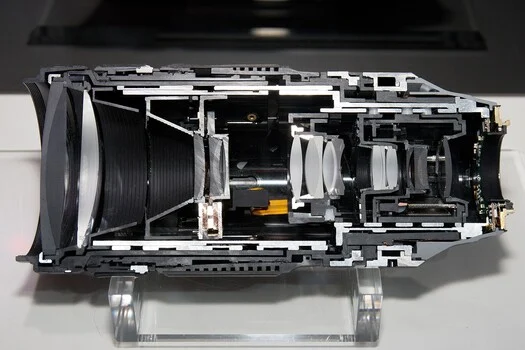
Tilt a 600mm lens by a tenth of a degree, a movement so subtle it remains imperceptible to the human hand, and the image it projects shifts approximately one millimeter across the camera sensor. In the modern era of high-resolution digital imaging, where pixel densities continue to rise, that single millimeter of movement is the difference between a tack-sharp photograph and a blurred failure. To combat this, camera manufacturers have developed a complex ecosystem of stabilization technologies, ranging from floating lens elements to magnet-suspended sensors. Yet, as marketing departments push the limits of "stop counts" in their advertisements, the reality of how these systems function—and how they are tested—remains a source of significant industry debate and consumer confusion.
The Evolution of Optical Stabilization
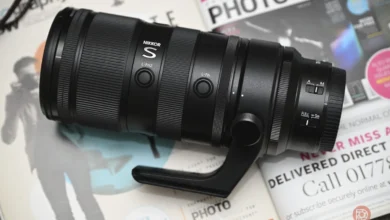
The history of stabilization is rooted in the quest to liberate photographers from the tripod. Optical Image Stabilization (OIS)—marketed variously as IS by Canon, VR by Nikon, OSS by Sony, and VC by Tamron—functions on a singular principle: counter-action. Inside these lenses, a dedicated "correction group" of glass elements is suspended and pushed perpendicularly to the optical axis by voice coil motors. These motors, operating on the same electromagnetic principles as high-fidelity loudspeakers, receive data from microelectromechanical (MEMS) angular velocity sensors. These gyroscopes do not track where the lens is pointed; rather, they calculate the rate of rotation. A processor integrates this velocity data over time to determine the necessary magnitude of the correction.
The industry’s push toward better stabilization has followed a clear chronological progression. While optical stabilization was the gold standard for decades, the 2009 introduction of Canon’s Hybrid IS in the EF 100mm f/2.8L Macro IS USM marked a turning point. Engineers realized that gyros are blind to linear movement; they only detect rotation. By adding accelerometers to the mix, manufacturers could finally compensate for the lateral "sway" that plagues macro photography, where even a tiny linear shift produces massive blur at high magnification.
The Rise of In-Body Image Stabilization (IBIS)
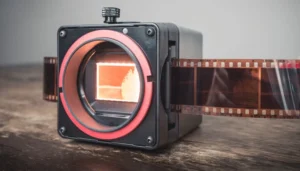
As mirrorless technology matured, the focus shifted from the lens to the body. In-Body Image Stabilization (IBIS) fundamentally changes the physics of the system by moving the sensor itself. The sensor is mounted on a floating carriage, held in place by a precise array of magnets and coils. When the system detects shake, the carriage slides in the image plane to chase the projected light, effectively canceling the camera’s erratic movements.
The complexity of these systems is best illustrated by the "five-axis" claim found on modern marketing brochures. While the sensor stage generally possesses only three physical degrees of freedom—translation in the X and Y axes and rotation around the optical axis (roll)—it addresses five types of shake: pitch, yaw, roll, vertical shift, and horizontal shift. Pitch and yaw are managed through the sliding motion of the carriage, while roll—the rotation of the camera around the lens axis—requires the carriage to physically rotate.
The inclusion of roll correction is critical because, unlike other forms of shake, roll-induced blur is distance-dependent. It remains non-existent at the very center of the image but becomes increasingly problematic as one moves toward the corners. In older or simpler systems, a photographer might find their subject perfectly sharp in the center while the edges of the frame appear smudged—a phenomenon that has pushed manufacturers to refine their internal algorithms to specifically target peripheral blur.
The Synergy of Coordinated Control
Recognizing that neither lens-based nor body-based stabilization is perfect in isolation, the industry has moved toward "coordinated" or "synchro" systems. Whether it is Nikon’s Synchro VR, Canon’s Coordinated Control IS, or OM System’s Sync IS, these technologies represent a handshake between the camera body and the lens.
The logic is rooted in optical leverage. Lens-based stabilization is highly efficient at long focal lengths because small movements of the internal glass elements can steer the light path significantly. Conversely, IBIS is excellent at managing short-focal-length vibrations and roll. By sharing data across the lens mount, the two systems divide the labor: the lens handles the large, sweeping angular corrections, while the sensor manages the fine-tuning and the axes that the lens cannot reach.
Supporting data from recent product launches underscores the efficacy of this split. For instance, the OM System OM-1 Mark II maintains its 8.5-stop rating even when jumping from a 40mm focal length to a 300mm equivalent, a feat that would be physically impossible if the system relied on sensor-shift alone. Without the "optical leverage" provided by the lens, the sensor carriage would simply run out of physical travel space, hitting the limits of the image circle and resulting in vignetting or performance degradation.
Parsing the CIPA Standard
The "stop count" (e.g., "8 stops of stabilization") is the most misunderstood metric in photography. These numbers are derived from the Camera & Imaging Products Association (CIPA) protocol, which is a rigorous, lab-based test. The camera is mounted on a vibration rig that simulates 32 seconds of human-generated shake data sampled at 500 Hz.
However, the "comparability" of these figures is compromised by shifting standards. The 2015 CIPA protocol was relatively forgiving, focusing on the center of the frame and allowing for up to 63 micrometers of blur. The 2024 revision significantly tightened these requirements to 20 micrometers, mandated the inclusion of roll-axis measurements, and required testing at 60% of the image height (the periphery). Consequently, a camera model tested under the 2024 standard will almost certainly show a lower "stop" rating than the same camera tested under the 2015 criteria. This creates a deceptive landscape where older, less capable cameras may appear to outperform modern flagships simply because they were benchmarked against easier, outdated standards.
The Limits of Mechanical Correction
Despite these engineering marvels, stabilization is not a panacea. It remains a tool for low-light management, not motion control. Stabilization systems are designed to keep the camera still relative to the scene; they have no power over the subject’s own movement. A runner captured at 1/8th of a second will remain a blurred subject, regardless of whether the photographer is using a 10-stop stabilized lens.
Furthermore, the integration of these systems into professional workflows requires an understanding of their limitations. Tripod use remains a notable "blind spot." When a camera is mounted on a rigid, immobile surface, the stabilization system may misinterpret the lack of movement and the micro-vibrations of the environment as shake, creating a feedback loop that introduces blur where there was none. While many modern cameras feature automatic tripod detection, the standard industry advice remains: turn off stabilization when the camera is locked down.
Similarly, panning for action photography requires specific modes. A standard stabilization algorithm will attempt to fight a deliberate, horizontal sweep of the camera, leading to "stuttering" or lag in the viewfinder. Advanced modes, such as Canon’s IS Mode 2 or 3, are designed to detect the direction of a pan and suspend correction on the relevant axis, ensuring the viewfinder remains fluid during high-speed action.
Implications for the Future
The move toward electronic, software-based stabilization in video production adds yet another layer of complexity. Technologies like Sony’s "Dynamic Active" mode rely on cropping the sensor to create a digital margin, allowing the processor to shift the frame in real-time. While effective, this carries a high cost in terms of field-of-view and resolution. As manufacturers continue to blur the lines between optical, mechanical, and electronic stabilization, the burden of verification falls on the end-user.
In the current market, the headline stop-count should be viewed as a theoretical maximum achieved under ideal laboratory conditions. For the working professional, the real-world performance is the only metric that matters. Given the variables of focal length, test protocol, and the physical limitations of the hardware, the most prudent approach is to treat these high-end ratings as a baseline for performance, while conducting personal "hit-rate" tests. By firing a series of frames at increasingly slower shutter speeds—1/60s, 1/30s, 1/15s, and 1/8s—photographers can establish their own practical threshold, ensuring that when the light fades and the shot is critical, the results are reliable rather than speculative.