Google’s New Call for Me Feature Harnesses Gemini AI to Automate Your Business Phone Calls

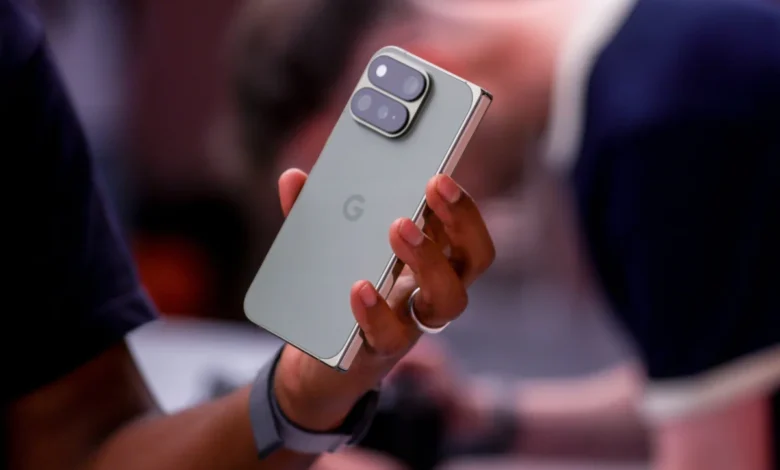
For nearly a decade, Google has pursued the ambition of offloading the mundanity of administrative phone calls to artificial intelligence. This vision, first introduced to the public in 2018 as Google Duplex, promised a future where your smartphone could autonomously book restaurant reservations or schedule haircuts. While the initial Duplex project eventually faded from the spotlight, Google is now launching a second, more sophisticated iteration. This week, the company announced "Call for Me," an experimental beta feature integrated into the latest Pixel 11 smartphones. By leveraging the advanced capabilities of modern large language models (LLMs), Google is attempting to solve the complex, real-time demands of telephonic communication that previously stifled its earlier efforts.
The Evolution of Google’s AI Voice Strategy
The timeline of Google’s push into AI-assisted calling began with high expectations but faced significant hurdles regarding public trust and technical limitations. When Duplex was unveiled at Google I/O in 2018, the demonstration—where the assistant successfully navigated a human conversation to book a table—stunned the industry. However, the technology struggled with the sheer unpredictability of human discourse. Over the years, the feature transitioned into more narrow use cases, such as providing COVID-19-related business information, before being largely shuttered as a consumer-facing tool.
The introduction of "Call for Me" represents a shift from the rigid scripts of the past to the flexible, context-aware reasoning of the Gemini era. Unlike its predecessor, which relied on specialized models to mimic human prosody and fill-ins, "Call for Me" uses a general-purpose, multimodal LLM capable of understanding nuance, navigating interactive voice response (IVR) menus, and managing the "dead air" associated with waiting on hold.
Accessing the Beta: Requirements and Availability
Currently, the feature is limited in scope, reflecting Google’s cautious approach to public AI deployment. It is exclusively available to Pixel 11 owners in the United States who use the English language setting. To access the beta, users must hold a Gemini subscription and participate in the public beta program for the "Phone by Google" application.
This tiered access strategy serves two purposes: it creates a controlled environment for data collection to refine the model’s performance in noisy or non-standard environments, and it ensures that the power users who are most likely to provide constructive feedback are the ones testing the system. Google’s support documentation outlines a rigorous setup process, emphasizing that the tool is intended specifically for business interactions rather than personal calls or emergency services.
How the Technology Operates
When a user initiates a request—for instance, "Call the local hardware store and ask if they have a 5/8-inch drill bit in stock"—the Gemini model takes over the interface. It utilizes the device’s cellular connection to perform the task, with the user retaining the ability to observe the interaction via a live transcript on their screen.
The system is designed to handle three distinct phases of a call:
- Initiation: Gemini introduces itself and states the purpose of the call, identifying that it is an AI assistant.
- Navigation: If the call is answered by an automated system, Gemini interprets the menu prompts, navigating through keypresses or voice commands to reach a human representative.
- Engagement: Once connected, the model carries on a back-and-forth dialogue. If the store representative asks a follow-up question, the model processes the request based on the user’s initial context or pauses to ask the user for further instruction.
Crucially, the user is not locked out of the process. At any point, the owner can "take over" the call simply by speaking into the phone. If the business cannot fulfill the request, Google has programmed the model to terminate the conversation politely, a small but essential detail in maintaining the brand reputation of the user.

Building Upon a Legacy of Smart Calling
"Call for Me" does not exist in a vacuum; it is the latest addition to a robust ecosystem of "smart" calling features that have defined the Pixel brand. Google has spent years refining features that reduce the friction of telecommunications:
- Call Screening: Uses AI to answer unknown numbers and ask for the caller’s intent before the user decides whether to pick up.
- Hold for Me: A precursor to the current technology, which monitors hold music and alerts the user only when a human representative is actually on the line.
- Direct My Call: Provides a visual representation of an automated phone tree, allowing users to tap their choices rather than listening to a recorded list.
- Scam Detection: A real-time analysis tool that flags potential fraudulent activity during a call, providing a layer of security that is becoming increasingly vital as voice-cloning technology advances.
Analytical Implications: Trust and Utility
The broader implications of this technology are significant. By automating the "boring" aspects of daily life, Google is positioning its AI not just as a chatbot, but as an agent capable of interacting with the physical world. However, this raises questions regarding the "human-in-the-loop" requirement.
Industry analysts point out that the primary barrier to adoption is not technological, but sociological. If a business receives a high volume of automated, AI-generated calls, they may eventually implement "CAPTCHA-like" verification steps to filter out non-human callers, creating an arms race between AI callers and AI receptionists.
Furthermore, there is the issue of linguistic diversity. Google’s spokesperson noted that the company is specifically seeking feedback on how the model handles different accents and noisy environments. If the system fails to comprehend a regional accent or a background noise, it could lead to frustration for the business owner, potentially causing them to hang up on legitimate customers. The success of the feature depends entirely on its ability to be perceived as helpful rather than intrusive.
Future Perspectives
Google’s strategy mirrors the wider industry trend of "agentic AI." As AI models become more capable of taking action, the role of the smartphone is evolving from a communication device to an automated assistant. The prospect of an AI calling a restaurant to book a table, only for that restaurant to be answered by a different AI that handles reservations, is no longer science fiction.
While the "machine-to-machine" future might seem efficient, it also highlights a potential disconnect in human experience. When businesses start using AI to handle their front-end communication, the nature of customer service may shift from being a relational interaction to a purely transactional data exchange.
For now, the "Call for Me" experiment remains a testing ground. Google is gathering data on success rates, the duration of calls, and the frequency with which users are forced to intervene. The company has stated that the feedback from this beta will be instrumental in improving the model’s "politeness" and its ability to handle complex business scenarios.
As we move forward, the adoption of such tools will likely depend on how seamlessly they integrate into existing social norms. If users find that their AI assistant is consistently successful in navigating the nuances of daily errands, the technology will likely see widespread adoption. If, however, it creates more work than it saves, it may join the ranks of other experimental features that ultimately failed to gain traction. For the time being, the Pixel 11 remains the testing laboratory for this ambitious attempt to automate the final frontier of the analog world: the phone call.