Trump Signals Openness to Chinese Automakers Building Plants on U.S. Soil, Sparking Bipartisan Alarm and Policy Friction

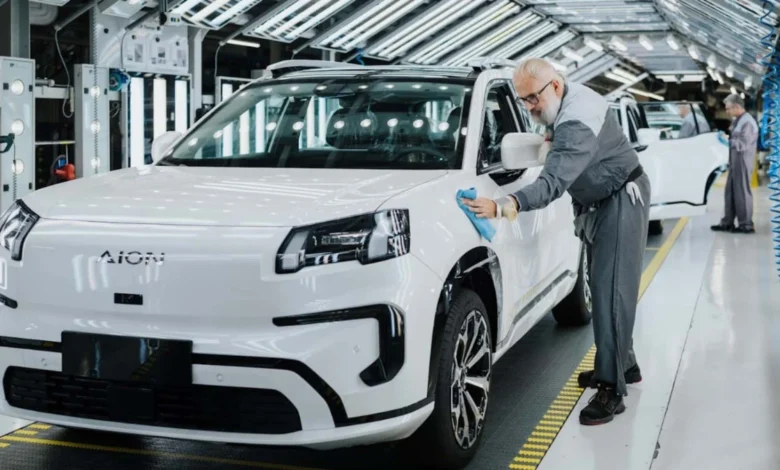
The landscape for Chinese automakers eyeing expansion into the lucrative United States automotive market has grown increasingly hostile over the past decade. What once appeared to be an inevitable trajectory of global commercial integration during the late 2010s has devolved into an era of aggressive protectionism. Policymakers on both sides of the political aisle have systematically fortified the domestic manufacturing base against an influx of highly competitive, technologically advanced Chinese electric vehicles (EVs). Immersive tariff structures have rendered direct vehicle imports economically uncompetitive, while sweeping regulatory bans targeting Chinese-developed hardware and software threaten to make consumer sales virtually impossible.
Despite this frosty diplomatic and economic climate, former President Donald Trump offered a nuanced caveat during a recent appearance on Fox News’s The Ingraham Angle. Speaking to host Laura Ingraham, Trump stated that he would be open to allowing Chinese automakers to establish manufacturing operations within the United States, provided they build their vehicles domestically using American labor.
"If China wanted to come in and open a plant to build their cars here, I’d be okay with that," Trump said during the broadcast. "Japan does it, but they hire our people. The big thing is they hire our people."
However, Trump drew a sharp line regarding potential trade workarounds, explicitly condemning any strategy that would see Chinese brands utilize Mexico as a manufacturing staging ground to bypass U.S. trade rules and import vehicles duty-free under existing regional trade agreements.
The Pivot and the Policy Paradox
Trump’s recent remarks present a stark contradiction to the prevailing bipartisan consensus in Washington, where opposition to Chinese automotive infiltration—even via domestic assembly—has intensified. Just days prior to Trump’s television appearance, Department of Transportation Secretary Sean Duffy launched a public critique of Ford Motor Company. Duffy targeted Ford’s ongoing licensing agreement with Chinese battery giant Contemporary Amperex Technology Co. Limited (CATL), which provides technical expertise and design frameworks for a battery manufacturing facility in Michigan that employs American workers. Despite the utilization of domestic labor, Duffy’s scathing open letter underscored deep-seated federal anxieties regarding any corporate entanglement with Chinese entities.
The timing of Trump’s comments also coincides with warnings from lawmakers such as Michigan Senator Elissa Slotkin. Senator Slotkin recently raised alarms regarding potential backchannel negotiations and rumored policy packages that could pave the way for Chinese automakers to enter the U.S. market as part of a broader diplomatic bargain. These rumors have gained traction ahead of a scheduled visit to the United States by Chinese President Xi Jinping to meet with Trump later this month.
For Senator Slotkin, who co-sponsored legislation aimed at establishing an outright ban on the sale of Chinese-built vehicles in the United States, any such compromise represents a direct threat to national security and domestic industrial stability.
Regulatory Roadblocks and Existing Bans
Even if political leadership were to pivot toward accommodating localized Chinese manufacturing, the current regulatory infrastructure presents formidable, if not insurmountable, hurdles. The Department of Commerce has enacted robust preventative measures that extend far beyond traditional tariffs. Under established federal rules, vehicles equipped with software developed by Chinese firms face an effective sales ban beginning in model year 2027, with hardware bans slated to take full effect by 2030.
These regulations are already actively reshaping the automotive landscape. Federal authorization denials rooted in these supply chain and software restrictions forced Polestar to adjust its market strategies, while legacy European automakers like Mercedes-Benz find themselves navigating complex compliance battles with U.S. regulatory bodies over components tied to Chinese networks. Consequently, the legal and regulatory framework currently in place prevents Chinese-branded vehicles from entering the U.S. consumer market, regardless of executive branch rhetoric.
A History of Conditional Pragmatism
Trump’s willingness to consider Chinese factories on U.S. soil is not an entirely new development. Throughout his 2024 presidential campaign, Trump repeatedly floated conditional openness to Chinese automakers, maintaining that domestic manufacturing facilities and the subsequent creation of American blue-collar jobs could outweigh the inherent risks, provided that the vehicles were not merely funneled through foreign intermediaries.
This transactional approach to international trade contrasts sharply with his administration’s broader posture toward Beijing. Trump has frequently targeted China over systemic trade deficits, allegations of intellectual property theft, economic espionage, and geopolitical positioning in global conflicts, such as Iran’s proxy engagements. Yet, his rhetoric frequently oscillates between economic nationalism and pragmatic diplomacy, occasionally highlighting his personal rapport with President Xi Jinping.
Economic Implications and the Global Context
The global automotive market is currently experiencing a massive supply surplus driven by China’s hyper-efficient, state-supported EV ecosystem. Chinese automakers, led by giants like BYD, Geely, and SAIC, have aggressively expanded their export footprints across Europe, Southeast Asia, South America, and the Middle East, recording record-breaking export volumes. Having saturated many international markets, Chinese manufacturers view the North American market as the ultimate frontier for long-term profitability and scale.
For the domestic U.S. auto industry, the prospect of Chinese competition—whether imported directly or built locally—evokes memories of the Japanese auto invasion of the 1980s. At that time, Japanese automakers initially faced fierce political backlash and import quotas before eventually establishing multi-billion-dollar manufacturing footprints in states like Ohio, Kentucky, and Tennessee, employing hundreds of thousands of American workers.
However, industry analysts point out critical differences between the Japanese expansion of the 20th century and the modern Chinese EV phenomenon. Modern vehicles are effectively rolling supercomputers, heavily reliant on complex data-collection networks, cloud connectivity, and artificial intelligence. U.S. national security agencies argue that the integration of Chinese software and hardware creates unprecedented vulnerabilities regarding data harvesting, remote interference, and critical infrastructure disruption—concerns that were largely absent during the mechanical era of Japanese automotive expansion.
Outlook Ahead of the Summit
As the diplomatic summit between Trump and President Xi Jinping approaches later this month, the automotive sector remains on high alert. While the regulatory barriers established by the Department of Commerce and bipartisan congressional opposition remain robust, the unpredictable nature of executive trade policy leaves room for potential shifts.
Whether Trump’s conditional endorsement of localized Chinese manufacturing transforms into actionable policy or remains mere campaign-trail rhetoric will soon be tested. For American automakers, labor unions, and federal regulators, the stakes could not be higher as the intersection of national security, global trade, and the future of mobility hangs in the balance.