Deezer Reports AI Generated Content Now Accounts for 44 Percent of All New Music Uploads as Streaming Fraud Concerns Rise

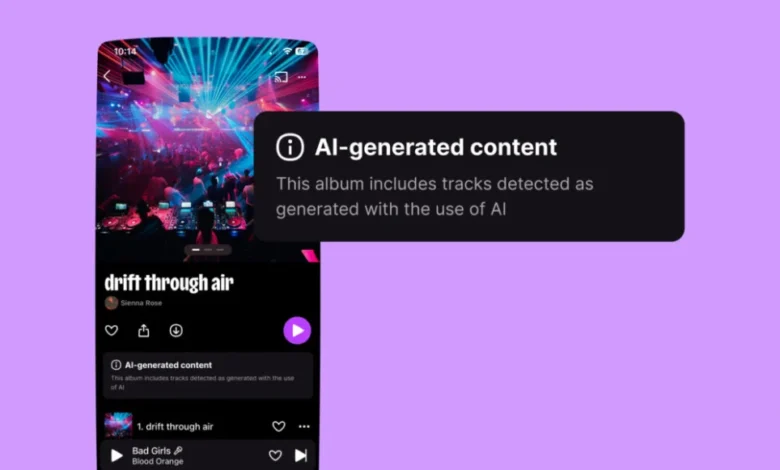
The global music streaming landscape is undergoing a seismic shift as artificial intelligence transitions from a niche experimental tool to a dominant force in content production. On Monday, Deezer, the Paris-based music streaming giant, announced a staggering milestone in this evolution: AI-generated tracks now represent 44% of all new music uploaded to its platform. This figure represents a near-parity between human-created art and machine-generated content in the current release cycle, marking a transformative moment for the digital music economy.
According to the company’s internal data, Deezer is currently processing approximately 75,000 AI-generated tracks per day. On a monthly basis, this volume exceeds two million tracks. The rapid influx of synthetic audio has prompted the platform to accelerate its defensive measures, as the surge in volume brings with it significant challenges regarding copyright integrity, storage costs, and the fair distribution of royalty payments to human artists.
The Exponential Growth of Synthetic Audio
The rise of AI music on Deezer has followed an aggressive upward trajectory over the past 16 months. The data reveals a timeline of growth that reflects the increasing accessibility of generative AI tools like Suno, Udio, and various open-source models that allow users to create full-length songs from simple text prompts.
In January 2025, when Deezer first launched its proprietary AI-music detection tool, the platform was receiving roughly 10,000 AI tracks per day. By September 2025, that number had tripled to 30,000. The momentum continued through the end of the year, reaching 50,000 daily uploads in November. By January 2026, the figure hit 60,000, eventually culminating in the current rate of 75,000 tracks per day reported this April.
This 650% increase in daily uploads within a year and a half highlights the democratization of music production, but it also underscores the "content flood" that streaming services are now forced to navigate. As generative AI becomes more sophisticated, the barriers to entry for creating music have effectively vanished, leading to a saturated market where human creators must compete for visibility against an endless stream of algorithmically produced content.
The Consumption Paradox and Streaming Fraud
Despite the massive volume of AI uploads, actual listener engagement with these tracks remains disproportionately low. Deezer reports that AI-generated music accounts for only 1% to 3% of total streams on the platform. This discrepancy between supply (44% of uploads) and demand (less than 3% of streams) suggests that the vast majority of AI music is not being created for genuine artistic consumption by human audiences.
The most alarming statistic provided by Deezer concerns the nature of these streams. The company revealed that 85% of the plays attributed to AI-generated tracks are detected as fraudulent. This "streaming fraud" typically involves the use of "bot farms"—automated systems designed to play specific tracks repeatedly to manipulate streaming numbers and siphon money from the royalty pool.
In a traditional "pro-rata" streaming model, royalties are distributed based on a track’s share of total streams. When AI-generated tracks are "botted" to achieve millions of fake plays, they effectively steal revenue from human artists, labels, and songwriters. To combat this, Deezer has implemented a policy of demonetizing any track identified as fraudulent, ensuring that these synthetic streams do not dilute the earnings of legitimate creators.
Strategic Responses and Platform Policies
In response to the deluge of synthetic content, Deezer has implemented several industry-leading policies designed to prioritize human artistry and maintain platform quality.
First, the company has confirmed that any song tagged or detected as AI-generated is automatically excluded from Deezer’s algorithmic recommendations. This means AI tracks will not appear in "Flow," personalized mixes, or discovery playlists. Furthermore, these tracks are strictly barred from editorial playlists curated by Deezer’s staff.
Second, Deezer announced a new technical restriction: the platform will no longer store high-resolution (hi-res) versions of AI-generated tracks. By limiting AI content to standard quality, the company aims to reduce the massive server and storage costs associated with hosting millions of tracks that see very little human engagement. This move is seen as a strategic "quality-tiering" that reserves premium bandwidth for human-made recordings.
CEO Alexis Lanternier emphasized the importance of these measures in a statement accompanying the data release. "AI-generated music is now far from a marginal phenomenon," Lanternier stated. "As daily deliveries keep increasing, we hope the whole music ecosystem will join us in taking action to help safeguard artists’ rights and promote transparency for fans."
Lanternier added that Deezer’s proactive stance, which began over a year ago, has proven that technology can be used to mitigate the risks of "payment dilution" in the streaming era.
Consumer Perception and the Loss of Distinguishability
One of the most significant challenges facing the industry is the blurring line between human and machine creativity. A survey conducted by Deezer and Ipsos in November 2025 highlighted a growing "Turing Test" crisis in the audio world. The study found that 97% of participants could not reliably tell the difference between a fully AI-generated song and one created by a human.
This lack of distinguishability has led to significant shifts in public opinion regarding transparency. The survey revealed:
- 80% of respondents believe that 100% AI-generated music should be clearly and mandatory labeled for listeners.
- 52% of respondents believe that fully AI-generated songs should be excluded from mainstream music charts, arguing that they should not compete directly with human-made art.
The urgency of this debate was underscored last week when an AI-generated track topped the iTunes charts in the United States, United Kingdom, France, Canada, and New Zealand. While the specific track utilized high-quality voice modeling to mimic established artists, its success proved that synthetic music is no longer just a "spam" issue—it is becoming a viable commercial competitor.
The Broader Industry Context
Deezer’s aggressive stance on AI labeling and fraud detection places it at the forefront of a broader industry-wide debate. Other streaming services have adopted varying strategies:
- Qobuz: The French high-fidelity service announced plans in February to tag all AI-generated content, aligning closely with Deezer’s philosophy of transparency.
- Spotify: While Spotify has updated its AI policy to label tracks and cut down on spam, it has generally avoided a blanket ban on AI music. Instead, it focuses on removing content that violates copyright (such as "deepfake" vocals) and utilizes filters to identify low-quality or "junk" audio.
- Apple Music: Reports suggest Apple is moving toward adding transparency tags to distinguish AI music, though much of the responsibility for labeling currently rests with the digital distributors who deliver the files to the platform.
The core of the conflict lies in the "Artist-Centric" payment model, a system pioneered by Deezer in partnership with Universal Music Group (UMG). Under this model, "professional" artists (those with a consistent following) receive a higher weight in royalty calculations compared to non-professional or "functional" audio (like white noise or basic AI loops). By identifying and isolating AI content, Deezer is able to protect the financial interests of professional human musicians.
Implications for the Future of Music
The fact that nearly half of all new music is now machine-generated carries profound implications for the future of the creator economy. Analysts suggest that we are entering an era of "hyper-saturation," where the sheer volume of content makes human discovery increasingly difficult without the intervention of strict platform curation.
From a technical standpoint, the 44% figure suggests that the "dead internet theory"—the idea that the majority of internet content will eventually be generated by and for bots—is finding a foothold in the music industry. If 85% of AI streams are fraudulent, the ecosystem risks becoming a closed loop where machines create music and bots listen to it, all for the purpose of gaming financial algorithms.
However, Deezer’s data also offers a silver lining for human artists. The low consumption rate (1-3%) of AI music suggests that, for now, audiences still crave the emotional resonance, storytelling, and cultural context that only human creators provide. While machines can replicate the sound of a hit song, they have yet to replicate the "star power" and community-building aspects of a human artist’s career.
As the TechCrunch event in San Francisco approaches this October, industry leaders are expected to use Deezer’s latest figures as a catalyst for new standards in digital rights management. The goal remains a balanced ecosystem where AI can be used as a creative tool for humans, rather than a replacement that destabilizes the economic foundations of the music world.
For now, Deezer’s 13.4 million tagged AI tracks serve as a digital archive of a turning point in cultural history—the moment the music industry began to fight back against the dilution of human creativity.