The iPhone Duo Marks Apple’s Definitive Entry Into the Foldable Smartphone Market

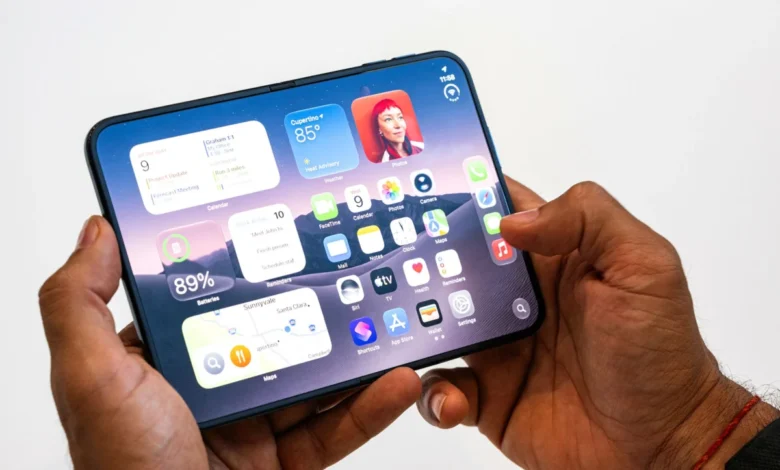
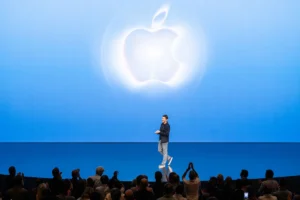
Apple has officially entered the foldable smartphone era with the introduction of the iPhone Duo, a device that represents the most significant hardware departure in the company’s history since the original iPhone launch in 2007. Unveiled at Apple’s annual September keynote at Apple Park in Cupertino, California, the iPhone Duo arrives as a premium, high-stakes entry into a category previously dominated by Android manufacturers. Priced at $1,999 for the 256 GB base model, the device positions itself at the apex of the mobile market, signaling Apple’s intent to redefine consumer expectations for folding hardware.
The device will be available for pre-order starting October 16, with a retail release scheduled for October 23. It arrives alongside the iPhone 18 Pro and iPhone 18 Pro Max, rounding out a refreshed lineup that notably excludes a standard, non-Pro base iPhone 18—a strategic shift that suggests Apple is shifting its focus toward high-end, specialized hardware for the 2026 fiscal cycle.
Hardware Engineering and Design Philosophy
The iPhone Duo utilizes a book-style folding mechanism, featuring a 5.4-inch outer display that serves as a standard smartphone interface, and a expansive 7.6-inch inner display. Apple emphasized that the aspect ratio has been meticulously calibrated to remain consistent across both surfaces, ensuring that software transitions are seamless.
Durability remains the central challenge for any foldable, and Apple has addressed this through a combination of proprietary material science and structural engineering. The chassis is constructed from a titanium frame with a mirror finish, paired with Apple’s Ceramic Shield glass on the rear and a specialized "Ceramic Shield 2" on the front. Notably, the iPhone Duo achieves an IP68 dust- and water-resistance rating. This represents a significant technical milestone, as previous market leaders in the foldable space have struggled to marry the mechanical complexity of a hinge with high-level environmental sealing.
The hinge itself incorporates a "custom variable torque profile," designed to facilitate a fluid opening and closing sensation. To mitigate the display creasing that has historically plagued foldable screens, Apple has integrated a carbon fiber metal plate beneath the panel, similar to the "Flex Titanium" technology seen in competing devices, topped with a nano-texture finish and a custom scratch-resistance coating.
Technical Specifications and Internal Architecture
Internally, the iPhone Duo is powered by the A20 Pro chip, the same silicon architecture driving the flagship iPhone 18 Pro series. This ensures that the Duo is not merely a novelty device but a performance-oriented workstation. Apple has adopted a split-battery system to balance weight and power, which the company claims provides up to 31 hours of video playback on the inner screen and 44 hours on the outer display. Under real-world mixed-use conditions, users can expect approximately 24 hours of operation per charge.
Connectivity is handled by a new custom C2 modem, providing mmWave 5G support in the United States. In a departure from traditional iPhone design, the Duo omits Face ID, likely to preserve internal space for the folding components. In its place, Apple has reintroduced Touch ID, integrated directly into the side-mounted power button. The device also introduces support for the USB-C Apple Pencil, though users will need to carry the stylus separately, as the device lacks a magnetic charging dock—a notable omission for a device clearly designed for professional productivity.
Imaging and Software Integration
The camera array is streamlined, featuring a 48-megapixel primary camera and a 48-megapixel ultrawide sensor. While the absence of a telephoto lens may disappoint power users, the Duo leverages its unique form factor to enhance the photography experience. The software allows for a "preview" mode where subjects can view themselves on the outer screen, and the device’s ability to stand upright in a "tent" position allows for automated, tripod-free group photography.

The software experience is a critical component of the Duo’s value proposition. Having spent years refining adaptive app scaling for the iPad and the Vision Pro headset, Apple has optimized iOS to transition gracefully between the 5.4-inch and 7.6-inch displays. Essential controls have been shifted to the side, and the UI features a vertical dock to maximize the available real estate.
A Shifting Market Landscape
The foldable smartphone market has existed since 2019, with companies like Samsung, Google, Honor, and Motorola iterating through several generations of hardware. Despite this, the category has remained a niche segment, accounting for approximately 2 percent of the global smartphone market.
Industry analysis from IDC suggests that the arrival of the iPhone Duo will serve as a catalyst for growth. Nabila Popal, senior research director at IDC, notes that while the general smartphone market has faced headwinds—contracting by 13 percent year-over-year—Apple’s brand loyalty is expected to drive adoption. An IDC survey indicated that while 60 percent of consumers expressed disinterest in current foldables, 33 percent stated they would be "absolutely" likely to purchase a folding phone if it were manufactured by Apple.
"Apple has such a strong market pull," Popal stated. "The arrival of the iPhone Duo is going to create overall excitement for the category. It brings legitimacy to a form factor that many consumers previously viewed as experimental."
Repairability and Sustainability Concerns
The introduction of the iPhone Duo has reignited debates regarding device longevity and repairability. Elizabeth Chamberlain, director of sustainability at iFixit, highlighted the inherent friction between modern folding technology and the right-to-repair movement.
"Manufacturers have made strides in durability, but those gains have not translated to repairability," Chamberlain said. The complexity of the internal components and the specialized nature of the folding screen make these devices some of the most difficult to service in the industry. Apple’s simultaneous promotion of a leasing program further complicates the ownership model. By encouraging users to lease the iPhone Duo rather than purchase it outright, the company ensures a steady stream of refurbished inventory but moves further away from the principle that consumers should maintain full autonomy over their hardware.
Economic Implications and Future Outlook
The $1,999 price point places the iPhone Duo firmly in the ultra-premium segment. While this may cause "sticker shock" for the average consumer, analysts expect the device to be a commercial success. Apple has historically proven that its core demographic is willing to absorb price increases, as evidenced by the successful transition to the $1,000 smartphone threshold in previous years.
Looking ahead, the launch of the iPhone Duo is merely the first step in a broader strategy. The delayed release of the base iPhone 18, which is now expected to arrive in the spring of 2027 alongside the iPhone 18e and the second-generation iPhone Air, suggests that Apple is restructuring its entire product roadmap. By staggering its releases, the company is attempting to sustain momentum throughout the year, rather than relying solely on the traditional September surge.
As the device enters the hands of consumers on October 23, the focus will shift from marketing to real-world performance. Whether the iPhone Duo can survive the rigors of daily use and justify its price tag will ultimately determine the future of the foldable form factor in the mainstream market. For now, the tech industry is watching closely to see if Apple can do what it has done many times before: take an existing, niche technology and refine it into an essential standard.
Related posts: