The landscape of modern mobile technology has shifted significantly over the past five years, with foldable devices transitioning from high-concept prototypes to viable, daily-driver hardware. However, the barrier to entry remains a substantial hurdle for the average consumer, as flagship foldables often command prices exceeding $1,200. In a strategic bid to capture the mid-range market, Motorola has launched a compelling promotion for its 2026 Razr series, effectively lowering the cost of entry by bundling premium accessories with the base model. This move underscores a broader industry trend where manufacturers are increasingly relying on hardware ecosystem bundling to maintain sales volume in a saturated smartphone market.
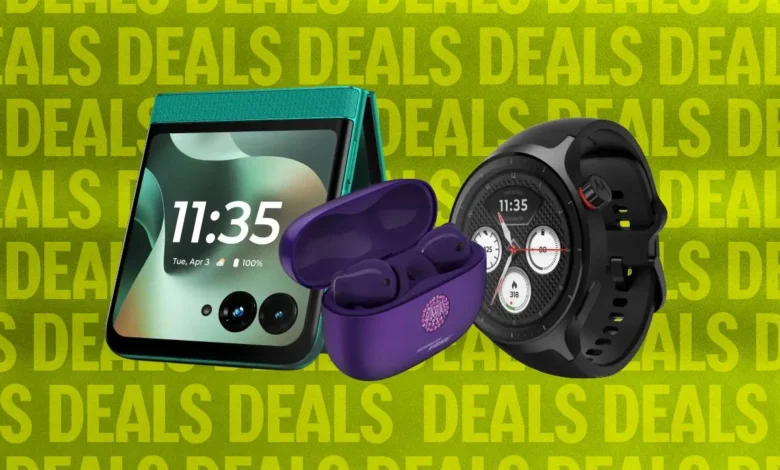
The 2026 Motorola Razr, currently positioned as the premier budget-conscious foldable, retails at a starting price of $800. While this figure places it well below the "ultra-premium" tier of the foldable market—dominated by devices like the Samsung Galaxy Z Fold series or Apple’s hypothetical high-end folding handsets—it remains a significant investment. To incentivize potential adopters, Motorola is currently offering a comprehensive bundle that includes the Moto Watch and the Swarovski Edition Moto Buds 2 Plus, a package the company values at approximately $350. By including these items at no additional cost, Motorola is effectively signaling a shift in how it intends to compete with established giants, focusing on value-added propositions rather than purely aggressive price slashing.
A Strategic Pivot in Hardware Ecosystems
The decision to bundle a smartwatch and high-fidelity earbuds with a smartphone purchase is not merely a promotional tactic; it is a calculated effort to increase the "stickiness" of the Motorola ecosystem. By providing users with a complete suite of interconnected devices—the phone, the watch, and the earbuds—Motorola is aiming to replicate the user-retention models successfully employed by competitors like Apple and Samsung.
The 2026 Razr itself is designed to balance the aesthetic appeal of a classic "clamshell" form factor with the durability requirements of modern daily use. It features a titanium-reinforced hinge mechanism and an IP48 weather-resistant rating, bringing the build quality of its entry-level foldable in line with its more expensive, "Ultra" counterparts. While the device does not boast the highest-tier processing power, utilizing a MediaTek chipset that is optimized for efficiency rather than raw benchmark dominance, it provides a consistent experience that meets the needs of the average mobile user.
Historical Context and Market Positioning
To understand the significance of this promotion, one must look at the trajectory of the Razr brand since its modern reboot. In 2019, the revival of the iconic Razr nameplate was met with immense nostalgia but also significant technical criticism regarding display durability and battery life. Over the subsequent years, Motorola’s engineering team has iteratively refined the hardware. The 2026 model represents a maturation of this design philosophy. By this stage in the device’s lifecycle, the technical "growing pains" associated with folding screens have largely been mitigated, allowing the company to pivot toward market penetration.
The current promotional window in October 2026 comes at a critical time. Historically, this period marks the final quarter surge in consumer electronics, as shoppers prepare for the end-of-year holiday season. By launching this bundle now, Motorola is attempting to secure a share of the "early adopter" market who may have been waiting for a price point below the $1,000 threshold, while simultaneously clearing inventory ahead of potential new product announcements in the early months of the following year.
Technical Specifications and Performance Metrics
The 2026 Razr serves as an entry point into the foldable experience. With 256 GB of storage as the standard configuration, it offers sufficient capacity for the average user’s media and application needs. The device is sold unlocked, ensuring compatibility with all major telecommunications carriers in the United States, a feature that remains a critical selling point for consumers wary of carrier-locked hardware.

Despite its competitive positioning, the device is not without its trade-offs. The display, while vibrant and durable, lacks the high-refresh-rate capabilities found in ultra-premium devices. Furthermore, the software support cycle is limited to three promised Android updates. This represents a point of friction for power users who expect long-term software relevance, as competitors often offer five or more years of support for flagship devices. Additionally, the integration of Motorola’s AI features has been described by critics as inconsistent, suggesting that the software side of the business has not yet reached the same level of polish as the physical hardware.
The Role of Accessory Bundling
The inclusion of the Moto Watch and the Swarovski Edition Moto Buds 2 Plus serves as a psychological buffer for potential buyers. The Moto Watch, while not considered a market-leading wearable, provides fundamental fitness tracking, heart rate monitoring, and notification management. It is a functional accessory that fulfills the basic requirements of a modern wearable.
The Moto Buds 2 Plus, tuned with Bose audio technology, represent a significant inclusion for audiophiles. The partnership with Bose is a strategic branding play, allowing Motorola to lend its audio equipment a layer of credibility that is often missing from generic bundled earbuds. The Swarovski branding on the case adds a stylistic flair that, while subjective in its appeal, demonstrates an attempt to position the Razr as a fashion-forward accessory rather than just a utilitarian tool. The ability for users to "regift" or resell these accessories if they find them redundant also adds a layer of perceived value to the overall package.
Economic Implications of Trade-In Programs
Beyond the accessory bundle, Motorola has integrated an aggressive trade-in program to further lower the net cost for consumers. By allowing users to trade in legacy devices—ranging from older iPhones to previous-generation Android handsets—the company is effectively subsidizing the cost of the new Razr.
Data from recent trade-in assessments indicates that the value provided is highly variable. A Pixel 6, for instance, might yield a modest $35 credit, while a more recent flagship like a Pixel 10 could reduce the price by nearly $290. This creates a tiered pricing structure that effectively masks the MSRP. By using these trade-in credits, a consumer can theoretically purchase a 2026 Razr for significantly less than the $800 sticker price, making the foldable form factor accessible to a wider demographic than ever before. However, the economic viability of this trade-in depends heavily on the condition and age of the user’s current device, creating an unequal playing field for consumers.
Broader Industry Impact and Future Outlook
The smartphone market has reached a state of feature parity where hardware iterations are becoming increasingly marginal. In this environment, the "form factor" becomes the primary differentiator. Motorola’s commitment to the folding phone, and specifically its focus on bringing the price under $1,000, suggests a belief that foldable screens are the inevitable future of mobile computing.
If this strategy succeeds, it could force other manufacturers to accelerate their own timelines for "budget-friendly" foldables. Currently, Samsung, Google, and Apple have largely prioritized the premium end of the market for their folding devices, leaving a void that Motorola is currently filling. The success of the 2026 Razr will be a key indicator of whether the general public is truly ready to embrace folding technology, or if the form factor will remain a niche interest reserved for tech enthusiasts.
In conclusion, the 2026 Motorola Razr, bolstered by its current promotional bundle and flexible trade-in options, represents a significant, if imperfect, step toward the democratization of foldable technology. While it lacks the raw power and long-term software support of higher-end flagships, it provides a functional and stylish experience that is currently unrivaled at its price point. As the industry continues to evolve, Motorola’s focus on ecosystem value—leveraging accessories like the Moto Watch and Bose-tuned earbuds—may prove to be the blueprint for maintaining relevance in an increasingly crowded and competitive marketplace. Consumers interested in this offer should note that the transaction must be completed directly through the Motorola portal, as third-party retailers may not always mirror these specific promotional incentives. As the year draws to a close, this bundle stands as a clear signal that the foldable wars are moving away from purely technical specifications and into the realm of bundled value and consumer incentives.