The AI Revolution in Biologics: Accelerating Drug Discovery and Redefining Treatment Possibilities

The journey of designing and developing a new medicine is a monumental undertaking, fraught with immense scientific challenges, significant financial investments, and a high probability of failure. For biologic medicines – therapies derived from engineered proteins that are increasingly vital in treating a wide spectrum of acute and chronic diseases – this complexity is amplified. Historically, this process has demanded years of painstaking research, exploring vast quantities of potential molecular candidates to identify the rare few that exhibit the crucial properties of target binding, biological stability, and manufacturability at scale. However, the advent of Artificial Intelligence (AI) is rapidly transforming this landscape, becoming an indispensable component of pharmaceutical research and development, fundamentally accelerating timelines and expanding the very definition of treatable diseases.
From Brute Force to Intelligent Design: The AI Infusion in Biologics R&D
For decades, drug discovery operated largely on a principle of exhaustive exploration, a meticulous process of trial and error. Scientists would meticulously synthesize and test countless compounds, a laborious endeavor that, even with advanced computational tools, often yielded limited breakthroughs. The sheer combinatorial explosion of potential molecular structures meant that many promising avenues remained unexplored, simply due to the constraints of human capacity and time.
Biologics, in particular, present a unique set of challenges. Unlike small molecules synthesized through traditional chemistry, biologics are complex protein-based structures. Their development involves understanding intricate biological pathways, protein folding, stability in the human body, and immunogenicity – all factors that add layers of complexity to the design and manufacturing processes. Historically, identifying a promising biologic candidate could take upwards of five to seven years and cost hundreds of millions of dollars, with the vast majority of potential candidates never making it past preclinical stages.
This is where AI is making its most profound impact. By leveraging sophisticated algorithms and vast datasets, AI is enabling a paradigm shift from brute-force exploration to intelligent, predictive design. Pharmaceutical companies are integrating AI across the entire R&D pipeline, from initial target identification and molecule design to preclinical testing and even early-stage clinical trial analysis.
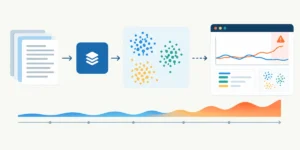
AstraZeneca, a global leader in biopharmaceutical innovation, exemplifies this transformative shift. Puja Sapra, Senior Vice President and Head of R&D Biologics Engineering and Oncology Targeted Discovery at AstraZeneca, highlights the pervasive influence of computational enhancement: "Everything we do, whether it’s design, make, test, or analyze, is now computationally enhanced. The cycle times are getting shorter while productivity and innovation increase." This integrated approach, often referred to as a "build-measure-learn" loop, allows for rapid iteration and optimization. AI algorithms first computationally generate or prioritize candidate molecules, predicting their likelihood of success based on intricate data models. Subsequently, laboratory resources are strategically deployed to focus solely on the most promising, top-ranked candidates. This focused approach dramatically reduces the number of dead ends, accelerates the learning cycle, and allows researchers to pursue therapeutic targets that were previously considered intractable.
Navigating Complexity: AI’s Role in Designing Next-Generation Therapies
The application of AI in drug design extends beyond merely accelerating existing processes. It is also unlocking the potential to discover entirely new classes of medicines. Traditional biologics often target a single disease pathway, a focused approach that has yielded significant therapeutic advances. However, the future of medicine lies in more sophisticated, multi-faceted therapies.
Next-generation biologics are being designed to interact with multiple targets simultaneously or to precisely deliver therapeutic payloads to specific cells, offering a more nuanced and potentially more effective treatment strategy. Achieving this level of precision and complexity requires optimizing numerous variables concurrently – a task that is exponentially more challenging for human researchers alone.
AI-driven models are proving instrumental in navigating this intricate design space. Sapra elaborates, "AI-driven models could help identify which two or three targets to prioritize based on the underlying biology, then optimize across multiple parameters to balance a molecule’s potency, stability, manufacturability, and safety." This capability is opening doors to treating diseases previously deemed "undruggable." The ability to design molecules with finely tuned properties for multiple targets, while ensuring efficacy, safety, and manufacturability, represents a significant leap forward. As Sapra aptly puts it, "Drugging the undruggable is becoming a reality. These technologies will eventually enable us to develop medicines against targets once thought impossible to reach. The potential for benefit to patients is remarkable."
This advancement is not merely theoretical. Companies are already reporting tangible progress. For instance, generative AI, in conjunction with other computational tools, has the potential to reduce drug discovery timelines by as much as 50%, according to estimates by McKinsey & Company. This reduction in time translates directly into faster access to potentially life-saving treatments for patients.
The Data Moat: Fueling AI’s Predictive Power
The efficacy of any AI model is intrinsically linked to the quality and quantity of the data it is trained on. In the realm of drug discovery, this means access to vast, high-quality biological datasets. Every experiment conducted, whether successful or unsuccessful, generates valuable data that provides critical insights into what works and what doesn’t. This iterative process of experimentation and data generation forms the bedrock of AI-driven discovery.
"Data is our differentiator," states Sapra, underscoring the strategic importance of proprietary datasets. AstraZeneca’s data assets are described as proprietary, multimodal, and encompassing a rich tapestry of information, including molecular structures, binding measurements, safety profiles, and manufacturing outcomes. The company has cultivated an intentionally diverse portfolio across multiple disease areas and drug types, ensuring that its AI models are trained on representative and nuanced datasets. "All of that data empowers us to fine-tune frontier AI models with richer, more representative training sets," Sapra explains. Furthermore, substantial investments in deep screening technologies are continuously generating the high-volume datasets required to refine and validate these models.
This concept of a "data moat" is crucial in the competitive landscape of pharmaceutical R&D. Companies that can amass and effectively leverage unique, high-quality datasets gain a significant advantage in developing more accurate and predictive AI models, thereby accelerating their discovery pipelines. The ability to generate and curate this data at scale is becoming a key determinant of success in the AI-driven era of drug development.

Building the "Lab of the Future": An Autonomous Discovery Engine
To harness the full potential of its data and AI capabilities, AstraZeneca is investing in the creation of a "lab of the future" facility. Located in Kendall Square, Cambridge, Massachusetts, this facility is designed to be a nexus of AI and robotic automation, forming a continuous, closed-loop discovery system.
This innovative facility operates on principles akin to a self-driving car, but instead of navigating physical environments, it navigates the complex landscape of molecular discovery. AI models make predictions, robotic systems execute experiments based on those predictions, and sophisticated instruments generate data from these experiments. This data then feeds directly back into the AI models, creating a virtuous cycle of accelerated learning and refinement.
"Where a self-driving car uses sensors and models to navigate its environment, this system uses AI to make predictions, robotic systems to execute experiments, and instruments to generate data," Sapra explains. This continuous loop dramatically shortens the time between hypothesis generation and experimental validation. The data generated by these automated systems is designed to be "AI-ready," meaning it can be seamlessly integrated into the AI models for further analysis and prediction.
Crucially, human expertise remains central to this evolving ecosystem. Sapra emphasizes, "Throughout, scientists will remain central to the process, providing the oversight, judgment, and strategic direction that ensure outputs are explainable, tolerable, and directed toward potential patient benefit." The role of the scientist shifts from manual execution to strategic guidance and interpretation, leveraging AI as a powerful collaborator.
The ultimate aim of these automated, high-throughput systems is to generate and evaluate thousands of molecular interactions on a weekly basis. This represents an unprecedented scale of data generation, far surpassing the capabilities of traditional workflows. Robotic sample handling, automated quality checks, and integrated data pipelines are all contributing factors to the significant acceleration of early drug development timelines.
The Next Frontier: De Novo Design and the Quest for "Druggable" Targets
The ultimate vision for AI in biologics drug discovery is "de novo" design – the ability for AI to generate entirely novel protein sequences and molecular structures from scratch, precisely engineered to possess desired drug properties. This ambitious goal encompasses designing the molecular structure, predicting its safety profile, understanding its behavior within the human body, and ensuring its manufacturability at scale.
"The field is making great progress toward a completely AI-generated biologic, designed from scratch all the way to a clinical candidate," Sapra asserts. This vision is becoming increasingly attainable as frontier AI models are refined with increasingly rich and relevant datasets. The realization of this vision hinges on several critical factors: the availability of richer and more standardized training data across the industry, the development of robust evaluation benchmarks for AI-generated candidates, and the cultivation of interdisciplinary teams proficient in both machine learning and biology.
Perhaps the most significant and least discussed prerequisite for de novo design is safety prediction. "One of the hardest problems in de novo design is predicting whether a computationally generated molecule will be safe in the human body," Sapra acknowledges. To address this challenge, AstraZeneca is pioneering the use of virtual clinical trials. These involve advanced cell systems and micro-scale organ models that serve as sophisticated testbeds. Paired with AI that learns from the outputs of these models, this approach aims to generate enhanced biological signals without the traditional bottlenecks of in-vivo testing. "These systems have the potential to generate enhanced biological signals without traditional testing bottlenecks, and they’re a critical missing piece in closing the loop between AI-generated designs and clinical-ready candidates," Sapra adds.
A notable trend in this evolution is the development of agentic AI systems. These systems possess the capability to simultaneously generate molecule candidates and predict their efficacy and safety. This enables autonomous workflows that can directly connect disease-level insights to molecule design, effectively bridging previously disparate data silos. "The complexity of the biology goes hand-in-hand with the design of the molecule," summarizes Sapra.
The Indispensable Human Element: Talent Unlocks AI’s Full Potential
While the technological advancements in AI are revolutionary, the transformation in biologics discovery is fundamentally a human endeavor. "With more autonomous systems, human oversight remains at the heart of this approach – ensuring explainable and ethical AI for the benefit of patients," Sapra emphasizes. The integration of AI is not about replacing human scientists but about augmenting their capabilities, fostering a collaborative environment where human judgment and AI-driven insights converge.
Scientists will work synergistically with these advanced model systems. "Scientists will work hand-in-hand with these model systems," Sapra explains. "There will be a world where models will design molecules, then scientists will work with the systems to test those molecules and put all that data together." This iterative process of human checks, balances, and critical decision-making ensures that AI-generated outputs are not only scientifically sound but also ethically responsible and aligned with patient needs. Through this symbiotic relationship, AI models will continuously evolve and improve, ultimately enhancing the potential to deliver transformative treatments.
For engineers, the challenge lies in designing and building AI systems that are not opaque "black boxes" but rather transparent and explainable "thinking partners." AstraZeneca’s engineering teams, comprising data scientists, automation specialists, and AI engineers, are focused on developing systems that facilitate this collaborative dynamic. "Engineers are designing systems that generate, validate, and learn at speed. And the problems are genuinely hard: Multimodal data fusion, closed-loop optimization, uncertainty quantification, and interpretability at the point of clinical decision-making," Sapra notes.
By tackling these technically demanding challenges, engineers and scientists are at the forefront of developing potentially life-changing treatments for a myriad of diseases. The future of biologic medicines, both those being developed today and those envisioned for tomorrow, is intrinsically linked to the synergy between world-class AI and engineering talent and deep scientific expertise. The ongoing integration of AI in biologics drug discovery is not just an technological evolution; it represents a fundamental reimagining of how we can combat disease and improve human health, promising a future where previously insurmountable medical challenges can be overcome.
Related posts: