The Illusion of Safety: How the US Border Wall of AI and Surveillance Towers Failed to Prevent Over a Thousand Deaths

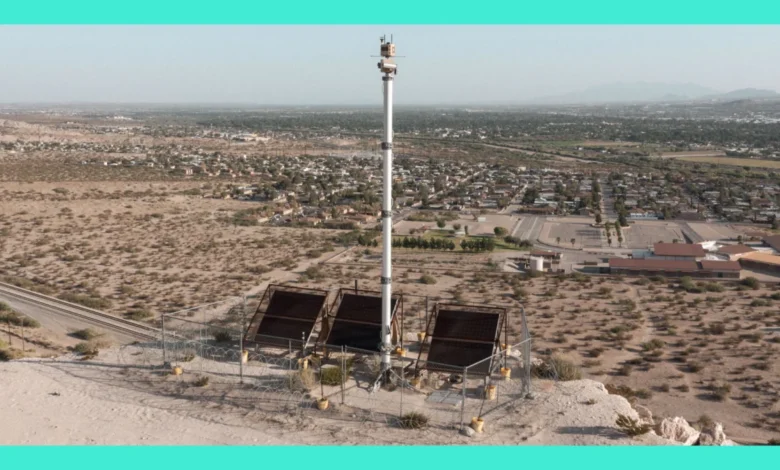
Over the past quarter-century, the United States federal government has invested billions of dollars into constructing what policymakers frequently describe as a high-tech "virtual wall" along the southern international boundary. Stretching across hundreds of miles of unforgiving desert, mountain ranges, and scrubland, this digital barrier relies on an intricate network of surveillance towers, long-range thermal and infrared cameras, seismic ground sensors, and, more recently, advanced artificial intelligence algorithms designed to automatically detect and classify human movement. The foundational promise presented to the American public by successive administrations and defense contractors was twofold: to radically enhance national security by securing the frontier against unauthorized crossings, and simultaneously, to save human lives by enabling rapid search-and-rescue operations for migrants in distress.
However, a groundbreaking and exhaustive investigation published by MIT Technology Review has shattered this narrative, revealing a grim and deeply troubling reality. The investigation documented more than one thousand instances in which migrants successfully traversed or attempted to traverse areas heavily monitored by these high-tech surveillance systems, only to be neither intercepted by border authorities nor rescued in time. Tragically, these individuals ultimately perished in the harsh borderlands. Even more alarming is the finding that a significant number of these tragic deaths occurred directly beneath the electronic gaze of newly installed, AI-powered autonomous towers specifically engineered to spot, track, and alert personnel to human presence in real time.
This comprehensive journalistic endeavor has brought to light a profound humanitarian crisis hidden in plain sight, exposing deep systemic failures in the core security and humanitarian premises of the virtual wall. In response to these revelations, the editorial and investigative team behind the project—including Editor-in-Chief Mat Honan, Senior AI Reporter James O’Donnell, and Senior Features and Investigations Reporter Eileen Guo—has organized public briefings and discussions to dissect the technological breakdowns and honor the humanity of those who lost their lives in the remote borderlands.
The Evolution and Chronology of the Virtual Wall
To understand the current failure of border surveillance technology, one must examine its historical trajectory. The genesis of the virtual wall dates back to the mid-1990s and early 2000s, when traditional physical fencing proved insufficient to stem unauthorized migration across vast, unpopulated expanses of the American Southwest. Recognizing the limitations of boots-on-the-ground enforcement in the desert, the Department of Homeland Security (DHS) and Customs and Border Protection (CBP) began conceptualizing a technological force multiplier.
In 2006, under the administration of President George W. Bush, the federal government officially launched the Secure Border Initiative (SBI), aiming to construct a comprehensive network of sensors, radars, and cameras known as SBInet. Led primarily by defense contractor Boeing, the initiative sought to create an integrated surveillance grid that would provide border agents with a real-time, common operating picture of the border. Despite an initial investment of nearly $1 billion, SBInet faced severe technical delays, soaring cost overruns, and persistent reliability issues, particularly in extreme weather conditions. By 2011, the Obama administration effectively canceled the flagship Boeing program, pivoting instead toward localized, commercial-off-the-shelf technology tailored to specific regional terrain.
Throughout the 2010s, the technological landscape shifted toward mobile surveillance systems, aerostats (blimps equipped with high-resolution cameras), and fixed towers equipped with advanced thermal imaging optics. These systems were marketed as the modern solution to the age-old problem of border visibility.
The most recent chapter in this technological evolution began in the late 2010s and accelerated into the 2020s with the integration of artificial intelligence and machine learning. Partnering with technology firms and defense contractors such as Anduril Industries, CBP began deploying autonomous surveillance towers—often referred to as Lattice towers. Powered by software capable of distinguishing humans and animals from swaying brush or blowing dust, these towers utilize machine learning to automatically alert border agents to potential border crossers. The selling point was absolute efficiency: algorithms that never blinked, never grew fatigued, and could monitor vast sectors of the frontier continuously. Yet, as the MIT Technology Review investigation reveals, bridging the gap between technological detection and human intervention remains an unresolved, and often fatal, chasm.
Supporting Data and Investigative Findings
The numbers compiled in the investigation paint a devastating picture of technological overpromise and humanitarian under-delivery. While CBP maintains that technological investments enhance situational awareness and aid in rescue operations, the empirical data surrounding migrant fatalities in areas monitored by these towers suggests otherwise.
According to humanitarian organizations, medical examiners, and missing-migrant databases operating across the US-Mexico border region, thousands of individuals have died over the past twenty-five years from dehydration, heatstroke, hypothermia, and trauma. By cross-referencing geographic mapping data of migrant mortality with the precise deployment locations of fixed surveillance towers—including legacy radar towers and modern AI-driven systems—investigators uncovered a chilling overlap.
Over a thousand people died in zones where cameras had clear lines of sight, or where automated sensors registered movement. In many of these documented cases, the technology functioned precisely as designed from a data-processing standpoint: it detected a human target, generated an alert, and transmitted coordinates to regional command centers. However, due to resource constraints, logistical bottlenecks, prioritization protocols, or simple human error within the border patrol apparatus, no agents were dispatched to intercept the individuals, nor were search-and-rescue teams deployed to assess their well-being.
This disconnect highlights a fundamental flaw in the architecture of the virtual wall: detection does not equal rescue, and visibility does not guarantee intervention. When a surveillance tower logs a border crosser in a remote desert sector fifty miles from the nearest highway, the camera captures the individual’s desperate journey, but if the alert is deprioritized or if response times lag by hours in punishing temperatures, the technology merely records a tragedy rather than preventing it.
Official Responses and Institutional Perspectives
Federal agencies, defense contractors, and border security advocates view the deployment of surveillance technology through a different lens, emphasizing the immense challenges of securing a nearly 2,000-mile border characterized by extreme topography.
Customs and Border Protection has consistently maintained that technological enhancements are indispensable tools for managing border security. In various statements and budget justifications submitted to Congress, DHS officials have argued that automated towers and remote sensors act as force multipliers, allowing limited personnel to monitor vast expanses that would otherwise be entirely opaque. CBP officials have pointed out that technology helps agents intercept hundreds of thousands of individuals annually, while also facilitating thousands of humanitarian rescue operations where agents utilize coordinates provided by surveillance systems to locate distressed migrants.
However, government accountability offices and independent watchdogs have frequently criticized the procurement and deployment strategies associated with border technology. Past reports from the Government Accountability Office (GAO) have highlighted persistent shortcomings in how CBP measures the effectiveness of its investments. Specifically, the GAO has noted that the agency often fails to establish reliable metrics for determining whether billion-dollar surveillance programs actually achieve their strategic goals or improve humanitarian outcomes.
Defense contractors and technology developers, meanwhile, emphasize that their products are engineered to solve specific engineering challenges—such as improving detection ranges and reducing false alarms—rather than dictating agency policy or operational response protocols. From an engineering perspective, an AI tower successfully captures and classifies an object; what happens downstream in terms of operational deployment is a matter of agency resource allocation and command decisions.
Broader Impact and Implications
The findings of the MIT Technology Review investigation carry profound implications for the future of border management, artificial intelligence ethics, and human rights policy in the United States.
First, the investigation forces a critical reassessment of the growing reliance on artificial intelligence in high-stakes enforcement environments. As algorithms increasingly arbitrate matters of life and death along national borders, questions of accountability become urgent. When an AI-powered tower detects a human in distress but no rescue follows, the accountability is often diffused across a complex bureaucracy of contractors, software developers, agency supervisors, and field agents. This diffusion of responsibility creates a humanitarian vacuum where accountability evaporates.
Second, the human cost documented by the investigation challenges the prevailing political rhetoric surrounding border technology. For decades, proponents of the virtual wall have framed high-tech surveillance as a humane alternative to physical barriers, arguing that electronic monitoring prevents perilous desert crossings while maintaining sovereign control. The evidence suggesting that over a thousand people perished under the very lenses meant to watch over them dismantles this dichotomy, demonstrating that high-tech surveillance can coexist with—and in some cases fail to mitigate—severe humanitarian catastrophes.
Finally, as Congress continues to allocate billions of dollars toward border security modernization and technological enhancement, the investigation serves as an urgent call for systemic reform. Policymakers face mounting pressure to reevaluate how border technology is integrated with humanitarian response mechanisms. Without mandatory protocols ensuring that automated detection immediately triggers welfare checks and rapid-response search-and-rescue operations, the virtual wall risks remaining what critics have long accused it of being: an expensive, sophisticated monitor of human suffering rather than a safeguard for human life.
The ongoing public conversations and investigative panels hosted by journalists and editors aim to keep these critical questions in the national spotlight. By tracing the paths of those who vanished into the monitored borderlands, the investigation ensures that the human stories behind the data points are neither forgotten nor obscured by the gleaming narrative of technological progress.