The Busy Bar and the Evolution of Workplace Focus Tools A Deep Dive into Productivity Hardware and the Challenges of the Open Office Environment

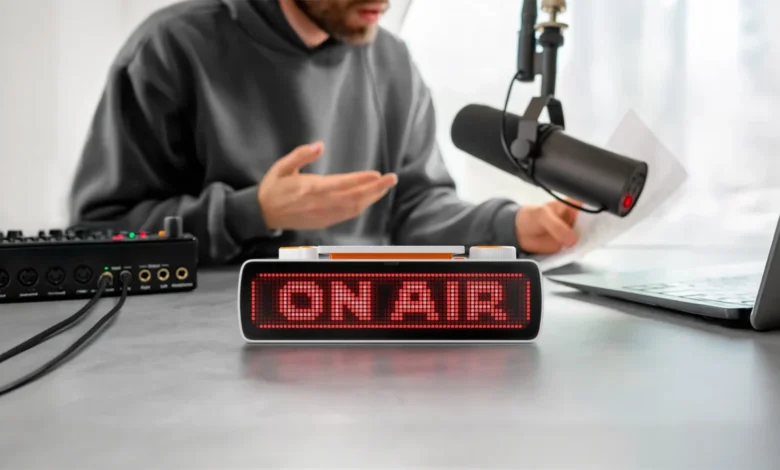
The modern professional landscape is currently undergoing a significant shift in how personal focus and collaborative availability are signaled within shared workspaces. As organizations continue to favor open-office floor plans—despite decades of research suggesting they can hinder deep concentration—a new niche of "productivity hardware" has emerged to bridge the gap between social accessibility and cognitive isolation. At the forefront of this movement is the Busy Bar, a dedicated status indicator and focus timer developed by Flipper Devices, the company previously known for its viral multi-tool, the Flipper Zero. While traditional software solutions have long offered "Do Not Disturb" statuses, the Busy Bar represents a growing trend toward physical, tactile manifestations of digital boundaries.
The Problem of the Open Office Paradox
The introduction of the Busy Bar comes at a time when the "open office paradox" has reached a critical point in corporate culture. According to research published by Harvard Business School, the transition to open-plan offices frequently results in a 70% decrease in face-to-face interactions, as employees often resort to wearing headphones or appearing hyper-focused to signal a need for privacy. In this environment, the Busy Bar serves as a non-verbal communication tool designed to mitigate the social friction of interrupting a colleague.
Field testing within high-density environments, such as the editorial offices of major technology publications like WIRED, has highlighted both the potential and the limitations of such devices. In these settings, the Busy Bar is often utilized in its "ON AIR" or "BUSY" modes. However, the effectiveness of the device is frequently contingent upon the existing social fabric of the office. Early reports indicate that while the device’s screen is high-contrast and bright, its compact form factor can struggle to command attention across the vast, unobstructed expanses of a modern corporate floor. In many instances, the social etiquette of the office overrides the hardware signal; colleagues may notice the "Busy" status but choose to engage in conversation regardless, treating the device more as a novelty than a hard boundary.
Technical Specifications and the Pomodoro Integration
The Busy Bar distinguishes itself from simple desk clocks through its integration of the Pomodoro Technique, a time-management method developed by Francesco Cirillo in the late 1980s. While the standard Pomodoro cycle typically involves 25 minutes of work followed by a five-minute break, the Busy Bar’s default configuration utilizes 20-minute segments. The hardware provides a visual progress indicator—a filling "pill" graphic reminiscent of early 1990s puzzle games—which serves as a gamified stimulus for the user.
The device features a high-resolution display and a physical interaction model that encourages "slapping" the top of the bar to conclude a session or initiate a break. This tactile feedback is a core component of its design philosophy, aiming to provide a dopamine-driven reward for completing a work interval. Internally, the Busy Bar operates on an open-source operating system, a hallmark of Flipper Devices’ commitment to the "maker" community. This allows for future extensibility, with the potential for third-party developers to create custom applications, ranging from stock tickers to more eccentric uses, such as porting classic video games like Doom to the device’s limited but capable hardware.
Chronology of Development and Market Context
The development of the Busy Bar follows a specific timeline in the post-pandemic "Return to Office" (RTO) era.
- Early 2023: Flipper Devices identifies a market gap for physical status indicators as remote workers return to shared spaces and find their productivity slipping due to frequent interruptions.
- Late 2023: The "Busy App" is launched as a free software companion, allowing users to sync their status across mobile and desktop platforms.
- Mid-2024: The physical Busy Bar hardware is released to the public, positioned as a premium peripheral for "power users" and hardware enthusiasts.
- Current Status: The device is currently in a phase of early adoption, with Flipper promising an expansive app library and deeper OS modification capabilities to enhance its utility beyond a simple timer.
The $250 price point of the Busy Bar has placed it in a controversial position within the market. Critics point out that the core functionality—the status synchronization and Pomodoro timer—is available for free via the Busy mobile app. This creates a significant value-proposition hurdle for the company. However, proponents of the hardware argue that the "physicality" of the device is its primary feature. In an era of "notification fatigue," where software alerts are easily ignored or buried under dozens of open tabs, a dedicated physical object on a desk provides a persistent, undeniable reminder of one’s current commitment to a task.
Social Dynamics and Reaction from the Workforce
The reception of the Busy Bar among office workers has been a mix of curiosity and skepticism. In professional environments where "hustle culture" is prevalent, the device can be seen as a badge of productivity. Conversely, in more relaxed or collaborative settings, it may be perceived as an unnecessary barrier to team cohesion.
One observed reaction from colleagues of Busy Bar users includes "joking" inquiries into the user’s availability—a social mechanism used to test the seriousness of the digital boundary. Furthermore, the device faces the "signage fatigue" phenomenon. Much like how large "ON AIR" signs outside professional recording studios are occasionally ignored by distracted staff, the small Busy Bar can become "invisible" once the initial novelty wears off. This suggests that for the Busy Bar to be truly effective, it requires a top-down cultural shift within an organization where physical status indicators are respected as part of the official workflow.
Analysis of Implications for the Future of Work
The existence and adoption of the Busy Bar signal several broader implications for the future of the professional workspace:
1. The Quantified Professional: The device represents the ongoing trend of "quantifying" work. By breaking the day into discrete, visual segments, employees are encouraged to view their time as a finite resource to be managed with surgical precision.
2. The Rejection of Software-Only Solutions: The move toward $250 hardware for a task that a free app can perform suggests a growing "digital exhaustion." Users are willing to pay a premium for tools that exist outside their primary screens, seeking to reduce the cognitive load of switching between work windows and productivity trackers.
3. The Customization of the Workspace: With the promised "app library" and open-source OS, the Busy Bar may evolve into a versatile dashboard. This reflects a desire among knowledge workers to personalize their environment in ways that reflect their specific technical interests, such as the "maker" culture.
4. The Battle for "Deep Work": As popularized by author Cal Newport, "Deep Work" is the ability to focus without distraction on a cognitively demanding task. The Busy Bar is, at its core, a defensive weapon in the battle for deep work. Its success or failure will likely depend on whether corporate culture moves toward respecting these boundaries or continues to prioritize immediate accessibility.
Conclusion: A Niche Tool for a Specific Demographic
Ultimately, the Busy Bar is likely to remain an "overengineered" tool for a specific subset of the workforce. For the average employee, a free app or a simple "do not disturb" sign may suffice. However, for those who find themselves "enamored" with tactile hardware and the psychological benefits of a physical countdown, the device offers a unique, albeit expensive, solution to the modern problem of distraction.
As Flipper Devices continues to roll out features, the true test of the Busy Bar will be its longevity. Will it remain a permanent fixture on the desks of high-performers, or will it join the graveyard of productivity gadgets that failed to change the fundamental nature of human interruption? For now, it stands as a bright, blinking testament to the lengths we will go to reclaim our focus in an increasingly noisy world. Whether it is used to manage a grueling writing deadline or simply to display a clock, the Busy Bar is a physical manifestation of the modern worker’s struggle to find a quiet moment in the "vast expanse" of the open office.