HEDD HEDDphone D1 Review High-Fidelity Performance and Innovative Carbon Diaphragm Technology

The Berlin-based audio manufacturer Heinz ElectroDynamic Designs, known as HEDD, has officially expanded its high-end personal audio portfolio with the release of the HEDDphone D1. Marking the brand’s fourth major foray into the over-ear headphone market, the D1 represents a strategic pivot for the company. While HEDD gained international acclaim for adapting Air Motion Transformer (AMT) technology—originally designed for professional studio monitors—into wearable devices, the D1 introduces a new engineering direction centered on custom-developed Thin-Ply Carbon Diaphragm (TPCD) dynamic drivers. Positioned as a mid-range contender in the audiophile market, the D1 seeks to bridge the gap between clinical professional monitoring and the immersive demands of home high-fidelity listening.
The HEDDphone D1 arrives at a competitive price point of $799.99 (£599 / AU$999), placing it in direct contention with established models from manufacturers such as Meze Audio, Sennheiser, and HiFiMAN. Unlike its predecessors, which focused on the heavier, more complex AMT architecture, the D1 utilizes a lightweight 50mm dynamic driver. This shift in hardware is intended to offer a more accessible entry point into the "HEDD sound" while maintaining the rigorous technical standards associated with German audio engineering.
The Engineering Legacy of Heinz Klaus and HEDD
To understand the significance of the HEDDphone D1, it is necessary to examine the pedigree of its parent company. HEDD was founded in 2015 by Klaus Heinz and his son, Dr. Frederik Knop. Klaus Heinz is a seminal figure in the history of loudspeaker design, having previously founded ADAM Audio. He was instrumental in the commercialization of the Air Motion Transformer, a transducer type originally invented by Dr. Oskar Heil. The AMT works by squeezing air between folded diaphragms, a method significantly faster than the piston-like movement of traditional drivers.
After decades of perfecting AMT technology for professional studio monitors, HEDD achieved a breakthrough in 2019 with the original HEDDphone. This was the first full-range headphone to utilize a dedicated AMT driver, bypassing the need for hybrid designs. The subsequent releases of the HEDDphone TWO and the TWO GT refined the weight and ergonomics of this technology. However, the D1 represents a new chapter. By moving toward dynamic drivers, HEDD is exploring how advanced materials science—specifically carbon fiber composites—can replicate the speed and accuracy of AMT drivers in a more traditional, efficient, and cost-effective form factor.
Chronology of HEDD Personal Audio Development
The release of the D1 is the latest milestone in a timeline characterized by rapid innovation in transducer materials:
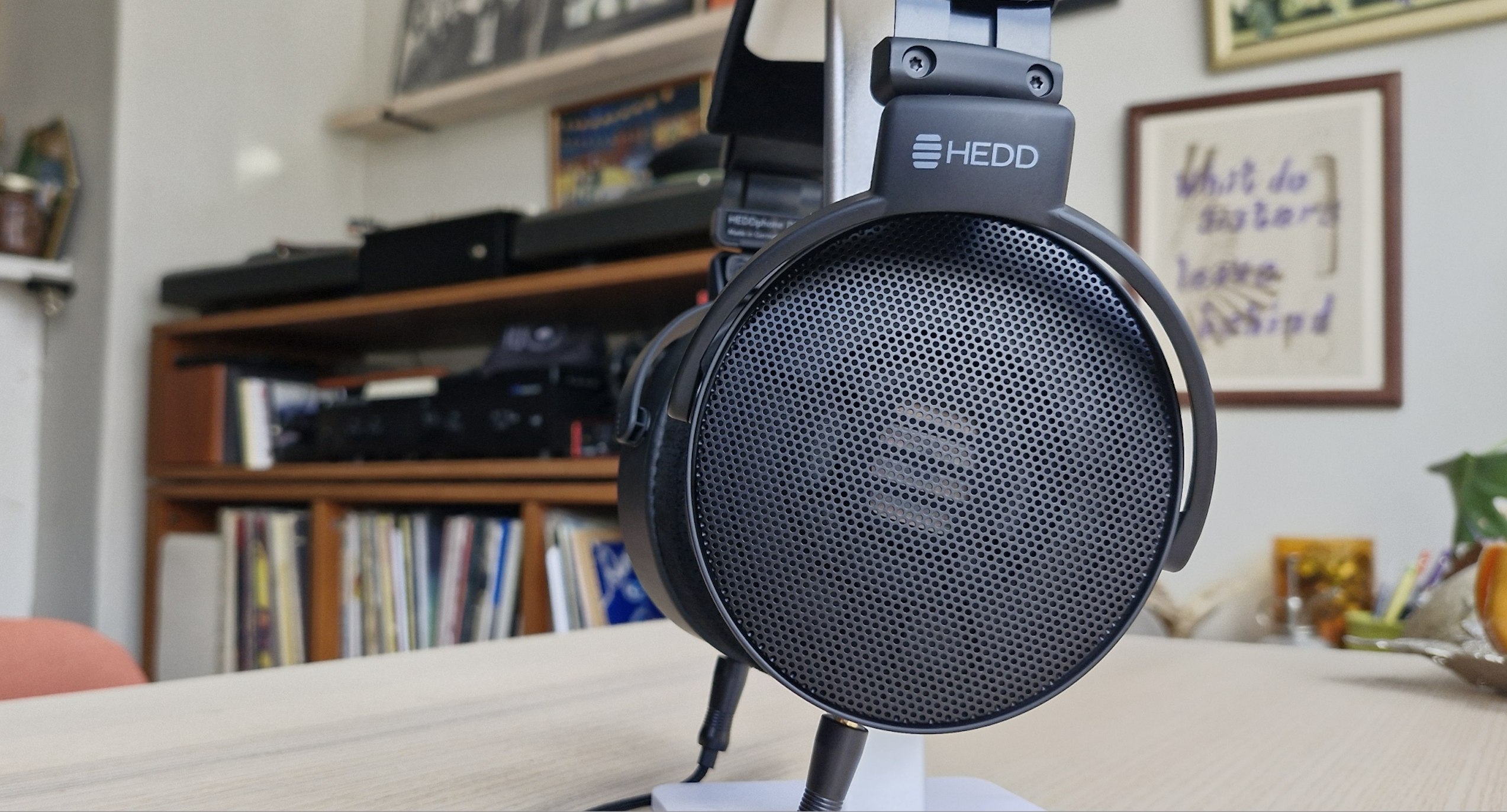
- 2019: The HEDDphone ONE – The world’s first full-range AMT headphone. While praised for its unprecedented detail, it was noted for its significant weight (714g), which presented challenges for long-term comfort.
- 2023: The HEDDphone TWO – A complete redesign featuring a new carbon-fiber headband and a refined "VVT" (Variable Velocity Transformation) AMT driver, reducing weight to 550g.
- 2024: The HEDDphone TWO GT – A "Grand Touring" version designed for the luxury audiophile market, emphasizing premium materials and aesthetic refinements.
- 2025: The HEDDphone D1 – The first HEDD headphone to utilize TPCD dynamic drivers, aimed at the mid-range market with a focus on efficiency and tonal balance.
Technical Specifications and Material Innovation
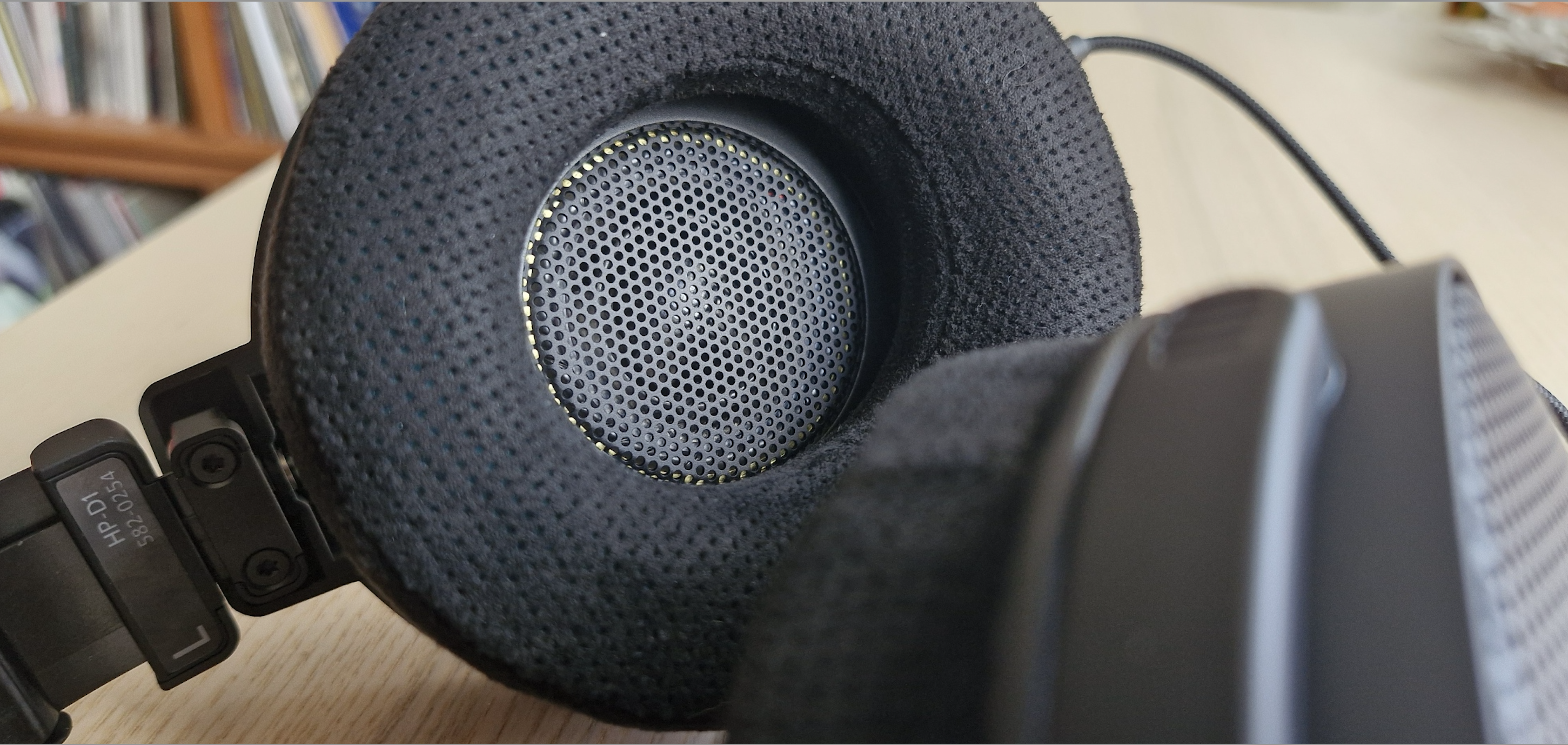
The core of the HEDDphone D1 is the 50mm Thin-Ply Carbon Diaphragm. TPCD is a material often reserved for high-end aerospace applications and elite-level loudspeaker tweeters. The primary benefit of thin-ply carbon is its exceptional stiffness-to-weight ratio. In a traditional dynamic driver, the diaphragm can suffer from "break-up" modes—microscopic deforming of the material at high frequencies—which leads to harmonic distortion. The rigidity of carbon fiber ensures that the diaphragm moves as a perfect piston even under high stress.
The technical specifications of the D1 are tailored for versatility:
- Transducer Type: 50mm Dynamic with TPCD
- Frequency Range: 5 Hz to 40,000 Hz
- Impedance: 32 Ohms
- Weight: 350g
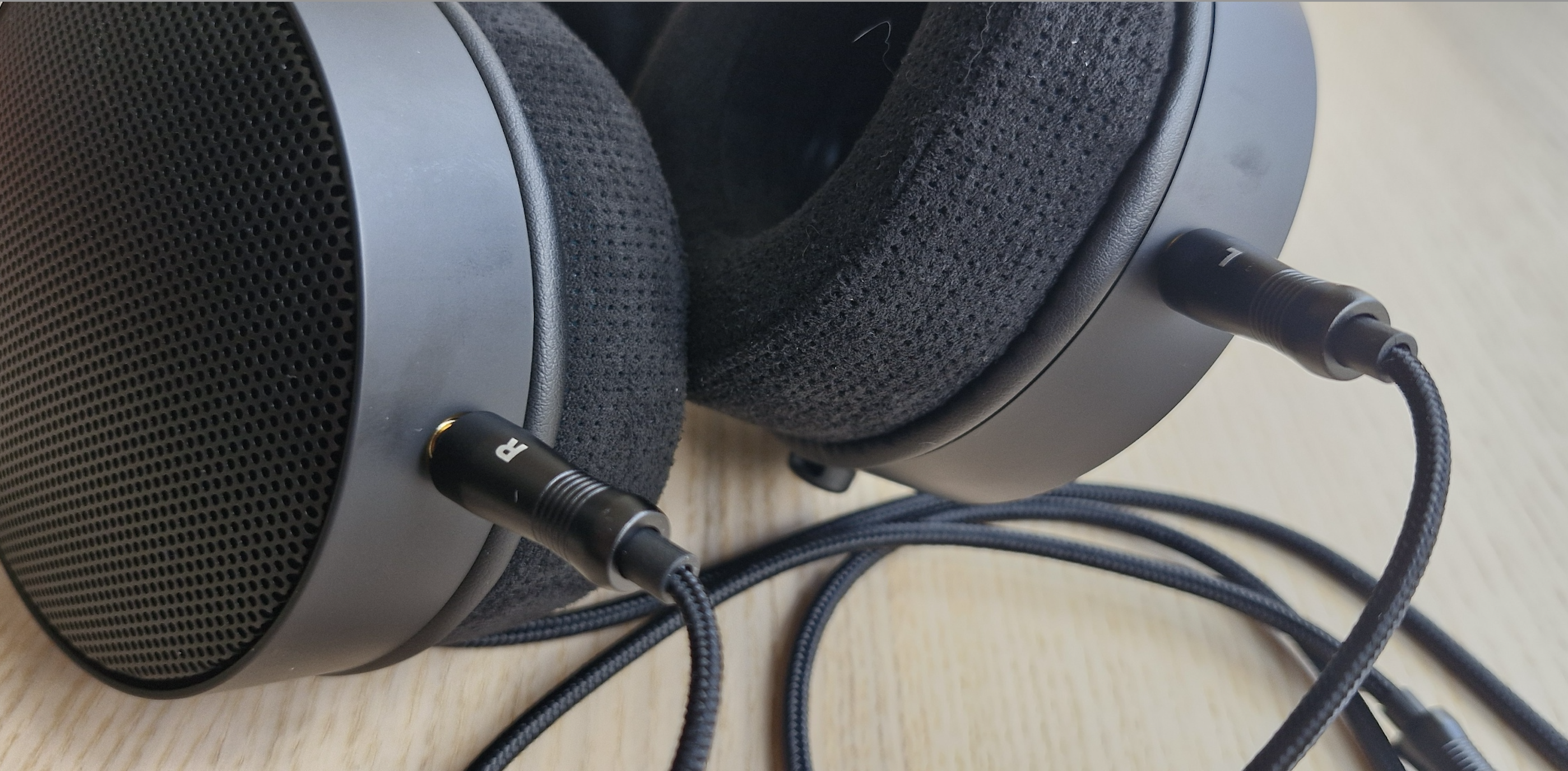
- Connectivity: Dual 3.5mm TS inputs
The choice of a 32-ohm impedance is a notable departure from many professional-grade headphones that require high-voltage amplification to reach their full potential. By keeping the impedance low, HEDD has ensured that the D1 can be driven effectively by a wide range of sources, from high-end tube amplifiers to portable Digital-to-Analog Converters (DACs) and even standard audio interfaces.
Design and Ergonomic Analysis
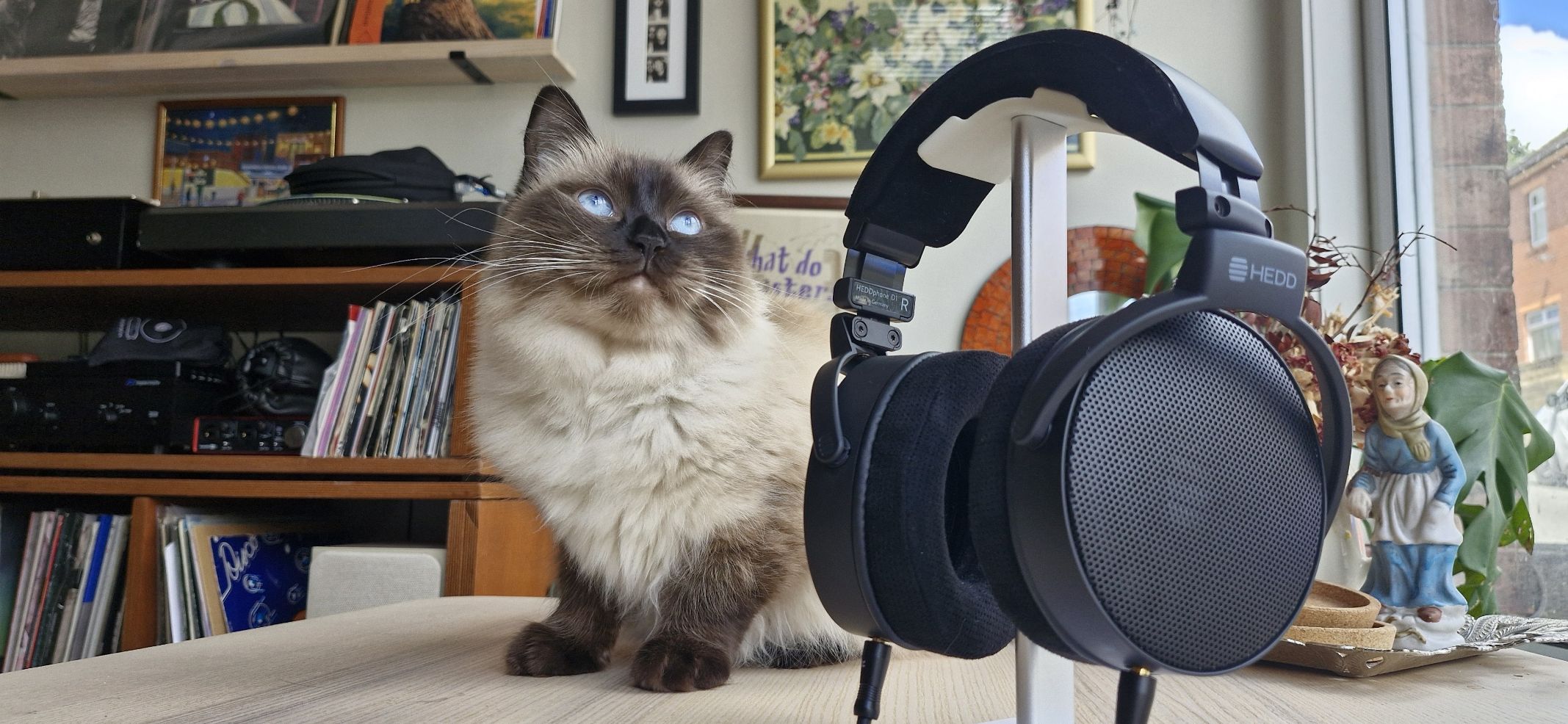
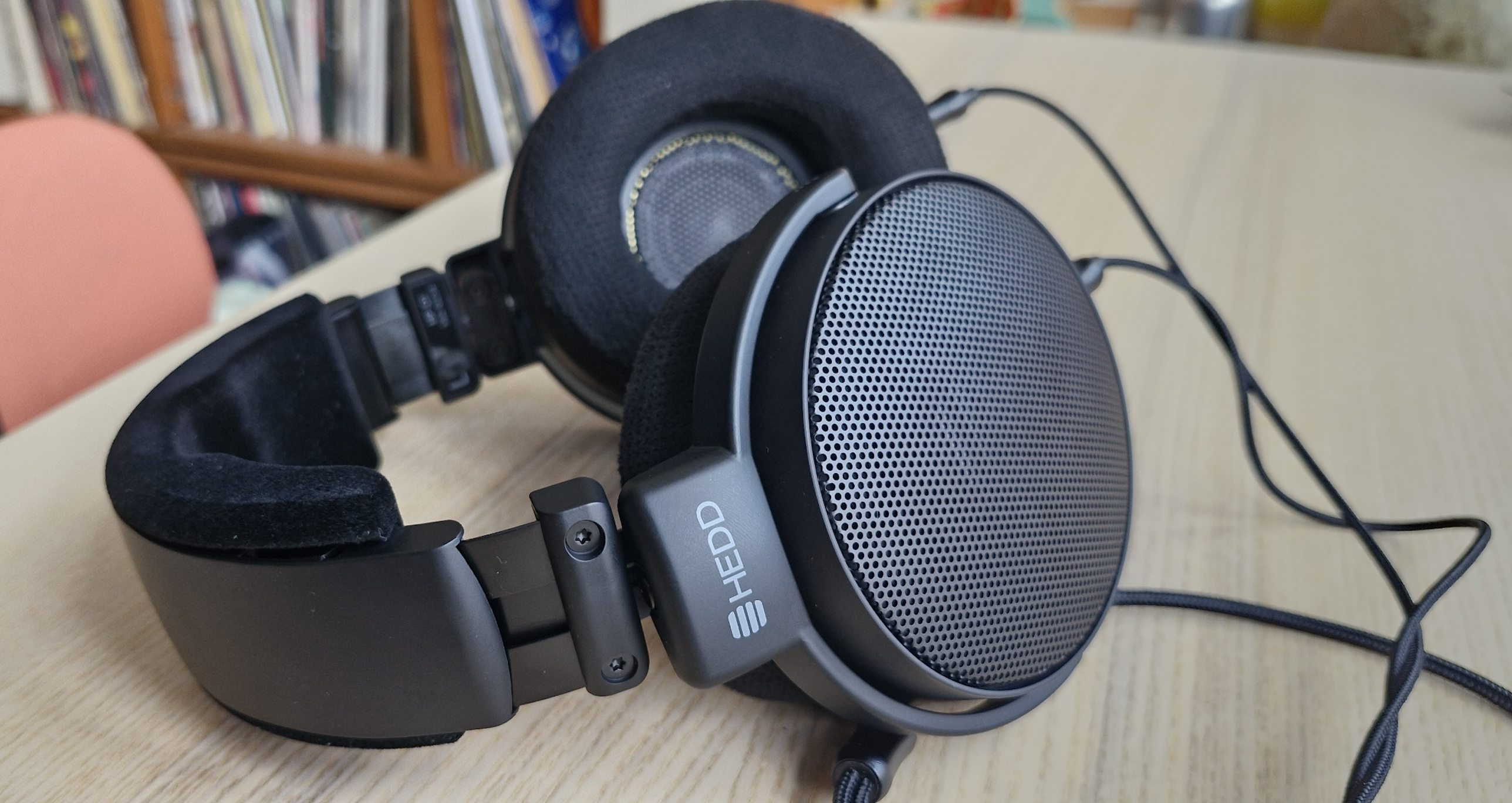
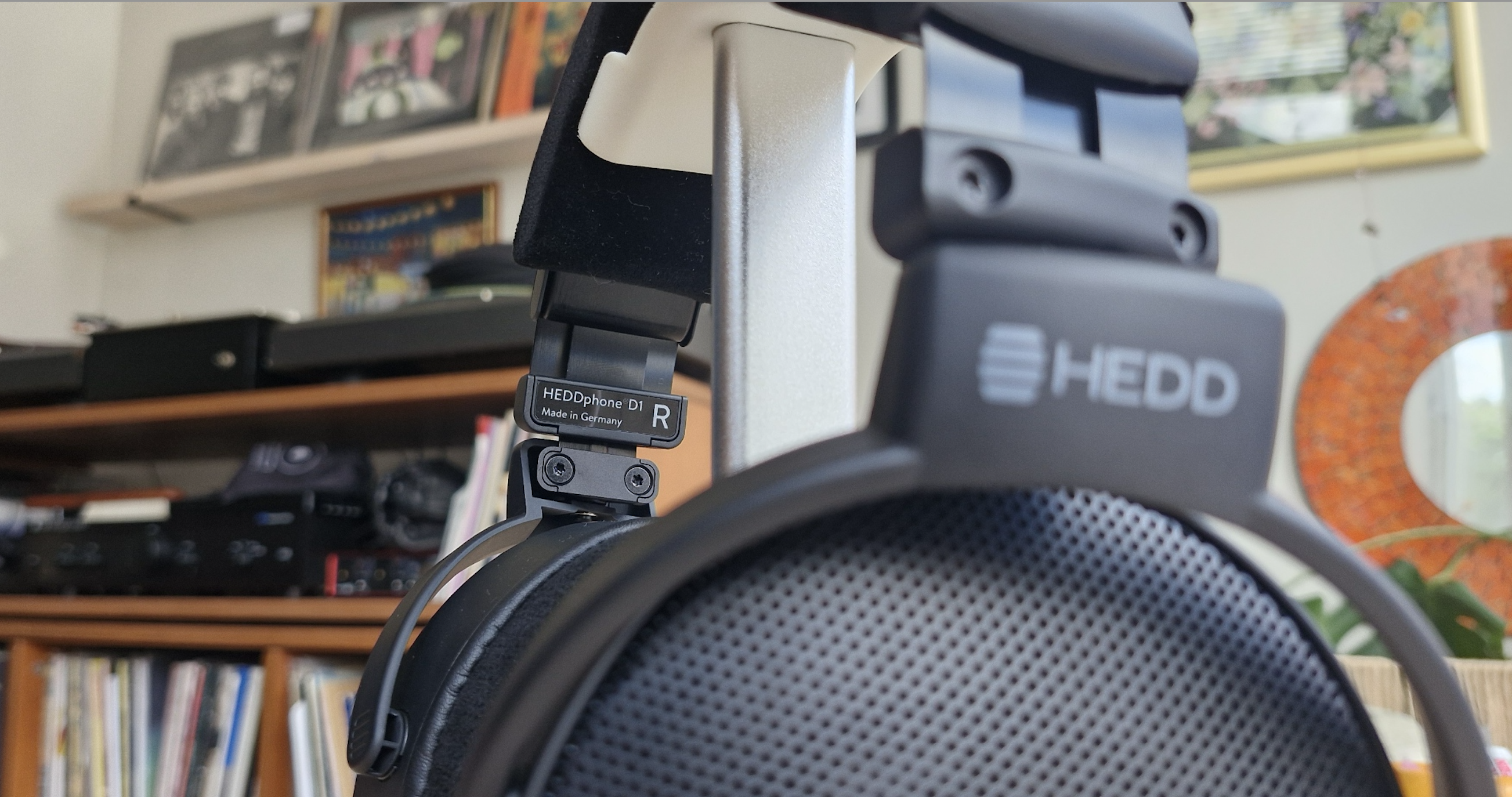
At 350g, the HEDDphone D1 is significantly lighter than the company’s AMT-based models. This weight reduction is a critical factor for professional engineers who may spend eight to ten hours a day in a studio environment. The design language maintains the industrial, minimalist aesthetic typical of Berlin-made products.
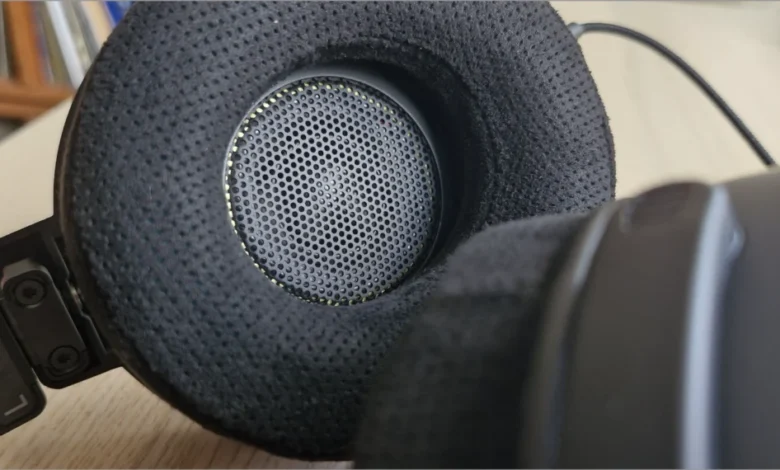
The chassis is constructed primarily from high-grade plastics and foams, reinforced by a metal spine in the headband and metal grilles on the earcups. While some critics have noted that the extensive use of plastic feels less "luxurious" than the wood-and-leather designs of competitors like Meze Audio, the focus appears to be on durability and weight management. The earpads are made of a soft, breathable fabric designed to mitigate heat buildup, a common issue with closed-back or leather-clad alternatives.
The "open-back" nature of the D1 is a fundamental design choice. By allowing air to pass through the earcups, the headphones eliminate the "boxiness" associated with trapped air pressure, resulting in a wider, more natural soundstage. However, this also results in sound leakage, meaning the D1 is intended for quiet indoor environments rather than public commutes.
Sonic Performance and Market Implications
The HEDDphone D1 is marketed as a "neutral-plus" headphone. While it follows the Harman Target Curve—a scientific benchmark for preferred frequency response—it includes a slight emphasis in the sub-bass and lower-midrange regions. This tuning is intended to provide the "slam" and physical impact often missing in open-back headphones, which typically struggle to maintain low-end pressure.
In the professional sector, the D1 is positioned as a tool for "critical listening." The speed of the TPCD driver allows for the precise identification of transients—the sharp onset of sounds like drum hits or vocal plosives. For the audiophile, this translates to a sense of "transparency," where the hardware seemingly disappears, leaving only the recording.
Industry analysts suggest that the D1 is HEDD’s attempt to capture a larger share of the "prosumer" market. By pricing the unit under $1,000, HEDD is competing in a bracket where consumers demand professional performance but are sensitive to price and comfort. The success of the D1 could signal a broader trend in the industry where high-tech materials like carbon fiber become the standard for mid-range equipment, previously the domain of Mylar or cellulose diaphragms.
Comparison with Competitors
To assess the D1’s value, it must be compared against its contemporary rivals:
- Meze Audio 105 Silva: While the Meze offers superior aesthetic appeal with its walnut wood earcups and premium leather, the HEDDphone D1 provides a wider frequency response (up to 40kHz compared to Meze’s 30kHz). The D1 is generally considered more "analytical," whereas the Meze is tuned for a "warmer," more relaxed listening experience.
- Sennheiser HD 660S2: A staple in the $500-$600 range, the Sennheiser is known for its legendary midrange. However, the HEDDphone D1 offers significantly more extension in the sub-bass, making it better suited for modern electronic music and cinematic scores.
- HiFiMAN Edition XS: As a planar magnetic headphone, the HiFiMAN offers great detail but is often criticized for its build quality and "QC" (Quality Control) inconsistencies. HEDD’s German manufacturing and robust 350g chassis offer a more durable alternative for professional use.
Broader Impact on the Audio Industry
The introduction of the HEDDphone D1 highlights the ongoing evolution of the "Berlin Sound"—a term often used to describe audio equipment that prioritizes accuracy, wide frequency extension, and industrial reliability. HEDD’s decision to diversify its driver technology suggests that the company is not merely an "AMT specialist" but a broader materials-science firm.
Furthermore, the D1’s release reflects a changing landscape in professional audio. As more music production shifts from multi-million dollar studios to high-end home setups, the demand for "cross-over" gear has surged. Producers require headphones that can handle the rigors of a mix session but are also enjoyable for recreational listening.
Conclusion and Future Outlook
The HEDDphone D1 stands as a testament to the viability of advanced carbon composites in the headphone space. By delivering a product that offers high-resolution performance, low-impedance versatility, and a lightweight footprint, HEDD has addressed the primary criticisms of its earlier, heavier models.
While the $799 price tag remains a significant investment, the D1’s ability to compete with flagship headphones costing twice as much suggests it will be a disruptive force in the mid-range market. As HEDD continues to refine its TPCD technology, the industry may see these innovations trickle down to even more affordable price points, further democratizing high-fidelity audio for creators and listeners alike. The HEDDphone D1 is not just another product launch; it is a calculated move by a heritage-rich brand to redefine the boundaries of the mid-range audiophile experience.