SpaceX executes successful USSF-385 mission as national security launch cadence accelerates from Vandenberg

Early Saturday morning, SpaceX successfully launched the classified USSF-385 mission from Space Launch Complex 4E at Vandenberg Space Force Base, marking a significant milestone in the increasing operational tempo of the United States Space Force. The mission, which lifted off at 7:00 a.m. PT, utilized a flight-proven Falcon 9 booster that successfully returned to Earth, landing on the autonomous drone ship Of Course I Still Love You approximately eight and a half minutes after liftoff.

This event represents the tenth successful flight and recovery for the specific booster, identified as B1100. The rapid turnaround of this vehicle underscores the maturing efficiency of SpaceX’s reuse program, as the booster had completed a Starlink mission just 35 days prior. While both SpaceX and the U.S. Space Force have maintained a standard policy of silence regarding the specific nature of the payload, the mission’s profile and the strategic reliance on the Vandenberg facility suggest a continued focus on expanding the military’s orbital infrastructure.
The Strategic Context of USSF-385
The USSF-385 mission is the fourth classified launch conducted from the California-based launch site within a six-week period. This rapid-fire deployment schedule follows the USSF-366 mission on August 15, USSF-153 on September 10, and USSF-259 on September 17. Industry analysts and independent space observers, such as those tracking orbital debris and satellite catalogs via platforms like KeepTrack, have noted consistent patterns in these launches.

Independent tracking data suggests that the orbital parameters and stage drop zones for these recent missions closely align with the deployment of Starshield—the specialized, government-facing iteration of SpaceX’s Starlink satellite constellation. Unlike the commercial Starlink network, Starshield is designed to meet the rigorous security and endurance requirements of the Department of Defense. The cataloging of multiple satellite objects following recent launches provides further evidence that the Space Force is actively populating a resilient, low-Earth orbit network capable of providing secure communications and persistent surveillance.
A Financial and Operational Powerhouse
The intensity of these launches is supported by a robust financial framework established earlier this year. In July, the U.S. Space Force awarded SpaceX a massive $1.6 billion contract covering 18 Falcon 9 missions from Vandenberg to be executed through the end of 2027. When combined with other government contracts related to the development of the Starshield network, SpaceX’s total Pentagon funding for the 2026 calendar year has exceeded $8 billion.

This financial backing has enabled SpaceX to treat Vandenberg as a dedicated hub for national security operations. September alone saw six Falcon 9 launches from the West Coast, a record-setting pace that contrasts with the company’s activity on the East Coast. As SpaceX shifts its Florida infrastructure at Cape Canaveral to support the growing requirements of the Starship program, Vandenberg has increasingly become the primary staging ground for the rapid deployment of military assets.
The Broader Implications of Rapid Launch Cadence
The transition to a high-cadence launch environment has profound implications for national security strategy. By maintaining a constant flow of satellites into orbit, the Space Force is effectively building a "Golden Dome" of space defense—a resilient, redundant network that is difficult to neutralize. The ability to launch, replace, and expand this network on a weekly basis ensures that the U.S. remains ahead of competitors who might seek to challenge American space superiority.

Moreover, the technical success of the B1100 booster—now having completed ten flights—validates the economic argument for reusability in military operations. By lowering the cost per launch, the Space Force can sustain a larger constellation of assets, ensuring that capabilities such as high-speed, secure satellite internet are always available to military personnel on the ground, at sea, and in the air.
Future Outlook: Starship and Beyond
The activity at Vandenberg is not expected to slow down. SpaceX has already scheduled another Starlink mission from SLC-4E for September 30, maintaining a turnaround time of roughly six days between missions. This operational efficiency is a stark departure from the traditional space industry, where launch preparations often took months.

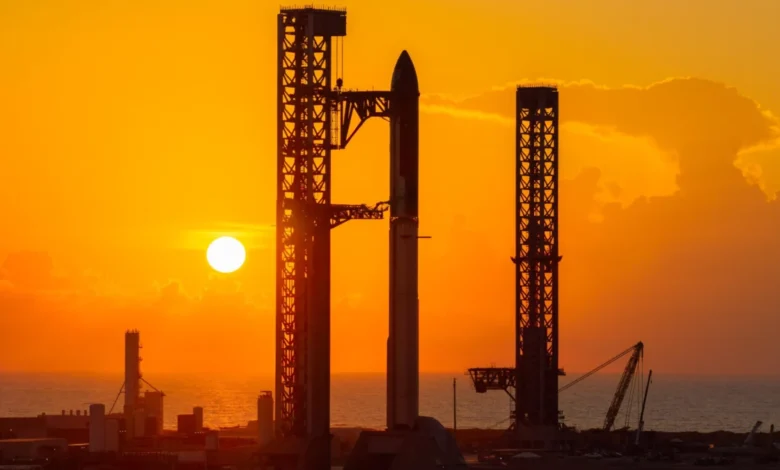
Simultaneously, the aerospace community is turning its attention to Starbase, Texas, where preparations are in the final stages for the highly anticipated Starship Flight 14. This mission, targeting a launch on Monday at 7:15 a.m. CT, represents the first attempt to place the massive Starship vehicle into an orbital trajectory. Unlike the suborbital test flights of the past, Flight 14 will perform an orbital insertion burn, allowing the ship to maintain a velocity sufficient for staying in orbit for approximately ten hours.
The success of Flight 14 is critical for the future of the Starlink program, as it is slated to deploy 26 V3 satellites that will significantly enhance the network’s capacity. Additionally, the flight will test the durability of the Starship heat shield, incorporating new tile designs and fasteners intended to resolve previous issues with thermal protection.

Summary of Recent Developments
The rapid progression of SpaceX’s launch calendar throughout September 2026 serves as a bellwether for the future of global space operations. Whether it is the routine deployment of military satellites from California or the experimental, heavy-lift capabilities being tested in Texas, SpaceX is successfully transforming space from a frontier of infrequent, expensive scientific endeavors into a domain of constant, reliable, and affordable utility.
For the Department of Defense, the partnership with SpaceX has moved beyond mere transportation to a fundamental integration of private-sector agility into national defense strategy. As the Space Force continues to integrate these assets into its broader defense architecture, the implications for surveillance, navigation, and global communications will likely become even more pronounced. With the scheduled flight of Starship and the ongoing cadence of Falcon 9 missions, the coming weeks will provide further insight into the speed at which the United States is capable of reinforcing its presence in low-Earth orbit.

As the industry looks toward the conclusion of 2026, the question is no longer whether SpaceX can maintain its current pace, but how quickly the military can integrate the vast data streams and communication capabilities that these new satellites provide. With the next Vandenberg launch only days away, the tempo shows no signs of decelerating, signaling a new era of space-based national security.