Mastering High-Contrast Landscape Photography Through Precision Post-Processing Techniques

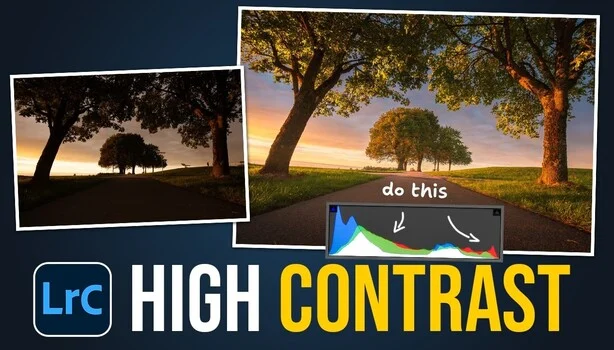
The inherent challenge of golden hour landscape photography lies in the extreme dynamic range between a brilliant, setting sun and the deep, often obscured shadows of the foreground. This disparity frequently results in images where highlights are burned to paper white or shadows are crushed into impenetrable blacks. Achieving a balanced, high-contrast aesthetic requires a nuanced approach to digital post-processing, a method recently demonstrated by professional photographer Christian Möhrle. By moving away from aggressive global adjustments and toward a philosophy of targeted, local control, photographers can retain detail across the entire tonal range while maintaining the dramatic punch that characterizes compelling landscape imagery.
The Technical Evolution of Digital Darkroom Practices
The practice of balancing exposure in landscape photography finds its roots in traditional film-based darkroom techniques, specifically "dodging and burning." Historically, photographers would manually obstruct light during the enlargement process to lighten specific areas of a print or expose certain sections longer to increase density. Modern digital tools, particularly those found in Adobe Lightroom, have digitized this logic, offering unprecedented precision.
The shift toward localized editing represents a significant departure from the early days of digital photography, where global sliders—such as contrast, clarity, and dehaze—were the primary tools for image adjustment. While these global tools remain useful for broad corrections, they often impose a "blanket" effect that ignores the unique tonal requirements of different regions within a frame. Contemporary professional workflows, as exemplified by Möhrle’s recent technical demonstration, emphasize that the most effective edits are those that remain invisible to the viewer, relying on layers of subtle, stacked adjustments rather than single, heavy-handed modifications.
Chronology of the Editing Workflow
A methodical approach to image restoration begins long before color grading or artistic stylistic choices are applied. The workflow can be categorized into four distinct phases: foundational exposure correction, tonal expansion, regional masking, and final color calibration.
- Foundational Exposure Correction: The initial stage involves cleaning the image of digital artifacts. Möhrle utilizes Lightroom’s Generative AI-powered Remove tool to eliminate distractions. By brushing over sensor spots or unwanted debris, the software utilizes generative fill to reconstruct the background seamlessly. Following this, the histogram serves as the primary diagnostic tool. By analyzing the tonal range, a photographer can determine if the data is clipped at the extremes.
- Tonal Expansion: To prevent clipping while maximizing data, exposure is adjusted carefully. Highlights are pulled down to recover texture in the brightest areas of the sky, while shadows and blacks are lifted to reveal hidden detail in the foreground. This creates a "clean" histogram, which serves as a neutral, detail-rich foundation.
- Regional Masking: This stage introduces depth. Using color range masks, linear gradients, and radial gradients, the photographer isolates specific segments of the image. For instance, darkening the deep blues of a sky while simultaneously brightening a mid-ground area creates a sense of three-dimensional depth.
- Color Calibration and Grading: The final phase involves shifting hues to achieve a cohesive aesthetic. This includes adjusting orange hues toward red, reducing purple casts in blue tones, and employing split toning to harmonize highlights and shadows.
The Physics of Tone and Detail Retention
The underlying principle of high-contrast photography is the preservation of midtones. When a global contrast slider is moved, it pushes dark pixels darker and light pixels lighter simultaneously. In a scene with high dynamic range, this inevitably leads to clipping. Data from Adobe’s color science research suggests that images captured in modern RAW formats contain significantly more shadow information than the human eye can perceive, but this data is volatile. Once a shadow is "crushed" to pure black (a value of 0 on the RGB scale), the information is permanently lost.
Möhrle’s approach demonstrates the importance of "restraint" as a technical necessity. By nudging whites up while holding the Alt key (in Windows) or Option key (in macOS), the photographer can visualize the exact point at which highlight information is lost. Backing off just before that threshold ensures the maximum possible dynamic range is maintained. This is not merely an aesthetic choice; it is a mathematical imperative for high-quality printing, where tonal transitions must be smooth to avoid banding or posterization.
Counterintuitive Adjustments: Clarity and Dehaze
One of the more contentious topics in landscape post-processing is the use of Clarity and Dehaze sliders. In many workflows, these are cranked upward to add "punch." However, in the context of a soft, warm sunset, such adjustments can introduce an artificial, gritty texture that distracts from the light’s natural quality.
Möhrle’s demonstration reveals that reducing Clarity and Dehaze can actually enhance the atmosphere of a sunset. By slightly lowering these values, the photographer introduces a subtle "glow" or halation effect that mimics the natural scattering of light through the atmosphere at golden hour. This technique requires a firm understanding of image structure, as it risks softening necessary details if applied too aggressively. The successful application of this method relies on the contrast between the softened glow and the sharpened, high-detail areas of the subject, such as the foliage or textures of the landscape.
Broader Implications for Landscape Photography
The professional consensus in the photography community is that the "era of the slider" is fading. As software like Lightroom and Capture One becomes more sophisticated, the barrier to entry for complex masking has lowered, but the requirement for artistic intent has risen. The reliance on regional control, or "local adjustment layers," is now considered the industry standard for high-end landscape output.
Data from the professional photography market indicates a growing demand for images that appear "natural yet enhanced." Trends in commercial and editorial landscape photography suggest that viewers are increasingly sensitive to over-processed, "HDR-looking" imagery. Consequently, the meticulous, multi-step process—involving dodging and burning through masks—is not just a technical preference but a commercial necessity for photographers seeking to distinguish their work in a saturated digital landscape.
Conclusion: The Repeatable Method
The workflow established by Christian Möhrle offers a template for any photographer shooting at golden hour. By prioritizing a clean, detail-first base and applying targeted regional adjustments, the photographer can exert control over the image without sacrificing the integrity of the original file. This "darkroom logic" ensures that even the most extreme contrast situations—where the sun meets the earth—can be rendered with clarity, depth, and emotional resonance.
Ultimately, the goal of post-processing is to align the digital image with the photographer’s memory of the scene. Through the careful application of masking, judicious exposure management, and subtle color grading, the high-contrast landscape ceases to be a technical hurdle and becomes a canvas for creative expression. Restraint, when paired with precision tools, remains the most powerful asset in the modern photographer’s toolkit.