Beyond the Laboratory Horizon: NASA and Encapsulate Bring Cancer Photomicrography to the International Space Station

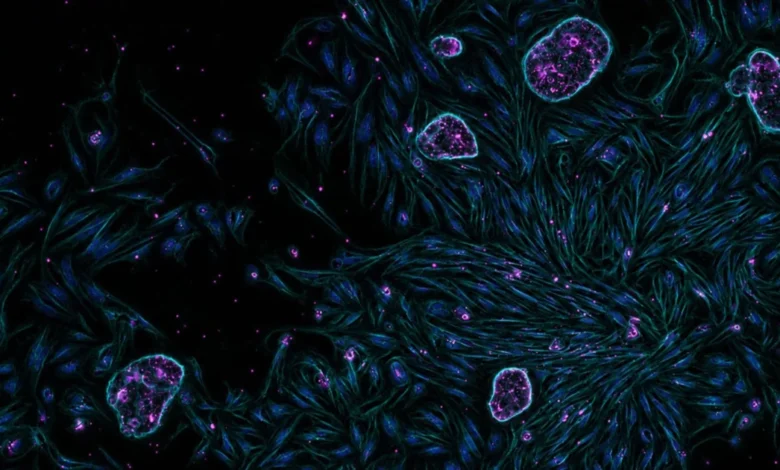
The intersection of advanced micro-imaging and orbital research has yielded a striking new perspective on one of humanity’s most persistent medical challenges. Following the recent celebration of the 52nd annual Nikon Small World Photomicrography Competition—which highlighted the breathtaking complexity of the microscopic world—the boundaries of photomicrography have expanded beyond Earth’s atmosphere. A pioneering collaboration between the National Aeronautics and Space Administration (NASA) and medical startup Encapsulate Inc. has brought high-resolution cancer cell imaging to the International Space Station (ISS).
The resulting imagery, highlighted as NASA’s Image of the Day, presents patient-derived gastric tumor samples captured in exquisite, microscopic detail. Developed as part of the innovative Encapsulate-1 investigation, these visuals offer unprecedented insight into the behavior of cancer cells suspended in microgravity. As researchers analyze these extraterrestrial cellular models, the scientific community is taking a closer look at how the unique environment of low Earth orbit might unlock entirely new paradigms in cancer treatment and metastasis prevention.
The Genesis of the Partnership: Merging Biochips with Orbital Mechanics
The journey toward conducting cancer research 260 miles above the Earth’s surface began with a shared vision between space administration technologists and terrestrial biotech innovators. Encapsulate Inc., a Connecticut-based medical startup specializing in advanced biochip technology, has long focused on mimicking the human tumor microenvironment to test personalized therapies. Recognizing the limitations of studying tumor dynamics solely under the influence
of Earth’s gravity, the company sought an environment where gravitational forces would not obscure cellular interactions.
This ambition aligned seamlessly with NASA’s In Space Production Applications (InSPA) program. Designed to stimulate the commercial development of products and research in low Earth orbit that benefit life on Earth, the InSPA initiative recognized the profound potential of Encapsulate’s platform. Last year, the venture received a critical financial boost: a $3.63 million grant awarded to Encapsulate to accelerate the development of its microgravity-based metastasis-on-a-chip technology.
Dr. Armin Rad, CEO and co-founder of Encapsulate, emphasized the strategic importance of the collaboration at the time of the grant announcement. "This grant represents a bold step forward in how we approach cancer research," Dr. Rad stated. "We are honored to partner with NASA and explore the unique advantages of space-based research in advancing cancer diagnostics and precision medicine."
The Science of Encapsulate-1: Simulating Metastasis in Microgravity
To understand the significance of the Encapsulate-1 experiment aboard the ISS, one must examine the mechanics of cancer metastasis. Metastasis—the spread of cancer cells from the primary tumor to distant organs—remains the primary cause of mortality for the vast majority of cancer patients. On Earth, gravitational forces can influence how cells settle, migrate, and interact with extracellular matrices within laboratory cultures, potentially masking subtle mechanical behaviors.
In the microgravity environment of the ISS, however, cells experience a near-weightless state. This unique condition alters cellular architecture, fluid dynamics, and gene expression. By suspending patient-derived gastric tumor samples within specialized biochips, researchers can observe how cancer cells autonomously move, aggregate, and attempt to invade surrounding tissues without the confounding variable of terrestrial gravity.
Scientists at Encapsulate hypothesize that this microgravity-induced model will illuminate the precise biological pathways that drive early-stage metastasis. By identifying these mechanisms, oncologists and pharmaceutical developers hope to design targeted interventions that can block the spread of cancer cells before they establish secondary tumors in the human body. The microscopic imagery transmitted back to Earth serves not only as a visual marvel reminiscent of award-winning photomicrography but as vital empirical data for ongoing computational and biological analysis.
A Decades-Long Legacy of Orbital Biotechnology
The Encapsulate-1 study does not exist in a vacuum; it is part of a rich, nearly three-decade tradition of scientific inquiry aboard the International Space Station. Since the station’s initial modules were assembled in orbit, the orbiting laboratory has hosted more than 4,000 distinct experiments spanning disciplines from astrophysics to advanced protein crystal growth.
The unique laboratory conditions provided by the ISS—specifically microgravity, continuous viewing angles, and the absence of convective fluid currents—have repeatedly proven invaluable for biological and pharmaceutical breakthroughs. Over the years, NASA astronauts have routinely served as frontline researchers, facilitating complex medical studies in orbit.
For instance, NASA astronaut Christina Koch, who later traveled to the Moon as part of the Artemis II mission, dedicated significant time during her historic ISS tenure to studying amyloid protein aggregations. Those investigations aimed to uncover the underlying mechanisms of neurodegenerative disorders such as Alzheimer’s disease. Similarly, NASA astronaut Serena Auñón-Chancellor worked extensively on testing more advanced, targeted cancer therapeutics in partnership with Angiex Cancer Therapy, focusing on vascular-targeted drug delivery systems.
Chronology of a Modern Medical Milestone
The trajectory from concept to orbital execution involves rigorous testing, safety reviews, and meticulous payload scheduling. While exact launch windows and transit details for individual biomedical payloads are coordinated months in advance, the recent capture of the gastric tumor imagery marks a major operational milestone for the Encapsulate-1 initiative.
- Phase 1 Grant Award: NASA awards Encapsulate Inc. a $3.63 million InSPA grant to adapt its tumor-on-a-chip technology for orbital use.
- Payload Preparation and Validation: Engineers and biologists rigorously test the biochip hardware to ensure it meets NASA’s stringent safety and operational standards for crew-tended laboratory equipment.
- Launch and Integration: The experimental hardware is transported to the International Space Station via commercial resupply services.
- Execution in Orbit: Aboard the ISS, astronauts utilize specialized infrastructure—such as the Microgravity Science Glovebox—to handle, monitor, and image the biological samples.
- Data and Imagery Transmission: High-resolution photomicrographs of the gastric tumor samples are captured and transmitted to mission control and research facilities on Earth, feeding directly into ongoing oncology models.
Implications and the Road Ahead for Precision Medicine
While the translation of space-based biological discoveries into commercially available pharmaceutical treatments is a famously rigorous and protracted process, the implications of the Encapsulate-1 study are profound. Traditional drug screening often relies on two-dimensional cell cultures or animal models that fail to accurately replicate the complex microenvironment of human tumors. By combining patient-derived tissues with the transformative environment of microgravity, researchers are forging a high-fidelity predictive model.
If successful, the insights gained from the ISS could fundamentally shift the paradigm of personalized cancer care. Early-stage patients could potentially have their tumor samples tested against various therapeutic compounds within these advanced microgravity models, predicting metastatic risk and treatment efficacy with unprecedented accuracy.
As medical science continues to push the boundaries of what is possible, laboratories on Earth will remain the bedrock of therapeutic development. Yet, as the stunning microscopic imagery from the International Space Station demonstrates, looking outward toward the stars may ultimately provide the clearest view toward healing humanity from within.