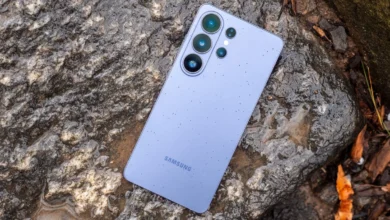
The Evolution of Mobile Productivity and Versatility with the Samsung Galaxy Z Fold 8

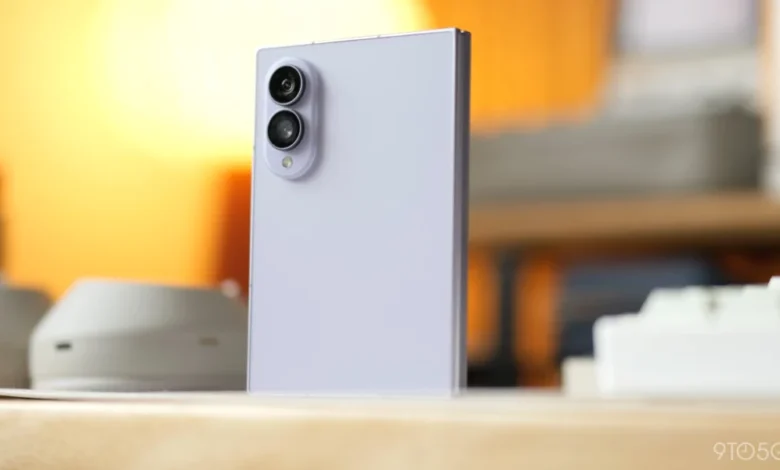
The landscape of mobile technology has undergone a seismic shift over the past decade, moving away from static, monolithic slab designs toward the sophisticated, flexible architecture of the modern foldable device. With the release of the Galaxy Z Fold 8, Samsung has reached a critical juncture in this trajectory, refining its hardware to bridge the gap between portable smartphones and high-performance tablets. This latest iteration represents not merely an incremental update to the folding category, but a concerted effort to standardize a form factor that addresses the demands of both casual consumers and power users.
Chronology of the Foldable Era

To understand the significance of the Galaxy Z Fold 8, one must examine the evolution of Samsung’s foldable lineage. The journey began in 2019 with the original Galaxy Fold, a device that served as a proof-of-concept for flexible display technology. Throughout the subsequent years, Samsung introduced critical hardware refinements: the Z Fold 2 improved the hinge mechanism, the Z Fold 3 added essential water resistance and S Pen support, and the Z Fold 4 and 5 focused on software optimization and weight reduction. By the time the Galaxy Z Fold 8 debuted in late 2026, the series had matured into a reliable toolset for enterprise and creative professionals, shedding the "beta-tester" stigma that once plagued early foldable iterations.
Unfolding the Display Paradigm
The hallmark of the Galaxy Z Fold 8 is its refined aspect ratio, which moves away from the narrower, vertical profile seen in previous generations. By adopting a wider internal display, Samsung has addressed one of the most common consumer pain points: content compatibility. Traditional smartphones often struggle with cinematic media, resulting in significant letterboxing. The Z Fold 8, however, offers a near-tablet canvas that aligns more closely with the native aspect ratio of standard digital media.

Supporting data from display industry analysts indicates that user satisfaction regarding screen real estate is significantly higher when the device aspect ratio approaches 16:9 or 16:10. By optimizing the inner display, Samsung has ensured that streaming video, mobile gaming, and high-resolution photo editing are not just possible, but visually immersive. Furthermore, the external "cover" display has been widened, allowing users to perform standard daily tasks—such as responding to emails or checking social media—without the necessity of unfolding the device. This dual-mode functionality ensures that the phone remains a functional, one-handed device when needed and a high-fidelity workspace when required.
Software Synergy and Multitasking Efficiency
The hardware improvements in the Z Fold 8 are heavily complemented by the advancements in the One UI 9 operating system. In the current mobile ecosystem, productivity is defined by the ability to manage multiple threads of information simultaneously. Samsung’s implementation of advanced split-screen views allows for a three-way, or even four-way, multitasking environment.

This functionality is supported by a robust taskbar that mimics the desktop computing experience. For instance, a user can host a video conference on one side of the screen, reference a document in a secondary window, and maintain an active messaging thread in a third. The integration of artificial intelligence in the background ensures that memory management is optimized, preventing the performance degradation often seen when multiple high-demand applications are active. This shift marks a transition in mobile computing: the phone is no longer a terminal for single-task consumption, but a portable workstation.
The Physics of Functionality: The Hinge and Form Factor
A frequently overlooked aspect of the Galaxy Z Fold 8 is the engineering behind its hinge mechanism, which allows the device to function in "Flex Mode." This capability effectively turns the phone into its own tripod. In an era dominated by content creation, the ability to prop a device at any angle between 30 and 150 degrees provides a distinct advantage for video calls, time-lapse photography, and long-exposure imaging.

From an engineering perspective, this requires a hinge capable of maintaining structural integrity under varying torque levels. Samsung’s latest iteration utilizes a refined cam-and-spring assembly that has been stress-tested for over 400,000 folds. This durability is crucial for the longevity of the device, as the hinge is the primary point of failure in foldable architecture. By providing a stable, hands-free platform, the Z Fold 8 reduces the reliance on external accessories, further cementing its position as a "do-it-all" device.
Market Implications and Industry Impact
The release of the Galaxy Z Fold 8 comes at a time when the smartphone market is experiencing a plateau in innovation. IDC and other market research firms have noted that consumers are holding onto their devices for longer periods, often citing a lack of meaningful hardware differentiation. Foldable devices like the Z Fold 8 represent the industry’s primary answer to this stagnation.

Industry analysts suggest that the "foldable" category is poised for significant growth, with projections estimating a 25% year-over-year increase in adoption for the next three years. This growth is driven by a combination of falling manufacturing costs and an increase in software optimization from third-party developers. Samsung, as the market leader in this segment, holds a strategic advantage, as its dominance in the foldable supply chain allows it to set the standard for what consumers expect from a premium device.
Retail Availability and Consumer Strategy
As the device reaches mass-market retailers, the purchasing strategy has become increasingly sophisticated. Major retailers, including Best Buy, have implemented comprehensive trade-in programs that allow consumers to offset the higher upfront cost of foldable technology by leveraging the residual value of older flagship phones. These programs serve as a gateway, lowering the barrier to entry for users who are curious about the form factor but hesitant to commit to the premium pricing of a flagship device.

Official statements from Samsung executives during the product launch emphasized a commitment to the "ecosystem" approach. The company is actively working with Google and other major software developers to ensure that the Android ecosystem treats the foldable aspect ratio as a first-class citizen. This is a critical development, as the failure of early foldable devices was largely attributed to a lack of software support. Today, nearly all major productivity and social applications—ranging from Microsoft Office to Instagram—feature dedicated layouts for the Z Fold 8’s unique screen configuration.
Broader Technological Context
The Galaxy Z Fold 8 must be viewed within the context of the broader AI-driven mobile revolution. The device is not just a screen; it is a vehicle for on-device processing. The capabilities of the Z Fold 8 are augmented by AI features that automate photo editing, live language translation, and predictive text, all of which are displayed more effectively on the expansive inner screen.

Looking forward, the implication for the tech industry is clear: the era of the flat, rectangular screen is being challenged by devices that can adapt to the user’s immediate environment. Whether it is a professional using the device to manage complex spreadsheets on a commute, or a creative utilizing the screen as a canvas for digital illustration, the Galaxy Z Fold 8 provides a versatile, robust, and highly integrated solution. While it remains a premium device with a price point that reflects its advanced engineering, it has successfully transitioned from a niche curiosity to a practical tool for the modern digital age. The focus has shifted from the mere novelty of folding to the genuine utility provided by the expansion of space, signaling that the future of mobile interaction is, quite literally, wide open.