Slate Tacks a Tongue-In-Cheek Twist on Modern Auto Industry Trends With the Launch of Its Screenless GPS Road Atlas

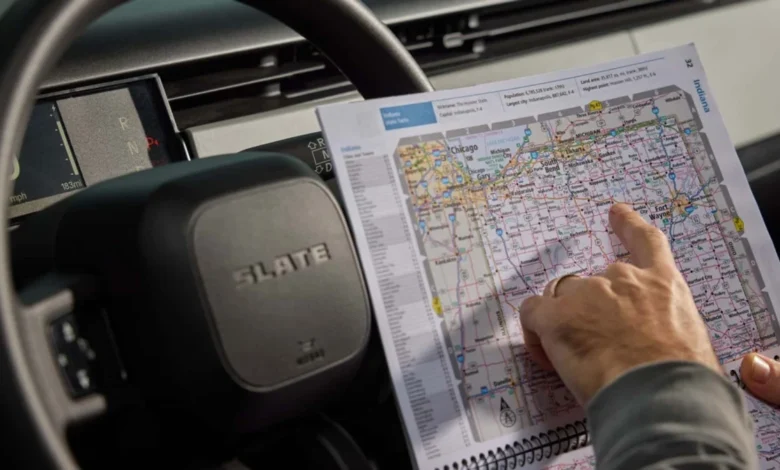
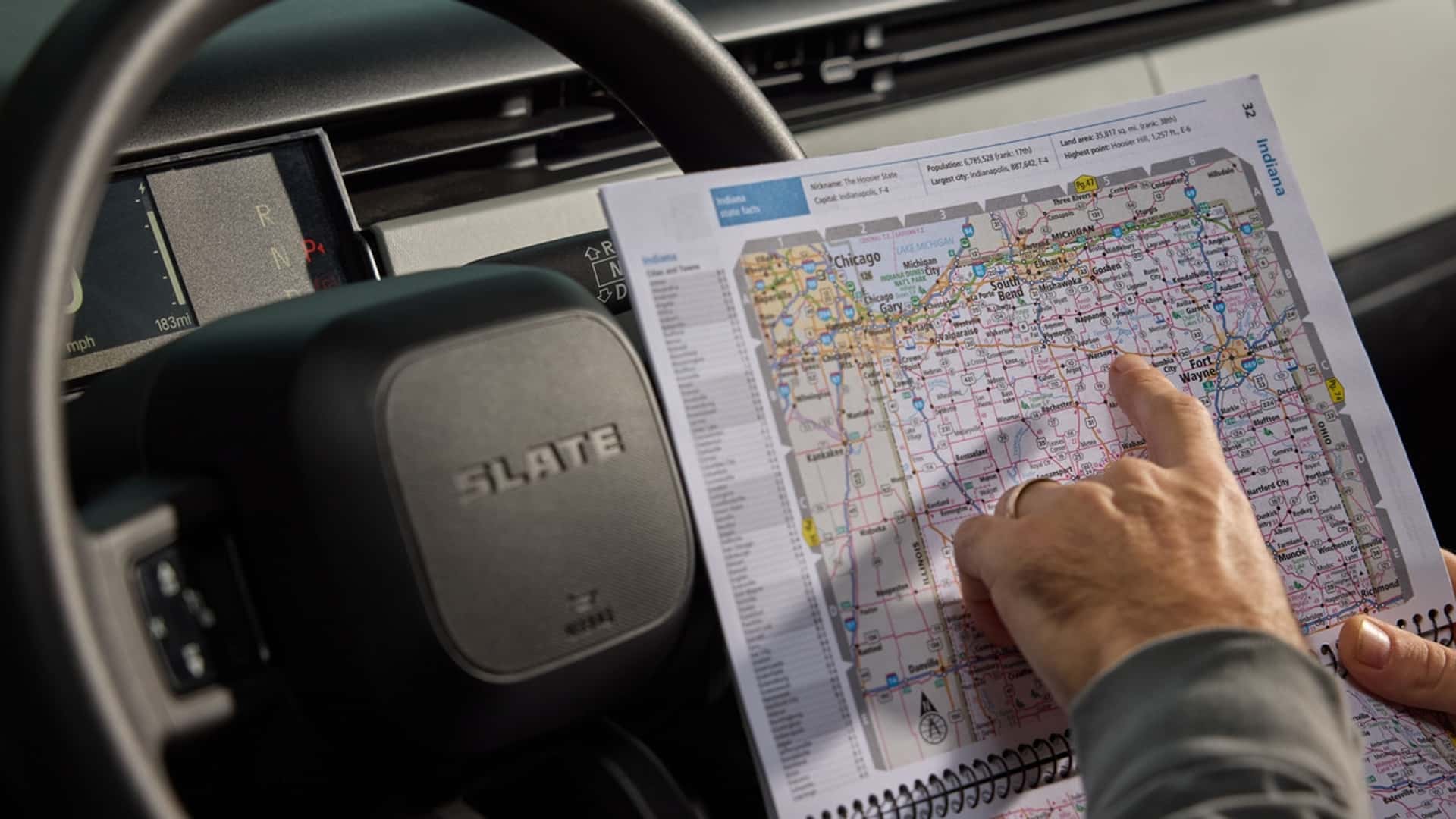
The contemporary automotive landscape is defined by an arms race of digital excess, characterized by massive touchscreens, over-the-air subscription models, and artificial intelligence assistants embedded deeply into every facet of the driving experience. In stark rebellion against this prevailing technological tide, electric vehicle startup Slate has introduced an unconventional piece of optional equipment for its upcoming, ultra-affordable electric pickup truck: a physical, paper-based navigation system marketed with tongue-in-cheek humor as the "Screenless GPS."
Priced at $30 and available in strictly limited quantities through the company’s online store, the newly added accessory is, in reality, the 2027 edition of the Rand McNally Road Atlas. Slate describes the product as the "original navigation system," highlighting its zero boot time, total absence of recurring subscription fees, infinite battery life, and complete immunity to erroneous software updates that might direct a motorist to make an ill-advised left turn into an active construction site. While the announcement is undeniably a clever marketing stunt designed to capture headlines and social media engagement, it cuts to the heart of Slate’s broader corporate philosophy. The startup is banking heavily on a growing consumer segment that feels alienated by the complexity, high cost, and constant digital oversight of modern automobiles.
The Philosophy of Minimalism and the Under-$25,000 EV
Slate’s overarching business strategy hinges on a radically stripped-down approach to vehicle manufacturing and ownership. By forgoing expensive digital displays, premium interior materials, and complex electronic architectures, the company has successfully kept the base pricing of its upcoming battery-powered truck under $25,000—a remarkable price point in an era where the average cost of a new electric vehicle often hovers well above $40,000 or even $50,000.
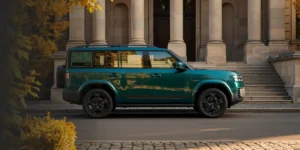
The core vehicle platform is purposefully rudimentary. It features unpainted composite body panels designed to resist minor dents and scratches without requiring expensive body shop repairs, manual windows, and an architecture devoid of a central infotainment screen. Powering this utilitarian machine is a cost-effective Lithium Iron Phosphate (LFP) battery pack, chosen for its durability, safety profile, and lower production cost relative to nickel-manganese-cobalt chemistries.
This back-to-basics ethos has already begun attracting attention from prominent automotive figures and early reviewers. Renowned British automotive journalist James May recently evaluated a pre-production prototype of the Slate truck, describing the experience as remarkably "unburdensome." May noted that driving a vehicle free from constant alerts, driver-monitoring cameras, and menu-diving touchscreen controls offered a refreshing return to pure, unadulterated motoring—a sentiment echoed by other early automotive testers who have spent time behind the wheel of Slate’s minimalist machine.
Bridging Analog Nostalgia With Modern Utility
Despite the theatrical appeal of selling a physical paper road atlas in the mid-2020s, Slate is not entirely divorced from the practical realities of modern navigation. Recognizing that very few contemporary drivers rely solely on unfolded paper maps while navigating congested urban environments, the company has engineered the truck’s interior to accommodate personal technology. Every Slate pickup comes standard with a dedicated dashboard phone mount, allowing operators to seamlessly utilize their preferred smartphone-based mapping and navigation applications, such as Google Maps or Apple Maps.
In an official statement accompanying the launch of the Screenless GPS, Slate articulated its pragmatic stance on in-cabin technology: "When it comes to tech, we believe you should use the devices and solutions you already know and love. Not because we don’t like tech, but because we believe you already have everything you need to get where you’re going."
This philosophy shifts the financial and technological burden away from the vehicle manufacturer and back onto the consumer’s existing personal electronics. By eliminating the multi-thousand-dollar proprietary infotainment systems found in mainstream EVs, Slate avoids the licensing fees, hardware obsolescence, and software bugs that frequently plague modern automotive software suites. Furthermore, it ensures that the vehicle’s navigation capabilities remain perpetually up-to-date, as smartphones receive regular operating system patches and map updates independently of the vehicle itself.
Chronology of the Slate Project and Market Rollout
The journey toward the commercial launch of the Slate truck has been characterized by steady development milestones and aggressive pricing transparency. The timeline of the project highlights how the startup has captured the industry’s attention:
- Late 2024 to Early 2025: Slate reveals its foundational concept: an ultra-affordable, modular, all-electric utility vehicle designed to bypass traditional automotive excess. Early announcements outline the use of LFP battery technology and unpainted composite materials to anchor the base price below the psychological $25,000 threshold.
- Mid-2025: Official pricing details are finalized and publicized, confirming the sub-$25,000 entry point. The company details its modular ecosystem, which includes optional kits allowing the truck to be configured with various utility beds, trailer hitches, and even an SUV conversion kit featuring extra seating and an enclosed roof structure.
- Late 2025: Slate opens its flagship Experience Center in Chicago, marking its first physical showroom where prospective buyers can examine the vehicle, test out its straightforward trailer hitch installation process, and experience the minimalist cabin firsthand.
- Early 2026: Prominent automotive journalists, including James May and various independent reviewers, publish their driving impressions. The vehicle is widely praised for its refreshing lack of digital friction and ease of daily living compared to more electronically complex rivals like Tesla and traditional legacy automakers.
- Current Operations (2026): Slate expands its online merchandise and accessory ecosystem, culminating in the tongue-in-cheek release of the Rand McNally 2027 Road Atlas, cleverly rebranded as the "Screenless GPS."
- Later This Year (2026): Slate remains on track to deliver its very first customer production units, marking the official commercialization of its low-cost electric vehicle gamble.
Broader Industry Implications and Consumer Reception
The introduction of both the Slate truck and its satirical paper map accessory arrives at a critical juncture for the global automotive industry. For years, legacy automakers and new market entrants alike have pursued higher profit margins by packing vehicles with increasingly elaborate digital interfaces. However, market research and consumer advocacy groups have increasingly pointed to driver frustration over buried climate controls, subscription-based features, and distracting touchscreens.
Safety regulators have also begun scrutinizing the removal of physical buttons, as studies consistently show that interacting with flat glass screens increases driver distraction compared to tactile switches and knobs. Slate’s entire product architecture serves as a direct rebuke of this trend, proving that a segment of the driving public actively desires mechanical simplicity.
Moreover, the modular nature of the Slate truck extends far beyond its lack of a screen. The vehicle has been engineered to accept various snap-on components and user-installed accessories—ranging from basic trailer hitch receivers that require no professional programming to comprehensive modular body kits. This approach mirrors the consumer electronics and personal computing industries, where base hardware is kept inexpensive and standardized, leaving customization entirely up to the end user.
Whether this minimalist gambit will achieve widespread commercial success remains to be seen. The true test will begin later this year when production vehicles reach driveways across North America. If everyday consumers embrace the trade-off of lower cost and mechanical simplicity in exchange for foregoing built-in digital luxuries, Slate could well pioneer a disruptive new sub-segment in the electric vehicle market. Until then, early adopters who manage to secure one of the limited-edition $30 road atlases will at least possess a fail-safe navigation tool that requires no software updates, cellular data connections, or password resets.