The official market release of Apple’s latest flagship smartphone lineup—the iPhone 18 Pro and the iPhone 18 Pro Max—has triggered an inevitable wave of rigorous independent testing. Following a weekend saturated with initial unboxing videos and early teardown analyses, prominent technology content creator Zack, renowned for hosting the popular YouTube channel JerryRigEverything, has acquired both devices. Sticking to his signature methodology, Zack subjected the newly minted Apple flagships to a comprehensive series of stress evaluations, exploring everything from Mohs hardness scale scratch thresholds to structural integrity under intense pressure, capped off by a detailed secondary teardown highlighting internal innovations such as the much-discussed variable aperture camera module.
The launch of the iPhone 18 Pro series on Friday marked a significant milestone for Apple’s annual hardware cycle. Consumer anticipation had reached a fever pitch following weeks of speculation regarding material upgrades, internal redesigns, and computational photography advancements. As units swiftly landed in the hands of early adopters, tech reviewers, and hardware enthusiasts, the digital ecosystem was instantly flooded with early-stage evaluations. Within the first forty-eight hours of commercial availability, multiple high-profile content creators published initial video teardowns, providing the public with an early look at the internal architecture, modular placement, and specific hardware adjustments implemented by Apple engineers this generation.
Comprehensive Durability Assessment: Scratch, Burn, and Bend Tests
The core of the JerryRigEverything evaluation centers on physical endurance, beginning with the device’s display protection. Utilizing standard Mohs scale mineral picks, Zack tested the front glass panel of the iPhone 18 Pro. The results demonstrated a notable upgrade in surface resilience compared to previous industry standards. While typical smartphone display glass routinely scratches at level 6 on the Mohs hardness scale with deeper grooves appearing at level 7, the glass utilized on the iPhone 18 Pro pushed this threshold higher. The display successfully resisted scratching until level 7, with deeper grooves only materializing at level 8. This performance suggests tangible advancements in material composition and scratch resistance for Apple’s latest front-cover formulation.
Moving beyond surface hardness, the evaluation shifted to structural material composition. The chassis of the iPhone 18 Pro is constructed from high-grade aluminum, extending to the integrated camera plateau on the rear panel. Below this aluminum camera housing, the lower portion of the back panel retains a glass finish to accommodate wireless charging technologies and aesthetic continuity.
Thermal resilience was subsequently tested by exposing the device’s OLED display to an open flame from a butane lighter. The screen endured direct thermal exposure for approximately 25 seconds before showing any localized pixel distress, recovering without sustaining permanent damage or functional impairment.
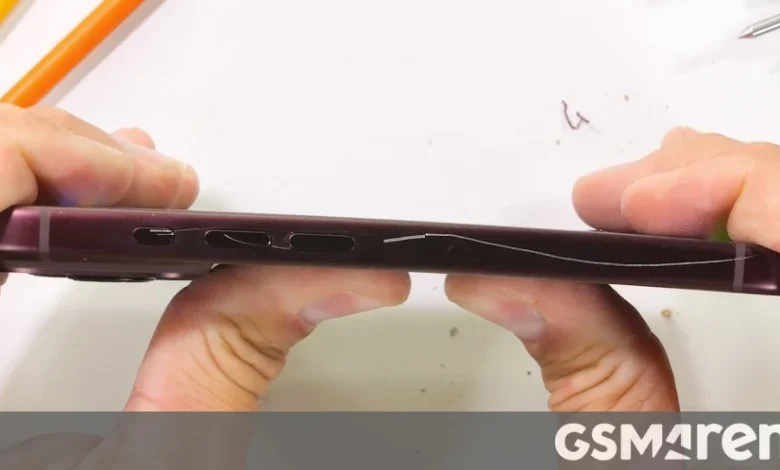
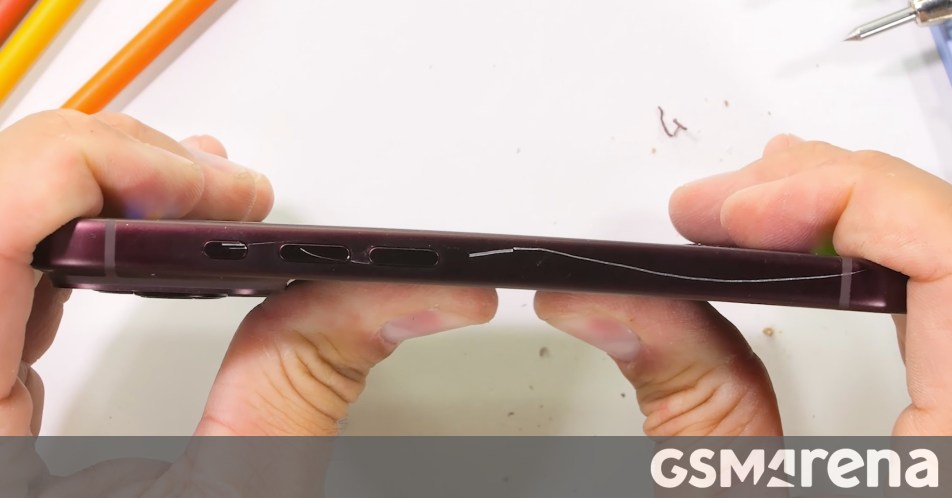
The culmination of the durability assessment was the traditional structural bend test. When subjected to severe manual pressure applied from both sides of the chassis, the iPhone 18 Pro exhibited exceptional rigidity, yielding no discernible flex, separation, or structural compromise. This structural stability highlights the effectiveness of the internal frame design and the choice of aluminum alloys used in the manufacturing process.
Deep Dive: Internal Teardown and the Variable Aperture Innovation
Not content with merely testing external durability, Zack subsequently disassembled the iPhone 18 Pro, contributing to the broader phenomenon of launch-weekend teardown content dominating technology platforms. This internal examination allowed for a granular look at the phone’s internal layout, battery configuration, and cooling mechanisms.
The highlight of the teardown segment was a focused inspection of the main camera module, which incorporates a new variable aperture system. This hardware inclusion allows the device to physically adjust light intake directly through the lens mechanism, diverging from purely software-based exposure compensation common in previous smartphone generations. The detailed visual breakdown provided viewers with a transparent look at the micro-mechanical actuators and precision engineering required to integrate variable aperture capabilities into a compact mobile form factor.
Market Context and Pricing Structure
The arrival of the iPhone 18 Pro and iPhone 18 Pro Max on retail shelves follows months of global supply chain preparation and massive pre-order volumes. Consumer interest has focused heavily on the upgraded memory configurations and enhanced camera hardware featured in the Pro models.

In European markets, retail pricing reflects the tiered configuration structure:
- Apple iPhone 18 Pro (256GB storage, 12GB RAM): Available through major online channels in Germany starting at €1,449.00, and in the United Kingdom starting at £1,199.00.
- Apple iPhone 18 Pro (512GB storage, 12GB RAM): Positioned at €1,699.00 in Germany and £1,399.00 in the UK.
- Apple iPhone 18 Pro Max (256GB storage, 12GB RAM): Retails at €1,599.00 in Germany and £1,299.00 in the UK.
- Apple iPhone 18 Pro Max (512GB storage, 12GB RAM): Tops out the standard tier offerings at €1,849.00 in Germany and £1,499.00 in the UK.
These price points position the devices firmly in the ultra-premium segment, raising consumer expectations regarding build quality, longevity, and everyday durability. Independent stress tests like those performed by JerryRigEverything serve as an unscripted benchmark for consumers assessing whether these premium investments can withstand the rigors of daily use.
Broader Industry Implications and Outlook
The publication of these rigorous durability and teardown tests carries significant implications for the broader smartphone market. As manufacturing costs rise and consumers hold onto their devices for longer periods, physical resilience and repairability have become critical purchasing factors. The demonstration that the iPhone 18 Pro resists scratches at a higher Mohs level and maintains absolute structural rigidity under pressure provides reassurance to consumers committing to an investment exceeding one thousand dollars or euros.
Furthermore, the public dissection of complex hardware components—such as the variable aperture main camera—satisfies growing consumer demand for radical transparency regarding internal engineering. As enthusiasts and independent repair advocates scrutinize every square millimeter of the new logic boards, thermal sheets, and camera assemblies, manufacturers are increasingly held accountable for modularity and build integrity.
As laboratories and editorial newsrooms finalize their comprehensive, long-term reviews of both the iPhone 18 Pro and iPhone 18 Pro Max, initial indicators from drop, scratch, and structural tests suggest that Apple’s latest hardware engineering meets the high durability standards demanded by the contemporary flagship market.