Waymo Resumes San Francisco Operations Following Service Suspension Triggered by Major Power Outage

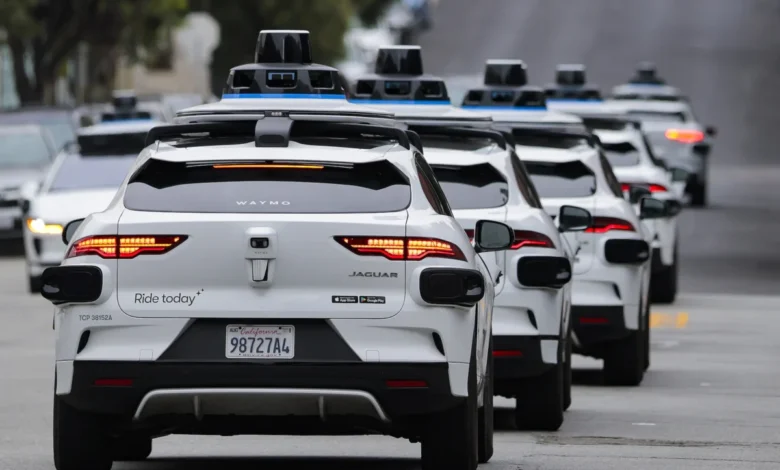
Waymo, the autonomous driving subsidiary of Alphabet Inc., has officially resumed its robotaxi operations across San Francisco following a strategic service suspension on July 18, 2026. The disruption was necessitated by a widespread electrical failure that affected approximately 7,000 Pacific Gas and Electric (PG&E) customers, creating hazardous driving conditions and infrastructure instability throughout several of the city’s high-traffic corridors. The incident, which occurred during the early afternoon, forced the company to temporarily halt its fleet to assess the safety of the operating environment, highlighting the ongoing challenges autonomous vehicle (AV) platforms face when integrated into aging urban infrastructure.
The service interruption began shortly after noon when reports surfaced on social media platforms, including X (formerly Twitter), showing screenshots of the Waymo One app informing users that service was "temporarily paused." The notification specifically noted that "freeway routes are unavailable," a critical limitation for a service that had recently expanded its high-speed connectivity between San Francisco and neighboring municipalities. Waymo later confirmed that the decision to pause was a proactive measure designed to prevent vehicle clusters or "stalling" incidents, which have plagued the company during previous infrastructure failures.
Chronology of the July 18 Incident
The timeline of the service disruption began at approximately 12:10 PM PDT, when a localized failure in a PG&E substation led to a loss of power in the Mission District, SoMa, and parts of the Richmond District. By 12:20 PM, social media users began reporting that their scheduled Waymo rides were being canceled without prior warning. By 12:30 PM, Waymo issued its first internal directive to the fleet to transition to a "holding pattern," effectively pausing new ride requests while allowing vehicles currently carrying passengers to complete their trips using surface streets.
A Waymo spokesperson initially told reporters that the company was making "temporary adjustments" while monitoring local conditions. However, as the scale of the outage became clearer—affecting hundreds of traffic signals—the company opted for a full system pause. At 1:15 PM, a follow-up statement confirmed that the service had been suspended for roughly one hour to "assess the scale of the power outage" and to "coordinate with local officials."
By 1:45 PM, as PG&E crews began successfully rerouting power and restoring signals in key intersections, Waymo began a phased reactivation of its fleet. While surface street operations returned to normal by mid-afternoon, freeway access remained restricted for an additional two hours as a precautionary measure, ensuring that the high-speed transition zones were fully supported by operational lighting and communication nodes.
The Technical Vulnerabilities of Autonomous Fleets during Blackouts
The decision to suspend service underscores a critical technical hurdle for Level 4 autonomous vehicles: the reliance on predictable infrastructure. While Waymo’s "Waymo Driver" system utilizes a sophisticated suite of LiDAR, cameras, and radar to navigate, the loss of municipal power creates "edge case" scenarios that complicate machine learning models.
One of the primary concerns during a power outage is the failure of traffic signals. When lights go dark, California law requires drivers to treat intersections as four-way stops. While Waymo’s software is programmed to recognize and adhere to these rules, the unpredictability of human drivers during such outages creates a high-risk environment. Previous data from the California Department of Motor Vehicles (DMV) suggests that autonomous vehicles often struggle with the "social negotiation" required at busy, unlit intersections where human drivers may not follow standard four-way stop etiquette.
Furthermore, the loss of power can impact the mesh networks and cellular towers that facilitate vehicle-to-everything (V2X) communication. While Waymo vehicles do not require a constant cloud connection to operate safely, they rely on real-time data for routing, traffic density assessment, and remote assistance. A significant drop in network reliability during a blackout can hinder the company’s ability to provide "remote steering" or guidance if a vehicle becomes confused by a complex road obstruction.
Historical Precedents and the Regulatory Backlash
This latest suspension is not an isolated incident for Waymo or the city of San Francisco. The July 18 outage follows a string of high-profile events that have raised questions about the resilience of autonomous fleets.

In December 2025, a similar blackout led to a dozen Waymo vehicles stalling simultaneously in the middle of city streets, effectively creating a gridlock that prevented emergency vehicles from passing. Earlier in July 2026, during a Fourth of July fireworks display at the Golden Gate Bridge, a surge in pedestrian traffic and localized network congestion caused several robotaxis to "freeze" in place, requiring manual intervention from Waymo’s roadside assistance teams.
These incidents have fueled a growing movement among local policymakers to reclaim authority over AV regulation, which is currently managed at the state level by the California Public Utilities Commission (CPUC) and the DMV. San Francisco Mayor Daniel Lurie has been a vocal critic of the current "hands-off" approach, arguing that the city bears the brunt of the logistical chaos when these systems fail.
Following the July 18 outage, Mayor Lurie reiterated his call for tougher state regulations. "We need to adequately address how autonomous vehicles operate during major incidents, planned or not," Lurie stated in a press briefing. "The city cannot be a laboratory where the experiment stops every time the lights go out. We need guarantees that these vehicles can navigate emergencies without becoming obstacles themselves."
Implications for the Robotaxi Industry
The repeated service interruptions pose a challenge to the narrative of robotaxis as a reliable pillar of urban mass transit. As Alphabet continues to invest billions into Waymo’s expansion—competing with the likes of Tesla’s promised Cybercab and a reorganized Cruise—reliability during "force majeure" events is becoming a key differentiator.
Industry analysts suggest that for Waymo to achieve true "all-weather, all-condition" status, the company must improve its fleet’s ability to operate autonomously in "dark" environments without human-remote oversight. There is also a growing discussion regarding the necessity of "redundant infrastructure," where AV companies might invest in private localized sensors or independent power backups for critical navigation nodes in high-density areas.
From a business perspective, the one-hour pause represents a loss in revenue, but more importantly, a potential dip in consumer confidence. For riders who have swapped personal car ownership for "transportation-as-a-service" (TaaS), a service that disappears during a power outage—precisely when public transit might also be delayed—is a significant liability.
Looking Ahead: Safety and Policy
As Waymo returns to normal operations, the focus now shifts to the post-incident analysis. Waymo has committed to sharing data with the SFMTA (San Francisco Municipal Transportation Agency) regarding how its vehicles handled the unlit intersections during the initial phase of the outage. This transparency is part of a broader effort to appease local regulators who are pushing for the "Smart City" integration of AVs.
The July 18 event will likely serve as a case study for the upcoming legislative session in Sacramento. Proponents of local control are expected to use the outage as evidence that cities should have the power to set "operational thresholds"—rules that would dictate when an AV company must pull its fleet off the road or, conversely, what failsafes they must have in place to remain operational.
For now, Waymo maintains that its "safety-first" approach, even if it results in temporary service gaps, is the correct path forward. The company’s ability to resume service within an hour suggests an improving capability to manage crisis situations, yet the underlying vulnerability to the city’s power grid remains a variable outside of its direct control.
As San Francisco continues to serve as the global epicenter for autonomous vehicle deployment, the intersection of private technology and public infrastructure remains a friction point. The events of July 18, 2026, serve as a reminder that the road to a fully autonomous future is not just paved with code and sensors, but is also deeply dependent on the stability of the traditional power grid and the evolving political landscape of urban governance.