Thermacell LIV 2.0 Evaluation: Examining the Evolution of Perimeter Mosquito Control Technology

Four years after returning to Texas from California, the struggle to mitigate mosquito populations remains a primary concern for many homeowners in the Southern United States. Upon arrival, the scale of the local mosquito presence prompted an immediate search for abatement solutions. The experience of this homeowner reflects a common trajectory: initial reliance on professional pesticide services, followed by a transition toward integrated, semi-permanent smart technology.
The history of residential mosquito control has historically oscillated between chemical fogging and localized repellents. For many, the first line of defense involves professional pest control services that utilize high-pressure misting systems. These services typically involve a technician deploying pyrethrin or permethrin-based solutions across foliage on a recurring schedule. While these methods are often cited for their immediate knockdown effect, they face criticism regarding longevity and environmental impact. Industry data suggests that the efficacy of broad-spectrum pesticide spraying often degrades within 48 to 72 hours due to ultraviolet light degradation, rainfall, and wind, necessitating constant, expensive reapplication.
The Technological Shift to Smart Repellents
Recognizing the limitations of chemical spraying, manufacturers began pivoting toward smart-home integrated systems. The Thermacell LIV Smart Mosquito Repellent System, originally launched several years ago, represents a departure from traditional "kill-on-contact" pesticides. Instead, it focuses on area-wide deterrence through the controlled release of metofluthrin, a synthetic pyrethroid derivative that acts as a potent spatial repellent.
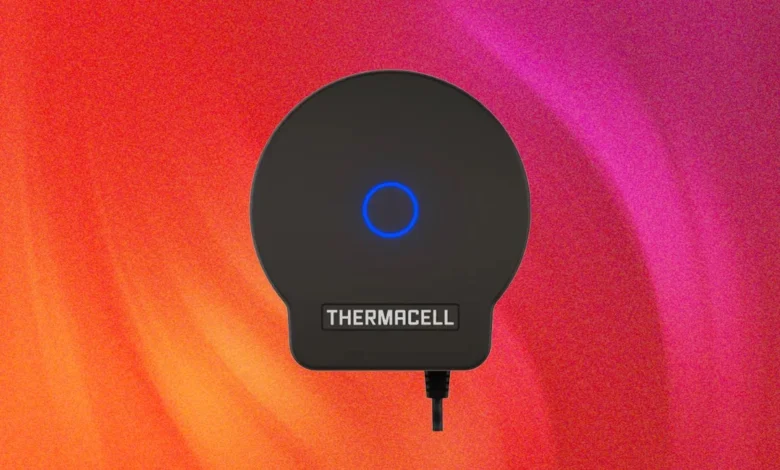
The introduction of the LIV 2.0 marks an iterative update to this established ecosystem. The system is designed for semi-permanent installation, allowing homeowners to manage their outdoor living spaces via a smartphone application or automated scheduling. By creating a “vaporous fence” around a designated perimeter—such as a patio or swimming pool area—the system aims to keep mosquitoes at bay without the necessity of broad-spectrum chemical coverage on vegetation.
Understanding the LIV 2.0 Hardware and Deployment
The architectural foundation of the LIV 2.0 remains conceptually consistent with its predecessor, utilizing a daisy-chain configuration. The system is powered by one or more Wi-Fi-connected control hubs, which serve as the brains of the operation. These hubs interface with a series of individual repeller units placed at intervals of up to 20 feet.
The primary change in the 2.0 iteration involves refined hardware components, though the cabling infrastructure remains backward-compatible with previous versions. In practical application, this allows users to expand their existing perimeters by adding extra repellers. For instance, in a recent field test, a standard five-repeller setup was supplemented with a sixth unit to address a coverage gap, demonstrating the modular scalability of the system.
The Science of Metofluthrin
Central to the effectiveness of the Thermacell system is metofluthrin. According to Environmental Protection Agency (EPA) documentation, metofluthrin is a volatile pyrethroid that evaporates into the air to create a zone of protection. Unlike older contact insecticides that leave a residue on leaves, metofluthrin is designed to be highly effective at low concentrations, specifically targeting the olfactory senses of mosquitoes.
The chemical does not typically kill the insects; rather, it disrupts their ability to locate hosts. This mechanism is significant for homeowners concerned about the ecological footprint of their pest control choices. By avoiding the broadcast spraying of non-selective insecticides, users can theoretically protect their outdoor environment while minimizing the impact on non-target species, such as pollinators.

Timeline and Chronology of Mosquito Control Innovation
The evolution of these systems follows a clear technological timeline:
- 2019-2020: The homeowner experiences a significant increase in local mosquito density, leading to the use of professional, high-frequency pesticide spraying. The recurring annual cost for these services reached four figures.
- 2021-2022: The emergence of the first-generation LIV system offers a smart-home alternative. Testing indicates a reduction in reliance on external contractors, with the user deploying a dual-hub system to protect a pool area.
- 2023-2024: Thermacell releases the LIV 2.0. Evaluation focuses on hardware durability and software improvements, confirming that the modular nature of the system allows for easier maintenance and expanded perimeter coverage compared to the original launch model.
Comparative Analysis of Costs and Maintenance
When evaluating the cost-effectiveness of a system like the LIV 2.0 versus traditional professional spraying, the math is complex. Professional services are an operating expense (OPEX) that requires no hardware investment but provides diminishing returns. Conversely, the LIV 2.0 represents a capital expenditure (CAPEX) followed by the cost of replacement vials of metofluthrin.
For the average homeowner, the “break-even” point occurs when the upfront cost of the system is offset by the cessation of monthly recurring fees for professional services. Furthermore, the ability to control the system remotely—activating it only when the outdoor space is in use—extends the life of the repellent vials, a significant improvement over automated, scheduled spraying that occurs regardless of whether the area is occupied.
Industry Implications and Broader Impact
The shift toward “smart” pest control mirrors broader trends in the Internet of Things (IoT) sector, where consumers are increasingly seeking automated solutions to environmental nuisances. From a regulatory standpoint, the rise of targeted, low-concentration vapor-based repellents is generally viewed as an improvement over the era of heavy pesticide reliance.
However, the efficacy of these systems is inherently tied to the user’s setup. Because the system relies on the physical placement of repellers, “perimeter integrity” is the most critical factor. Gaps in the daisy chain can lead to localized mosquito entry points. As demonstrated in recent tests, adding extra units to account for complex landscaping or high-wind environments is essential for maintaining a high level of protection.
Future Considerations for Residential Pest Management
As climate patterns continue to fluctuate, mosquito-borne disease vectors and general nuisance populations are expected to expand into new territories. Consequently, the demand for sophisticated, non-toxic, and user-controlled abatement systems is likely to increase.
The LIV 2.0 serves as a case study for how hardware iteration can address early-adopter feedback. By maintaining the same cabling but upgrading the core hardware, Thermacell has signaled an intent to support long-term users, a departure from the "disposable tech" model common in the smart home space.
As homeowners weigh the pros and cons of these systems, the following takeaways remain consistent:
- Flexibility: Modular systems allow for custom configurations that professional spraying services often cannot replicate without significant cost.
- On-Demand Utility: Smart integration allows users to treat the air only when necessary, which is both more economical and more environmentally conscious.
- Technological Maturity: The transition from the original LIV to the 2.0 indicates a maturing market where reliability and user experience are becoming as important as the chemical efficacy itself.
In conclusion, while no system can fully eliminate the presence of mosquitoes in an open-air environment, the shift toward integrated, hardware-heavy solutions like the LIV 2.0 represents a significant advancement. By moving away from the "blast and hope" method of traditional pest control, homeowners are finding that a combination of intelligent hardware placement and targeted chemistry offers a more predictable, sustainable, and effective way to reclaim their outdoor living spaces. As technology continues to evolve, the integration of sensors—such as wind-speed detectors or mosquito-density monitors—may be the next logical step in further optimizing these residential perimeter systems.